


Thucydides, Bismarck, and U.S.-China Competition - Dr. Mackubin Owens
Dr. Mackubin Owens, MINDSETTER™
Thucydides, Bismarck, and U.S.-China Competition - Dr. Mackubin Owens
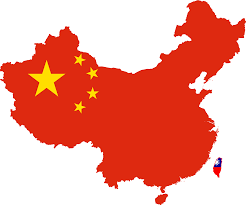
Several years ago, the Harvard political scientist, Graham Allison coined the term, “the Thucydides Trap,” to describe a theory holding that there is a significant likelihood of war when a great power’s hegemonic position is threatened by an emerging power. In Allison's words, “the Thucydides Trap refers to the natural, inevitable discombobulation that occurs when a rising power threatens to displace a ruling power...[leading to]… structural stress [that] makes a violent clash the rule, not the exception.” He identified 16 historical crises that he claimed illustrated the Thucydides Trap, concluding that 12 resulted in war. His main concern was a possible conflict between the United States and a rising China, which threatened US hegemony. Indeed, in his 2017 book Destined for War, Allison argued that "China and the US are currently on a collision course for war.”
GET THE LATEST BREAKING NEWS HERE -- SIGN UP FOR GOLOCAL FREE DAILY EBLAST
Although the theory has generated much debate about the US-China rivalry, “The Thucydides Trap” been roundly criticized by scholars for lacking an understanding of both Asian history and classical Greek politics. But while we should always be wary of historical analogies, one of Allison’s case studies—Britain and the rise of Imperial Germany in the late nineteenth century—does require close study.
In the latter part of the nineteenth century, British power was at its high point. Britannia truly “ruled the waves” linking an empire that spanned the globe. In the words of Sir Jackie Fisher, First Sea Lord, there were "five keys that locked up the world"—the English Channel, Gibraltar, Suez, the Cape of Africa, and Singapore—and Britain controlled then all. The British ruled in their own interests, but the world was generally at peace. After centuries of war against its continental nemesis, France, the defeat of Napoleon ushered in a relatively peaceful era.
Meanwhile, Germany and most of Central Europe had been weakened by the Thirty Years’ War, one of the most destructive conflicts in history. The region featured a plethora of petty states, which placed them at the mercy of France and the Hapsburg Empire. Although Prussia was a part of the “Concert of Europe,”—France, Austria, Russia, Britain, and Prussia—it was by far the weakest member. But in three successive wars: against Denmark, 1864; Austria, 1866; and France. 1871; Prussia unified the German states and proclaimed the German Empire.
Prussian diplomacy was characterized by prudence under the German chancellor, Otto von Bismarck, who was careful to fight these wars for limited objectives. The Prussians could have marched on Vienna during the war against Austria and could have seized vast French territory during the Franco-Prussian war, but Bismarck opted for options less threatening to the core interests of the other European powers.
But after the fall of Bismarck, Germany did something that did truly threaten the balance of power in Europe: it decided to challenge Britain at sea. While Britain had cooperated with Prussia in its wars against France—the Prussians had played a major role in the defeat of Napoleon at Waterloo—Britain would not stand for German maritime competition. The result was a breakdown of the system that had moderated European conflict for decades. The result was the Great War.
Although this case would seem to support the thesis of the Thucydides Trap, the reality was more complicated. First of all, Germany faced internal problems that undermined its international power. In addition, the system of alliances in Europe was brittle. Once the troop trains began to move, there was little opportunity to stop the process. The assassination of the Austrian archduke in Sarajevo and the resulting crisis in the Balkans threatened to bring about Russian intervention and war against Germany’s ally, Austria. As Russia mobilized, Germany mobilized. As Germany mobilized, France mobilized. Hoping to avoid a two-front war, Germany opted to knock France out of the war before the Russians could fully mobilize. Unfortunately, Germany’s long-standing operational plan for a war against France, the Schlieffen Plan, required the violation of Belgian sovereignty, which brought Britain into the war.
Although there are similarities between the Britain-Germany case and the US-China case, there are also many differences that undercut the Thucydides Trap theory. China, like Germany in the late nineteenth century, faces many internal problems, which include reliance on imports for foodstuffs and oil/gas as well as demographics. Although China possesses vast coal reserves, it lacks oil and natural gas. In addition, China’s population is aging and thanks to the “one child per family” policy from the Mao era, there is a serious imbalance between the sexes, with men outnumbering women by a substantial margin.
The problem may well be that it is not China’s rise that is the source of the threat of war with the United States, as the Thucydides Trap thesis would suggest, but that it faces long-term decline. Thus, like Germany in 1914, China may conclude that its best chance to maintain its international position is to fight a preemptive war before inevitable decline sets in.
And that is where Thucydides’ true teaching leads us: that the link between a state’s domestic politics and its foreign policy is decisive. After all, after the death of Pericles, whose leadership was marked by prudence and moderation, Athenian democracy descended into mobocracy, to be shaped by the likes of Cleon and Alcibiades. It is the internal decay of Athens that led to its defeat, not Sparta.