


Warwick Neighborhood Outraged over Sex Offender Move Near School
Stephen Beale, GoLocalProv News Contributor
Warwick Neighborhood Outraged over Sex Offender Move Near School
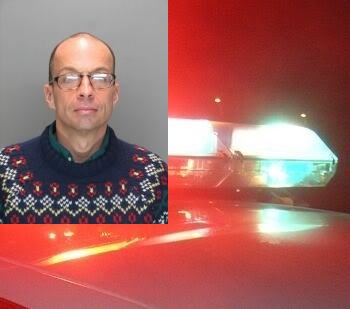
Byron de Weldon has moved into an apartment building less than a tenth of a mile from the school. He is the son of famed sculptor Felix de Weldon, the artist behind the iconic memorial depicting U.S. Marines raising the flag over Iwo Jima. (See below slides for more on the tragic story of the de Weldon family.)
State records show that Byron de Weldon has multiple convictions on sex-related charged stemming from incidents involving boys ranging from 11 to 15 years old. The charges include third degree sexual assault, second degree child molestation, and indecent assault and battery on a child. The latter charge was in Massachusetts. At one point, de Weldon was deemed a “sexually dangerous person” under Massachusetts law and committed to the state psychiatric facility in Bridgewater. He also served a prison sentence in Rhode Island, court records show.
GET THE LATEST BREAKING NEWS HERE -- SIGN UP FOR GOLOCAL FREE DAILY EBLASTState authorities have labeled de Weldon a Level III offender, meaning that he has the highest risk of re-offending. Now, out of prison, he is no longer on probation.
His recent arrival in Warwick has set the community on edge and alarmed parents.
“As a parent I’m concerned about him victimizing children and also as a therapist I’m aware of their pattern of behavior,” said Rebecca Carter, whose son attends the John Brown Francis Elementary School. Carter also is a licensed mental health counselor, but she treats only the victims of abuse, sexual or otherwise.
Warwick Schools Superintendent Richard D’Agostino said local authorities had taken the proper security procedures. Once a Level III sex offender has moved into a community and registered with police they, in turn, notify residents who live within half a mile by phone and e-mail. Police also notify the school principle, providing a photograph and other relevant information. That information is then shared with staff and kept on file, according to D’Agostino.
Push for a new state law
But that’s enough for Carter. She says the current state law allows sex offenders to live too close to schools. After reaching out to her local lawmakers, two of them—Sen. Michael McCaffrey and Rep. Joseph McNamara, both Warwick Democrats—have filed legislation in their respective chambers that would extend that minimum 300-foot buffer to 1,000 feet.
When asked how much of a difference the additional 700 feet would make, McCaffrey said every little bit helps. “I think every foot would help. The farther the sex offenders are from a potential victim, the better off we are,” McCaffrey told GoLocalProv.
McCaffrey, who is also chair of the Senate Judiciary Committee, said a preliminary hearing on the bill has been held. He said the bill was held for further study in the face of opposition from the state ACLU but he promised that it would be back before the committee. The House version of the bill, sponsored by McNamara, was also held for further study earlier this month, legislative records show.

Up until 2008, sex offenders could live as close to schools as they wanted. Then, that year, the General Assembly passed a law instituting a buffer of 300 feet. The bill in its originally proposed version would have set the distance at 2,000 feet, according to Carolyn Medeiros, the executive director of the Alliance for Safe Communities. “How they whittled it down to 300 feet is sad,” she said.
Carter said she settled on 1,000 feet after researching what is done in other states. A dozen states have 1,000-foot buffer zones, according to the Council on State Government. About half as many double that distance. Only a few states have zones under 1,000 feet. But there are also many states—just under about half of them—that have no restrictions at all. That was as of 2008, but a more recent national survey does not appear to be available.
Medeiros told GoLocalProv she also backs the 1,000 feet. But given arguments about the state’s density, she said she would be open to compromising at 500 feet—but no less. “Absolutely, definitely no less than 500 feet,” she said.
However, even if proponents of the new law are successful, it’s unclear whether that will reduce de Weldon's proximity to the Francis Elementary School. McCaffrey said that will all depend on the final wording of the bill, but he said normally such laws are prospective, not retroactive.
ACLU opposes law as ‘ineffective’

“While it may feel good to pass bills like these, sex offender residency laws are not only ineffective, but counter-productive,” said Steve Brown, executive director of the state ACLU. “The state’s current law—and this bill—make no attempt to differentiate between sex offenders based on their offense, their risk level, the length of time since they offended, or any other relevant factor. It applies regardless of whether the offense involved children.”
But even were such laws restricted just to sex offenders who abused children, Brown noted that they rest on the “flawed assumption” that most offenses are committed by strangers. “Yet the statistics are clear: the overwhelming majority of child sexual assaults are committed by family members, friends, or acquaintances of the victim, not by strangers who find their victims at schools or parks. Thus, a bill like this completely misses the mark, for the problem has nothing to do with not knowing where a sex offender is located,” Brown added.
While doing little to solve the problem, he said such laws could actually make it worse. By making it harder to find housing, sex offenders’ path back into community and society is made more difficult. “[T]he resulting instability can have the effect of increasing, rather than decreasing, the likelihood of recidivism,” Brown said. “It certainly increases their risks of homelessness and limits police ability to monitor their location.”
GoLocalProv attempted to reach out to de Weldon through the attorney who represented him in an unsuccessful appeal before the Rhode Island Supreme Court last year to get one of his no contest pleas tossed out. The attorney, John Sylvia, did not respond to a message seeking comment yesterday.
The Tragic Story of the de Weldon Family

A World Famed Sculptor
Byron de Weldon is the son of Dr. Felix de Weldon, a world-famed sculptor best known for the sculpture of the raising of the flag in Iwo Jima during World War II. At left, the elder de Weldon is pictured with a scale model of his sculpture, officially known as the Marine Corps War Memorial.
Photo credit: U.S. Marine Corps History Division

Early Fame
The elder de Weldon was born in Vienna on April 12, 1907. He studied art in Rome, Florence, and the Prado Museum in Madrid. He held two PhDs from the University of Vienna—one in art, the other in architecture. (The university’s main building is pictured at left.) After completing his studies, he opened a studio in London, where his work attracted the attention of the royal family. He did a bust of King George V and then one of King Edward VIII for his coronation. When Edward abdicated, de Weldon did another for King George VI.
Photo credit: Bwag

An Immigrant’s Story
De Weldon came to the United States via Canada, where he had been commissioned to do a likeness of Prime Minister Mackenzie King. While the prime minister was on overseas trip, de Weldon was encouraged to travel in the United States. He visited 44 of the 48 states and later told an interviewer that “I was so impressed by the friendliness of the people, the vastness and the beauty of the country, the tremendous vitality of its industry and its schools and its science, that I felt ‘This is the country to live in.’” After completing his work in Canada, de Weldon moved to New York in 1937. During World War II, he enlisted in the U.S. Navy, where he continued his work as an artist, making a crucifix for the U.S. Naval Academy chapel. He became a naturalized citizen in 1945.
At left is a younger de Weldon with Admiral Raymond A. Spruance, at the unveiling of a bust de Weldon sculpted of the admiral.
Photo credit: Naval War College Museum.

Iwo Jima Monument
When he first saw the famous photograph of the raising of the flag on Iwo Jima, de Weldon, who was still on active duty with the U.S. Navy, immediately began work on a scale model of a sculpture based on the image, completing it in a single weekend. Eventually, after nine years of work—sometimes at a pace of 19 hours a day—the 100-ton, 32-foot high sculpture was completed and dedicated on November 10, 1954. Officially known as the Marine Corps War Memorial, the monument stands near the entrance to Arlington National Cemetery in Rosslyn, Virginia outside of Washington, DC. The monument is pictured at left at night.
Photo credit: Catie Drew/Federal Highway Administration

Presidents Man
In 1950, while still working on the Iwo Jima monument, de Weldon was tapped by President Harry Truman to serve as Commissioner of Fine Arts. He would go on to hold this position under five presidents. De Weldon also made busts of three U.S. Presidents. Here he is pictured with one he did for Truman.
Photo credit: Abbie Rowe/U.S. National Archives and Records Administration

Newport Mansion
In 1951, de Weldon bought the Beacon Rock estate in Newport, where he set up a studio. The estate sits on eight acres of oceanfront land overlooking Brenton Cove. The 22,000-square foot mansion has 48 monolithic columns, solid marble porches, 11 fireplaces, nine bedrooms, and quarters for staff. Originally built in 1881 for a member of the J.P. Morgan family, the estate sold for $6.8 million in 2010 to an anonymous buyer.
Photo credit: Wally Gobetz/Flickr

World Fame
Over the course of his career, de Weldon produced more than 2,000 pieces of art, including 70 statues and 800 smaller busts and other sculptures. In his lifetime, the man and his work were honored by presidents and royalty alike. He is the only sculptor to have his work featured on all seven continents—yes, that includes Antarctica, where a bust of explorer and Admiral Richard Byrd stands at McMurdo Station (pictured at left).
Photo credit: Srbauer/NOAA.

Bankruptcy Battle
In his later years, de Weldon fell on financially hard times, after defaulting on a $1.5 million loan to cover medical expenses for his wife, who had Alzheimer’s disease. When one of the banks to which he owed money was taken over by the Federal Deposit Insurance Corporation, the agency immediately moved to push him into involuntary bankruptcy and auction off the home, according to a 1992 report in the Philadelphia Inquirer. But de Weldon fought back and was able to stay in the home.
“In most countries like France or Italy, a great artist is a national hero and they do everything for him … they just try to take everything away from me and ruin me,” de Weldon told the Inquirer.

Antique Theft
Adding to de Weldon’s troubles, his son Byron de Weldon was arrested in 1992 on a charge of stealing antiques from his father’s collection, according to the Philadelphia Inquirer report. The younger de Weldon at the time reportedly claimed he was trying to “protect” his father’s property from bill collectors. He was released from jail on condition that he undergo a drug rehabilitation program, according to the Inquirer report.

Mansion Sale and Death
In 1996, the Beacon Rock Estate was sold. De Weldon died in 2003 of congestive heart failure at his home in Virginia. He was 96. De Weldon is buried in Arlington National Cemetery (pictured at left).
Photo credit: Remember

Actor Son
De Weldon was survived by two sons. His other son, Daniel de Weldon, is an actor, director, and producer. He has appeared in several plays in Los Angeles and in such films as “The Select Fit,” “Fortunes’ 500,” and the upcoming “Amsterdam.” De Weldon is currently also working on a bio-pic about his father titled “Monumentous,” according to his Web site.
Photo credit: BardotD

Sex Offenses
His brother, Byron de Weldon, faced his first sex-related charge in1995, at the age of 25, when he pled guilty in a Massachusetts court on a single charge of indecent assault and battery on a child under 14 years old, according to Massachusetts court records. That same year also entered guilty plea on three counts of second degree child molestation in Rhode Island, stemming from an incident in Newport in 1993, involving three boys from Massachusetts. He received suspended sentences of about ten years in both states, according to Massachusetts court of appeals account of his criminal history.

Probation Revoked
In the late 1990s, Byron de Weldon moved to California where he soon found himself in trouble with the law again. In 1998 he pled guilty for contributing to the delinquency of a minor after allegedly providing marijuana to an underage kid. He was extradited to Rhode Island where he was arrested on a child molestation charges. His probation in both Rhode Island and Massachusetts were revoked. He was incarcerated in Rhode Island until 2004. During his years in prison he “participated in multiple rehabilitative programs,” accumulating 570 days of good time credit, according to the Massachusetts Court of Appeals.

Assault and Cocaine
De Weldon, pled no contest to a third-degree sexual assault charge and possession of cocaine in 2004, according to a Rhode Island Supreme Court opinion issued in an appeal stemming from the case. He ended up receiving a suspended five-year sentence on the assault charge, with probation, and served 30 days to serve for the drug charge. The victim in the assault case was a 15-year-old boy, according to state Parole Board records.

Civilly Committed
After 2007, a Superior Court judge granted a petition deeming de Weldon a Sexually Dangerous Person and ordering him to be civilly committed to the Bridgewater Treatment Center in Massachusetts. The Massachusetts Court of Appeals upheld the order in 2011.

Appeal Denied
In 2005, de Weldon filed a motion to vacate his guilty plea on the 2004 charges. That was denied and de Weldon appealed to the Rhode Island Supreme Court. The state high court tossed out the appeal in April 2014 on procedural grounds.

Move to Warwick
De Weldon moved to Warwick several months ago, according to community members who were notified of his release. Sources tell GoLocalProv that he lives just outside the mandatory 300-foot buffer from the John Brown Francis Elementary School. De Weldon is deemed a Level III sex offender, meaning there is a high likelihood that he will re-offend. His probation has expired, meaning that he is under no community supervision. However, as a convicted sex offender, de Weldon did have to register with Warwick Police.


