


We Must Pass George Floyd Justice In Policing Act for Real Justice: Guest MINDSETTER™ Schoos
Geoffrey Schoos, Guest MINDSETTER™
We Must Pass George Floyd Justice In Policing Act for Real Justice: Guest MINDSETTER™ Schoos

The white officer was convicted of two counts of murder and one count of manslaughter. Because the three convictions were related to the same event, the judge must focus on the most serious conviction which carries a maximum 40-year sentence. The state is seeking an enhancement of factors considered in sentencing citing that, among other things, the officer acted in front of children. If the enhanced charges, aka aggravating factors, are accepted by the judge he could depart upward from the state’s sentencing guidelines.
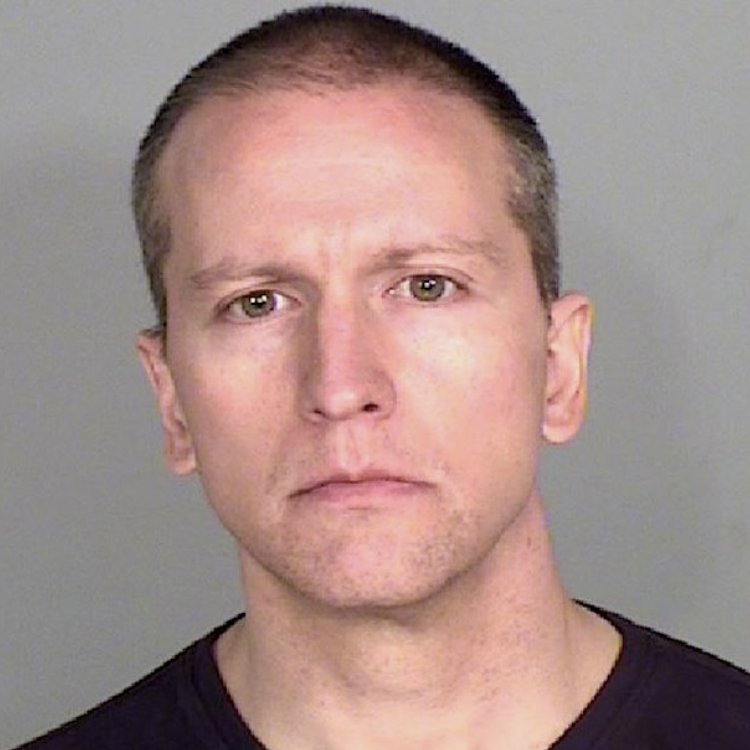
Obviously, I‘m writing about the verdict finding Derek Chauvin guilty of the murder of George Floyd. While it is tempting to celebrate this verdict, we cannot lose sight that the life of another was needlessly lost, leaving a grieving family that included Mr. Floyd’s young daughter.
GET THE LATEST BREAKING NEWS HERE -- SIGN UP FOR GOLOCAL FREE DAILY EBLASTWe know that Chauvin did not act alone. Three of his fellow officers will be tried in August for their actions and inactions. What happens then remains to be seen. Even if Derek Chauvin is sentenced to the statutory maximum of forty years, would that be “justice?” Clearly not. No amount of time served in prison will ever relieve the pain of loss now being suffered by George Floyd’s brother, his young daughter, his friends. And no amount of compensation paid by the City of Minneapolis can ever fill the void of a missing loved one.
We should embrace the fact that “justice” was dispensed in this instance. But this result should not blind us to the fact that, not 10 miles away from the Minneapolis courthouse, a 20-year-old black male was shot and killed after being pulled over in a routine traffic stop. The 26-year veteran white police officer “couldn’t” distinguish her taser from her service revolver, never mind that they neither look nor feel the same.
We should not be blinded by the fact that, not more than 30 minutes prior to the jury’s delivery of the Chauvin verdict, a 16-year-old black girl was shot and killed in a residential neighborhood in Columbus Ohio. This child had a knife and was in an altercation with another child, but the multiple officers at the scene couldn’t or wouldn’t intervene in this affray, leaving it to one white officer to shoot this child four times.
Neither should we be blinded by the fact that, since the first day of the Chauvin trial to the verdict, 64 people have been killed at the hands of the police nationwide. That averages three killing each day. Over one-half of this number were black and Latinx people.
We know, even if we won’t admit it, that the guilty verdict was an aberration from the norm. We know that there are many good and decent police officers who work tirelessly to keep us safe. We also know that there are a few - still way too many - who abuse their power and then hide behind their badges, knowing that the “Blue Wall” will shield them. We also know that sometimes errors of judgment are made, sometimes errors that cost lives.
}If we truly want to see a greater measure of “justice” derived from the Chauvin conviction, we must all call for the passage of the George Floyd Justice In Policing Act, H.R. 1280, which has passed the House and is currently before the Senate. This Act will provide real reforms that, while unable to undo the past, may make the future safer for others.
This Act will prohibit chokeholds and carotid holds, both potentially lethal techniques. This is not a far leap from placing a knee to the neck of an arrestee lying face down on the pavement for 9 minutes and 29 seconds.
This Act will ban no-knock arrest warrants in federal drug cases. A no-knock warrant precipitated the events that led to the shooting of Breonna Taylor last year in Kentucky. To encourage compliance, federal funds would be tied to the elimination of these warrants in drug cases.

This Act will create a federal misconduct registry so that officers discharged for misconduct by one police department could not easily relocate to another police department.
The Act would provide grants to states to establish commissions to study police reforms. Ideally, this will result in better training which should be standardized through all jurisdictions within each state. Part of this training will mandate the prohibition of racial profiling and other discriminatory practices.
Moreover, the Act would end qualified immunity, the doctrine that shields individual police officers from being sued for alleged constitutional violations. Perhaps losing this immunity would inspire the officers to become more circumspect as to how they go about their duties. In the alternative, if the elimination of qualified immunity for individual officers proves too much of a political lift, then remove this immunity as it might apply to the police departments, perhaps inspiring the implementation of better hiring, training, and supervision procedures.
It has been well documented that many local police departments have been militarized through the largess of the federal government. Beginning after America’s unilateral surrender on the War on Poverty, we began equipping local police departments in their new War on Crime. This process accelerated after 9/11/2001, with weapons of war being provided to fight America’s new War on Terror.
The Act will address police militarization by limiting the amount of military-grade equipment that is awarded to state and local law enforcement agencies. If local police are being trained on the use of weapons of war, is it any wonder that too many police officers view too many members of the public as the “enemy?”
The resumption of federal “patterns and practices” investigations of local police departments by the Department of Justice will begin with the Minneapolis Police Department. The Act would provide the Department with subpoena power and would also provide grants to state attorneys general to conduct their own investigations. These investigations are remedial in nature, seeking to uncover practices that discriminate and infringe on the civil rights of people the police have sworn to “protect and serve.”
Despite the benefits to be gained by passing this Act, racial prejudice exists in every profession, in every community. Racism exists in all genders, in people of all ages and all ethnicities. It may be the one constant theme that is woven through all of American history. The eradication of racism and its expulsion from our society will be a long incremental struggle. To expect the police departments to rid themselves of this social cancer before its expulsion from the broader society is too much to ask.
But what is not too much to ask is that police, as should all engaged in the criminal justice system, adopt the practice of lady justice, Themis. She stands with her scales of justice, not deaf but blind. She must be able to hear the disputes to be resolved but need not see the parties in order to deliver a fair judgment. In this way, she will not be prejudiced by who and what she sees but will only render judgment based solely on the facts presented.
The conviction of Derek Chauvin provided a measure of vindication of the criminal justice system and conferred only a measure of retributive justice. Chauvin was convicted, he will be punished, he will be forever stained by the consequences of his act. At best, that provides only a small measure of solace to the Floyd family and the Minneapolis community.
In a broader sense, we have the ability to achieve a measure of restorative justice by passing the George Floyd Justice In Policing Act. This is a big step toward repairing the very real harms felt by too many in this country. This is justice in the Aristotelian sense in that it articulates a sense of right and a loud repudiation of the wrongs that have been done to too many for too long.
Geoffrey A. Schoos, Esq is the past President of the former Rhode Island Center for Law and Public Policy.
His most recent book, "Access to Justice on the Outskirts of Hope," is now available online and can be found on his website here.