


What is Putin’s End Game? - Mackubin Owens
Mackubin Owens, MINDSETTER™
What is Putin’s End Game? - Mackubin Owens
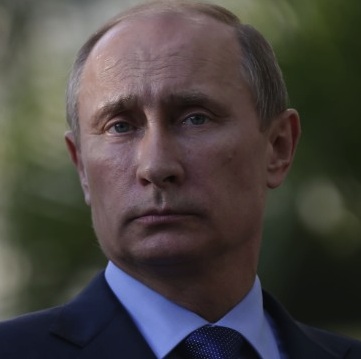
But for a number of reasons having to do with Russian military shortcomings, including the poor morale of the Russian army, command and control failures, and serious logistical problems, that effort fell short. So what options does he have now?
Russia has publicly reduced its military aims in Ukraine. On March 25, Russian General Staff head of military operations Sergei Rudskoi said, “Our forces and equipment will focus on the most important thing, the complete liberation of Donbass.” He went on to claim that this was always the purpose of the war. But even achieving this objective faces problems. For one thing, according to ongoing assessment by the Institute for the Study of War (ISW), reconstituting combat power within units being redeployed to the Donbass region is problematic, given heavy combat losses and poor morale among Russian troops.
GET THE LATEST BREAKING NEWS HERE -- SIGN UP FOR GOLOCAL FREE DAILY EBLASTOne possibility is that Putin will be satisfied with his territorial gains so far and offer a cease-fire in place. Such an agreement would likely resemble the Minsk agreements of 2014-2015, according to which Russia would no doubt insist on its control of Donbass and Luhansk coupled with a pledge that Ukraine would not join NATO.
Some observers believe that Russia has an incentive to accept this outcome since continuing the war will seriously hurt the Russian economy. On the other hand, Ukraine may believe that, despite the costs of the war, it is not in its interest to accept such terms. Indeed, many observers believe such an agreement would be a trap for Ukraine.
But it seems most likely that Putin will double down on his efforts against Ukraine. This likelihood is suggested by his appointment of a new overall military commander in Ukraine.
While this appointment signals an attempt to establish unity of command, the lack of which has undermined the Russian effort so far, it also suggests a more sinister goal: in the words of David Goldman of the Asia Times, to “ruin and depopulate Ukraine, the way Richelieu reduced large parts of Germany to cannibalism during the Thirty Years War.” READ MORE
The new commander, Gen. Aleksandr Dvornikov, is noted for his brutal tactics during the 2015 Russian campaign in Syria, especially the reduction of Aleppo. But Dvornikov is only the latest practitioner of the Russian way of war. One only has to look at the destruction of Grozny, the capital of Chechnya in 1994-1995 for an example. The situation then was similar to Ukraine today: the Russians were stymied in their assault, suffering high casualties. They responded with a massive bombardment of the city, reducing it to rubble. Were the Russians to resort to long-range bombardment of Ukrainian cities, there is little that the anti-tank weapons that NATO is providing to Ukraine would make a difference.
One thing we can say for sure about Russia’s execution of war in Afghanistan, Chechnya, and Ukraine is that the Russian military does not seem at all concerned about the limitations on the conduct of war to which the United States seeks to adhere: the laws of land warfare arising from the just war tradition, including discrimination—distinguishing between combatants and non-combatants—and proportionality—applying only the level of force consistent with military necessity. Americans take it seriously when US soldiers are accused of war crimes and atrocities. For Russia, inflicting civilian casualties appears to be a feature, not a bug.
Putin has also hinted at the use of nuclear weapons, both against Ukraine and NATO. Although such a step is possible, it appears unlikely. First of all, the employment of nuclear weapons would constitute a real “red line” that the United States and NATO could not ignore. Secondly, there are conventional weapons capable of generating blast and overpressures similar to that of a small nuclear weapon, minus the radiation: thermobaric weapons and munitions such as the Massive Ordnance Air-burst Bomb (MOAB). The latter contains some 18,000 pounds of an ammonium nitrate/powdered aluminum gelled slurry detonated by a high explosive booster. It was used against an ISIS tunnel complex in Afghanistan in 2017. We can assume that if the United States possesses such weapons, Russia also does.
We don’t yet know the outcome of the Russo-Ukrainian war. However, history teaches certain general lessons about war. First, those like Putin who have “rolled the iron dice” are encouraged by the appearance of weakness or confusion, a staple of both US and NATO actions recently. Second—a corollary of the first—bluffing is dangerous. Establishing “red lines” but failing to enforce them is a recipe for disaster. The primary danger now is miscalculation. Backing out of the present cul-de-sac will take a great deal of diplomatic skill.