


Whitcomb: Better Places for the Homeless; Somerset Mess; Permanent Pandemic; Guns, Guns, Guns
GoLocalProv
Whitcomb: Better Places for the Homeless; Somerset Mess; Permanent Pandemic; Guns, Guns, Guns

“Before you can learn the trees, you have to learn
The language of the trees. That’s done indoors,
GET THE LATEST BREAKING NEWS HERE -- SIGN UP FOR GOLOCAL FREE DAILY EBLASTOut of a book, which now you think of it
Is one of the transformations of a tree.’’
--From “Learning the Trees,’’ by Howard Nemerov (1920-1991)
“Technology is so much fun, but we can drown in our technology. The fog of information can drive out knowledge.’’
-- Daniel Boorstin (1914-2004), American historian. He wrote this in 1978.
“I’m dubious of Alexa and GPS. It would be a waste of time trying to persuade a young person not to rely so heavily on either, though I’d like to tell them that having too much help makes you helpless.’’
Writer Anne Bernays, 90, in The Boston Globe.
xxx
After the relative stasis of late winter, Nature speeds up now. The first, early-spring/late winter flowers – crocuses, snowdrops, etc. – came out tentatively, but now they pop out in full force and then quickly fade and wilt, to be swiftly replaced by blooms you associate with April, particularly daffodils. Spring peepers serenade you from wet woods. Everything softens. And a couple of days in the 60s start to turn grass in full sun green. You start to think of graduations and weddings, even this year. And the bugs come out.
xxx
The constantly mutating COVID-19 virus may mean that the pandemic is permanent. How to adjust to that? Hit this link:

“Tent cities” of homeless people are all over the place. A particularly noticeable one was the camp just closed down in Pawtucket on the west bank of the Seekonk River to make way for a soccer-stadium project, which might actually get built.
Many, probably most, of the people at this camp are mentally ill. In these places, they might find kindred spirits but they also face such dangers as exposure to the elements, assaults and thefts. And the atmosphere is conducive to alcohol and drug abuse.
These tent cities have been common since the de-institutionalization movement that got going in the late ‘60s, when officials hoped that new psychotropic medications would allow many of the mentally ill to be released from state mental hospitals, saving taxpayers money. But for many mentally ill people, this didn’t work out because they didn’t like the side-effects of these meds for such illnesses as schizophrenia and manic-depression (aka bipolar disease). For that matter, some of these people like feeling “crazy.’’
Or some have not been given adequate guidance on how to use the meds or don’t have a way to pay for them or can’t get to pharmacies to get them.
I think that we need more mental hospitals for long-term care. As for those people, mentally ill or not, who actually prefer to live in settings like tent cities, the states and localities should consider setting aside permanent places for them on public land, or rent space from private landowners, where the “campers’’ could be better monitored by police, social workers and public health agencies. Moveable tent cities pose too many dangers. And be they temporary or permanent, they should not be near regular residential or commercial areas; they are too disruptive.
Folks seeking help with serious mental health and/or substance-abuse problems might want to look at this Rhode Island state Web site to find available spaces at institutions.

New Boston Acting Mayor Kim Janey is both the first woman and first person of color to run “The Hub,’’ and someone quite associated with identity politics.
Let’s hope that in her passion for helping minority group members to benefit more than they have from the city’s vaunted wealth-creation capacity she doesn’t scare away generally publicly spirited companies and individuals who have been instrumental in increasing the city’s and the region’s wealth. Unlike her predecessor, Marty Walsh, the new U.S. labor secretary, who was a private-sector union official before becoming mayor, and who worked closely with the city’s business community, she knows little about business and job creation.
For the sake of this motor of the New England economy, let’s hope that she’s a fast learner of Economics 101.
xxx

Somerset Is Stuck
Another unfortunate side-effect of the Trump regime:
A company called Commercial Development in 2018 spent $8 million to buy, and $20 million for remediation of, 306 acres that had been occupied by the polluting Brayton Point Power Plant, in Somerset. The company has planned to turn it into a well-situated manufacturing, supply and logistics center for the offshore wind-power industry.
But in 2019 the Trump administration, in a sleeping bag with the fossil-fuel industry, blocked indefinitely the development of offshore wind farms for “further review,’’ although these sorts of facilities had been reviewed ad nauseam for years.
Now the Biden administration, which likes green energy, is moving to restart Vineyard Wind and similar East Coast projects. But delay and uncertainty under Trump has thrown a spanner into preparations to install them. It will probably be several years before Commercial Development can start to get wind-power-related income from the site.
So, meanwhile, Commercial Development is trying to obtain enough revenue to cover its purchase, remediation, taxes and maintenance of the site. To do this, it’s been renting out space for scrap metal to be shipped abroad and road salt imported for the use of South Coast communities. Despite the dust, etc., they kick up, they’re cleaner than the old power plant, though their dirt is much more visible.
These activities, especially the truck traffic, have been understandably riling up nearby neighbors. At the same time, I assume that other Somerset people, a bit further away, are happy that the temporary (?) messy operations at Brayton Point mean that Commercial Development will continue to be Somerset’s biggest taxpayer. The company says that the town is getting about $600,000 a year in property-tax revenues but that the property has the redevelopment potential (from the wind industry) of $1 billion, which could ultimately bring in $6 million a year in taxes to Somerset. That’s perhaps exaggerated but the contribution is expected to be very big.
The biggest lesson I take from all is the reminder of how difficult it is to build major infrastructure in pathologically litigious and red-tape-bound America, and the grotesque instability of public policy compared to other economically advanced nations, including China, our greatest rival.
To read more about the Brayton Point situation, please hit this link:
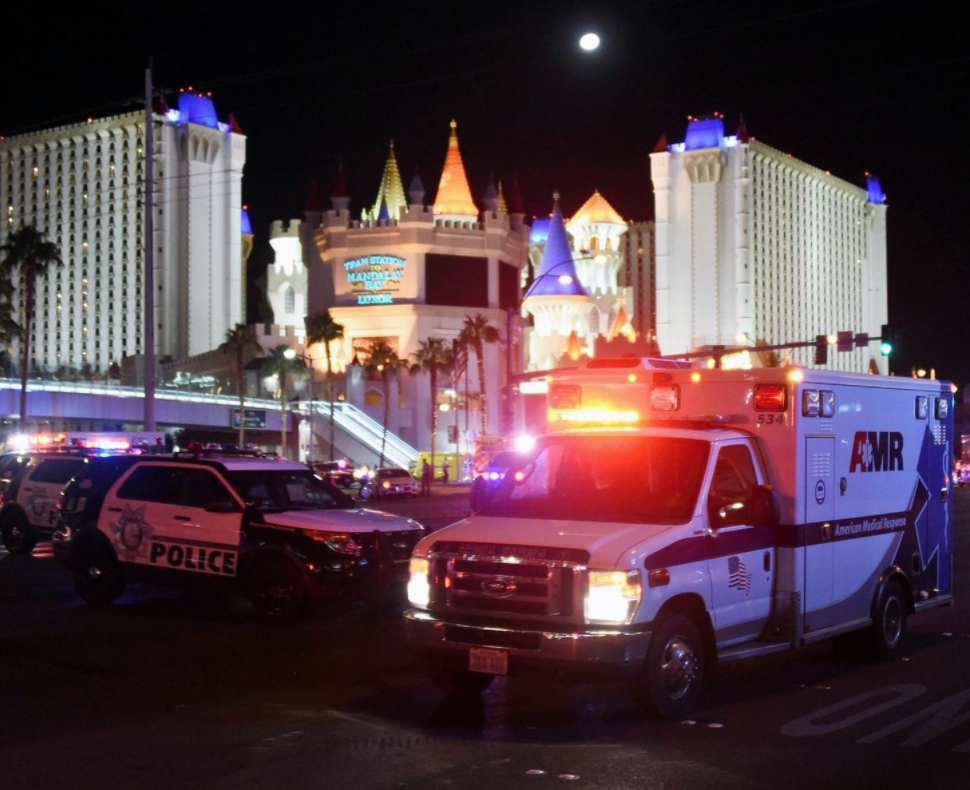
America has so many gun deaths not because we’re so violent, though God knows there’s plenty of anomie to go around to help produce violence. It’s mostly that it’s so easy to get guns, including those military-style weapons meant to kill as many people as possible as fast as possible. The Founders, who wanted to support “well-regulated” state militias via the Second Amendment, would have been flabbergasted by current right-wing interpretations of the amendment, aided and abetted by heavy lobbying by the very lucrative gun industry.
Of course, the weapons beloved by American mass murderers didn’t exist in the 1780s. The typical firearms then were muskets and flintlock pistols. They could hold a single round at a time, and a skilled shooter might get off three or four rounds in a minute of firing, and these guns weren’t very accurate.
It’s no accident that the states with the lowest per-capita gun deaths --
Massachusetts, Hawaii, New Jersey, New York, and Connecticut – are those with the most serious gun laws. These are statutes that add significant state regulations to federal law, such as limiting access to particularly dangerous types of firearms -- e.g., “assault rifles” -- setting minimum safety standards for firearms, requiring a permit to buy them, and restrictive laws governing the open and concealed carrying of firearms in public.
I grew up in the ‘50s and ‘60s with various guns around the house -- a couple of shotguns (for bird hunting), a .22 rifle (which I used a few times) and a revolver carried by my paternal grandfather when he was taking a shoe company’s money from Brockton to a bank in Boston before World War I. And I just glanced at a Civil War rifle my wife inherited that’s leaning against the wall next to where I’m typing this. (We’re not sure which side used it; it’s from Kentucky, a Border State.) Fine, but the arsenal of war weaponry now in the hands of unstable people would have been inconceivable back then.
The poor police. They have to work in a society where crazy people and criminals are sometimes better armed than they are, not to mention having to put up with the inane, and now muted, calls to “defund the police.’’
And nothing will change any time soon. The Republican/QAnon Party and the NRA are the same organization.
Delayed Deliveries
Trump donor/disciple Louis DeJoy continues to try to slash even more services at the U.S. Postal Service, where he’s already done a lot of damage. We can only hope that the agency’s board fires him as soon as possible.
Poorer people are more vulnerable to reductions in mail service, which may explain some of Mr. DeJoy’s lack of interest in the effects of his program, which treats the Postal Service as just another company.
The USPS should not be expected to make money, though efficiencies should always be sought if they can be implemented without service cuts. Rather, it is charged with among other things, helping citizens and real businesses to make money, and in some cases, keeping some individuals alive – consider the shipping of medications. Too many people have received late deliveries of their life-saving meds because of Mr. DeJoy’s actions.
Lots of people have been moving to increasingly crowded Florida for the winter weather and tax structure. But almost as many have been leaving, reports The Wall Street Journal. Prices are getting too high for many middle-class people, and many have found the niceness of February is more than offset by the state’s Congo-like summers. And some have found its flatness and multitude of strip malls depressing, and its high urban crime rates anxiety-causing.
Please hit this link to read The WSJ article:
Trying to Restart Alliances
The Biden administration is quite right to prioritize rebuilding the foreign alliances torn asunder by Trump. It’s making a renewed commitment to NATO as the centerpiece of Western efforts to thwart the aggression of Vladimir Putin’s increasingly ruthless Russia. And it’s firming up the Quadrilateral Security Dialogue (aka “The Quad’’) – the informal alliance of America, India, Japan and Australia meant to counter China’s expansionism. Together, they are considerably more powerful than Xi Jinping’s increasingly Orwellian-surveillance dictatorship.
Still, whatever these efforts, some of the biggest dangers to the United States are internal. Consider the extreme litigiousness and legalism that blocks long-needed public infrastructure and other projects; the disregard of science and indeed of easily ascertainable facts; the neo-fascist takeover of the national Republican Party and of some of “evangelical” Christianity; the emphasis on one’s ethnic, sexual and other personal identity instead of issues that apply to everyone; the time and energy wasted on such trivial, idiotic issues as whether a private company should keep printing certain Dr. Seuss books, the great time suck of social media, the fetishization of guns, etc.
These are all signs of a decadent nation in decline.
Enough!?
The pandemic and its acceleration of work at home via Zoom, etc., have led to increasingly loud complaints by those with relentless, if high-paying, jobs in technology and financial firms. They say that the disappearance of walls between work time and personal time is wearing them out. Some people at Goldman Sachs, the ruthless investment bank, for instance, find that they’re working more than 100 hours a week.
Goldman Sachs CEO David Solomon issued a voice message to his employees last Sunday (!): “Let me say to everyone, and in particular to our analysts and associates: We recognize that people working today face a new set of challenges” in work-life matters.
“In this world of remote work, it feels like we have to be connected 24/7. All of us — your colleagues, your managers, our divisional leaders — we see that. We’re here to provide support and guidance. This is not easy, and we’re working hard to make it better.”
But how? A tricky thing is that people who go to work for the likes of Goldman Sachs tend to have an extremely strong desire for the very big pay packages handed out by such Wall Street firms.
Anyway, Jane Fraser, the CEO of Citigroup, for her part, has announced “Zoom-Free Fridays.”
“I know, from your feedback and my own experience, the blurring of lines between home and work and the relentlessness of the pandemic workday have taken a toll on our well-being. It’s simply not sustainable.’’
Did she just notice this? This was a problem well before COVID-19.
Zoom does a number on your eyes. And it’s good to get away from computers more often to clear the mind.
Edmund Wilson as Nature Writer
The journals of the celebrated literary critic, memoirist, historian, novelist, and all-around man of letters Edmund Wilson (1895-1972) are rich with brilliant observations of people who were then, and in some cases still are, famous, as well as the virtually anonymous people he chatted up on his travels; deeply knowledgeable appreciations of literature and momentous historical events; delicious gossip about parties, and rather depressingly clinical descriptions of sex acts. His journals and notebooks have been put together in the books The Twenties, The Thirties, The Forties, The Fifties and The Sixties.
I just finished reading The Forties, and somewhat to my surprise, what most impressed me was Wilson’s very close observation of nature. This ranges from the ponds of Cape Cod (he had a house in Wellfleet), with their colors, textures, smells and the woods and terrain around them, to all sorts of very different places, from deserts to jungles to mountains, around the world. Wilson was terrific in evoking the sense of the seasons and the skies. He was better than Thoreau at this descriptive writing.
Likewise, his descriptions of cities, buildings (including the many bombed-out ones he saw while in Europe at the end of World War II), farms, and other human creations are just superb. He makes you feel you are right there.