


Whitcomb: Attempt at Civic Celebration in Grim Year; Give Cops a Break; Cornell’s COVID Control
Robert Whitcomb, Columnist
Whitcomb: Attempt at Civic Celebration in Grim Year; Give Cops a Break; Cornell’s COVID Control

“If there’s ice in November that will bear a duck,
There’ll be nothing after but sludge and muck.’’
GET THE LATEST BREAKING NEWS HERE -- SIGN UP FOR GOLOCAL FREE DAILY EBLAST-- Old adage
“He steers her like a baby carriage.
Places each jointed part
in the seat. She stays
where’s she’s put,
all but her mouth, which neither
of them can control. …’’
-- From “Old Couple at Howard Johnson’s Soda Fountain in Manchester, New Hampshire,’’ by Carole Simmons Oles
“Political nature abhors a vacuum, which is what often exists for a year or two in a party after it loses a presidential election.’’
-- Conservative columnist and book author George Will
“Elections belong to the people. It's their decision. If they decide to turn their back on the fire and burn their behinds, then they will just have to sit on their blisters.”
― Abraham Lincoln
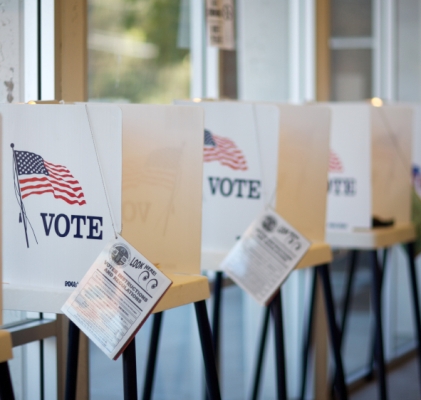
This year there’s an urgency unprecedented in most of our lifetimes, with a national Republican Party having been taken over by a ruthless, desperate, neo-fascist mobster and his sycophantic acolytes. I would have preferred a Democratic candidate like Montana Gov. Steve Bullock, but any Democratic candidate would have gotten my vote this year given the state of the GOP. So, Joe Biden will do. (It’s sad that honest, able, highly successful and old-fashioned moderate Republican governors such as Charlie Baker are no longer viable potential candidates for the presidency in today’s Republican Party.)
We’re fortunate that in New England we’re much less likely than in other parts of America to be confronted at polling places with screaming, gun-toting Trump thugs -- some presenting themselves as “militias’’ -- seeking to intimidate people waiting to vote.
Given the character of Trump and his enablers I make no predictions on who will win. They’ll engage in as much vote suppression as they can get away with. Pro-Trump Russian and other misinformation and disinformation efforts will continue. If that doesn’t work, they can always appeal to a Supreme Court that they’ve packed.
Trump, et al., will do anything to maintain a regime that has represented only a minority of Americans. Consider the composition of the Electoral College and the Senate and the GOP operatives who run the Supreme Court. Indeed, such minority rule has been the norm for most of two decades.
And even if Trump loses and agrees to go peacefully, his voters, many driven by social resentment and economic anxiety and getting their “news’’ on Fox News and right-wing talk radio, will continue to follow this carnival barker’s rants with intense loyalty. Maybe he’d set up his very own cable TV network.
xxx
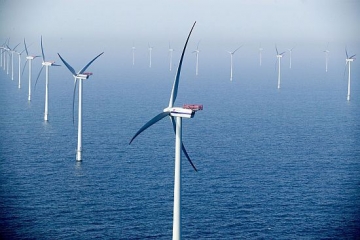
It’s always good to see the Ocean State taking more advantage of, well, the ocean. There are two developments worthy of note. One is Gov. Gina Raimondo’s plan, working with National Grid, for Rhode Island to get 600 more megawatts of offshore wind power, as part of her hope to get all of Rhode Island’s electricity from renewable sources by 2030. That’s probably unrealistic but a worthy goal nonetheless. Certainly, it would be a boon for the state’s economy to have that regionally generated power. Ultimately, with the development of new advanced batteries to store electricity, it would lower our power costs while making our electricity more reliable, helping to clean the air, slowing global warming and providing many well-paying jobs.
There is, however, the danger that if the Trump regime stays in power, it will slow or even sabotage offshore-wind development because it’s in bed with the fossil-fuel sector.
Then there’s the happy news that the Rhode Island Commerce Corporation plans to buy more land for the Port of Providence. This would come from a $70 million port-improvement bond issue that voters approved in 2016. $20 million of that is for expanding the Port of Providence. Considering its geography and location, Rhode Island for more than a century has used far too little of its potential to host major ports, with of course Providence and Quonset being the main sites.
Observers see considerable synergies between those ports and big offshore-wind operations off southeastern New England, much of which could be served from Rhode Island, as well as from New Bedford.
Please hit these links to learn more:
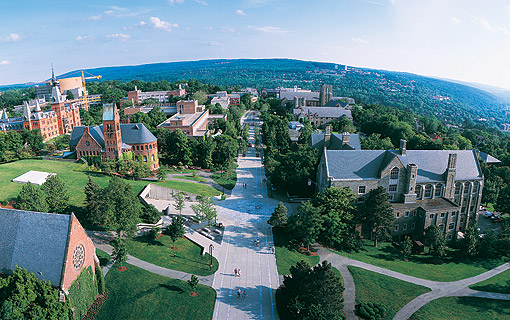
My July 5 column discussed Cornell University’s plans to control COVID-19 on its sprawling campus, in Ithaca, N.Y., in the Finger Lakes region.
Now, some months later, Cornell University may have big lessons for colleges and universities. Because of the university’s relentless testing, as often as twice a week, and contact tracing, facilitated by its decision to ban off-campus student housing this year and thus maintain stringent monitoring of student behavior, Cornell’s test-positivity rate is tiny – 0.006 percent in a recent week.
Cornell is big, with about 23,000 students, about 15,000 of them undergraduates, along with about 15,000 faculty and staff. But the university had a total of only 149 COVID cases through late October, which was an even better result of its measures than the university had hoped for. College-dense New England should study Cornell’s approach.
Of course, winter is coming and winters are usually long, cold and snowy in Ithaca. That means more people inside most of the time, which raises the risks of spreading the virus. Let’s see how things look this winter.
Bloomberg reports that Cornell “has relied on an emerging technology known as pooling to process five samples at once, with hopes of eventually getting to 24 at a time. That lowered the cost to $12 a test, and let the {Cornell} lab save chemicals called reagents that are in short supply nationwide. Testing and several other virus measures are expected to cost Cornell about $10 million for the semester.’’
To read more, please hit this link:
China is also superb at controlling the spread of COVID-19, but it uses police state tactics.
xxx
The biggest reasons for Rhode Island’s COVID surge: a dense population, including a large low-income sector, lots of college students and location in the Northeast Corridor between two big metro areas.
When will the situation get substantially better? After reading various epidemiologists’ guesses, I’d say next summer, assuming that there’s a vaccine by sometime in the next several months, and that the anti-vaxxers can be kept at bay.
xxx
Overloading the Police
There’s something to be said for those fliers cropping up in Providence that say “Don’t Call the Police. Scan for Alternatives’’ around a bar code. The Providence Journal’s Madeleine List wrote about this in the Oct. 27 paper.
If you scan the QR code with your smartphone you’ll be taken to a Web site that lists agencies that city residents can use to obtain assorted services, such as for housing, mental health and substance-abuse issues. These are things that the police don’t necessarily have to be brought into.
Unfortunately, Ms. List’s article says, the list also includes domestic violence. The police need to handle that.
The main point, to me, is that police are called upon all too often to act as social workers rather than as anti-crime and public-safety personnel. There’s no way that cops can be trained and otherwise resourced to adequately address all the problems that they’re unfairly called upon to face these days. School personnel are also increasingly asked to serve as social workers, especially in places with lots of dysfunctional and impoverished families, many with only one parent around – the mother. The more of these functions that can be spun off to specialized agencies the better.
Of course, some of these problems are intertwined. Much criminal behavior is caused by perpetrators’ mental illness. So, you sometimes need to bring in the police and social services.
There’s good news – so far – on the flu front. The Centers for Disease Control and Prevention, in a weekly report, says that flu activity remained low in the United States through the middle of October. Probably the greatest fear of the health-care sector now is that currently surging COVID-19 cases, combined with a flu epidemic, would overwhelm hospitals, which is some places are already on the edge.
Encouraging mask wearing to stem COVID should also reduce the spread of flu and the common cold this season.
xxx
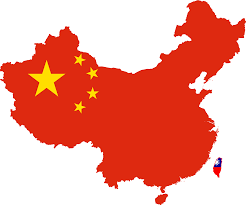
If Biden is elected president, the first thing that the U.S. should do is to strengthen its ties with Asian and Pacific Basin nations feeling threatened by China. It could start by rejoining the Trans-Pacific Partnership, a trade group that the Trump regime pulled out of in a nationalist/isolationist outburst, further consolidating the image of the United States as an unreliable ally.
One of the unofficial reasons for creating the TPP was to reduce the signatories' dependence on Chinese trade. American membership would have tended to encourage the other nations in the agreement to increase trade with us instead of with China and given them more backbone in confronting Chinese imperialism in the South China Sea and elsewhere.
We also need a much expanded version of the old Southeast Treaty Organization (SEATO) as another bulwark against Chinese aggression. It would be a kind of NATO.
xxx
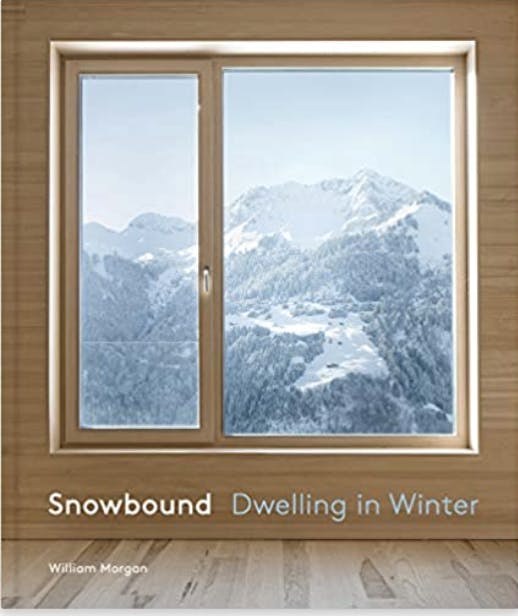
As the press release notes:
“From the ski slopes of Utah to the frigid tundra of northwestern Russia, Snowbound celebrates contemporary design in cold climates with a focus on sustainability. Tailor-made for architects, designers, snowbirds, and aspiring second-home owners, this tour of twenty dwellings is equal parts escapist photo essay and practical sourcebook, with immersive photography, architectural plans, and location, climate, and building-systems data.’’
That some of these houses were put up in preposterously harsh and remote places adds to the entertainment.
But global warming rears its head. Mr. Morgan writes:
“Candidates for Snowbound in Canada, Australia, and Vermont had to be eliminated as recent winters came with less-than-usual snowfall. In the middle of the winter in the Southern Hemisphere, there was insufficient snow in the Andes, more than a thousand miles south of Buenos Aires, to photograph a house as it would have looked only less than a decade ago.’’
But what about summers at these buildings?