


Whitcomb: N.E. Island Idylls; Aquidneck Acreage; Better Batteries; Beautiful Bogs
Robert Whitcomb, Columnist
Whitcomb: N.E. Island Idylls; Aquidneck Acreage; Better Batteries; Beautiful Bogs

“Enjoy thy youth, it will not stay;
Enjoy the fragrance of thy prime,
For oh, it is not always May!
Enjoy the Spring of Love and Youth,
To some good angel leave the rest;
For Time will teach thee soon the truth,
There are no birds in last year's nest!’’
-- From “It Is Not Always May,’’ by Henry Wadsworth Longfellow (1807-82), New England poet and professor
GET THE LATEST BREAKING NEWS HERE -- SIGN UP FOR GOLOCAL FREE DAILY EBLAST
‘“I only drink to make other people seem interesting.’’
-- George Jean Nathan (1882-1958), American magazine editor and drama critic
“Capitalism without bankruptcy is like Catholicism without hell. Markets work best when participants have a healthy fear of loss. It shouldn’t be the role of the Fed or the government to eradicate it.”
-- Howard Marks, co-founder and co-chairman of Oaktree Capital Management, on the pandemic bailouts, which, yet again, show how the federal government too often socializes big corporations’ risk while profits remain privatized – treating the earnings of big, powerful companies as the rightful property of shareholders (especially big institutions and companies’ senior executives) while the public must cover the losses. Such bailouts weaken the economy over the long run, and help explain why economic growth before the current recession was so slow for so long.
Meanwhile, the federal COVID-19 stimulus/rescue package includes massive tax breaks that will greatly benefit the Trump and Kushner families, Treasury Secretary Steve Mnuchin and other very rich folks -- of both parties, of course. Senate Majority Leader Mitch McConnell was the chief congressional enabler. And so it goes….
For a useful discussion of this, please hit this link:
Leafing Out
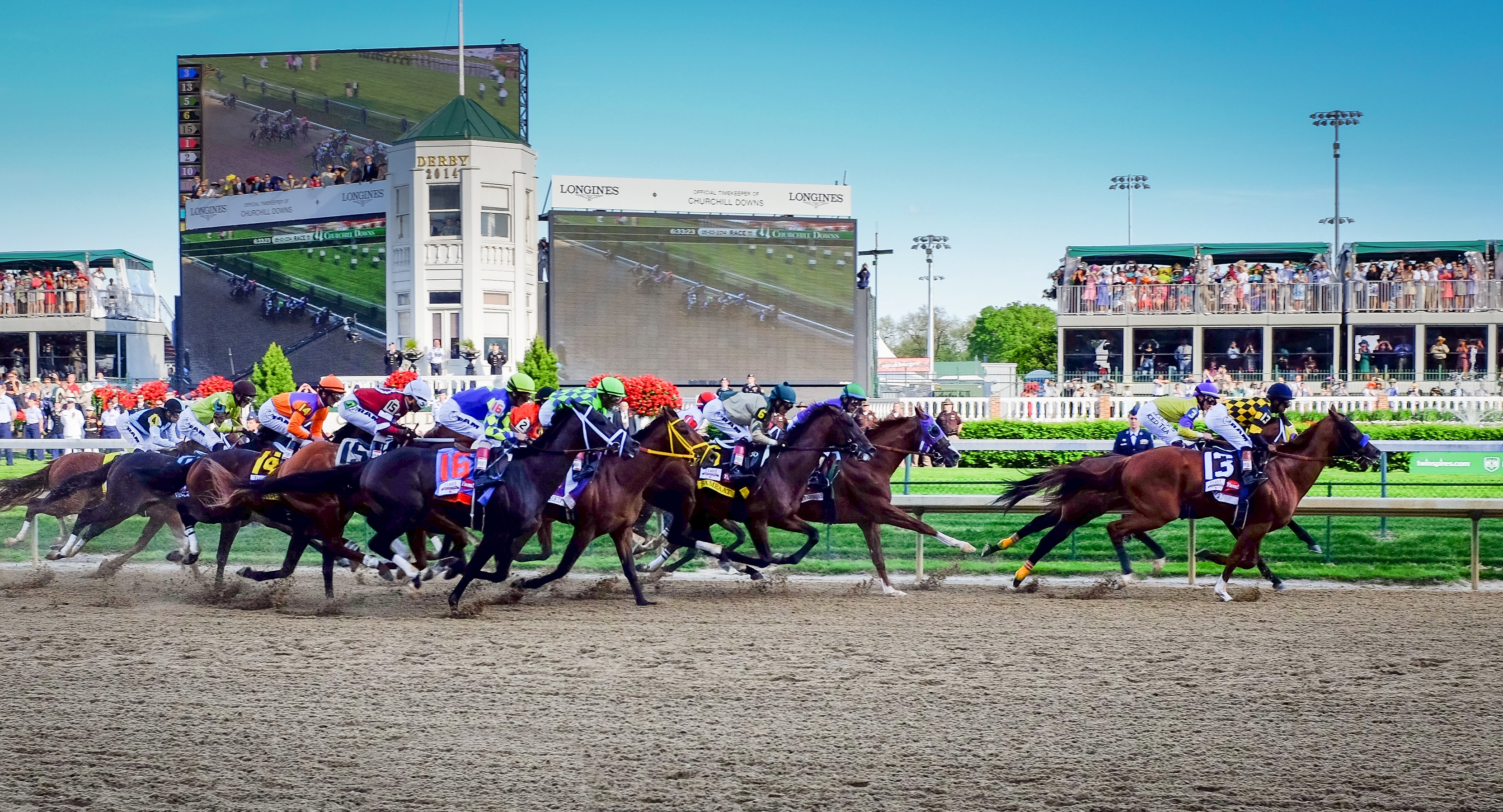
To me, May is the best month in New England. Its freshness, increasingly lush greenery, vivid flowers and mild-to-warm temperatures can be paradisiacal on some days. And it includes the Kentucky Derby! Of course, this May will be weird, especially with school schedules asunder. Among other things, kids’ anticipation of summer has been diluted.
xxx
New Englanders like to visit their many islands in the summer, especially Block Island, Martha’s Vineyard, Nantucket and those seemingly innumerable islands along the Maine Coast. Even visiting a big if often over-crowded island such as Martha’s Vineyard can give a nice sense of escape, almost like going to another country. Unlike a lot of travel, just getting there, mostly by boat, is part of the pleasure. On the other hand, this year many of us feel that we’ve long been trapped on our own little islands on the mainland.
xxx
Crowded Aquidneck Island needs to protect its remaining bucolic open space. Thus, it’s good to learn that the Aquidneck Land Trust is hard at work trying to raise money to conserve 7 ½ acres of Glen Farm, in Portsmouth, in what passes as the partly urban island’s countryside.
Better Batteries?
We in the Northeast tend to be more enthusiastic about renewable energy than most Americans, in part because we tend to be more educated, including about global warming, and also because there’s no fossil fuel to be extracted in our region. But a big hurdle is boosting the capacity to store energy from solar- and wind-power facilities.
And so it was good to hear that Framingham, Mass.-based Ameresco has completed Phase 1 of Defense Department-funded research on flow battery technology as an alternative to lithium ion batteries, which degrade over time. The hope is that flow batteries may be more efficient than lithium ones and thus reduce the need for, say, diesel generators (with their pollution) used in microgrids. These new batteries might also cut utility bills.
Tart Triumph
With New Englanders looking to expand local agriculture, and make the region a little less dependent on supplies from far away, the cranberry industry long concentrated in Southeastern Massachusetts is a good model of how to operate. (Current food-supply-chain problems caused by the pandemic are a reminder of the perils of over-dependence on far-away agribusinesses.) The Sustainable Agriculture Initiative has recognized the Ocean Spray cooperative, which represents about 65 percent of the Bay State’s growers, as engaged in sustainable farming.
Ocean Spray said:
“SAI validated Ocean Spray’s sustainable agriculture program and on-farm practices at a representative number of its farmer-owners’ farms against the FSA’s [Farm Service Agency] 112 questions, which measure farm sustainability holistically from soil health, to water conservation practices, to health and safety of farm workers and local communities.’’
The co-op is also working with the National Geographic Society to support the expansion of sustainable agriculture around the world. Ocean Spray said it “will support National Geographic fieldwork across the globe to aid in agriculture practices that help preserve the health of the planet. The field work includes projects such as bee-friendly agriculture, automated land-use, insect collection and biodiversity discovery, and global mapping of center pivot {irrigation} agriculture.’’

First off, let’s reject the plans promoted by some officials to keep current draconian social-distancing rules in effect for many months. The damage – economic and otherwise, including health – from these rules looks increasingly ominous. Focus on protecting the elderly and those with underlying ailments (often the same people) – the people who have been proven to be by far at the most risk of COVID-19 -- and open up America as soon as possible (by late June would be preferable) for everyone else. Meanwhile, test and isolate carriers faster. And prepare to wear face masks in many public places for a long time to come. And wash your hands.
As journalists and others scrounge around for things to say about the pandemic, among the most common is the assertion that “everything will change.’’ Well, a lot will change, for a while, but then human nature will reassert itself and we’ll resume our wishful-thinking ways – indeed faster than you might think because of the relentless acceleration of human life and the forgetfulness that goes with it. For example, we’ll eventually again cut planning and spending needed to prepare for future “black swan’’ disasters. And Americans will probably remain slothful when it comes to maintaining parts of their public health infrastructure. After all, that might require raising taxes!
Anyway, some unexpectedly good things will come out of COVID-19. One is that many cities, in response to unfortunate threats of open-ended social distancing, and to provide more space for exercise, will close off some streets to vehicular traffic to all but walkers and bicylists. This will be particularly important as many people, for a while, avoid public transportation and are tempted to return en masse to heavily polluting automobile travel. There’s a correlation between air pollution and vulnerability to COVID-19 symptoms.
Of course, the disease will lead some people to decide to leave urban life, especially in the biggest cities, and move to car-dependent suburbs and exurbs. That will cause housing costs to fall in cities, a deflation that eventually, over time, will lure back many people, especially the young.
People are not (yet) composed of computer chips. They want and need in-person interactions, whatever the hype about Zoom, telemedicine and so on – hype pumped up by tech companies. A vaccine, of course, would speed `four liberations,' until the next virus comes along. And creativity will continue to be most intense in urban areas because of their density of social interactions.
But we’ll be seeing soon a lot more empty storefronts and far fewer of those sometimes quirky small stores, not to mention restaurants, that make city life so alluring. The current extreme social-distancing rules (assuming that they continue for months) will drive many of these small firms out of business; indeed, some have already folded. Just consider the effects of rules that indefinitely limit restaurants and shops to, say, only 50 percent of the number of customers who used to patronize them! That would close down many, perhaps most, permanently, leaving many people destitute. Destitution can kill.
And sterile national chains will become even more dominant – until a bored urban public starts to support new, locally based enterprises and we enter another cycle of urban renaissance.
But maybe if draconian social-distancing rules are soon relaxed, as they should be, we won’t have to wait that long.
I notice, by the way, that many of the people demanding that we work from home are white-collar, often affluent types who can easily do so. How about more consideration for those who must show up in person to work at stores, restaurants, factories, etc.?
xxx
In what must be horrifically complicated jobs now, the governors of Rhode Island, Massachusetts and Connecticut continue to do very sound fact-based work in the crisis.
The video above presents a biostatistician’s very contrarian view of the response to the COVID-19 outbreak:
The interviewer, John Kirby, summarizes it thus: “In this highly charged follow-up interview, Knut Wittkowski says his initial claim has been vindicated: the lockdowns -- always a dubious proposition for a respiratory virus -- came too late in the U.S. and elsewhere, and were therefore even worse than useless. By turns emotional and darkly comic, Wittkowski ranges across all the essential topics of the crisis, and gives answers you are unlikely to see in the major media. Not to be missed.’’
Another unanticipated effect of the pandemic may be that it leads many previously screen-addicted young people to seek more in-person encounters because their mandatory online schooling has made even these young subjects of the Digital Kingdom sick of such creepy artificiality.
xxx
xxx
I must say that given the brutality to animals slaughtered to supply the meat business, the closing of some meat-processing plants is not a bad thing, except of course for the poor employees.
xxx
When companies, especially now, tout the alleged “convenience’’ for us of only sending us documents via the (hacker-populated) Internet and not by snail mail, it’s partly about their cutting costs by forcing us to print out our important stuff at our cost. It reminds me of what my late friend Bill Ruger, who ran the Sturm-Ruger gun company, used to say about the expression “See me at your earliest convenience’’:
“That means at your earliest inconvenience.’’
Paper records are safer.
Mail Maelstrom
Trump and some other bogus “conservatives’ seem to want to kill the U.S. Postal Service. As I noted here a couple of weeks ago, in the case of our leader it’s because he’s hates Jeff Bezos, the Amazon mogul/monopolist whose Washington Post insists on reporting on him in more rigorous ways than Pravda covered Stalin. Amazon is a big Postal Service customer. Trump has suggested forcing the Postal Service to boost its delivery prices so much so that they might exceed those of UPS and FedEx. But then, the GOP, especially since the rise of the anti-government Tea Party (anti-government except for Medicare and Social Security, which disproportionately benefit its members), has long been gunning for the service, which goes back to the writing of the U.S. Constitution.
The share of the nation’s workers represented by federal employees has fallen to record lows in the past decade, which is one reason that service has declined at some agencies – e.g., even before the pandemic you often had to wait more than an hour to ask a question of an IRS agent on the phone. Now, during the COVID-19 crisis, the agency takes no calls. Of course, Tea Party types hate the IRS, but how do they propose to fund the government? And remember, it’s Congress, not the IRS, that makes the tax laws. Then there’s the sorely understaffed Social Security Administration.
The argument is that the Postal Service should always be profitable. But the agency, like, say, the Defense Department, the Food and Drug Administration and the Interstate Highway System, is a necessary public service that also helps tie together the country. It’s a mostly reliable entity that’s essential for the private sector – both individuals and businesses.
Look at the 2006 law pushed through by the GOP that requires the Postal Service to prefund its employee retirement health-care cost for 75 years into the future! Imagine a private company having to deal with that. And do we really want to have the mail controlled by private companies (which might be big campaign contributors)?
There are some services that only government can provide on a broad and coordinated enough fashion to adequately serve the public outside the vagaries of the market.
Beltway Brothel
For a classic case of Washington, D.C., careerism, watch former G.W. Bush administration hack Ron Christie’s oily and real-information-free blather as a talking head on BBC America and other outlets as he tries to position himself for another government job, or at least more GOP consulting gigs, while trying to cover his posterior if those things don’t happen. It’s too bad that the BBC, etc., has this character on so often, apparently for “balance’’ and because he is always available. His like reminds me of what I have always disliked about these “Beltway Bandits.’’
Mr. Christie gives Mike Pence a run for his money in the Sycophant Sweepstakes.
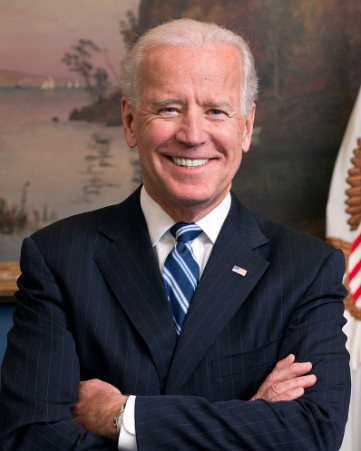
I have no idea what to believe in the contradictory stories about Tara Reade’s allegation that Joe Biden sexually assaulted her back in 1993. Her tale, of course, doesn’t begin to approach the weight of the seemingly endless series of sexual-misconduct cases against Putin’s person in the Oval Office. In any case, I wish that the news media and the Democratic Party establishment had given more respect and time to people such as Montana Gov. Steve Bullock and Minnesota Sen. Amy Klobuchar who would have been far stronger candidates than the aged and baggage-heavy, backslapping Biden in the general election.
Whatever, our sociopathetic and incompetent (except as a demagogue) president continues to pose a grave threat to American national security, as even many Republicans terrified of his endless thirst for vengeance privately acknowledge.
Venezuelan Refugees
Is the U.S. ready to deal with the geopolitical and humanitarian effects of the quickening collapse of Venezuela caused by the collapse of oil prices, which might send millions of refugees streaming in our direction? The nation’s dictator, Nicolas Maduro, has shown himself willing to do just about anything to stay in power. Like….don’t be paranoid!
Big, Strange, Windy, Wet Place
Robert Finch’s exploration of the big, beautiful and remote island of Newfoundland in his essay book The lambics of Newfoundland: Notes From an Unknown Shore is a marvel of nature and culture writing.