


Whitcomb: Hong Kong’s Courage; Higher Is Fine With Fane; Wind-Farm Standardization; WooSox & Encore
GoLocalProv
Whitcomb: Hong Kong’s Courage; Higher Is Fine With Fane; Wind-Farm Standardization; WooSox & Encore

Than wish a snow in May’s new-fangled mirth;
But like of each thing that in season grows.’’
-- From Shakespeare’s Love’s Labors Lost
GET THE LATEST BREAKING NEWS HERE -- SIGN UP FOR GOLOCAL FREE DAILY EBLAST
“Americans cleave to the things of this world as if assured that they will never die…. They clutch everything but hold nothing fast, and so lose grip as they hurry after some new delight. An American will build a house in which to pass his old age and sell it before the roof is on.’’
-- Alexis de Tocqueville (1805-59), the Frenchman political scientist, historian and diplomat who wrote the classic book Democracy in America, from which this quote is taken.
"At a party given by a billionaire on Shelter Island, the late Kurt Vonnegut informs his pal, the author Joseph Heller, that their host, a hedge fund manager, had made more money in a single day than Heller had earned from his wildly popular novel Catch 22 over its whole history.
"Heller responded, 'Yes, but I have something he will never have ... Enough.'"
-- John Bogle, the late founder of Vanguard, the mutual-fund company, in a 2007 address at Georgetown University’s business school

Ready or not, the holiday season, which started around Halloween, is now at its industrial strength, with consumers willing to deepen their debt to accumulate well-marketed stuff, much of which, when adjusted for inflation, is cheaper now than similar stuff was 30 years ago. Thank globalization and factory automation.
In no other time of the year do so many memories of stages of life crowd in on us, from our recollections of candied early childhood to boisterous, anxious youth, to harried parenthood and ruminative old age, of relatives and friends still with us, and those departed.
Speed for the Sake of Speed
Americans’ obsession with speed for the sake of speed plays itself out depressingly in Amazon’s distribution centers, where workers ruin their health to keep up with management demands to move faster and faster to get deliveries to impatient consumers, especially in the Christmas season. It’s looking a bit like the working conditions in late 19th Century textile mills. Soon thereafter, lots of this stuff will be in landfills.
Yes, I know many people are desperate for these jobs, which Amazon takes full advantage of.

Let us give thanks for the courage of the people of Hong Kong, a former British colony, for overwhelmingly voting for pro-democracy candidates in local district council elections instead of those affiliated with China’s Orwellian dictatorship/surveillance state. The people decided that freedom is worth more than prosperity coupled with tyranny.
Hong Kong citizens acted in the face of a regime that runs huge concentration camps and uses all the technological tools available to try to control its subjects, including Big Brother cameras all over the place, artificial intelligence and facial-recognition software.
The Hong Kong vote is a direct challenge to dictator Xi Jinping, who is closely overseeing Beijing’s accelerating efforts to quash dissent. The regime is a bizarre mix of fascism, state capitalism and old-fashioned Stalinist communism. But even with the regime’s massive censorship, the word of what happened in the Hong Kong elections will eventually filter into the farthest reaches of China, encouraging a few more brave souls to speak out for freedom.
Still, the regime places its preservation of near-totalitarian power above all else, even over the continuation of economic growth. Will it soon find the drive for freedom and democracy in Hong Kong an intolerable model for the rest of China and send in the troops?
Meanwhile, while Donald Trump has not shown much respect for democracy in America he has at least signed legislation, very popular in Congress, backing the anti-Beijing protesters in Hong Kong. Thank you.
Apple Does Vlad’s Bidding
Apple has knuckled under to Russian demands to show the Crimean peninsula, which Vladimir Putin had his troops invade and steal from Ukraine in 2014, as part of Russian territory on Apple Maps and Weather apps used within Russia; the change apparently is on devices using the Russian edition of Apple’s App Store, the BBC reports. However, these apps don’t identify Crimea as part of any country when viewed from outside the dictatorship. Crimea is part of Ukraine! As usual, we can depend on big American tech companies to be amoral.

GoLocal reports that developer Jason Fane’s proposed tower in Providence would be 55 feet higher – at 550 feet --- than previously proposed and have a 20 percent increase in the number of residential units – to 500 units. This may mean that Mr. Fane and his associates think that the project could be more successful than they had thought a few months earlier – if it’s ever built. It’s late in the business cycle….
Fane’s group says that, despite the strenuous opposition of some rival real-estate developers/operators and the Providence Preservation Society, “The State Historic Preservation Officer concluded that the project will not diminish or otherwise adversely affect the historic character, significance, integrity or National Register eligibility of any of the listed properties in the project's area of potential effects.”
Will “Hope Point Tower’’ draw the sort of international flight capitalists who have gone to such big cities as Boston, New York and San Francisco? Russian and Chinese oligarchs? And how many locals have signaled interest in living there, in part because of what would be its spectacular views? Or are they keeping silent so as not to offend some friends. The project does seem to be politically incorrect.
To read more, please hit this link:

Predictability and standardization are generally sought by businesses, large and small. Thus it should be good news that five companies seeking to set up offshore wind-turbine farms off southern New England have agreed to a common layout for their projects: a standard east-west orientation, with each turbine a nautical mile apart. That’s mostly to try to satisfy fishermen, some of whom express the (exaggerated) fear that the wind farms would reduce their ability to maneuver.
The five companies are Vineyard Wind, Eversource Energy, Mayflower Wind, Orsted North America and Equinor Wind.
The Trump administration, in thrall to the Red State-based fossil-fuel industry, seems to be using some fishermen’s complaints as cover in trying to stop some big renewable-industry projects, which the regime, as with “green energy’’ projects in general, associates with Democrats.
An irony in all this is that the supports for turbine towers act as reefs that attract fish.
The long debate about offshore wind farms continues as signs rapidly multiply that global warming caused by burning oil, gas and coal is accelerating, along with the damage it’s doing, although most people are not yet concerned enough about the crisis to push for serious political and policy action to reverse it. Some of those actions would indeed be quite inconvenient.
Bring Your Own Bags
More and more communities, mostly in Blue States, notably New England, are banning one-time-use plastic shopping bags because of the environmental damage they do, both in being made (from oil) and in the mess they make in the environment after they’re discarded. But they’re being replaced by paper bags, whose manufacture requires a lot of fossil-fuel burning and, of course, taking down trees. It would be much better if we got into the habit of using permanent reusable bags, as is common in much of the rest of the world, which lacks Americans’ wasteful habits.
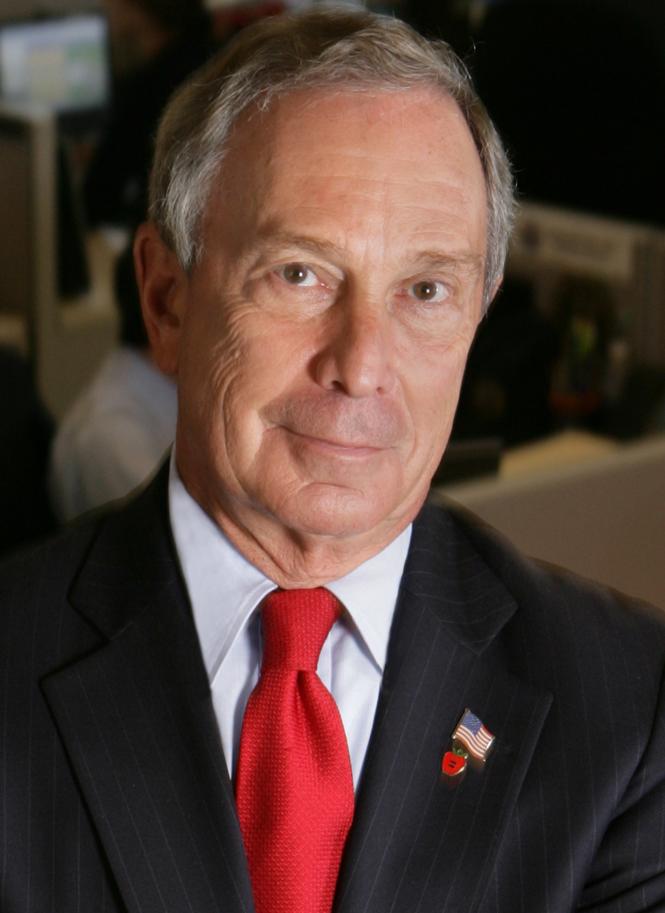
A goal of patriotic Americans should be to end the Trump regime. That means, of course, having a Democratic candidate who can win the Electoral College next November. Ego trips by the likes of former New York City Mayor Michael Bloomberg, who recently announced he’s running for president, don’t help, whatever his record of high competence and integrity -- two qualities that are ominously less important than they used to be to millions of Americans. Yes, Bloomberg, like Trump, could surprise many of us and win but that seems very remote.
It would be better for the Democrats – and the country – if Mr. Bloomberg used his fortune to promote someone like the under-funded but impressive moderate Democrat governor of Montana, Steve Bullock, for the nomination rather than wasting it on his own campaign. As I’ve written, I think Mr. Bullock, from a Red State, would wallop Trump in the general election. And/or the mega-billionaire former mayor could pour money into U.S. Senate races, victories in which could at least curb Trump’s ability to name judges if he’s re-elected.
Rural Broadband
A model for rural areas of southern New England?
Smaller communities in New Hampshire (which has lots of very small and rural towns) may soon be allowed, under state legislation, to create multi-town districts to be used to set up broadband systems for the Internet. The legislation is partly based on a law – apparently the only one like it in America -- that mostly rural Vermont enacted in 2015. The structure of the New Hampshire districts would be similar to the state’s sewer districts.
The idea is that these districts will address the problem that a small town might not be able to attract an Internet service provider on its own.
To learn more, read this Governing.com article:
Rockweed Wars
The Boston Globe has published an article on a struggle on the Maine Coast between some coastline property owners and people harvesting that bubbly brown seaweed called rockweed (it grows on rocks) in the area between high and low tide. Rockweed is an increasingly valuable commodity used for fertilizers and food products. Its expanding harvesting raises some interesting issues about the rights of property owners vs. those who want to gather stuff from what fishermen and many others like to see as “the commons.’’
Complaining property owners don’t like the noise of rockweed harvesters operating powerboats and mechanized equipment to remove the seaweed from rocks that might be only a few yards away from shoreline houses, more than a few owned by affluent summer people. And they and some ecologists complain that extensive stripping away of rockweed hurts the coastal environment. They say the harvesting, now a $20 million industry in the Pine Tree State, reduces habitats for juvenile lobster, cod, and other important species that use rockweed for protection and food.
The state’s Supreme Judicial Court has ruled that the harvesters must ask property owners’ permission before harvesting. “We agree that rockweed in the intertidal zone belongs to the upland property owner and therefore is not public property, is not held in trust by the state for public use, and cannot be harvested by members of the public as a matter of right,” Justice Jeffrey Hjelm wrote in the majority opinion. Of course, harvesters could ask for proof that the property owners’ deeds cover land extending to the shore.
The Maine Coast is long and convoluted, and so rockweed harvesting will continue to be very difficult to monitor.
As more human uses are found for animal and plant life along the shore, expect more such conflicts.
To read The Globe’s story, please hit this link:
But Will They Keep Coming?
Now that the successor to the Pawtucket Red Sox has been (unfortunately) named the WooSox, the big question to me is whether Worcester’s new minor league affiliate of the Boston Red Sox can succeed, in its spanking new stadium, for the long term or whether, after the public’s initial curiosity wears off, it will fade.
That’s what seems to be happening – fast -- to the hyper-glitzy Encore casino, on the Mystic River in Everett, Mass., which opened on June 23. Its revenue has been falling below projections after an initial flood of curiosity seekers. Of course, some of that is probably simply because the southern New England casino sector may now be glutted.
After checking out the WooSox’ Polar Park, due to open in 2021, how many baseball fans will want to drive frequently into downtown Worcester?
The PawSox owners know that in terms of transportation access and population density, Pawtucket or Providence are better places for a pro-sports stadium than Worcester.

Andrew Yang, that quirky fellow running for the Democratic presidential nomination, has made warnings about the need for government and the rest of us to prepare for the economic and social effects of robotics and artificial intelligence a centerpiece of his campaign. Most of us then think of layoffs in factories from these developments. But a new Brookings Institution study suggests that AI might soon have a bigger impact on well-paid, highly skilled jobs concentrated in such high-tech regions as, say, Greater Boston.
The study, by Mark Muro, Jacob Whiton and Robert Maxim, is titled “What jobs are affected by AI? Better-paid, better-educated workers face the most exposure’’. It looks at AI’s power to automate tasks that have required high human intelligence and extensive education. The trio write: “Unlike robotics (associated with the factory floor) and computers (associated with routine office activities), AI has a distinctly white-collar bent.’’
Of course, these are exactly the sort of people that local and state economic-development officials are happiest to attract and keep. What happens if and when the aforementioned change happens?
But we’ll always have the need for restaurant cooks and waiters and some other generally low-paying service jobs…
To read the study, please hit this link:
Urbanist, economist and futurist Richard Florida observes about the study:
“The coming widespread use of AI could extend the kind of fear and anxiety felt by lower-skilled manufacturing workers and regions to more affluent and educated professional and technical workers living in many leading tech hubs. These workers and places have, to date, largely been spared by the previous wave of automation and robotics. Might an even larger political earthquake be in the offing?’’
To read his essay, please hit this link:
Where Much of Your Subscription Money Goes
I don’t recommend following Jack Shafer’s semi-advice in a column in Politico headlined “Care About Journalism? Maybe You Should Cancel Your Newspaper: If an out-of-town owner is gutting your local paper, think about who’s getting your money.’’ (I still love print.) But he does make some very good points about how Wall Street asset strippers, with no interest in the importance of local journalism in civic culture, are hollowing out local newspapers in the pursuit of big short-term profits. Eventually, nothing will be left but bleached bones.
Mr. Shafer hopes that more local people will come in to save newspapers, as happened in the case of The Berkshire Eagle, which has a long and distinguished history. But it’s probably too late for most daily papers, as the World Wide Web ever expands and traditional committed newspaper readers die off.
To read Mr. Shafer’s article, please hit this link:
To read about The Berkshire Eagle, please hit this link:
Get Used to It!
What with leaf blowers, roofers, municipal pipe layers, etc., I complained to a daughter that the din in our Providence neighborhood was worse than in Midtown Manhattan. The racket starts before 7 a.m. and goes to sunset. She replied: “This is simply suburban noise.’’
Railroads in Our Landscape
I think that railroad buffs (I’m one) will enjoy James E. Vance Jr.’s book The North American Railroad: Its Origin, Evolution, and Geography.
Mr. Vance makes many very interesting observations. Among the most important is that unlike in Britain, where railroading started about 1825, many American rail lines were built to create markets rather than serve existing ones and that our railroad companies have always tended to follow the terrain closely (e.g., Amtrak’s route along the Connecticut shore and up the Connecticut Valley) rather than being as dependent on tunnels and bridges as are European railroads.