


Whitcomb: First Steps in Schools Takeover; Newport Class Warfare; Boris and Donald
Robert Whitcomb, Columnist
Whitcomb: First Steps in Schools Takeover; Newport Class Warfare; Boris and Donald

And crickets cry in the black walnut tree
The wind lifts up my life
GET THE LATEST BREAKING NEWS HERE -- SIGN UP FOR GOLOCAL FREE DAILY EBLASTAnd sets it some distance from where it was.’’
-- From “Dog Days of Summer,’’ by Meena Alexander (1951-2018)
“In my whole life, I have known no wise people who didn’t read all the time – none, zero. You’d be amazed at how much Warren {Buffett) reads, at how much I read. My children laugh at me. They think I’m a book with a couple of legs sticking out…’’
-- Charles (Charlie) Munger, vice chairman of giant investment company Berkshire Hathaway, whose chairman is Warren Buffett
Maybe this week we’ll start hearing the fiddling of katydids, a reminder that fall is coming, along with softening sunlight, plant growth slowing, and some birds, such as thrushes, moving out and a flood of back-to-school ads moving in.

The state takeover of Providence public schools can and should be a turning point in Rhode Island’s economic and social history. After a series of frightening reports, it’s clear that the city can’t fix the structural pathologies of the system. It’s also clear that the failures of what is by far the biggest school district in the state have long hurt the state’s economy and civic culture, especially in failing to educate so many young people, who thus can’t get well-paying jobs and are less likely to become part of an engaged and well-informed citizenry. It bears repeating that some employers have cited Providence’s education problems for their disinclination to move to, or expand in, the state.
New state Education Commissioner Angelica-Infante Green, who blessedly comes from out of state (New York, where she was deputy commissioner) with clear eyes, can become a nationally known heroine of education reform if she starts turning around the Providence School System.
First steps: Making physical repairs to some of the system’s crumbling schools, revising and perhaps nullifying labor contracts, attacking the depressing problem of student and teacher absenteeism, boosting school security, lengthening the school day and school year, and, above all, taking full possession of the right to fire and hire.

Massachusetts is moving toward controlling spending on the most expensive drugs covered by the state Medicaid program. Because of the vast wealth and political lobbying power of the pharmaceutical industry, it’s been rare for government entities to have been given the power to negotiate with drug companies for lower prices. The Veterans Administration is an exception. This is one reason among several that U.S. medical costs are so high and indices of health are so low compared to other developed nations.
.jpg)
The Carpionato Group’s planned $100 million mixed-use development in Newport at the site of the hideous Newport Grand casino would certainly be an improvement. Carpionato generally does classy work. But I found a rendering of the project a little depressing because of the capacious use of land to serve the car culture. How much better it would be if bus service were good enough to eliminate the need for all that windswept parking lot space.
This reminds me of a survey by the Metropolitan Area Planning Council in Massachusetts of around 200 apartment buildings inside Route 128. The surveyors discovered, in The Boston Globe’s words, “that about 30 percent of their parking spaces go unused, even in the wee hours of the morning, when most residents are likely home.’’ Space taken up for parking means less space available for housing, which in turn means higher housing prices.
To read the report, please hit this link:
To read The Globe’s article, please hit this link:
Given that the Carpionato project would bring many more permanent and transient people to very tight Newport, with its mostly narrow and crowded streets, let’s hope that the company works with the city and state to increase bus service in its neighborhood.

During a couple of days in Vermont last week, it was nice to drive around a place where people signal before making a turn, where they don’t throw trash out their car windows and where there seem to be convivial diner restaurants in every burg, focused on breakfast of course. The friends I was visiting have a place on Lake Morey, in Fairlee, with the range of vacation houses on the lake like a Smithsonian Museum of architectural styles going back to Victorian days, when trains to nearby big towns, connected to horse-drawn transport taking summer visitors to villages and lakes, started to make such relatively remote places accessible to people made newly affluent by the Industrial Revolution burgeoning to the south of the Green Mountain State.
One of the summer houses was an exemplar of “Mid-Century Modern” interior and exterior architecture, sort of ski-lodgey and a tad musty and with such ‘50s reminders as blond furniture and orange Formica countertops. Sadly, I didn’t see any copies of The Saturday Evening Post and Life Magazine lying around. I’m told that many Millennials like Mid-Century Modern, unlike most Baby Boomers, who grew up with it.
In the lake there were other reminders of bygone vacation days, such as the sailing canoe we tried out, recalling a Boy Scout Handbook from the Twenties.
I noticed there and around Providence more fireflies than I’ve seen in a long time. Might that mean a tad less pesticide spraying?
Toll Collectors
Driving to and from Vermont via New Hampshire, with its highway toll collectors, I thought that it will be a little sad when E-ZPass readers make all those jobs disappear. Considering that they’re dealing with the bad air from idling motors and occasional difficult (and sometimes worse), drivers, most toll collectors are remarkably pleasant – and helpful in providing directions and even addressing driver health and other emergencies, including helping police to apprehend crooks on the road. Maybe some states will add new rest stops where this sort of human help can be provided to replace the services of surprisingly cheery toll collectors.
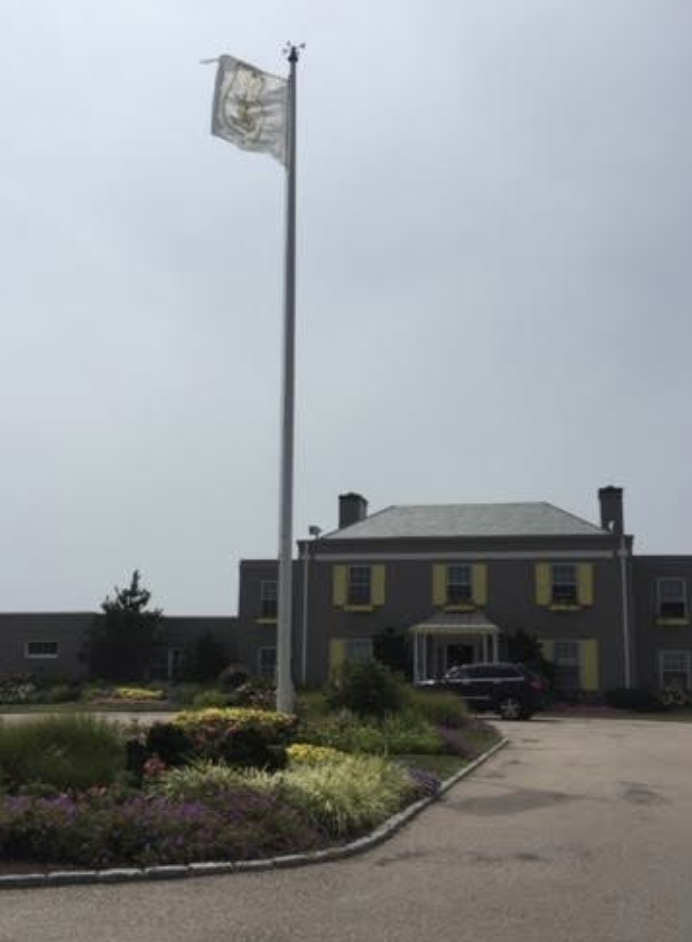
Nice about-face by Bailey’s Beach Club, in Newport, which had initially tried to close a nearby roadside snack stand started by three very enterprising Rogers High School students (“not our kind, dear!’’), but then decided to support it after a GoLocal article reported on what seemed to be a case of snobbery and arrogance, arousing some brief public outrage. Still, the reaction to the oh-so-exclusive Bailey’s imperialism reminded me of what irritates a lot of us in a nation increasingly run for the benefit of the very rich: That most of the people at Bailey’s are materially fortunate through no effort of their own but through the accident of being from rich families. The famous Lucky Sperm Club.
To read a GoLocal article on this entertaining controversy, please hit this link:

In another interesting coastal development, there’s a move underway to lift the prohibition on federal flood insurance for more than 900 homes, mostly owned by the wealthy, on the East Coast. Many of these homes should never have been built in flood-prone areas, now made ever more vulnerable by seas rising because of global warming. The proposed change would have taxpayers cover some or most of the cost of rebuilding fancy houses and would provide federal aid to fix such infrastructure as roads and bridges.
The National Flood Insurance Program, which has always tended to favor the affluent (who, like most people, like to be near water, but unlike most people can afford it) is already more than $20 billion in debt. The proposed expansion of the program to those who can easily pay to cover the risk of having to rebuild where there shouldn’t be any buildings is yet more welfare for the rich.
Weekly Rankings Racket Report
Channel 12 journalist Ted Nesi had some good reporting on the state-rankings racket after the generally right-wing CNBC ranked Rhode Island last in the country for business. He cited the generally conservative and/or libertarian Boston-based Beacon Hill Institute’s Annual State Competitiveness Report. It ranked Massachusetts #1, followed by North Dakota, Utah, Nebraska and Minnesota. It put Rhode Island at 35th, not last, and said the biggest gap between the Ocean State and Bay State was in new- business incubation.
The institute ranked Connecticut, which in per-capita income is among the richest states, at 43rd, and put another rich state, New Jersey, in last place.
Mr. Nesi also helpfully quoted the somewhat libertarian Niskanen Center’s Josh McCabe in reference to the challenges posed by the Ocean State’s extreme small size:
“The amount of goods and services governments can provide is very much limited by the size of their revenue base.’’
“In other words, any given Rhode Island taxpayer can expect tax savings by moving to Connecticut or Massachusetts, where he or she can also expect more generous government services….Trying to match its neighbors on service delivery will mean having an outsize tax burden, and trying to match their tax rates means providing a lot less government.’’ (Human nature being what it is, most taxpayers consider the government services that favor them to be “essential,’’ while those that favor others to be eminently cuttable.)
I’ve often suggested that Rhode Island be merged into Massachusetts or maybe split between the Bay State and Connecticut. It’s too damn small.
To read Mr. Nesi’s column, please hit this link:
And beware rankings in general. Those U.S. News & World Report rankings of colleges will be out in a few weeks. They’ve done a lot to corrupt American higher education by injecting some misleading criteria for measuring quality.
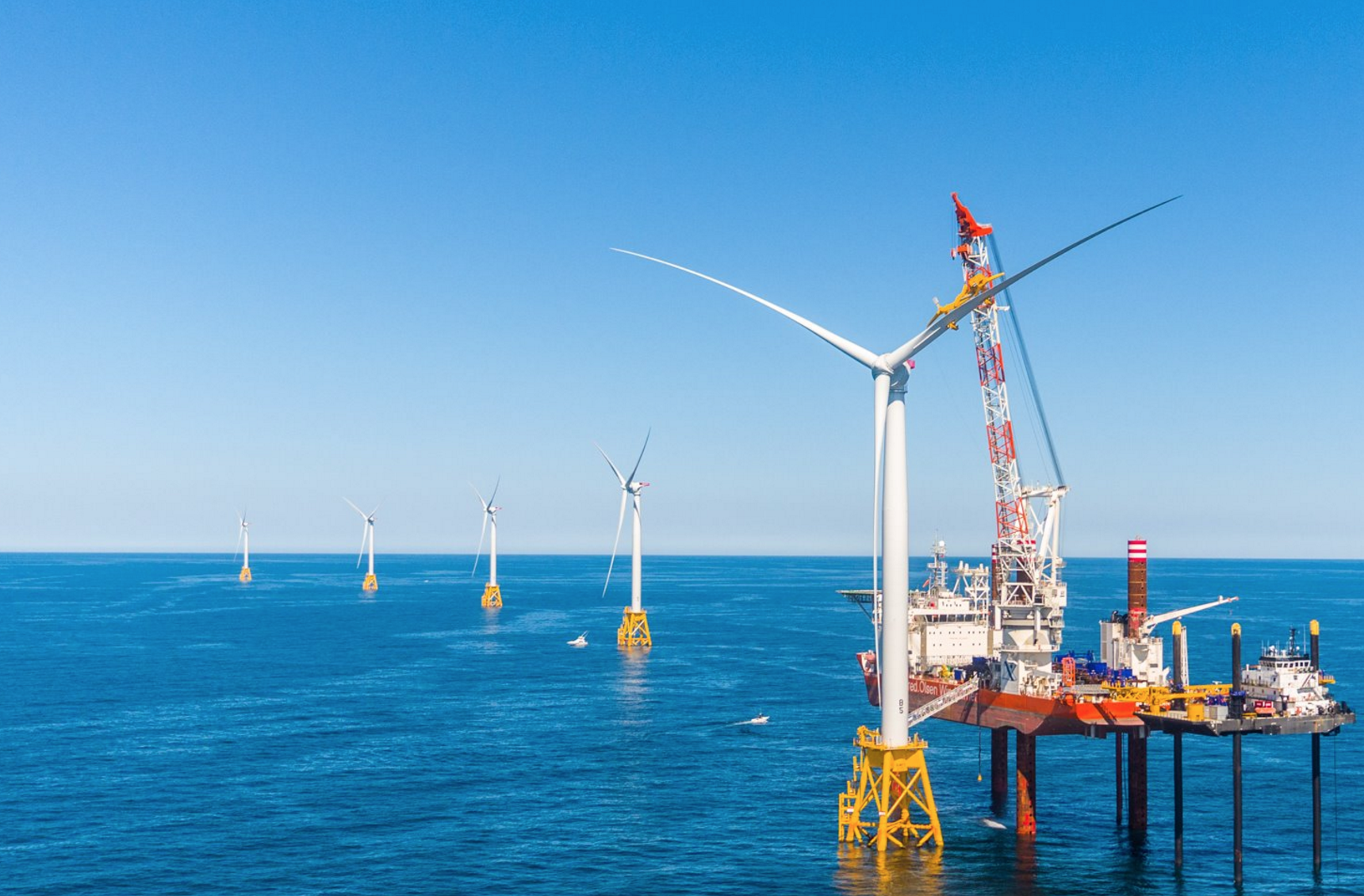
Fishermen opposed to proposed wind farms off the southern New England coast should send a research delegation to often stormy northwest Europe, where big offshore wind farms have co-existed with intensive fishing for years, with supports for the wind turbines acting as reefs that attract fish. Or maybe we should frack more for natural gas in Pennsylvania, blow up some more mountaintops for coal in West Virginia, or start drilling for oil and natural gas on Georges Bank to get the energy we need to keep the lights on? Those drilling platforms would take up less water than wind farms.

New British Prime Minister Boris Johnson and Trump have at least a few obvious things in common: family money and immense privilege, arrogance, mind-numbing hypocrisy, scandalous private lives and a propensity to lie and fabricate in virtually any situation. But Johnson, while perhaps not quite as good a demagogue as the feral Trump, is much more educated and probably smarter, and often quite funny.
Mr. Johnson is also lucky that the other big British political figures now -- Nigel Farage of the extreme xenophobic Brexit Party and Jeremy Corbyn, the lunatic left wing leader of the Labor Party -- are so much worse than him. And Boris, as it seems everyone calls him in the U.K., wasn’t a bad mayor of London.
The worst thing about Trump and Johnson is that their rise shows how low the value that the public accords to public integrity has fallen and how much glitz has triumphed over character. And it’s intriguing that in a time of widening social and economic inequality a substantial minority of voters worships such rich and dishonest elitists as Trump and Johnson, both very adept at making suckers of their followers.
Both of them could sail on in power for quite a while, propped up by easy money from central banks pumping up their economies. But eventually a recession will come, perhaps first in Britain if the effects of a possible no-deal Brexit come crashing in the fall, and then America, with the popping of the asset bubble created by a politicized Federal Reserve Board and massive deficit spending. (Send the bill to the kids!)
Then the political landscape does a 180.
But there are so many variables in a global economy, it’s impossible to predict when the next downturn will come, recalling the old saw along the lines of “economists have predicted 2 of the last 10 recessions.’’ How long can the punch bowl be left on the table?
The economy has grown for 121 straight months, with 75 percent of that time under Obama.
Yes, Apple, Facebook (Putin’s favorite), Amazon (destroyer of brick-and-mortar stores) and Google (vying with Facebook as the most amoral of the group in such matters as privacy theft) are far too big, have far too much market power and are discouraging new competition and innovation by their sheer size. However, breaking them up, if Republican and Democratic politicians really want the Justice Department’s Antitrust Division to do so, would probably be more difficult than was breaking up such industrial monopolies as the Standard Oil Trust (one of whose descendants is Exxon), with physical things to be divvied up, as opposed to mostly software. But kudos to Trump and congresspeople of both parties for putting a little fear into these behemoths, which brilliantly monetize our lives for themselves.
The Moral Implosion of the Congressional GOP
I find it deeply saddening that the congressional Republican Party has fallen into such corruption and cowardice as evidenced by its performance during the very old-and-exhausted-looking Robert Mueller’s halting congressional testimony last Wednesday. They engaged in various diversionary attempts, layered with lies, to protect a man who is far and away the most corrupt president in American history and who happily worked with an American enemy to secure his own election. (Read the report.)
After all, every democracy needs a responsible center-right party. But out of fear of Trump and/or the promise of political and other favors, the GOP incumbents on Capitol Hill have prostituted themselves.
And I love how Texas Republican Congressman John Ratcliffe referred to the “Democrats and Socialists” on the other side of the aisle. Presumably, he was referring to the “Squad’’ of four “Progressive’’ congresswomen. While I don’t agree with them on some key issues, the congressman is obviously trying to impugn their Americanism. It’s a bit of McCarthyism as used by Trump’s mentor, Roy Cohn. As for their domestic-policy prescriptions, they’re typical social-democratic positions found in other Western governments. They make up a minuscule portion of the Democratic caucus on Capitol Hill – thank God!
The GOP smoke machine was turned on high as Robert Mueller testified. Despite the bottomless pit of self-dealing sleaze, seasoned by treason, of Trump and his coterie, some GOP congresspeople did all they could to distract attention from the regime’s behavior. I wonder what Dwight Eisenhower would have thought of this odiferous crew.
Meanwhile, let’s not forget that the Russians are hard at work striving to throw the 2020 election to Trump. This includes, besides relentless disinformation campaigns, trying to actually change votes in electronic systems. They will probably have some success. The Trump administration and its congressional allies are not exactly working hard to stop this ongoing attack on our system.
A thought experiment question: If President Obama or a President Hillary Clinton had done even just 10 percent of the corrupt things that Trump & his entourage have done how would congressional Republicans have responded? The Republicans, of course, impeached Bill Clinton for lying about an idiotic affair with an intern.
The Meaning of Mysticism
Rational Mysticism: Dispatches from the Border Between Science and Spirituality, by the very earnest and self-deprecating science reporter and book author John Horgan, is a weirdly engaging trip, mostly in the form of personal profiles, through religion, neuroscience, psychology, psychedelic drugs and more, with Mr. Horgan himself participating in some experiments, such as drug trips, himself. It sounds very Sixties, but it is actually a rigorous, if sometimes emotional, exploration, albeit with Mr. Horgan noting that the answers to some existential questions raised in the course of the book will remain out of reach, the biggest one being “why is there something rather than nothing?”