


Whitcomb: Raimondo Sticking with Deloitte; Chained Thayer Street; Wind and Nukes; Cleaning up Harbor
Robert Whitcomb, Columnist
Whitcomb: Raimondo Sticking with Deloitte; Chained Thayer Street; Wind and Nukes; Cleaning up Harbor

Light, chill and yellow,
Bathes the serene
Foreheads of houses.
-- From “Coming,’’ by Philip Larkin
GET THE LATEST BREAKING NEWS HERE -- SIGN UP FOR GOLOCAL FREE DAILY EBLAST
I so liked Spring last year
Because you were here --
The thrushes too --
Because it was these you so liked to hear --
I so liked you.
This year's a different thing,-
I'll not think of you.
But I'll like the Spring because it is simply spring
As the thrushes do.
-- “I So Liked Spring,’’ by Charlotte Mary Mew
“{E}ducational inequality is driven by the compounding privileges of the most advantaged residents.’’
-- From “Unpacking the Power of Privileged Neighborhoods,’’ in citylab.com. To read it, please hit this link:
Sticking With Deloitte
Was Rhode Island Gov. Gina Raimondo’s decision to extend Deloitte’s contract to run a computerized system for public benefits, in return for $200 million in financial concessions, the best one for the state? (The deal includes Deloitte paying the state $50 million in what you might call reparations.) It’s impossible to know for sure since we don’t know much about what the alternatives were/are for continuing to deal with Deloitte, which had infamously screwed up the rollout of the system. The administration had talked with eight other companies about creating a new system. But officials decided that there was too much risk in making such a big change.
Ms. Raimondo’s decision was a big reversal: She had previously said that she didn’t want to keep Deloitte, which had botched the introduction of public-benefits systems in some other places, too.
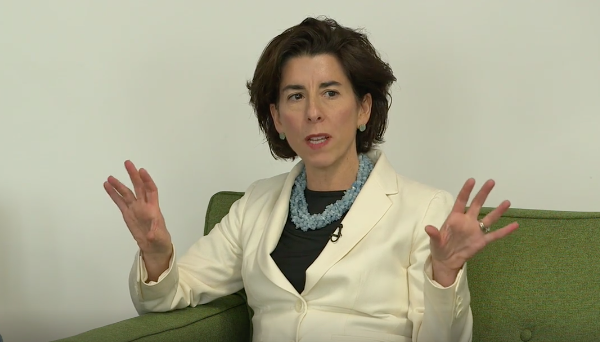
‘‘It was either throw the whole thing out and start from scratch or keep this broken system limping along. This decision postpones the big cost of starting from scratch, but Deloitte is the only realistic vendor who can keep it going,’’ after “management failure on all sides.’’
The governor, for her part, said: “I think we now know in retrospect that {the Deloitte system) was a mistake, because it’s unnecessarily complex. But we are where we are, and we have fixed it.’’
Well, the system does seem to be working at the moment. Fingers crossed. Perhaps we’ll never know if another vendor, perhaps with a less complicated system, could have avoided making the mess created by Deloitte. Maybe a foreign-based company would have done better. As impressive as computer systems can be, they can also trap their customers (in this case, Rhode Island’s taxpayers) in a labyrinth that’s very difficult to escape. Life and government get ever more complicated.

Best of luck to public officials and some businesses in Southeastern Massachusetts who are trying to get a bigger emphasis on onshore investment –- e.g., building more port infrastructure – in state negotiations with offshore wind farm companies on the price of power generated by their turbines. Their central argument is that more of what may well become a major industry should include considerably more direct local jobs.
But the main economic benefit of these wind farms will not be in direct jobs to install and service the wind farms but in making New England less dependent on polluting fossil-fuel from outside the region, and, as wind-power technology continues to improve, eventually lowering electricity costs for business and everyone else.
Meanwhile, Connecticut’s new governor, Ned Lamont, has helped the environment by backing an agreement to keep open the largest nuclear-power plant in New England, the two Millstone reactors, in Waterford.
He said: “The shutdown of the plant would have exposed the New England region to a nearly 25 percent increase in carbon emissions, increased risk of rolling blackouts, billions of dollars in power-replacement costs, and the loss of more than 1,500 well-paying jobs.”
We will need at least some nuclear power to keep the lights on during the long transition off fossil fuel.
The biggest challenge of nuclear power is where to store the radioactive waste; though there are geologically safe places to store it, such as Yucca Mountain, in Nevada, politicians hear the cries of constituents and keep rejecting proposals to store the stuff.
Pre-EPA and Clean Water Act
“Well, I love that dirty water (I love it, baby)
I love that dirty water (I love Baw-stun)’’
From “Dirty Water,’’ (1965) by the Standells, a tribute to the polluted waters of Boston Harbor and the Charles River, which of course flows into it.
As the Trump administration continues to weaken the understaffed Environmental Protection Agency, I think of Boston Harbor before the EPA and the great Boston Harbor cleanup, which the creation of the EPA (1970) and the Clean Water Act (1972) helped set in motion. I had summer jobs on the Boston waterfront in the ‘60s and well remember how rank the harbor was. My workmates and I would sometimes take the lunch boat, which offered many scenic attractions, but on a hot day, the smell was foul enough to make us put down our sandwiches.
The cleanup was a great social, aesthetic and economic boon for our region, as has been the gradual cleanup of Narragansett Bay.

61 percent of the Fall River citizens who bothered to vote in a March 12 election to recall Mayor Jasiel Correia II wanted to oust him. After all, the Feds had charged him with fraud and related offenses. But despite that, he remains in office because in the second part of the election, 35 percent voted for him and 65 percent scattered their votes among the other four candidates.
This seemingly ridiculous outcome could have been avoided by ranked-choice voting. In this system, voters put the candidates in their order of preference. If no one reaches 50 percent or more, in the first round, the candidate with the fewest votes is eliminated in the second. The process continues until someone wins a majority. Obviously, this couldn’t apply in presidential elections, with the Electoral College and all.
Chained-in Strip
On March 18, GoLocal had a story about how national chains have taken over Providence’s Thayer Street, heavily populated by students from Brown and RISD. It reminded me of how much quieter the retail strip was in our first stretch in Providence, in the late ‘70s. Then, the restaurants, with the exception of the International House of Diabetes, ah I mean Pancakes, and all the shops were one-off local establishments. The street had a kind of quaintness, such as little gift shops run by genteel blue-haired ladies.
All long gone, and the street could now be almost anywhere, with a few exceptions, most notably The Avon, the old art deco-ish movie theater, Andrea’s restaurant and Spectrum India. To me, the biggest disaster was the closing, in 2004, of the College Hill Bookstore, with its eclectic, even inspired collection of books and magazines. It was far more interesting than the still very bland Brown Bookstore. The College Hill Bookstore was the hub of the street, killed by the Internet, as with so many local shops. (Spectrum India was on Thayer Street before moving into the College Hill Bookstore’s site.)

I sort of like the much more crowded, city-like (including bigger, taller buildings) and perhaps more dynamic Thayer Street of today, although I and many neighbors also miss the often sleepy charm of 40 years ago.
Then you have the city’s other big student neighborhood – the one that has developed in downtown Providence, with the expansion there of Johnson & Wales University, RISD, URI and Roger Williams University bringing remarkable change. Now there are many more people downtown day and night than three decades ago, and it’s become much more of a residential as well as commercial neighborhood. This has offset much or all of the effects of the exit of many big companies from downtown over the past few decades. It may be hard to believe now but Providence used to be a major corporate-headquarters town.
Anyway, the recent transformation of downtown has been very heartening considering how abandoned it looked, especially after office hours, not so many years ago.
To read the GoLocal story, please hit this link:
Third World Roads
The condition of many of the streets on the East Side of Providence, whence cometh much of the city’s property-tax revenue, are much worse than many of the streets in East Africa I was driven on for a work project a few years ago.
Boycott U.S. News & World Report's Ranking
One way to help reduce corruption in college admissions would be for as many colleges as possible to stop cooperating with U.S. News & World Report in its deeply misleading but obsessively watched ranking system, which encourages institutions to artificially jack up their application numbers to look as “selective’’ as possible. The “elite” colleges should lead the way.
More of a Middle Way on National Health System
My hunch is that the next stage of U.S. health-insurance reform will look something like what new Democratic presidential candidate Beto (real name Robert) O’Rourke has been touting because it speaks to what many people like about our current “system,’’ if you call our current fragmented arrangements a “system.’’
This is a measure sponsored by two congresswomen, Rosa DeLauro, of Connecticut, and Jan Schakowsky, of Illinois, that would make Medicare available to all adults and children, including by automatically enrolling all newborns, currently uninsured people and, of course, elderly people.
However, the plan would also let employers continue to offer private insurance, albeit with rules on the quality and quantity of that coverage. Companies could also buy Medicare coverage for their employees via a tax equal to 8 percent of their annual payrolls. Eventually, many with private insurance would migrate to Medicare.
It’s a variant of the “public option’’ discussed during the debates over the Affordable Care Act that would have let everyone buy into Medicare. Insurance company lobbyists killed it.
A Kaiser Family Foundation poll found that 73 percent of Americans would support a true national (“universal”) health plan if it permitted the continuation of private insurance options, unlike, for example, Bernie Sanders’s “Medicare for All’’ plan. The measure endorsed by Mr. O’Rourke would speak to that, and so sounds politically realistic.
Mad as Hell
“I don't know what they have to say
It makes no difference anyway
Whatever it is, I'm against it.
No matter what it is or who commenced it
I'm against it.’’
-- From the song “I’m Against It,’’ sung by Groucho Marx in the 1932 movie Horse Feathers

Observers have noted that the demonstrators/rioters want both lower taxes and more services from the government. Sound familiar?
President Emmanuel Macron keeps traveling the country patiently explaining his moderate and well-crafted programs and listening to complaints, but the Yellow Vests, like many of the MAGA folks, are in the emotion-and-fantasy sector, not the tedious reason-and-fact sector.
I suspect that what a lot of demonstrators would like is a right-wing or left-wing man (or woman) on-horseback demagogue who will promise to take care of everything. Then the protesters will get what they thought they wanted – good and hard. Meanwhile, Russian troublemakers are trying to keep the pot boiling to weaken France and the West, of which Mr. Macron may now be the closest thing to its leader. Vladimir Putin did what he could to get Donald Trump elected and Brexit approved. He aids similar disruption in France.
It’s a Matter of Trust
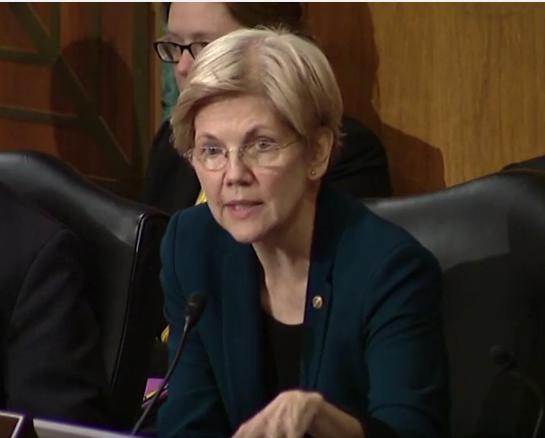
I’d be shocked if Elizabeth Warren won the Democratic presidential nomination but she and some other politicians, including a few Republicans, will do much good for the country if they keep pushing to break up the far too big tech companies Google, Facebook and Amazon. Their size -- which makes them cartels -- lets them stifle competition, which slows innovation, suppresses wages and reduces consumer choice.
But it’s not just some tech giants that should be broken up. Consider that only four companies control 85 percent of U.S. airline traffic. That explains, at least in part, the big fees and crowded planes with seats so small that they threaten health (especially in obese America). Then there’s the cable/telecommunications sector, where, as Tim Wu, a professor of law, science and technology at the Columbia Law School and scholar of corporate concentration, noted, 68 million Americans are trapped with “a broadband monopolist.’’ And the concentration into just a few huge companies in the pharmaceutical sector has encouraged price gouging there.
Small, Cold and Happy
A survey by the United Nations Sustainable Development Solutions Network ranks the “happiest’ countries as the cold-weather social democracies (Trump, et al., would call them “socialist’’) as, in order of happiness, Finland, Denmark, Norway, Iceland and the Netherlands. The United States, a vastly bigger and more complicated nation, was 19th.
Perhaps the fact that America has spent a lot of money helping to protect them from the Russians since the late ‘40s has something to do with the contentment in these little countries, although I think that their civic cultures and relatively homogeneous populations are the main reasons.
The results, based on three years of Gallup surveys from 2016 through 2018, include such factors such as gross domestic product, social support from friends and family, life expectancy, freedom to make life choices, generosity and perceived corruption.
Heaven and Hell in the Heartland
Sarah Smarsh’s Heartland: A Memoir of Working Hard and Being Broke in the Richest Country on Earth, is a vivid and often unsettling book about an extended and, to varying degrees, dysfunctional family with deep roots in Kansas farming. At its core, it’s about what many Americans don’t want to accept – that this country has a sometimes unforgiving class system. But the book is also a sometimes lyrical look at the landscape, creatures, plants and theatrical weather of the prairie states and despite many troubles and much craziness, the occasional joys of rural and small-city family life.
My big complaint: Sometimes the chronology and genealogy are hard to follow.