


Whitcomb: Great Inflation; Mattiello's Rent; First Jewish Super Bowl MVP; and PR Explosion
Robert Whitcomb, Columnist
Whitcomb: Great Inflation; Mattiello's Rent; First Jewish Super Bowl MVP; and PR Explosion
And more than the subway jerks,
I love you as much as a beggar needs a crutch,
And more than a hangnail irks.’’
-- From “To My Valentine,’’ by Ogden Nash (1902-1971)
“Everyone hustles his lifealong, and is troubled by a longing for the future and weariness of the present. But the man who … organizes every day as though it were his last, neither longs for nor fears the next day.’’
-- From Seneca, Roman Stoic philosopher (4 B.C.-65 A.D.)
“Less original novelists tenaciously follow their protagonists. In the ‘Music of Time’ we watch through the glass of a tank; one after another various specimens swim towards us; we see them clearly, then with a barely perceptible flick of fin or tail, they are off into the murk. That is how our encounters occur in real life. Friends and acquaintances approach or recede year by year.”
Remarks by the English writer Evelyn Waugh (1903-66) about his friend Anthony Powell’s (1905-2000) series of novels under the heading “A Dance to the Music of Time’’. Waugh’s description of how we encounter people over the years is spot on: They come and they go. If only we all kept a journal of our encounters, some stranger than most fiction, describing these creatures. Then what a show we’d have to review at our leisure.
Effects of the Great Inflation
Michael Tomasky wrote a very perceptive op-ed in the Feb. 3 New York Times headlined “The Real Legacy of the 1970s.’’ His central idea seems to be that the high inflation, wage stagnation and deindustrialization of that decade helped lead to a more selfish society in which greed and personal wealth got much more respect. The adoration of the rich, including the wealthy who merely inherited piles of money, took off in that and later decades, amplified by the mass media’s love of glitz (Robin Leach’s “Lifestyles of the Rich and Famous,’’ etc.). The sense of shared citizenry and concern for the underprivileged declined in the general atmosphere of economic anxiety.
He writes:
“{T}he Great Inflation, as the author Joe Nocera has noted, made most people feel they had to look out for themselves. Americans had spent decades just getting more and more ahead {in a time of high income-tax rates for the rich}. Now suddenly they were falling behind….Throw in wage stagnation, which began in the early ‘70s, and deindustrialization of the great cities of the North….’’
I was a business editor and writer in much of that decade; Mr. Tomasky’s description rings true to me.
In many ways, the ‘70s comprised a rather low and tacky decade. Still, they had a gritty charm, filled with interesting social and aesthetic experiments. (Just don’t think about the clothes….)
Whatever the level of retribution and reward in Rhode Island House Speaker Nicholas Mattiello’s allocation of office space for legislators, the apparent lack of adequate space in the State House is a problem. Legislators should, among other things, have places where they can talk quietly with constituents. Could the state rent some office space elsewhere during legislative sessions for this important function?
Such as:
The defense had that play sniffed out.
The defensive line is quick off the ball.
Their defense is starting to assert itself.
Their defense is tough in the red zone.
This game is being won in the trenches.
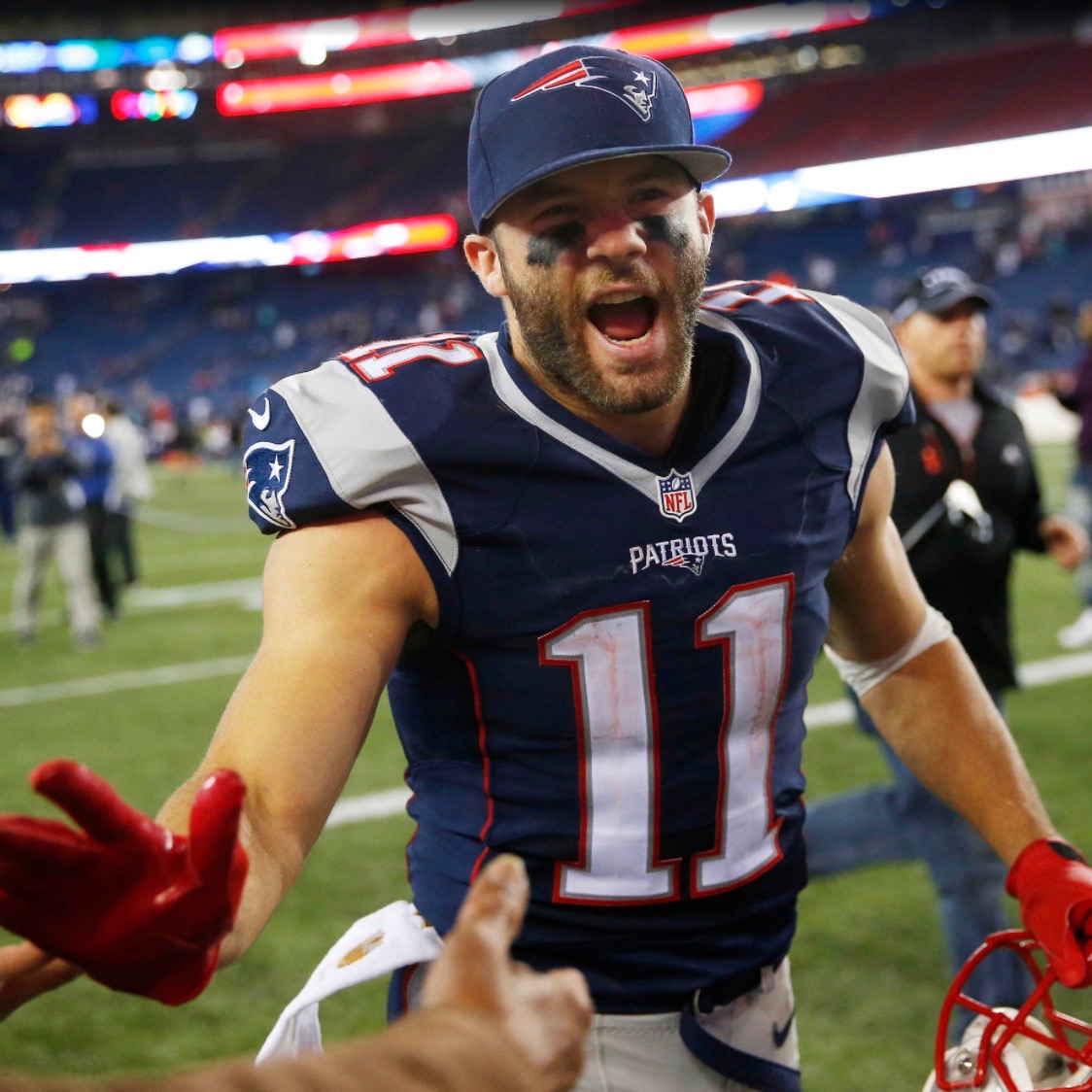
In order to avoid death threats, I congratulate the New England Patriots for winning the Super Bowl and sportswriters and broadcasters for maintaining the Niagara of sports clichés and tautologies that are the connective tissue of sports coverage. But let’s hope that the stars of the game aren’t drooling from the effects of concussions in a few years.
And yes, the game and half-time show were generally very boring but Julian Edelman becoming the first Jewish Super Bowl most valuable player provided a thrill!
Passing on the Paranoia Lane
I’d guess that many readers have seen the video of some of the infamous road-rage incident on Jan. 25, apparently originating in some sort of minor sideswipe, on the Massachusetts Turnpike near Boston.
The video footage showed 65-year-old Richard Kamrowski hanging on for dear life on the hood of 37-year-old Mark Fitzgerald’s car as it careened down the turnpike. Then we see Army veteran Frankie Hernandez leaping out of his car and pointing his gun at Fitzgerald.
Now both Messrs. Fitzgerald and Kamrowski face criminal charges in the incident, which provided too much excitement for other drivers and could have easily resulted in one or more deaths.
Highways can be very scary places because you never know the mental and emotional state of your fellow drivers, who are, like you, operating large, fast and potentially lethal machines. And the drivers in and around Boston are particularly aggressive, impatient (and outpatient) and rude. Stay away from people who are driving fast and/or erratically or better yet, if you can, take public transportation. And pull over and call 911 if you see dangerously bad driving.
To watch the video, please hit this link:

Not So Green Mountains
A Jan. 28 story in The Boston Globe, “In Vermont, a progressive haven, emissions spike forces officials to consider drastic action,’’ contained some irony: The Green Mountain State, long associated with environmentalism and progressive politics in general, has failed by a long shot to meet its stated aims of slashing carbon emissions. Indeed, these emissions have risen 16 percent from 1990!
Part of the challenge is the high percentage of ownership of aging, energy-inefficient pickup trucks, which, as in many mostly rural states, are sort of the official state vehicle. Further, cheap gasoline during the past few years has encouraged even more driving in a state whose residents are accustomed to traveling long distances every day.
Another problem in the heavily forested state is the heavy use of wood as fuel for heating. You can see smog in some river valleys from the many wood stores and furnaces. (I remember back when I lived in the Upper Connecticut Valley in the late ‘60s that wood (a carbon-based fuel!) was promoted as the wonderfully natural way to help wean ourselves off that nasty Arab oil.)
And while transportation is the largest single source of emissions – 43 percent – the closing of Vermont’s only nuclear-power, in 2014, made the state more dependent on fossil-fuel power plants. Global warming may make promoting nuclear power easier.
The administration of Gov. Phil Scott, a moderate Republican whom I’ve met and like, has come up with a detailed program to cut admissions, which includes, The Globe reports:
“{P}rograms to help improve energy efficiency in homes, financial incentives for electric vehicles, and protections for the state’s forests, which are in decline for the first time in a century.’’
In any event, it will take a long time for The Green Mountain State to get as
“green’’ as the rest of the country might think it is.
To read The Globe’s story, please hit this link:

A Soothing Indoor Sport for New England
Bowling, and especially candlepin bowling, used to be very popular in New England but has been in a decline since its heyday in the ‘50s and ‘60s. Tough to compete with the Internet….
It’s easy to play, and of course, it’s played inside -- a big attraction considering New England’s climate. For some reason, candlepin, not tenpin bowling, became dominant in our region. And there once were many bowling leagues, for adults and kids. And you’d have to have been a world-historical klutz not to win some sort of trophy in your youth bowling career. This is not a scary sport. A pulled muscle, or dropping a ball on a foot, are the greatest dangers. Good physical condition is not a prerequisite.
Besides the bowling itself, snacks and beverages (including beer in some bowling allies) have almost always been served in these establishments, and some have had such additional attractions as pinball machines. I still remember the scent of popcorn, hot dogs, beer, cigarette smoke, floor wax, rental shoes and maybe a little sweat in these businesses, which pushed up like mushrooms in shady wet earth in the suburbanization of the ‘50s.
Elizabeth McCracken’s Feb. 5 piece in Slate, “In Praise of Real Bowling: I grew up playing …candlepin bowling. This New England variant is harder than tenpin bowling, and it’s better, too’’ reminded me of how popular this inexpensive recreation used to be, in some small towns operating almost as unofficial town halls. Local politicians would cruise them to chat up voters.
Her piece reminded me of Robert D. Putnam’s famous 2000 book, Bowling Alone: The Collapse and Revival of American Community, about the fact that many people have become disconnected from their families and neighbors since the ‘60s. It’s worse now, whatever the promotions of social-media companies. You can see signs of it in the opioid-addiction epidemic and even some election results in what sometimes seems the United States of Anomie.
To read Ms. McCracken’s piece, please hit this link:
PR Folks and Journalists
The number of PR people in government and business far outpaces journalists. Muck Rack, for instance, reckons that there are six PR people for each journalist, double the ratio in 2006.
And, the online news service reports:
“According to the Bureau of Labor Statistics Occupational Employment Survey, newsroom employment in the U.S. dropped 23% between 2008 and 2017.
“Looking specifically at news reporters, photographers, videographers and editors, jobs across print, broadcast and digital media fell from 114,000 to just around 88,000. Nearly a quarter of jobs in the industry gone in less than 10 years. Let that sink in.’’ And PR folks get paid more.
Good news for crooks!
A central cause of the demise of so much of journalism is the federal government’s failure to break up the duopoly of Google and Facebook, which together take in well over half of U.S. digital advertising.
To read the Muck Rack article, please hit this link;
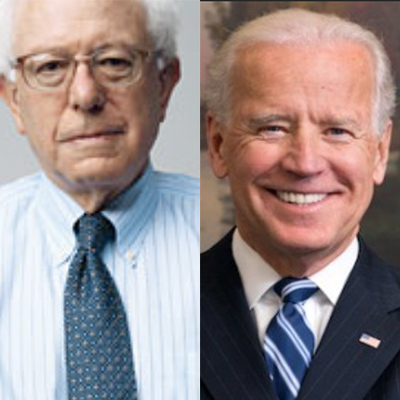
Some have reacted to worries about the age of potential Democratic presidential candidates Joe Biden, Bernie Sanders and Michael Bloomberg -- all in their seventies -- with charges of “ageism,’’ and note that all three are apparently now in good health. And they might stay healthy in office. But the actuarial fact is they’re much more likely to have a serious health issue, or die in office than, say, someone in his/her fifties. And fast and without warning. Mother Nature -- that crone -- will have her way.
The trio (of whom Mr. Bloomberg is by far the most competent) would serve the country and their party best as elder statesmen, providing advice and prospective, but not try to take on the relentless duties of the presidency.
Extreme Inequality Breeds Disorder
I vividly remember the vast income inequality I saw in Venezuela in a visit in the 1990s. There were the very, very rich, most often directly or indirectly from oil money, and millions of impoverished people, whose shantytowns were clearly visible from some of the mansions. Extreme income inequality tends to lead to violence and a demagogue’s dictatorship.
More to the Well-Off
Lincoln School on Providence’s East Side, the private institution for girls, overwhelmingly from affluent families, has just received a $4.5 million donation. If only more public schools could lure such philanthropy! Already well-heeled institutions get bigger and bigger slices of the pie. Does Harvard really need more billions?
There are a few ways to contribute to public schools.
For instance, many school districts have set up foundations, often funded by financially successful former students or parents of past and present students, to help address such needs as classroom supplies and teachers’ professional development.
Then there’s DonorsChoose.org, which raises money for individual projects and programs that schools wouldn’t otherwise finance. This can include technology improvements and even such basics as notebooks, paper and pencils. To look at its Web site, please hit this link:
Touche!
At Neomi Rao’s confirmation hearing in her nomination to be on the First Circuit Court of Appeals – the second most important federal court, after the Supremes, the sometimes grandstanding Democratic New Jersey Sen. and presidential candidate Cory Booker asked Ms. Rao if she’d had anyone work for her who identified as LGBTQ.
“To be honest, I don’t know the sexual orientation of my staff. I treat people as individuals,” she replied, in a nice comment on identity politics.
The 50 Greatest Living Rhode Islanders

#50
Professor J. Michael Kosterlitz
Nobel Prize Winner
In October 2016, Brown University Professor J. Michael Kosterlitz was awarded the Nobel Prize in Physics. He has been at Brown since 1982.
The Royal Swedish Academy of Sciences announced that it awarded the Nobel Prize in Physics 2016 to three U.S. scientists, including Kosterlitz ”for theoretical discoveries of topological phase transitions and topological phases of matter."
"They revealed the secrets of exotic matter," wrote the Academy in their release. "This year’s Laureates opened the door on an unknown world where matter can assume strange states. They have used advanced mathematical methods to study unusual phases, or states, of matter, such as superconductors, superfluids or thin magnetic films. Thanks to their pioneering work, the hunt is now on for new and exotic phases of matter. Many people are hopeful of future applications in both materials science and electronics."
The Academy wrote:
The three Laureates’ use of topological concepts in physics was decisive for their discoveries. Topology is a branch of mathematics that describes properties that only change step-wise. Using topology as a tool, they were able to astound the experts. In the early 1970s, Michael Kosterlitz and David Thouless overturned the then current theory that superconductivity or suprafluidity could not occur in thin layers. They demonstrated that superconductivity could occur at low temperatures and also explained the mechanism, phase transition, that makes superconductivity disappear at higher temperatures.

#49
Barnaby Evans
Artist
Barnaby Evans is the creator of WaterFire, cited as one of America’s most important pieces of public art. Friedrich St. Florian called WaterFire the “crown jewel of the Providence Renaissance.”
He has won numerous regional, national and global awards for his creation of WaterFire. The event has helped to transform Providence.
As his bio states, he "is also known for his photography which is included in the permanent collections of the Victoria and Albert Museum, London; the Bibliotheque National, Paris; the Musee’ d’art et d’histoire, Fribourg, Switzerland; the Addison Gallery of American Art, Andover, Massachusetts; and the Museum of Art, Rhode Island School of Design among others."

#48
John William Middendorf II
Ambassador, Investor, Musician
Ambassador Middendorf has a brilliantly diverse legacy. Financier, ambassador, and accomplished musical composer.
He served in World War II, was an investment banker, served as the U.S. Ambassador to the Netherlands, and served as Secretary of the Navy.
Middendorf graduated from the College of the Holy Cross in 1945 with a bachelor's degree in naval science after having served in World War II as an engineering officer and navigator aboard LCS 53. He then earned an A.B. from Harvard College in 1947 and received his MBA from the Stern School of Business, at New York University in 1954.
Middendorf founded the investment banking firm Middendorf, Colgate and Company, and held a seat on the New York Stock Exchange.
“Having learned how to make money,” he writes in his memoir, “I wanted to learn how to make a difference.” He became actively involved in politics, first at the local level in Connecticut and then with the presidential campaign of Senator Barry Goldwater in 1964 as treasurer of the Republican National Committee.
During his time as Secretary of the Navy, Middendorf oversaw the establishment of the General Dynamics facility at Quonset Point, now one of Rhode Island's largest employers. He also created the Marine Corps Marathon, and its trophy for the winner has been named in his honor.
He has authored two books, Glorious Disaster: Barry Goldwater's Presidential Campaign and the Origins of the Conservative Movement and Potomac Fever: A Memoir of Politics and Public Service.
Middendorf has written more than 100 marches and the Holland Symphony which he presented to Dutch Queen Juliana on the 25th anniversary of her ascension to the throne.
For his musical efforts, Middendorf received the “Edwin Franko Goldman Award” from the American Bandmasters Association and is a member of the American Society of Composers and Performers. Other of his honors include: Navy Distinguished Public Service Award (1976); the U.S. Olympic Committee Gold Shield Award; and the State of New York's Distinguished Patriot Award (1976).
He has lived in Little Compton, Rhode Island for decades.
Source: RI Heritage, U.S.Navy

#47
Bill Reynolds (Died in 2023)
Sportswriter
Reynolds' books use sports as the framework, but are deeper examinations of poverty, race, and addiction.
His book "Fall River Dreams" defined him a leading American writer who uniquely captures the intersection of sports and culture.
“Bill Reynolds is one of the best writers around, and this book is the Friday Night Lights of high school basketball,” said Dan Shaughnessy of the Boston Globe.
"Success is a Choice," which he co-wrote with Rick Pitino, is a business "how to" book that was a New York Times best-seller.
Reynolds has written 11 books and was a sports reporter for the Providence Journal.

#46
John McCauley (Deer Tick)
Singer-Songwriter
McCauley has been a leading voice in the alternative, indie rock sphere for more than a decade. His work is a mix of rock with folk, blues, and country influences.
Along with his band, McCauley won Rock Artist of the Year at the Boston Music Awards (beating out Aerosmith) in 2013. He is married to fellow musician Vanessa Carlton -- Stevie Nicks officiated their wedding.

#45
Ray Rickman
Civil Rights Leader, Business Consultant
Rickman has become the conscious of Rhode Island, calling out issues of inequity far before it was in vogue.
He served as a member of the Rhode Island General Assembly and as Deputy Secretary of State in Rhode Island. His efforts and leadership on civil rights issues have been consistent over the past 50 years.
His civil rights leadership is just one aspect of Rickman's accomplished legacy. He has owned small businesses, served as a TV talk show host, is a noted expert on books and so much more.
One of his most noted accomplishments was his critical role in helping to establish one of Rhode Island most successful tech companies - Virgin Pulse.
Today, Rickman founded and runs Stages of Freedom, an organization that provides everything from swim lessons to minority children to building a legacy of minority culture in Rhode Island.
Rickman is a true Renaissance man.

#44
Angus Davis
Entrepreneur
Few business innovators in America have had the success of native Rhode Islander Davis.
He co-founded Tellme, raised more than $200M in capital, and helped to lead the company to more than $100 million in sales and 300 employees. Tellme was acquired by Microsoft for nearly $1 billion.
And he did it again with Upserve, formerly Swipely. The company is "the smart management assistant serving up clear guidance that makes your restaurant thrive" - a tech firm that creates an information infrastructure for restaurants. At the outset, he raised upwards of $50 million for Upserve. In 2020, it sold for $440 million.
Davis is a leading American business thinker

#43
Terry "Mother" Moy
Navy SEAL
If the Navy SEALs are the best trained and most respected in the United State Armed Forces, Moy is the "Mother" of the SEALs.
The Newport native is the embodiment of military lore. He was a famous SEAL instructor and one of his most infamous trainees was Jesse "The Body" Venture - Seal, professional Wrestler and Governor of Minnesota.
While most SEAL activity is undisclosed, his effort to recover Apollo 17 was globally broadcast.

#42
Phil West
Government Reformer
Once dubbed the Godfather of Ethics Reform, West has been the driving force in reforming governmental ethics for three decades in Rhode Island.
His successes include a then-record fine against Governor Ed DiPrete, Separation of Powers, downsizing and modernizing the legislature, and the requirement of electronic filing of bills and making hearings accessible to the public.
He was the head of Common Cause RI for eighteen years and retired in 2006, but still remains a guiding force in reform. Under West, the master lever was eliminated and ethics reform moved through the General Assembly — all under the watchful eye of West.
West has taken on the most powerful forces — sometimes alone — and made Rhode Island a better place as a result.

#41
Richard Jenkins
Actor
Jenkins is the consummate American actor. His work ranges from everything from “The Witches of Eastwick” to “Hannah and Her Sisters” to HBO's "Six Feet Under" to his award-winning role in “Olive Kitteridge”
His formative acting years took place at Trinity Repertory Company (now Trinity Rep). Jenkins then returned later in his career to help save the financially struggling theater.
He has starred and appeared in more than 80 movies and television series or movies. In 2014, Jenkins and his wife Sharon received the Pell Award for Lifetime Achievement from Trinity Repertory Company in Providence.
In 2015, Jenkins won the Primetime Emmy Award for Outstanding Lead Actor in a Miniseries or Movie for his performance as Henry Kitteridge in the HBO miniseries Olive Kitteridge.
In 2022, Jenkins portrayed Lionel Dahmer, father of notorious serial killer Jeffrey Dahmer, in Netflix's limited series Dahmer – Monster: The Jeffrey Dahmer Story.

#40
Alan Hassenfeld
Business Leader
The former CEO and Chairman of Hasbro was a driving force in transforming the company from a toy manufacturer to an entertainment company.
Michael Jackson and slews of others came to Rhode Island to tour the company and negotiate licensing deals.
In the early 1990's he became a force in initiating ethics reform in Rhode Island. More recently, he endowed the creation of the Hassenfeld Institute for Public Leadership at Bryant University.
The Rhode Island-based Hassenfeld Foundation gave out nearly $10 million in donations in the most recently reported year.

#39
M. Therese Antone, RSM, Ed.D
Educator
Sister Antone was born in Central Falls, and educated at Salve Regina University, Villanova University, Harvard University and MIT Sloan School of Management.
Correspondingly, she has taught almost every level of education, rising to President of Salve Regina. There, she transformed the school, and Salve Regina’s national rankings and student profile vastly improved under her leadership.
During her tenure, the University's endowment grew from $1 million to more than $50 million and the University invested $76 million on renovations and expansions and has received numerous awards for restoring the historic mansions, cottages, and gatehouses on its campus. She transformed the University and correspondingly has won countless awards for her service.

#38
Umberto Crenca
Artist and Entrepreneur
Artist, visionary and business leader, Crenca took a crazy idea of developing a sustainable art cluster in Downtown Providence and made it the most unimaginable success, and has become a national model.
AS220 was founded in 1985 to "provide a local, unjuried, and uncensored home for the arts," and has grown to own and operate multiple facilities, currently providing artists live and/or work spaces, four exhibition spaces, a print shop, a media lab including a black and white darkroom, a fabrication lab, a stage, a recording studio, a black box theater, a dance studio, and a bar and restaurant.
In 2016, Crenca was awarded Honorary Degrees from two different Rhode Island Universities.

#37
Carolyn Rafaelian
Business Leader
In 2018, Forbes announced its “America's Richest Self-Made Women” list and Rhode Island’s Carolyn Rafaelian came in at #21 on the list.
The list included Oprah Winfrey at #6, Sheryl Sandberg of Facebook at #12, Sara Blakely of Spanx tied with Rafaelian at #21, and Kylie Jenner at #27.
“Despite this crazy state, it’s possible for a Rhode Island woman to reach this self-made list. For that I am proud,” said Rafaelian, Founder and now former-CEO of Alex and Ani in an interview with GoLocal.
“I am thrilled with my new team in place and we will continue to attract all the right people and continue to streamline the business and its efficiency. After all, we are the jewelry capital of the world!” she said.
Under her leadership, Alex and Ani donated more than $50 million to organizations large and small.
She no longer serves as CEO and has gone on to launch a new jewelry company. She may be Rhode Island's most successful female CEO.

#36
Louise Durfee
Environmentalist and Attorney
When one talks about trail blazers in Rhode Island, Louise Durfee’s image should be the first thing that comes to mind. She was the first female partner at a major Providence law firm at a time when most law firms did not employ women attorneys. She was one of a small group of Tiverton residents who joined together in the early 1970's to oppose a proposal to build a major oil refinery.
The fight was so profound that it was featured in 1971 in Life Magazine and resulted in the founding of an organization that ultimately became Save the Bay. Again, Durfee the trail blazer.
In the 1980’s she helped to clean up the aftermath at Rhode Housing after widespread corruption was found. In 1991, Governor Bruce Sundlun named her Director of the Department of Environmental Management and just three years later, he fired her.
So she ran against him in the Democratic primary for Governor.

#35
Ron Machtley
Former Politician and University President
Rhode Islanders were first introduced to Ron Machtley in 1988 when he traveled around Rhode Island with a pig named Lester “Less" Pork to point out the wasteful spending of then-Congressman Fred St. Germain.
Machtley upset the 28-year veteran and Chairman of the House Banking Committee to take the Congressional seat. In 1994, he was the odds-on-favorite to win the Governorship, but was upset in the GOP primary by Lincoln Almond, who went on to serve eight years as Governor.
After his defeat, he was the surprise choice to serve as President of then-Bryant College. At first appearances it was a strange choice, but Machtley could not have turned out to be a better selection.
Under his leadership, the college transformed to a University, with massive improvements in the University’s campus, an elevation to Division I Sports, and an overall improvement in Bryant’s academic position.
When he assumed office Bryant had a $1.7 million operating deficit and a tiny endowment. Today, the University’s endowment is nearing $200 million. Over the past 20 years, Bryant has become one of the most improved higher education institutions in America.
He stepped down as President of Bryant in 2020.

#34
U.S. Senator Jack Reed
Politician
If this list of greatest living Rhode Islanders had been developed twenty years ago, it might have been rich with elected officials - the likes of Senators Claiborne Pell and John Chafee, the retired John O. Pastore and Bruce Sundlun, but today there are few with the gravitas of achievement of those politicians.
However, there is the now-senior Senator from Rhode Island, who has a national reputation as an expert on issues of national defense and is a constantly rumored to serve as the Secretary of Defense.
The former Army ranger worked his way up the political ladder as a State legislator and Congressman before winning the Senate seat of the retiring Pell.
In a time of great diverseness, he is a rare member that has conversations across the aisle.

#33
Trudy Coxe
Environmentalist and Historic Preservationist
Coxe has now headed three of the most most important preservation organizations in New England. As the long-time Executive Director of Save the Bay in the 1980's and 1990's, she was a powerful force in driving the preservation of Rhode Island's open space and improvements to Narragansett Bay.
Coxe lost a close race for Congress against Jack Reed, but was later appointed head of the largest Environmental Agency in New England when then-Governor Bill Weld named her head of the Massachusetts environmental agency - the Department of Environmental Protection.
After a multi-year stint in the Commonwealth, she came back to Rhode Island to lead and transform the Preservation Society of Newport. In that role she has helped to recpaitalize and modernize the non-profit that stewards the mansions and other assets in Newport and across Aquidneck Island.

#32
Ken Read
Sailor
No one on this list may be more accomplished in their individual field than Ken Read is to sailing. Twice the Rolex United States Yachtsman of the Year, three times leading America’s Cup yachts, and dominant in the Volvo Ocean Races for decades.
One could argue Read may be the most accomplished sailor in the world. He was a three-time college All-American at Boston University.
Today, he sails leading privately owned yachts and has been involved with the North Sail company.

#31
Michael Littman
Academic
There are few computer science professors that get tapped for their celebrity for a national television commercial (see below), but Brown University’s Littman is an academic rock star. After ten years at Rutgers he left to join the faculty at Brown
He leads an effort called Humanity-Centered Robotics Initiative (HCRI) in which Brown University aims to become a global leader in the field of creating robots that benefit, learn from, teach, support, and collaborate with people.
One of his recent journal articles he co-wrote was titled, “Learning behaviors via human-delivered discrete feedback: modeling implicit feedback strategies to speed up learning.”

#30
Johanne Killeen
Restaurateur
For decades the nicest restaurant in Providence might have been the old Rusty Scupper, but in the 1980s, Johanne Killeen and George Germon not only transformed the restaurant scene in Providence, but also proved that small cities with brilliant chefs could compete.
Food & Wine honored Al Forno for launching 'a new era of ambitious cooking in Providence [in 1980] with their thin-crusted grilled pizzas topped with superfresh ingredients.' The editors singled out Al Forno's Margarita Pizza (with house-made pomodoro, fresh herbs, two cheeses and extra virgin olive oil) as the signature item.
John Mariani, the food writer for Esquire put the new restaurant, Al Forno, on the national map by naming it the best new restaurant in America. Other food and travel magazines followed and the recognition transformed Providence, and as a result other mid-sized cities.
Al Forno put Providence on the food map and sparked many other creative and smart chefs. George Germon passed away in October of 2015.

#29
Terry Murray
Business Leader
It has been a number of years since Terry Murray ran one of the biggest banks in America. In 2004, Fleet Bank was acquired by Bank of America. Even today, Bank of America is headed up by a former Fleet executive -- Brian Moynihan.
In the 1990s, Fleet was a superstar financial service firm — it gobbled up bank after bank in the U.S. and in 1999 Murray and Fleet made the biggest buy - acquiring BankBoston. The new FleetBoston was a megabank.
FleetBoston was the seventh-largest bank in the United States, as measured by assets (US$197 billion in 2003). It employed over 50,000, served more than 20 million customers globally, and revenues of $12 billion per year.
Murray grew Fleet from a small RI community bank to a global player.

#28
Farrelly Brothers
Movie Producers
The Cumberland brothers - Peter and Bobby - are two of the most prolific comedic movie makers in Hollywood. They created a genre of politically incorrect, slapstick humor that has generated billions in box office sales.
Their movies include Kingpin, There's Something About Mary and Dumb and Dumber -- to name a few of their 15 movies.
The Farrelly Brothers also co-wrote one of the all-time great Seinfeld episodes -- titled "The Virgin."

#27
Ojetta Rogeriee Thompson
Judge
In 1965 Thompson came to Providence from South Carolina to attend Brown University and never went home. Today, she serves on the 1st Circuit Court of Appeals - one of the highest federal courts in America.
She was elevated to the seat previously held by Judge Bruce Selya. Before serving on the court she served on the District and Superior Courts in the Rhode Island Courts.
Today, she serves on the Brown Corporation, the Board for College Unbound, and Save the Bay.

#26
Sid Abruzzi (Johnny Morocco)
Surfer/Skater
Abruzzi is known as the "godfather of the New England surf/skate mafia."
"With a face that launched a thousand spliffs, ‘The Package’ has skated, surfed, and partied over the last 50 years with no end in sight. After reaching rockstar status with Big World in the mid ’80s, Sid’s infamous Water Bros. Surf shop brought vert skating to the beaches of Newport, RI," wrote Jim Murphy in Juice Magazine.
Before ESPN's X Games (Extreme Games) or the Gravity Games were envisioned, Abruzzi was an innovator helping to create a movement and industry that was primarily a West Coast phenomenon.

#25
Duke Robillard
Musician
The blues guitarist and Woonsocket native is well-known locally for co-founding Roomful of Blues, but his presence on the national stage, performing with The Fabulous Thunderbirds and recording with the likes of Bob Dylan and Tom Waits has helped make Robillard a bona fide star in American music.
He is a two-time Grammy nominee, won the W.C. Handy Award in 2000 and 2001 for Best Blues Guitarist, and in 2007 received a Rhode Island Pell Award for Excellence in the Arts. But don’t take our word for it — Tom Clarke with Elmore Magazine extolled Robillard’s virtues when he reviewed “The Acoustic Blues & Roots of Duke Robillard” in 2015."
“A jazz man, a front porch pickin’ blues man and one-time guitarist for Dylan. A string band, jug band, ragtime, delta, Louisiana, Appalachian folk and Jimmie Rodgers-country aficionado. A backwards traveler, but forward thinker. A writer and singer with distinct style, and a studio owner and in-demand producer. Did I miss anything? Duke Robillard may wear a handsome, if nondescript, lid lounging on the cover of The Acoustic Blues,but he almost literally wears a hundred hats—all of them damn well. It’s hard to believe any one man can be as prolific as this Rhode Island Duke of the blues,” wrote Clarke.

#24
John Ghiorse
Meteorologist
Ghiorse may be Rhode Island’s most trusted and beloved television and digital news personality of all time. The Air Force Veteran and Harvard-educated weatherman studied Meteorology at Penn State. He transformed weather reporting in Rhode Island and created his own branded measure — the Ghiorse Factor.
He first joined WJAR-10 in 1968, then moved to Channel 6 for nearly a decade and then back to WJAR. He retired from Channel 10 in 2009 and joined GoLocal and helped the digital media company launch its first site in 2010. He has delivered the daily Ghiorse Factor to GoLocal for the past ten-plus years.
Ghiorse continues to be one of Southeastern New England’s most beloved news personalities.

#23
Joe Mazzulla
Athlete/Coach
Joe Mazzulla joined an exclusive list this past year — Red Auerbach, Bill Russell, Tom Heinshon, K.C. Jones, and Rick Pitino — as a head coach of the Boston Celtics.
Mazzulla took over as the interim coach at the tender age of 34 after Ime Uduka was fired for inappropriate behavior with a member of the staff.
Mazzulla led the Celtics to the second-best record in the NBA in his inaugural season and earned the permanent job mid-season.
He was born and raised in Rhode Island. Mazzulla enjoyed an All-state career at Bishop-Hendricken and then was a star at the University of West Virginia.
After college, it was on to a career in coaching.
He is in the midst of a three-year contract with the Celts, and with a team featuring two of the NBA’s brightest stars — Jayson Tatum and Jaylen Brown — he has the opportunity to be an immortal.
He is the first Rhode Islander to lead the Celtics.
PHOTO: Fairmont

#22
Claire Andrade Watkins
Scholar
Rhode Island has always been one of the top destinations for Cape Verde emigres.
Emerson College Professor and Brown University Fellow Andrade-Watkins, who grew up in Fox Point, has had a storied career, including a thirty-year retrospective of her work at the Museum of Fine Arts in Boston.
The subject was “Our Rhode: 30 Years of Cinema by and About Cape Verdian Rhode Islanders.”
Andrade-Watkins, a PhD, is Professor of Africana and Postcolonial Media Studies at Emerson, and is a Fellow at the Swearer Center for Public Service at Brown (as well as a visiting scholar). She is the Director of the Fox Point Cape Verdean Project, President, SPIA Media Productions, Inc., and a pioneer of global, intercultural media, marketing and distribution. Her CV of work and accomplishments is 17 pages long.
In 2006 Dr. Andrade-Watkins released "Some Kind of Funny Porto Rican?" A Cape Verdean American Story" (SKFPR), the “popular and critically acclaimed feature documentary about the Cape Verdean community in the Fox Point section of Providence, RI, and the first in a trilogy of documentaries about this unique and important community of the Africana Diaspora,” states her Emerson bio.
She’s won numerous awards including the 2008 Community Service Award from Fox Point Boys & Girls Club Alumni Association.

#21
Freidrich St. Florian
Architect
St. Florian is one of the most accomplished and varied architects in America. At one extreme he was the architect of the critically acclaimed World War II memorial in Washington, DC and on the other he designed the Providence Place Mall.
St.Florian has won numerous awards for his architectural achievements. He is a Fellow of the American Institute of Architects and a Fellow of the American Academy in Rome. His drawings are in the permanent collection of the Museum of Modern Art in New York and the Georges Pompidou Centre in Paris. In 2006 he was awarded an honorary degree from Brown University.
In 2022, GoLocal sat down with St. Florian when he "officially" retired after a truly amazing career.

#20
Brad Read
Sailor/Educator
Over the past few decades, Brad Read has built Sail Newport into a leading world class sailing education organization. Their programs vary from a partnership with the MET school that introduces urban children to sailing to running world class sailing events.
In 2015, Read was the driving force to bringing the Volvo Ocean Race to Rhode Island and then followed it up by leading the state’s effort to successfully bring the Volvo race back in 2017.
Read is a leading sailor, educator, facilitator, organizer and leader. His impact on Newport — and Rhode Island — has been remarkable.

#19
Gordon Wood
Historian
In a scene in the movie Good Will Hunting, Matt Damon humiliates a Harvard grad student by picking apart the student’s thesis regarding Wood’s “pre-revolutionary utopia.” (see scene below)
Matt Damon aside, Wood is one of America’s most accomplished scholars on the American Revolution — he won the 1993 Pulitzer Prize for History for his work The Radicalism of the American Revolution. In 2010 he was awarded the National Humanities Medal.
He is the Alva O. Way University Professor and Professor of History Emeritus at Brown University. His list of academic awards over the past 50 years is unmatched - he is the leading Revolutionary era historian.

#18
Barrett Hazeltine
Business Mentor
For the past 60 years Hazeltine has been one of the most important educators at Brown University. While Brown does not have a traditional B-School like Penn’s Wharton, it does have one of the top American business mentors. According to many of the top business leaders in America, Hazeltine was a guiding influence on their careers.
A 2000 article in Brown Alumni Monthly unveiled in 2000 that 10% of the freshman class at Brown University took his “Engin. 9” class — short for Engineering 9.
Entrepreneurs as diverse as “Tom and Tom” (First and Scott, who met at Brown), Founders of Nantucket Nectars to John Koudounis, the CEO of Calamos Investment to Marques Coleman at Carlyle Group all identify Hazeltine as being a driving force in their business careers.

#17
John Donoghue
Brain Scientist
Donoghue is one of the leading brain science researchers and entrepreneurs in the world. At Brown, he led the enhancement and growth of the Brain Science Center and his work to develop BrainGate, a mind-to-movement system developed in Donoghue’s lab.
Donoghue has published over 80 scientific articles in leading journals including Nature and Science. His work was featured on 60 Minutes and he has served on advisory panels for the National Institutes of Health, the National Science Foundation and NASA.
On October 2, 2018, he got another accolade that might just change the course of humanity -- "Brown scientist wins $1.5 million innovator award for new approach to decoding brain signals."

#16
James Woods
Actor
The Warwick native is a two-time Academy Award nominee and winner of a Golden Globe, and three-time Emmy Award winner. His acting career ranges from The Onion Field to Casino and Nixon.
More recently his voice work has been featured on The Simpsons, Family Guy, and Stuart Little 2.
Between TV, voiceover work and movies he has played roles in more than 100 productions.
Once dubbed as a genius by Business Insider for his attendance at MIT and his reported near-perfect SAT score and IQ of 184.
Today he is a Republican activist. He has also been the center of a number of social media and political controversies.

#15
Arlene Violet
Politician
Violet was one of a group of pioneering women who changed the face of politics in Rhode Island.
Claudine Schneider had been elected to the U.S. House of Representatives in 1980 in the 2nd Congressional District. Susan Farmer won the Secretary of State post two years later in 1982. Violet was the first female Attorney General in the United States when she was elected by Rhode Island voters in 1984. The new decade had ushered in a new era in Rhode Island politics. All three were Republicans.
It was her work and the work of other women that set the stage for Governor Gina Raimondo to be elected Rhode Island's first woman Governor in 2014.
Violet was defeated in her re-election bid in 1986, but her political presence continued in the state.
She was a talk radio host.
She penned two books, Convictions: My Journey from the Convent to the Courtroom and Me and the Mob, a book about the witness protection program. Violet was inducted into the Rhode Island Heritage Hall of Fame in 1996.

#14
Meredith Vieira
Journalist/Entertainer
A native Rhode Islander, TV-journalist Vieira is one of the leading Portuguese Americans in the United States. She attended Lincoln School and Tufts before landing her first job in Worcester in radio and on television as a reporter at WJAR-TV in Providence.
Her hard news journalism bona fides were earned while working on the CBS news magazine West 57th, then as an investigative reporter for 60 Minutes.
Then in the late 1990s she shifted to more entertainment-focused broadcast as a co-host to The View, hosting the game show “Who Wants To Be A Millionaire,” co-hosting the Today Show and Dateline NBC. She hosted her own show, The Meredith Viera Show for two years.
More recently she has been involved with a range of event and initiatives in Rhode Island including speaking at RIC regarding her heritage — all four of her grandparents were born in the Azores. Last year, URI’s Harrington School of Communication traveled down to Viera’s show at NBC Universal.

#13
Leon Cooper
Physicist
Brown University's Leon Cooper held the distinction as Rhode Island’s only Nobel Prize winner -- until colleague J. Michael Kosterlitz earned the honor in 2016.
Cooper won the Nobel Prize in 1972 for Physics (along with J. Bardeen and J.R. Schrieffer) for his studies on the theory of superconductivity. The winning work was completed while still in his 20s.
He has received seven honorary degrees from leading academic institutions from across the globe.
In the past few years, his work at Brown has focused on neural and cognitive sciences and has been “working towards an understanding of memory and other brain functions, and thus formulating a scientific model of how the human mind works.”

#12
Ernie DiGregorio
Athlete
There are certain athletes who transcend the game and elevate it from sports to a higher level of entertainment. Ernie D. was one of those rare athletes. He was am epic story, the 6 foot guard from North Providence who helped to take the beloved Providence College Friars to the final four. His skills and showmanship helped to transform the game from fundamentals to entertainment along with players like Connie Hawkins, Pistol Pete Maravich, Dr. J, and then Larry Bird, Magic Johnson and Michael Jordan. They all may have had better and longer careers, but none of them put on any better a show.
His NBA career was cut short due to injury but in his first year in the league he dazzled and won the NBA Rookie of the year. He was the third pick in the NBA draft.
For Rhode Islanders at the time his achievements were mythical. He teamed with fellow local boy Marvin Barnes and put little Providence College in the same sentence with powerhouse programs like UCLA.

#11
Elizabeth Beisel
Athlete
Arguably the best swimmer to come out of Rhode Island, the Saunderstown native and North Kingstown high school grad first competed in the 2007 World Championships at the tender age of 14, placing 12th in the world in the 200 meter backstroke after advancing to the semi-finals.
Beisel was the youngest member of the U.S. swim team at the 2008 Olympics in Beijing, finishing just out of medal contention with a fourth place in the 400-meter individual medley and fifth in the 200 meter backstroke. Four years later in London, Beisel made it to the Olympic podium with a silver in the 400 meter individual relay and a bronze in the 200 meter backstroke.
The SEC Female Swimmer of the Year in 2012, Beisel won two individual national titles and was an eighteen-time All-American at the University of Florida, and a first-team Academic All-American. According to her USA Swimming bio, the college communications major had dreams as a child of being an actress, but now has professional aspirations of being a news anchor. As someone accustomed to being in the headlines, it’s not hard to imagine we’ll be seeing more from Beisel in the future.

#10
Rocco Baldelli
Athlete/Manager
“The Woonsocket Rocket” is one of Rhode Island’s most storied athletes and is now a top baseball manager.
As a high school athlete at Bishop-Hendricken, Baldelli was a phenom.
He was also a four-sport star, earning all-state honors in baseball, indoor track, basketball, and volleyball.
The Tampa Bay Devil Rays picked Baldelli in the first round (6th overall) of the 2000 Major League Baseball draft.
His career in the major could not have started better — he was the third-highest vote-getter for the American League Rookie of the Year Award.
He immediately established himself as one of the best defensive outfielders in baseball.
After two outstanding seasons, he was hit with a series of serious injuries and then diagnosed with mitochondrial disease.
He retired and first went to work in the front office of Tampa and then went into coaching.
Baldelli was named manager of the Minnesota Twins after the 2018 season.In 2019, he led them to 101 wins and an AL Central Division title and was named the 2019 American League manager of the year. At 38 years old, he was the youngest manager to win the award.
He is in the midst of his fifth year as manager and has twice won the American League, and at the time of this writing, his Twins are leading the Division.

#9
Jeffrey Osborne
Musician
Grammy Award-winning Osborne, born and raised in Providence, came from musical lineage. His father, Clarence “Legs” Osborne was a trumpeter who played with the likes of Duke Ellington and Count Basie. And the Osborne roots are firmly planted here — in 2012, the city named a portion of Olney Street “Jeffrey Osborne Way,” to honor him.
Osborne’s biggest hits include “On the Wings of Love” and a duet with Dionne Warwick, “Love Power.” He wrote the lyrics for Whitney Houston’s “All at Once,” appeared in the fundraising “We Are the World” video in 1985, and has sung the national anthem at multiple World Series and NBA finals games.
While Osborne is an international legend in his own right, his star status continues to grow and impact the community here through his charity work. He’s done golf and softball classics, comedy nights, celebrity basketball games. And he brings in the big names, from Magic Johnson to Smokey Robinson to Kareem Abdul Jabbar — the list is extensive. Osborne is the epitome of a “greatest Rhode Islander” — one who’s gone on to make the state proud, and keeps coming back to help use his celebrity to benefit the community.

#8
Tom Ryan
Pharmacist/Business Leader
Ryan helped to build one of America’s Fortune 500 top 10 companies, as CVS is a leading retail and healthcare force in America.
More recently, the URI pharmacy grad has been involved with two of the biggest initiatives in Rhode Island in the past few years.
He and his wife Anne donated $15 million to fund the George and Anne Ryan Center on Neuroscience at URI. The effort is one of the key elements in bringing together major educational and health organizations in a broad-based neuroscience initiative in Rhode Island.
Ryan’s neuroscience gift coupled with his fundraising leadership and donations to build the Ryan Center have made him the single biggest individual donor to URI.

#7
Ann Hood
Writer
Born in West Warwick and a URI grad, Hood is a best-selling novelist and short story writer; and the author of fifteen books, with her latest, The Book That Matters the Most, due out this August.
Hood has won two Pushcart Prizes, two Best American Food Writing Awards, Best American Spiritual Writing and Travel Writing Awards, and a Boston Public Library Literary Light Award. Her essays and short stories have appeared in The Paris Review, Ploughshares, and Tin House. Hood is a regular contributor to The New York Times' Op-Ed page, and is a faculty member in the MFA in Creative Writing program at The New School in New York City. Hood’s “An Italian Wife” was recently featured as a play at the Contemporary Theater Company in South Kingstown.
Of Hood's The Knitting Circle, The Washington Post wrote, “A wondrously simple book about something complicated: the nearly unendurable process of enduring a great loss." Fellow best-selling writer Jodi Picoult even asked if anyone could top Hood. “Is there anyone who can write about the connections of ordinary people better than Ann Hood?" posed Picoult.
While her reach is worldwide, Hood lives in Providence and is a fixture in the Rhode Island community.

#6
Bob Ballard
Oceanographer
Ballard found the Titanic. And yes, he was a URI undergrad and now serves multiple leading roles at URI as a Professor of Oceanography; Director, Center for Ocean Exploration; and head of the Institute for Archaeological Oceanography.
Today, the Archeological Oceanography, which he started in 2003 is a unique institute “combines the disciplines of oceanography, ocean engineering, maritime history, anthropology and archeology into one academic program.” The institute involves a broad cross section of URI faculty and includes faculty from Harvard University, the University of Pennsylvania, Florida State University, MIT and Woods Hole.
He is the rockstar face of oceanography in the world.

#5
Jonathan Nelson
Investor
Nelson is one of America’s leading investors. In an era of Wall Street mega firms, Rhode Islander Nelson has built in Downtown Providence a $40 billion private equity fund Providence Equity Group.
Once the golden boys of private equity and lauded for putting together “the biggest deal in the world,” he and the firm have had a series of set backs.
The highest profile bump was the firm’s loss of nearly $800 million in the firm, Altegrity, that was contracted to review federal contractors like Edward Snowden.
As GoLocal previously reported, the domino effect of Snowden’s absconding with federal data bases exposed the deficiencies of Altegrity’s vetting process.
He has become more active as a philanthropist and is listed by Forbes richest in Rhode Island.

#4
Dennis Littky
Educator
Littky is a rebel, a disruptor, an innovator, a trouble maker, and an educator. They made a movie about him, Newsweek has featured his schools, President Obama talks about his schools and Bill and Melinda Gates gave him millions to grow, refine and scale is model of disruption.
In 2009, Littky defied all and created an alternative college and by 2015 the Rhode Island Council on Postsecondary Education approved College Unbound as a degree-granting postsecondary option in the state.
In Rhode Island, The Met School celebrated its 20th Anniversary this past week. Thousands of students who would not have finished high school have graduated and moved on to college, business and beyond.
There may be no more accomplished innovator than Littky.

#3
Gina Raimondo
Politician
Gina Raimondo is one of Rhode Island’s most accomplished and aggressive politicians in the state’s history.
In recent months she has said she would consider running for President in the future.
The two-term former Governor of Rhode Island today serves as the U.S. Secretary of Commerce in the administration of Joe Biden.
She broke onto the scene when she ran for General Treasurer in 2010 and immediately pushed for “pension reform” that cut the pension benefits of some state retirees.
Teachers and state workers saw their COLAs slashed while other classes saw little change. It was her change in investment strategy — a push to alternative investments — primarily hedge funds — that has drawn criticism from Wall Street watchdog Ted Siedle and others for their high fees.
Her record as governor and as Commerce secretary has drawn fire from progressives within the Democratic Party.
In October of 2022, Politico wrote, "Some progressives say Raimondo is too close to corporate leaders and helps them shape policies in forums like the Indo-Pacific Economic Framework, a pact that Biden founded as a counterweight to China where they fear she will try to curb efforts to regulate American tech giants.”
In the short-term, Raimondo is believed to be the potential successor to Treasury Secretary Janet Yellen (a Brown University grad), but that is now only likely to happen if Biden wins a second term.
Raimondo, a graduate of Yale, Harvard, and Oxford, is now in her early 50s and is likely to be a major player in national politics for the next twenty-plus years.

#2
Nick Benson
Artist
There are few people in the world that are recognized as the very best in their craft, but Nick Benson of the John Stevens Shop in Newport is globally recognized as the best stone cutter in the world.
Founded in 1705, The John Stevens Shop specializes in the design and execution of one-of-a-kind inscriptions in stone — the MLK Memorial, FDR’s Four Freedoms Park, and the inscription for the John F. Kennedy Memorial in Arlington National Cemetery, to name a few.
Benson won a Genius Fellowship from the MacArthur Foundation, and was recently featured on CBS news. The John Stevens Shop is one of America’s longest continuously running businesses.

#1
Viola Davis
Actor
Davis is one of the most accomplished actors in the United States. She is the winner of two Tony awards, an Emmy and a SAG award as well as an Oscar. With regard to her Emmy, she became the first African-American to win the Award for Outstanding Lead Actress in a Drama Series in 2015. Amazingly, she did not earn her SAG card until she was 30 years old.
Davis self-describes that she grew up in abject poverty in Central Falls and worked her way to Rhode Island College and now beyond but has been a constant force in helping Central Falls to recover from its bankruptcy and rebuilding its spirit.
She is a leading fundraiser for a range of Rhode Island causes. Davis is the embodiment of the Rhode Island spirit and a model of how to overcome the greatest challenges to reach greatness.


