


Whitcomb: Broken Brexit, Continued; Wisdom From Walls; Adding Coastal Space; “Hamster’s’’ Crisis
Robert Whitcomb, Columnist
Whitcomb: Broken Brexit, Continued; Wisdom From Walls; Adding Coastal Space; “Hamster’s’’ Crisis
A woman with planets in her hair, the gravity
Of perfection in her features--oh! her hair….
GET THE LATEST BREAKING NEWS HERE -- SIGN UP FOR GOLOCAL FREE DAILY EBLAST
You remember how she disappeared in winter,
Obscured by snow that fell blindly on the heart,
On the house, on a world of possibilities.’’
From “A Winter Without Snow,’’ by J.D. McClatchy (1945-2018), who lived in Stonington, Conn.
“The United Kingdom of Great Britain and Northern Ireland is a small country that is about to get even smaller. I know that this simple statement of fact will nevertheless infuriate many English people — and I do mean English people, not Scottish, Welsh or Northern Irish. …{T}he Spanish foreign minister said that there were two types of countries in Europe: countries that are small and countries that do not know that they are small.’’
-- From “Britain’s a Small Country. Get Used to it,’’ a Bloomberg article by Mihir Sharma about the Brexit bathos. To read his article, please hit this link:
“I regard this contest as one to determine who shall rule this free country—the people through their governmental agents, or a few ruthless and domineering men whose wealth makes them peculiarly formidable because they hide behind the breastworks of corporate organization.”
--Theodore Roosevelt, in 1907

The latest Brexit chaos demonstrates that the politicians who pushed the United Kingdom to leave the European Union never had a well-thought-out way to do it. Helped by the Russians and other mischief makers, they won a narrow victory in 2016 appealing to generalized populist anger and fear/dislike of immigrants with no road map for leaving the E.U. in a way orderly enough to avoid national economic disaster. (I confess that at the time of Brexit vote, in June 2016, I had no idea that its attempted implementation would be as inept as it has turned out to be.)
I suppose that now that it’s clearer what an exit from the E.U. would entail, even if it were orderly, another referendum on whether to stay in the body should be held. I have little doubt that such a vote would reverse the 2016 decision. After that, the U.K. should eschew referenda. It is, after all, supposed to be a representative democracy, in which knowledgeable legislators, assisted by highly trained professional civil servants, make informed decisions. Referenda, on the other hand, are highly vulnerable to demagoguery; social media make things worse.
The Brexit vote was like Trump’s Electoral College victory in 2016, based on his vague but loud promises to “Make America Great Again’’ with a wall and tough new trade deals. It was a classic “I’m mad as hell and I’m not going to take this anymore’’ explosion. (See the 1976 movie Network.) But in office, Trump has governed chaotically and, continuing his lifelong pattern, with deep corruption. He had no real plan except to be at the center of attention and make as much money as he could off his presidency for himself and his mobster family. And like the Brexit movement, he won with help from Russia.
Vladimir Putin is also doing what he can to spread the disorder produced by the bizarre “yellow-vest’’ alliance of left- and right-wing populists vandalizing Paris to protest the efforts of French President Emmanuel Macron to make the country more economically competitive, face demographic reality and address climate change. The Russian dictator continues his relentless campaign to destabilize and weaken the West.
But as a former resident of Paris, I should add that street riots have long been recreation there, though the rioters more typically prefer the nice weather of spring for this outdoor activity. Some law-abiding observers saw with indignation that after marching, screaming and spraying graffiti, some demonstrators repaired to Le Deauville and other expensive brasseries for drinks and dinner.

U.S. House Speaker Nancy Pelosi should let Trump give his State of the Union Address in the usual place – the House chamber – and on Jan. 29, as scheduled, rather than postponing it until Trump and his valet, Senate Majority Leader Mitch McConnell, agree to fully reopen the federal government. She risks building sympathy for the crook by blocking him from this traditional annual event. More and more Americans realize that much of what he’d say would be lies anyway.
Time to Fix Infrastructure
As I rode in a train from Providence to Boston the other day seeing decayed and/or empty industrial sites and eroding transportation infrastructure, covered with graffiti, I remembered the campaign promises of Trump and other candidates in 2016 to start fixing our infrastructure. Where is the Works Progress Administration now that we need it again?
But happily, everything is ship-shape at Mar-a-Lago.
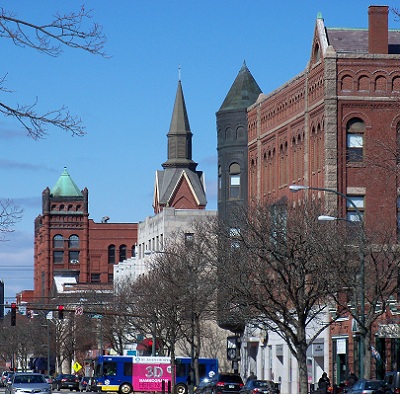
The Concord (N.H.) Monitor ran an intriguing story on Jan. 15 headlined “Crowdsourcing New Hampshire’s love affair with stone walls’’. Stone walls, built mostly by English colonists and their descendants, most of them farmers, from the 17th to the early 19 centuries, are one of our region’s most beloved features – and a reminder of how hard earlier New Englanders had to work to wrest a living from a rocky soil.
The Monitor’s David Brooks reports how an aerial mapping system called LIDAR has eased the mapping old stone walls, many hidden in woods that have long since enveloped open fields. “The state has uploaded a zoomable image of most of New Hampshire taken by airplanes using LIDAR, which operates like sonar but uses light waves and produces a more detailed image,’’ even from a mile in the air.
“Members of the public can search through the black-and-white image and if they find what appears to be a stone wall, notable for unnatural straightness amid meandering hills or streams, they can mark it with a drawing tool that creates a thin pink line. These lines will create a map and database of the state’s stone walls. The online map includes a ‘progress to date’ link keeping a running tally of how many miles of walls have been marked.”
The project could improve our understanding of land-use patterns that developed since Europeans started to move en masse into New England. It’s always useful to know where we’ve been, which can help tell us where we’re going.
To read Mr. Brooks’s story, please hit this link:

GoLocal reported Jan. 12 that a “new study finds that less than fifty percent {43 percent to be precise} of Rhode Islanders are willing to make significant ‘lifestyle changes’ in order to combat climate change.’’ That would include such things as driving their cars less. I’m surprised that the percentage willing to help address the scientific fact of global warming is that high. It takes a disaster to park over their heads to get the attention of many, probably most people when it comes to big issues, especially global ones. Rhode Islanders, says the study, are the least likely in New England to make changes because of fear of climate change. Maybe a big hurricane would change their minds.
Two-thirds of Massachusetts people in the research are willing to make such lifestyle changes, but that probably mostly reflects the higher percentage of well-educated people there, as well as its affluence, especially in the densely populated eastern part of the state. Obviously, the more affluent you are, the more likely you are to buy an electric car, etc.
To read the GoLocal article, please hit this link:
xxx
The Northeast’s exciting climate makes trying to make travel plans in mid-winter a triumph of hope over experience.
Astonishing Conflict of Interest
The Cranston City Council, in a 5-4 vote, has shown its disrespect for judicial independence and impartiality by reappointing gun-rights lobbyist Frank Saccoccio as a municipal court judge. It’s obvious to most citizens that a lobbyist shouldn’t be a judge. Legislation should be filed in the Rhode Island General Assembly to bar this sort of outrageously inappropriate appointment by municipalities.

SeaAhead, a newish organization with Rhode Island roots that seeks to promote “technology-based innovation tied to ocean sustainability in areas such as ports and shipping, fisheries, aquaculture and offshore renewables {wind turbines, etc.}’’ will be based in downtown Boston, at 50 Milk St. Given that Boston is in effect the capital of New England, a region with so many maritime roles, that makes sense. And there are lots of venture capitalists and other investment types in the neighborhood….. Still, I hope that SeaAhead eventually sets up permanent offices in Newport, Providence, New Bedford and Woods Hole, too.
See interview with SeaAhead HERE.
Make Space
An idea here for Boston? The Danes are considering building nine artificial islands in the Copenhagen area, both to provide more space for businesses and for renewable-energy production (probably mostly wind turbines) and, with reed beds and other natural barriers at the edges acting to reduce the impact of the storm surges expected to intensify with rising seas.
The Danes, like the Dutch, are very good at creating and reclaiming land, and planning in general, in their mostly low-lying nations. To read more on this, please hit this link:

A couple of minor private Massachusetts colleges have announced in the past year that they’re folding -- Mount Ida and Newbury colleges. Small colleges have been closing around America at an accelerating rate but few of them have been particularly distinguished.
However, as the demographic and financial crisis of higher education mounts, some prestigious colleges must close, too, or merge with larger, nearby institutions. Still, it was a bit of a bombshell last Tuesday to learn that Hampshire College, in Amherst, Mass., is in serious enough trouble that it’s seeking a partner, and, I assume, might have to close if it doesn’t get one.
Will a nearby institution rescue Hampshire? If so, it will probably be one of the four that helped found Hampshire in 1965 (it opened for students in 1970} for experimentation in the liberal arts when the Baby Boomer population meant surging applications. Those are the University of Massachusetts at Amherst and Smith, Amherst and Mount Holyoke colleges. Hampshire and the four comprise the Five College Consortium, whose students can take courses at any of the schools.
Hampshire is known for its alternative curriculum, emphasis on portfolios rather than course-distribution requirements and reliance on professors’ narrative assessments instead of grade point averages. Despite this seemingly touchy-feely approach, the college sends a big percentage of its graduates off to highly selective graduate schools.
Since 1970, Hampshire (sometimes affectionally called “Hamster’’) has become a sort of semi-elite institution. But its $52 million endowment is far too small for its ambitions and its applications have generally been slipping in recent years as they have at many other private colleges.
Hampshire, unlike some other economically challenged colleges, has not tried to turn itself into a glorified vocational school. Rather it has stuck with an emphasis on the liberal arts – an education that produces the most engaged and effective citizens. So I hope that some way may be found for Hampshire to survive with maximum independence and not just as a sort of experimental-education campus of one or more of the other four institutions in the Five College Consortium.
xxx
The Northeast’s exciting climate makes trying to make travel plans in mid-winter a triumph of hope over experience.
Anne Tyler: Social Historian
I’m a big fan of Anne Tyler’s novels, the latest being Clock Dance. She mostly writes about middle-class people (especially in the Baltimore area) as their lives change over the years. Clock Dance has a particularly eccentric collection of neighborhood characters, inhabiting a more marginal neighborhood than you might usually associate with Ms. Tyler’s work. And there’s a brilliantly described and creepy incident in an airliner early in the book….
Her portrayal of character through precise and concise description, and hyper-realist dialogue, displays literary genius. Here’s a description of the father of the central character: He’s “so mild-mannered that he thought it was impolite to pick up a telephone in mid-ring.’’ And while she generally avoids placing her characters directly in the context of news events, reading her books (and I haven’t found a clunker yet) gives you a clear-eyed view of what life has been for many Americans over the past half-century. There’s joy, humor, tragedy and melancholy, and she has the skill to energize our reaction to even the mundane aspects of daily lives.
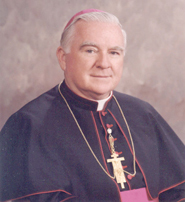
Robert Mulvee, retired bishop of the Roman Catholic Diocese of Providence. He was a very kindly and empathetic pastor who competently and honorably steered the diocese through the scandals involving sexual abuse by some priests as well as other difficult challenges, administrative and otherwise.
And John Bogle, whose invention of Vanguard index funds opened low-cost investing to many millions of people and in so doing secured comfortable retirements for many of them. And Mr. Bogle did this with great integrity and a surprising (in terms of the last few decades of American capitalism) absence of personal greed. His book Enough: True Measures of Money, Business, and Life is well worth reading.
19 to Watch in 2019 - FULL LIST

Angie Armenise
Chef and co-owner of Blackie’s Bulldog Tavern in Smithfield, Angie Armenise has it all going. Expansion to a new and larger location, a wonderfully loyal customer base and a big stack of awards -- and more to come in the new year. READ MORE

Marcela Betancur
Marcela Betancur, the new head of Latino Policy Institute at Roger Williams University and will be the power behind Latinx think tank in 2019.
Betancur, a Central Falls native, most recently worked READ MORE

Brian Goldner
No one will influence the psyche of Rhode Island more this year than Hasbro CEO Brian Goldner. After the loss of the PawSox to Worcester and the closing of Rhode Island’s beloved Benny's in 2017, Rhode Islanders are a bit raw.
He is poised to announce that Hasbro is...READ MORE

Cortney Nicolato
New United Way of Rhode Island President and CEO Cortney Nicolato succeeded Anthony Maione in 2018 — and takes on her first full year at the helm of the social service organization in 2019.
She is a Rhode Islander turned Texan returned back to Rhode Island. The Pawtucket native is all about Rhode Island and is passionate about helping to improve issues of housing affordability and the quality of education in RI. She is the mother of two elementary school-aged children. READ MORE

Sabina Matos
It is the rise of the Phoenix in Providence. On Monday, Sabina Matos won back the Presidency of the Providence City Council and returns to the top legislative position in the City of Providence.
As Providence goes so goes Rhode Island. Matos will be faced with taking on some of the most difficult issues in the state. READ MORE

Jamie Bova
The Newport City Councilor At-Large lined up the votes to votes for Mayor after being elected to just her second term on the Newport City Council this past November.
Bova, an engineer who grew up in Middletown, attended URI, and moved to Newport in 2012, succeeds Harry Winthrop as the city faces major changes ahead for 2019, including the construction of a new hotel on Thames Street — and more hotel proposals in the pipeline — and READ MORE

Jennifer Wood
The former private practice attorney turned top government aide turned non-profit director might have her biggest — and most public — battle on her hands in 2019.
RI Center for Justice Executive Director Jennifer Wood joined GoLocal News Editor on GoLocal LIVE where she spoke to the next steps after filing a federal class-action lawsuit in late November on behalf of all Rhode Island public school students to establish the right, under the U.S. Constitution, to an adequate education to prepare young people for full civic education.

Catholic Church Sex Abuse Survivors
In 2018, Bishop Tobin with the Diocese of Providence landed on GoLocal's “18 to Watch” as the Catholic Church was — and continues to remain — at the center of lawsuits pertaining to the collapse of the St. Joseph pension fund.
He’ll remain squarely in the spotlight — and not for good — in 2019, when he has pledged to release a list of names of abusive priests “credibly accused” over the years in the Diocese, as pressure mounts nationally for how sexual abuse claims were handled around the country — READ MORE

Matt Voskuil
One of Newport’s most iconic — and upscale — dining locations has a new look, a new chef — and people are taking note not just in Newport, but beyond.
Executive Chef and Director of Food and Beverage, Matt Voskuil at the newly opened Cara at the Chanler READ MORE

David Torchiana
The most powerful person in healthcare in Rhode Island may soon be a man who rarely visits the state and few here know his name.
Dr. David Torchiana is the CEO of Partners HealthCare and he is poised to push through an acquisition of Rhode Island’s second largest hospital group, ending the local control over three of Rhode Island’s most important healthcare assets. And, the deal has the potential of putting in peril thousands of Rhode Island jobs through consolidation. READ MORE

RI GOP Party Chair
Rhode Island Republican Party Chair Brandon Bell was defeated in his run for the General Assembly in 2018.
Republican Cranston Mayor Allan Fung lost in his second attempt at the Rhode Island Governor’s office, after a bruising primary that saw former opponent and House Minority Leader opt to endorse former Republican-turned-independent (and honorary chair for President Donald Trump’s campaign in Rhode Island) Joe Trillo. READ MORE

Anthony Baro
Anthony Baro heads Newport-based PowerDocks — one of Rhode Island’s most interesting startups. It is a market-making green tech company that, in many ways, combines the best of Rhode Island.
The emerging maritime renewal energy company is having an impact in the U.S. and globally. READ MORE

Blake Filippi
Blake Filippi is the new House Minority leader and is a fresh-faced leader for the GOP in Rhode Island. But, he faces a number of challenges. READ MORE

Desmond Cambridge
Brown University sophomore basketball player Desmond Cambridge has been a human highlight film his first year and a half on College Hill. He won Ivy League Freshman of the Year and this year he is READ MORE

Sarah Markey
South Kingstown School Board member Sarah Markey has been at the center of controversy since her election in November.
Markey, a top labor leader for the RI National Education Association, has drawn criticism by Democrats, Republicans and multiple municipal attorneys because READ MORE

Peter Neronha
Peter Neronha, the new Attorney General, takes over for the controversial Peter Kilmartin. The former U.S. Attorney for Providence now faces a far busier assignment than his federal one. READ MORE

Dylan Conley
Dylan Conley seems to be everywhere. Recently, GoLocal featured the attorney as one of Rhode Island's "Emerging Leaders."
He is the chairman of the Providence Board of Licenses and is in a hotbed READ MORE

Mike McGovern
Chef Mike McGovern -- formerly the chef at Red Stripe -- is taking the helm at East Greenwich's Kai Bar -- and now 241 Main Sports Bar and Grill.
Kai Bar is a combination of small plates and big drinks, “Kai offers a rotating small plates menu from an award-winning Chef and Craft Cocktails READ MORE

BIg Tourism Voids
Tourism is one of the most important sectors of the Rhode Island economy and two of the most important positions in the state are now vacant. READ MORE


