


Whitcomb: Another Gas Emergency; ‘Beautiful Wall’ Psychosis; Nationalism Can Be Nice
Robert Whitcomb, Columnist
Whitcomb: Another Gas Emergency; ‘Beautiful Wall’ Psychosis; Nationalism Can Be Nice
and too hot. It was sliding
beneath a big black wave,
GET THE LATEST BREAKING NEWS HERE -- SIGN UP FOR GOLOCAL FREE DAILY EBLASTanother, and another….
Then I was back in it.
The War was on. Outside,
in Worcester, Massachusetts,
were night and slush and cold,
and it was still the fifth
of February, 1918.’’
- From “In the Waiting Room,’’ by Elizabeth Bishop (1911-79)
“February is for curmudgeons, whinge-bags, and misanthropes. You can't begrudge us one month of the year or blame us for being even crabbier, it's so short. There is nothing good about it, which is why it's so great.’’
-- Lionel Shriver, journalist and novelist
“Every health-care system in the world has rationing. In the United States, I would be rationed by the insurance policy that I was able to afford. And beyond that, I’m rationed by how much I can afford, personally, for out-of-pocket.’’
--Sir Malcolm Grant, who recently stepped down after seven years as chairman of Britain’s National Health Service, the nation’s single-payer system, in an interview in The Boston Globe. To read it, please hit this link:
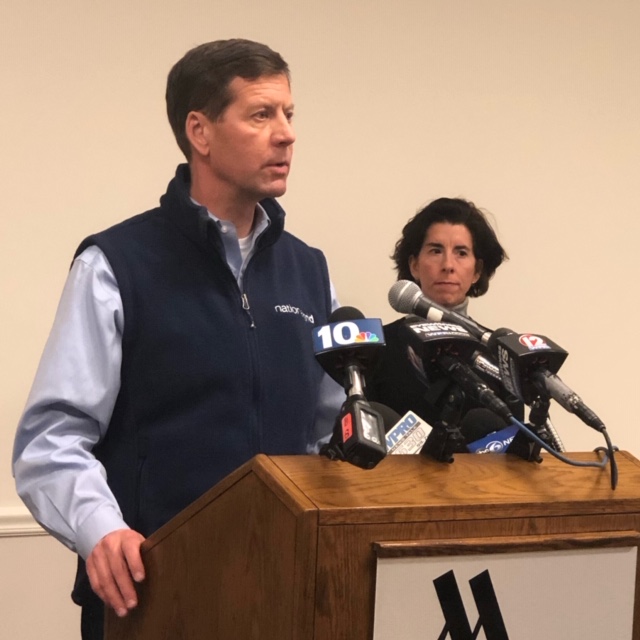
The natural-gas emergency on Aquidneck Island calls to mind the need for New England to accelerate its slow move away from polluting and flammable (and, in the case of gas, explosive) fossil fuel brought from far away and toward local renewable sources, which means mostly wind and solar power. Of course, this will require steady improvement in battery technology and much new construction, onshore and offshore. Ultimately, electricity from these sources will provide all of the electricity needed to run our homes, including heat, and do it cleanly.
Making New England less dependent on fossil fuel is not only good for the environment but it strengthens its economy by making it more energy-independent.
Good News for Fisherman
Meanwhile, there’s the good news that commercial fishermen are talking with Orsted U.S. Offshore Wind (which took over Deepwater Wind) on how to ease the interactions between offshore wind companies and the fishermen. The fishermen’s group is called the Responsible Offshore Development Alliance and represents fishermen from Maine to North Carolina.
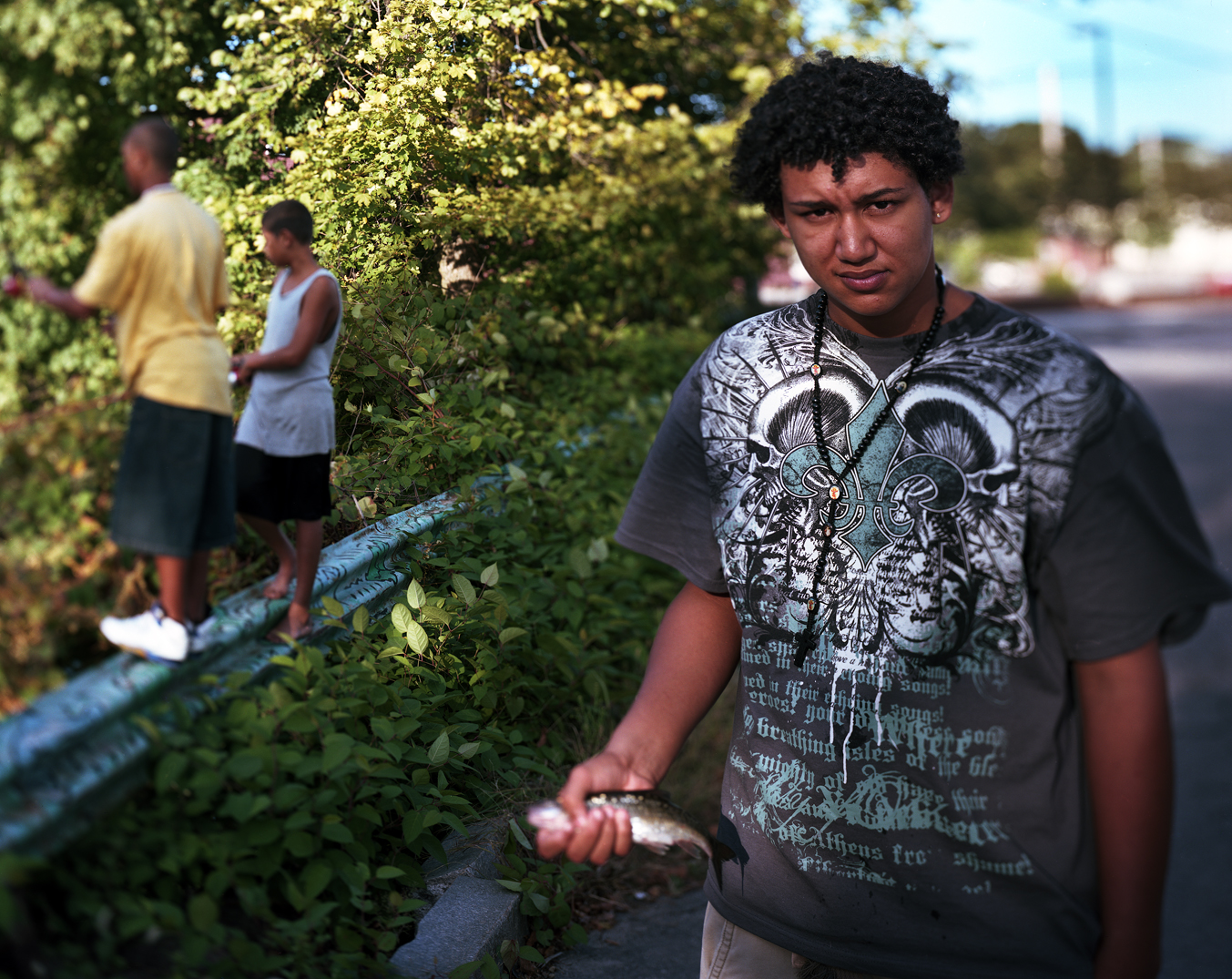
What the fishermen should really worry about is the Trump administration’s push for drilling for oil and gas off the East Coast. While a big offshore wind farm might inconvenience some commercial fishermen, think about what a big oil spill would do….
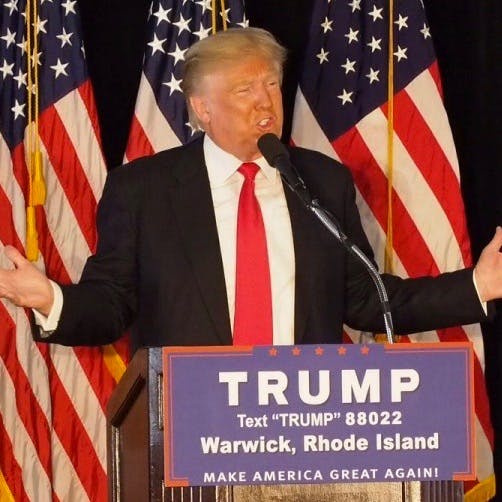
For a president to order a partial government shutdown as blackmail aimed at making him look like “a winner’’ to his base is immoral, and the now-suspended shutdown has caused considerable suffering. As I write this, thank God that no planes have crashed as a result of Trump’s infantile behavior.
I would have given him his wasteful $5.7 billion “beautiful wall’’ package in return for permanent legal status for the now-illegal aliens brought to the U.S. as children as well as for people with “Temporary Protected Status,’’ often granted because they feared for their lives in the nasty nations they fled.
The Democrats last week came up with a clever maneuver: They’d back a $5.7 billion enhanced border-security funding measure that includes drones and strengthened controls at ports of entry but not a wall project as promoted by Trump at MAGA rallies. $5.7 billion, is, of course, exactly what Trump wants to spend on his “Beautiful Wall’’ to please Sean Hannity and other Trump/Tea Party propagandists.
“Using the figure the president put on the table, if his $5.7 billion is about border security, then we see ourselves fulfilling that request, only doing it with what I like to call using a smart wall,” said Rep. James Clyburn, the No. 3 ranking Democrat in the House.
But Trump wants big wall photo-ops.
I’m surprised that more people haven’t noted that Trump could have pushed through his Beautiful Wall project when the GOP controlled both houses in the first two years of his reign. I realize that the Republican priority was tax cuts for the rich but still….
Curious.
Respectable Nationalism
Iowa Republican Congressman Steve King seems to be a white racist, and embarrassed House GOP leaders have punished him for it. But there’s nothing wrong with him defending “Western Civilization,’’ which has brought more political (democracy), economic, scientific and overall cultural advances to improve the lot of humanity that any other “civilization.’’
Nor is there anything wrong with people identifying themselves as “American nationalists’’ if that means admiring and adhering to our best principles – of human rights, such as equality under the law, representative democracy and as much economic freedom as the general welfare will allow. But “my country right or wrong’’ can lead to very bad places indeed.
{image_5)Tough to Compete With Mass.
Rhode Island Gov. Gina Raimondo commendably wants the state to be a lot more like Massachusetts – a desire reflected in her State of the State address and her (too?) ambitious budget proposals. That’s especially true when it comes to her ideas on how to advance public education -- K-college/voke school -- the heart of her program, around which hovers the question of how tough her administration will be willing and able to be on standards, as measured by tests.
The legislature is casting a gimlet eye on how she would fund her proposals, which would hike some fees, broaden the currently rather narrow sales tax and “scoop’’ some money from some quasi-public agencies. And who knows what might happen if we get a recession in the next year or so? We’d like to see contingency plans.
By the way, Massachusetts Gov. Charlie Baker also wants to raise taxes, in part to boost education aid to the localities. Among his proposals: putting a levy on opioid sales, broadening the excise tax to include vaping products, and boosting the tax that homeowners pay when they sell their house. The $150 million a year projected to come from this levy is supposed to go “resiliency-building’’ projects to address such effects of global warming as increased coastal flooding, flooding that’s already cutting property values in some places.
The biggest problem that all Rhode Island governors have in trying to implement programs like Massachusetts’s is simply that the Ocean State, while richer (in median household income, etc.) than the majority of states is much poorer than the Bay State, with its huge wealth-creating (and thus tax revenue) machine in Greater Boston based on technology, world-famed higher education, financial services and health care. (Consider that Massachusetts General Hospital alone has just announced a $1 billion building project).
Rhode Island, which has been much slower than Massachusetts to move away from its old mill culture, has nothing like this. But it does have proximity to Boston, which it must leverage with its own strengths, especially in such sectors as design and marine-related industries. The best thing that Rhode Island could do economically is make itself part of Greater Boston.

Governor Raimondo’s plans this year include requiring that both breakfast and lunch be provided at some public schools that predominately serve students from low-income families. The need for this reflects not only poverty but also the decline of the two-parent family; there used to generally be at least one parent around to feed the kids at each meal and often two. The alarming rise in the number of unwed mothers, especially among the poor, has played a big role in America’s economic and sociological problems in the past few decades.
Of course, such other issues as the decline of well-paying manufacturing jobs for parents are also important.
But where oh where are the fathers?
Slap to the Head
All this talk about public education reminds me of my first memorable encounter with it. I was in a first-grade classroom, jam-packed with about 35 kids in those early Baby Boomer days. The room smelled of furniture polish, disinfectant and chalk. A couple of us were rough-housing before the class was to start, and I accidentally tipped over an occupied goldfish bowl, which shattered on the linoleum floor.
At that point, the lady teacher slapped me hard on the head. I was more pained by the embarrassment that followed than the slap itself. There were no lawsuits. (I don’t remember if the goldfish was rescued.)
I mentioned the incident to my father that night. He sternly told me something to the effect of “be more careful.’’
Far worse public humiliations were to come in life but I still feel the shame of the goldfish-bowl disaster.
A Red State Loves ‘Free College’
As controversy continues around Governor Raimondo’s free-college program, you might look at how Tennessee, a Red State, is doing with its famous free-college program. The initiative is seen as a great success in, among other things, helping pull people out of poverty, and is very popular even in the most conservative parts of the Volunteer State. To read about it, please hit this link:
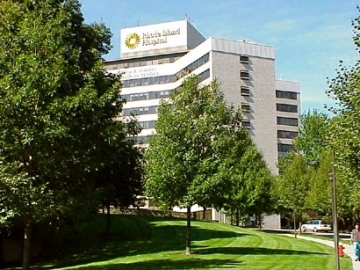
Governor Raimondo’s proposed budget includes a provision that’s part of her proposed reduction in the state program that gives money to municipalities to cover the revenue they lose by not being allowed to tax the property of “nonprofits’’. The provision would let cities and towns tax “nonprofit’’-owned “non-mission-related commercial property.’’ This very much means such big outfits as the big Lifespan and Care New England hospital chains.
Inevitably, the big “nonprofits’’ complain. I put the word in quotes because the executive suites of big hospital companies get huge compensation, and people on their boards can indirectly profit handsomely from their service from business thrown their way. Consider that Lifespan chief executive, Timothy Babineau, got $2,405,868 in compensation in 2017.
Amusingly, Lifespan complains that the proposed change could cost the company nearly $2 million annually – less than the compensation of one person there. Somehow I think that Lifespan could find someone who could do as good a job as the esteemed Dr. Babineau for half his compensation. Of course, most people on these boards are rich and so they’d be embarrassed to oversee a company C-Suite that wasn’t also rich.
Conflict Zone
Someday, probably far in the future, the Rhode Island legislature will pass and the governor will sign a law barring state legislators from also serving as public-employee-union officials. There’s a long tradition of these conflicts in Rhode Island and some other states.
A fine Jan. 21 article by The Providence Journal’s Katherine Gregg, “Senate labor chief has close union ties,’’ took us on a trip down a lane of legislative conflicts of interest.
She writes of state Sen. Frank Ciccone III, who’s now running the Senate Labor Committee, which deals with numerous labor laws. He, like Senate President Dominick Ruggerio, is a former high Laborers union official; Senator Ciccone is still a consultant there. Then there’s state Sen. Valerie Lawson, vice president of the National Education Association Rhode Island, a teachers union. She’ll also be on the Labor Committee. Meanwhile, 12 out of 21 legislators whose districts include parts of Providence are city employees!
Actually, these conflicts were sometimes considerably worse in some recent years. Perhaps the whopper conflict was the late Rep. Robert Tucker’s. He simultaneously served as the business agent for Council 94 of the American Federation of State, County and Municipal Employees while chairing the House Finance Committee in the ’80s. In that post, he helped push into law astronomically expensive retirement packages for state employees that eventually threatened to bankrupt the state.
Of course, there can be conflicts of interest involving legislators who are employees of big local companies, but their conflicts don’t seem as extreme as those involving public employee unions. If only we could depend on legislators with obvious economic conflicts of interest to always recuse themselves from voting on bills that would benefit themselves. Dream on….
Year-Round Farming Indoors
How about hydroponic farming in some of those many empty mall and mill buildings? Year-round food production in New England would help the environment by reducing food-shipping distances, and so fossil-fuel use, while providing very fresh produce, even in the middle of winter. Maybe use solar panels on the roofs to generate the electricity for the needed bright lights.
To read about one very dynamic Rhode Island hydroponic operation featured in GoLocal, please hit this link:

Michael Cohen’s request to delay his testimony about his former boss, Trump, because of Trump and Rudy Giuliani’s threats against Cohen’s family is a reminder that Giuliani’s father was a mobster, that Trump has done so much business with mobsters that he himself is one and that many people who cross Trump’s pal Vladimir Putin have premature deaths. Let’s hope that there’s adequate police protection for everyone who might testify in the web of investigations involving this most ruthless and corrupt president in U.S. history so far.
A Failure to Communicate
The “smile’’ of one of the kids from Covington Catholic High School starring at the elderly Native American drummer in the now famous encounter in Washington looked to me more like a rictus expressing anxiety than a facial insult. I wonder, meanwhile, about why the teachers in the Covington trip to Washington apparently went along with the kids wearing MAGA hats, which are of course Trump campaign gear. Donald Trump’s personal and public behavior is about 180 degrees away from Christian morality.
The kid in the middle of the controversy, Nicholas Sandmann, later said: “In hindsight, I wish we could have walked away and avoided the whole thing.” Quite right.
Reminder of Spring
Last Tuesday, the howling frigid winds had died down and you could feel the warmth of the sun on your face again. I had a brief image of looking at blue mountains in the distance on a May day with the smell of wet new leaves and newly cut grass.
A Domestic’s Dilemmas
Stephanie Land’s new memoir, Maid: Hard Work, Low Pay and a Mother’s Will to Survive, is a pungent narrative about class and the bigotry against the poor in America as its social mobility continues to decline. But it’s also a cautionary tale about personal fecklessness – hers.
Russell Baker, RIP
The courtly memoirist and longtime New York Times columnist combined the elegant and the rustic and big city and country wisdom, sometimes recalling E.B. White, though with a Virginian’s inflection. His sort of relaxed, ruminative commentary, usually not tied to the crisis chatter of hard news, was once found in many newspapers and magazines. The Internet, which has destroyed much of the business model of journalism, has sadly eliminated most of these generalist essayist jobs. Many people of a certain age miss Mr. Baker’s voice, often gentle, but strong when a moral issue called for it.
19 to Watch in 2019 - FULL LIST

Angie Armenise
Chef and co-owner of Blackie’s Bulldog Tavern in Smithfield, Angie Armenise has it all going. Expansion to a new and larger location, a wonderfully loyal customer base and a big stack of awards -- and more to come in the new year. READ MORE

Marcela Betancur
Marcela Betancur, the new head of Latino Policy Institute at Roger Williams University and will be the power behind Latinx think tank in 2019.
Betancur, a Central Falls native, most recently worked READ MORE

Brian Goldner
No one will influence the psyche of Rhode Island more this year than Hasbro CEO Brian Goldner. After the loss of the PawSox to Worcester and the closing of Rhode Island’s beloved Benny's in 2017, Rhode Islanders are a bit raw.
He is poised to announce that Hasbro is...READ MORE

Cortney Nicolato
New United Way of Rhode Island President and CEO Cortney Nicolato succeeded Anthony Maione in 2018 — and takes on her first full year at the helm of the social service organization in 2019.
She is a Rhode Islander turned Texan returned back to Rhode Island. The Pawtucket native is all about Rhode Island and is passionate about helping to improve issues of housing affordability and the quality of education in RI. She is the mother of two elementary school-aged children. READ MORE

Sabina Matos
It is the rise of the Phoenix in Providence. On Monday, Sabina Matos won back the Presidency of the Providence City Council and returns to the top legislative position in the City of Providence.
As Providence goes so goes Rhode Island. Matos will be faced with taking on some of the most difficult issues in the state. READ MORE

Jamie Bova
The Newport City Councilor At-Large lined up the votes to votes for Mayor after being elected to just her second term on the Newport City Council this past November.
Bova, an engineer who grew up in Middletown, attended URI, and moved to Newport in 2012, succeeds Harry Winthrop as the city faces major changes ahead for 2019, including the construction of a new hotel on Thames Street — and more hotel proposals in the pipeline — and READ MORE

Jennifer Wood
The former private practice attorney turned top government aide turned non-profit director might have her biggest — and most public — battle on her hands in 2019.
RI Center for Justice Executive Director Jennifer Wood joined GoLocal News Editor on GoLocal LIVE where she spoke to the next steps after filing a federal class-action lawsuit in late November on behalf of all Rhode Island public school students to establish the right, under the U.S. Constitution, to an adequate education to prepare young people for full civic education.

Catholic Church Sex Abuse Survivors
In 2018, Bishop Tobin with the Diocese of Providence landed on GoLocal's “18 to Watch” as the Catholic Church was — and continues to remain — at the center of lawsuits pertaining to the collapse of the St. Joseph pension fund.
He’ll remain squarely in the spotlight — and not for good — in 2019, when he has pledged to release a list of names of abusive priests “credibly accused” over the years in the Diocese, as pressure mounts nationally for how sexual abuse claims were handled around the country — READ MORE

Matt Voskuil
One of Newport’s most iconic — and upscale — dining locations has a new look, a new chef — and people are taking note not just in Newport, but beyond.
Executive Chef and Director of Food and Beverage, Matt Voskuil at the newly opened Cara at the Chanler READ MORE

David Torchiana
The most powerful person in healthcare in Rhode Island may soon be a man who rarely visits the state and few here know his name.
Dr. David Torchiana is the CEO of Partners HealthCare and he is poised to push through an acquisition of Rhode Island’s second largest hospital group, ending the local control over three of Rhode Island’s most important healthcare assets. And, the deal has the potential of putting in peril thousands of Rhode Island jobs through consolidation. READ MORE

RI GOP Party Chair
Rhode Island Republican Party Chair Brandon Bell was defeated in his run for the General Assembly in 2018.
Republican Cranston Mayor Allan Fung lost in his second attempt at the Rhode Island Governor’s office, after a bruising primary that saw former opponent and House Minority Leader opt to endorse former Republican-turned-independent (and honorary chair for President Donald Trump’s campaign in Rhode Island) Joe Trillo. READ MORE

Anthony Baro
Anthony Baro heads Newport-based PowerDocks — one of Rhode Island’s most interesting startups. It is a market-making green tech company that, in many ways, combines the best of Rhode Island.
The emerging maritime renewal energy company is having an impact in the U.S. and globally. READ MORE

Blake Filippi
Blake Filippi is the new House Minority leader and is a fresh-faced leader for the GOP in Rhode Island. But, he faces a number of challenges. READ MORE

Desmond Cambridge
Brown University sophomore basketball player Desmond Cambridge has been a human highlight film his first year and a half on College Hill. He won Ivy League Freshman of the Year and this year he is READ MORE

Sarah Markey
South Kingstown School Board member Sarah Markey has been at the center of controversy since her election in November.
Markey, a top labor leader for the RI National Education Association, has drawn criticism by Democrats, Republicans and multiple municipal attorneys because READ MORE

Peter Neronha
Peter Neronha, the new Attorney General, takes over for the controversial Peter Kilmartin. The former U.S. Attorney for Providence now faces a far busier assignment than his federal one. READ MORE

Dylan Conley
Dylan Conley seems to be everywhere. Recently, GoLocal featured the attorney as one of Rhode Island's "Emerging Leaders."
He is the chairman of the Providence Board of Licenses and is in a hotbed READ MORE

Mike McGovern
Chef Mike McGovern -- formerly the chef at Red Stripe -- is taking the helm at East Greenwich's Kai Bar -- and now 241 Main Sports Bar and Grill.
Kai Bar is a combination of small plates and big drinks, “Kai offers a rotating small plates menu from an award-winning Chef and Craft Cocktails READ MORE

BIg Tourism Voids
Tourism is one of the most important sectors of the Rhode Island economy and two of the most important positions in the state are now vacant. READ MORE


