


Whitcomb: Busing Was a Bust; Underwater-Property Battle; Marsh Medicine; Mooring Mania
Robert Whitcomb, Columnist
Whitcomb: Busing Was a Bust; Underwater-Property Battle; Marsh Medicine; Mooring Mania

On dune and headland sinks the fire:
Lo, all our pomp of yesterday
GET THE LATEST BREAKING NEWS HERE -- SIGN UP FOR GOLOCAL FREE DAILY EBLASTIs one with Nineveh and Tyre!
Judge of the Nations, spare us yet,
Lest we forget—lest we forget!’’
-- From “Recessional,’’ by Rudyard Kipling (1865-1936), published in 1897, at the height of the British Empire. Trump’s Fourth of July tribute to Donald J. Trump reminded me of this famous poem.
“We must select the illusion which appeals to our temperament and embrace it with passion if we want to be happy.’’
-- British writer Cyril Connolly (1903-1974)
“It is the smaller men, who belong almost completely to the climate of their times, who can tell us the most.’’
-- Iris Origo (1902-1988), English-born biographer

Joe Biden was excoriated by Senator Kamala Harris in the recent debate of Democratic presidential candidates for his opposition in the 1970s to busing ordered by federal judges to “integrate’’ public schools, mostly in cities. Senator Harris perhaps believed or hoped that there aren’t all that many people around who clearly remember what happened with busing.
Well, Biden was generally right. Forced busing was often a disaster, most famously in Boston, for which U.S. District Judge W. Arthur Garrity, a resident of rich, and lily white, Wellesley, ordered a massive busing plan that sent African American students all over the city, via long bus trips. It was a disaster, and not just because it took time from schooling and gave it to transportation and led to racial violence.
It also undermined neighborhood schools and the parent and student commitment they encourage, and intensified “white flight’’ to the suburbs and private schools, which further destabilized the school system.
If only Garrity and his ilk had spent considerable time in poor white (especially South Boston, large parts of Dorchester and Charlestown) and black sections (mostly Roxbury) of Boston, as I did as a reporter for the old Boston Herald Traveler, they would have realized that court-ordered busing would do more harm than good.
Joe Biden, representing Delaware, a state with a large African-American population, mostly in Wilmington, some affluent and middle-class white suburbs around that city and the area south of the Chesapeake & Delaware Canal, which had more in common with the Deep South than with the New Jersey-like region to the north of the canal, understood the sociological complexities of busing more than most politicians. He never was a racist, though like other senators had to work with racist Southern senators to get important legislation through. (I worked for the News Journal, Delaware’s dominant newspaper, for part of 1975 and met Biden a few times.) The area “South of the Canal’’ was a trip! One local pol down there asked me when the News Journal “is going to start hiring Americans’’ – in a nasty reference to the paper’s superb political writer Ralph Moyed, who happened to be Jewish.
Jeff Jacoby, The Boston Globe’s conservative columnist, usefully reviewed Boston’s busing mess in a July 2 article. He noted in it:
“In 1982, a Globe poll found that only 14 percent of black Boston parents still favored busing. The overwhelming majority preferred a free-choice plan, allowing parents to send their children to any public school in the city. In practice, that would have meant schools their kids could walk to.’’
“Busing made everything worse. Public school enrollment plummeted. In Boston, 78 school buildings were closed. In 1970, 62,000 white children attended the city’s public schools — 64 percent of the total. By 1994, only 11,000 white students remained. Before busing began, the average black child in Boston attended a school that was 24 percent white. By the mid-1990s, the proportion was 17 percent. Far from reducing racial isolation, busing had intensified it.’’
The best way to encourage long-term integration is to try to ensure that all students, in whatever school they’re in, get as good an education as possible so they can succeed economically and otherwise and to eschew rigid, racially based formulas. This also requires public policies that encourage family stability, including as politically incorrect as it sounds, two-parent households in which the parents are married. Family stability is a key factor in most kids’ success in school.

The rich are doing just fine pretty much everywhere – e.g., they effectively block off much of the coast to the peasantry with increasingly mammoth mansions and now they lay claim to part of the bottom of Newport Harbor: The New York Yacht Club makes available for sale – or rent? -- 17 commercial moorings only to club members and their guests.
I’m with the Rhode Island Coastal Resources Management Council on this: The bottom of Newport Harbor is clearly state-owned and a private entity has no right to treat it as its own.
Deputy CRMC Director Jeffrey Willis wrote:
“A mooring permit is a government-issued temporary license given to a specific person or entity, for a specific duration, to utilize a specific area of the public’s waters for a specific private purpose. The permits do not confer property rights, perpetual or otherwise, on their holders and the holders may not assign, transfer or sell them.”
“It’s not necessarily just about the New York Yacht Club. It’s about any given group that wants to exclude people. The harbor land is held as a public trust for the general public.”
The NYYC’s mooring imperialism takes privatization another step too far.

Marsh Magic
WBUR, one of the two major NPR stations in Boston (the other is WGBH), ran a nice story July 2 about efforts to improve New England’s largest salt marsh, in Massachusetts’s northeast corner, in the Parker River National Wildlife Refuge. Over the years, farmers, to encourage the growing of salt-marsh hay for livestock, and other local residents seeking to control the mosquito population, had ditches dug to drain what was seen as excess water from the marsh. But, says WBUR reporter Miriam Wasser, that did some damage to some creatures and the marsh’s general health and so some of its drainage ditches were blocked.
But wait! Maybe they went overboard. So, as wildlife biologist Nancy Pau told Ms. Wasser:
"Our concern about too much draining has shifted, and the concern now is that the marsh is getting too much flooding," she says. “It’s important for the marsh to get flooded, but also for the water to come back off. Anything that interrupts either of those two processes can negatively impact the marsh," which is a buffer against sea-level rise. Among the negative effects of bad water flow are the spread of algae, which can kill other life. So now some of those ditch plugs are being removed, letting water behind them to go to the Plum Island River. It’s a tricky balancing act.
As the tide rises and falls, marsh grass traps sentiment, which builds up the peat out of which the grass grows. This most dramatically helps protect the coast from storm surges in hurricanes and nor’easters.
Scientists continue to learn more about wetlands biology and geology, and how to adjust “marsh management’’ to maximize these wetlands’ biological health and their role as buffers against sea-level rise and coastal erosion. When I was a boy living very close to salt marshes most of us mostly saw them as homes for birds and the source of strong, rather unpleasant smells. But biologists know a lot more now of just how important coastal wetlands are to wildlife, including the shellfish and finfish we eat. The writer and marine biologist Rachel Carson, author of The Edge of the Sea, The Sea Around Us and the world-historical Silent Spring, would presumably be pleased by the progress. She focused her work for many years on the New England coast. But we need to know a lot more about how these ecological systems work.
In any event, wetlands overseers along the whole New England coast might learn some things from the restoration efforts at the beautiful Parker River Wildlife Refuge.
To see Ms. Wasser’s story, please hit this link:
Another Kind of Busing
An article in The Globe by Mark Pothier, an editor there, about the Plymouth & Brockton Street Railway Co. (a charming old name), which serves many of Boston’s southern suburbs and Cape Cod, brought back my memories of traveling on the P&B’s buses between Boston and the South Shore when I had summer jobs in high school and college. Mr. Pothier, for his part, has been commuting on the P&B since 2017, after often-nightmarish car commuting that began in 2003.
Back in the late ‘60s, the traffic on the roads to Boston, especially the Southeast Expressway (which the radio folks often called “The Distressway’’), was awful. It’s probably worse now, as Greater Boston’s population and wealth have grown. There is, it is true, commuter rail service again on the South Shore, but it’s more expensive than the bus.
While the buses, like the cars, also get gridlocked, at least you can read, snooze and brood on them, and if your bus gets into an accident, at least it isn’t your fault. The bus motion sometimes produces a touch of car sickness in some of us, and they tend to lurch, but still…
My question is whether private commuter bus lines might help supplement in more places the buses of such public-transportation agencies as the Rhode Island Public Transit Authority and the MBTA. And perhaps they could offer onboard perks, such as drinks, snacks and newspapers and magazines (if any such pubs survive). Anything to make a better and denser transportation system for those unwilling or unable to drive.
Mobile Gambling
How much will the introduction of online lottery games hurt those small convenience stores that sell so many state lottery tickets? They sure sell a lot in the little store down the street from us….

Let’s hope that the opening of the Urban Greens Co-op market on Providence’s West Side presages more such stores to address the food needs of now-underserved communities. They need to be able to add food stamps and EBT cards.
Book Store Retirement
And good luck to Judy Crosby in finding another devoted books person to buy and run Middletown’s terrific Island Books, which she founded in 1993. The store is a cultural treasure and public service. But owning and running such an establishment is hard work, and she wants to retire.
Blower Hell
Gasoline-powered leaf blowers, those screaming, polluting devices, formerly were used around here almost entirely to blow leaves into piles in the fall. Now they’re used to blow around dirt year round, creating dead/deaf zones of a block or more wide while the commercial yard crews, with or without ear protectors, push through. How to ruin a summer day.
Those Nice Nordic Nations
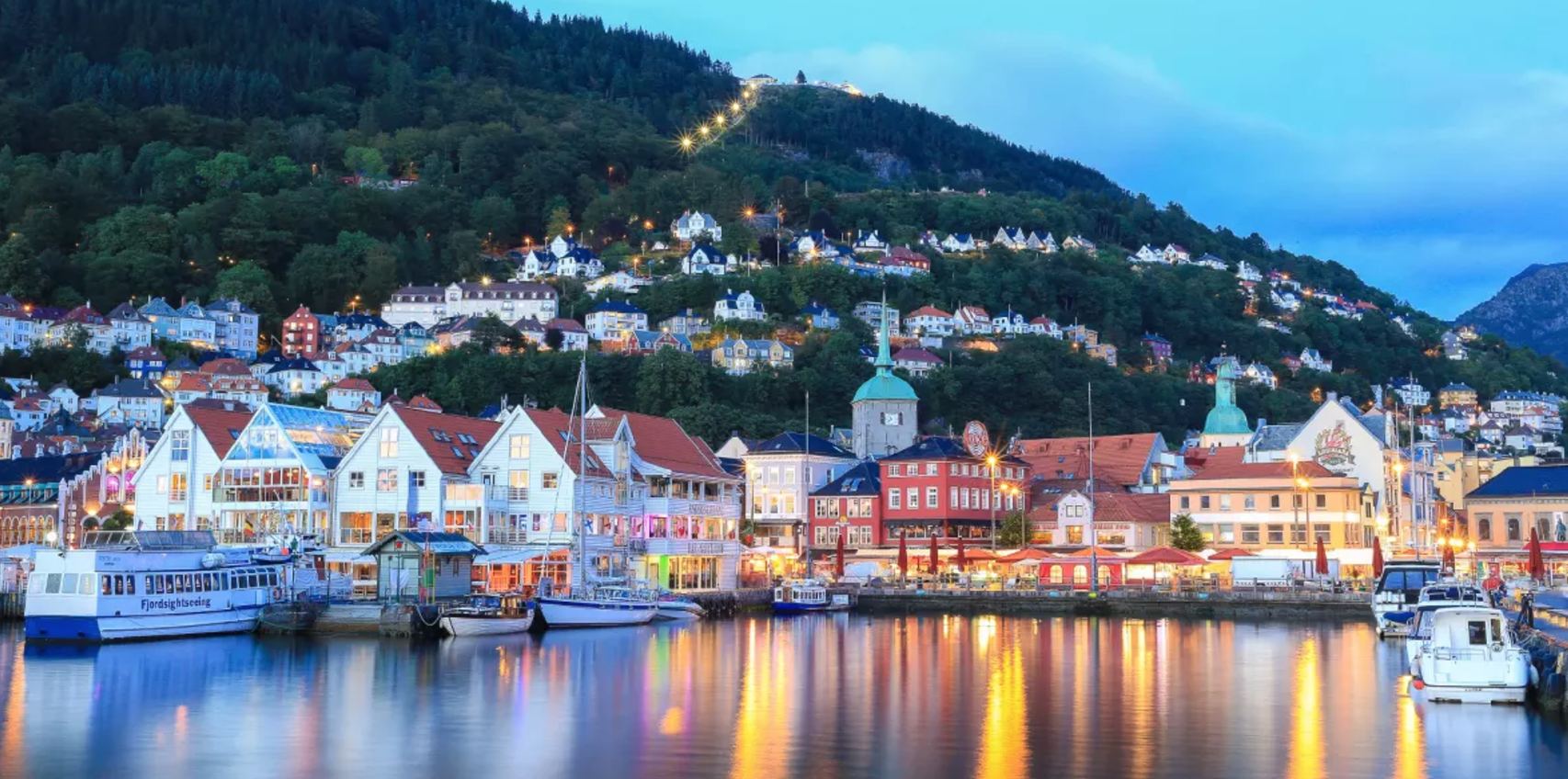
Some Democratic politicians laud the Scandinavian nations – all very prosperous -- for how their highly humane social-welfare systems are coupled with vibrant free-market economies tempered by a strong social contract.
But American politicians might not notice that those countries also have fewer regulations regarding such things as starting businesses and licensing requirements for occupations, and far less of a litigation habit, than we have. We have tons of such occupational licensing requirements here in part because powerful lobbies seek to keep their prices high by restricting the number of people who can set up shop. Scandinavian nations also have no minimum-wage laws, though that’s at least in part because the powerful unions there feel that such laws would curb their collective bargaining power.
Back when I was an editor covering international business, I found that Scandinavian businesses were the most efficient, that they usually took a very long-term capital-investment approach and that they were the most honest in the world. They placed a higher emphasis on integrity than American companies. That’s one reason they’re so successful: Trust is good for business.
And while Nordic national health programs have produced some of the best public-health metrics in the world, co-payments and deductibles are high. Citizens are taught at home and in these nations’ very good public schools to be responsible, civic-minded and not to expect the sort of “free lunch’’ for health care and college educations that some leading Democrats seem to be offering.
Of course, that there is also much, much more social cohesion and homogeneity—and far fewer people -- in Scandinavia than in America, making social programs much easier to start and efficiently maintain there than in the huge and vastly more culturally and politically complicated United States. Some Democrats, especially those running for president, would do well to take a closer look at why Scandinavia seems to do so well. They’re throwing around too many flawed comparisons.
Some Summer Memories
There was (and I assume still is) a beach down the hill from our house in Cohasset, on Massachusetts Bay, with rocky headlands on each side and a couple of large granite outcroppings in the middle of the beach – called “Little Big’’ and “Big Big.’’ Big white-elephant gray-shingled summer houses built in the late 19th and early 20th centuries and Spanish-style stucco mansions built in the ‘20s -- some summer places and some year-round— loomed, among the bayberry and poison ivy, over the gray sand and pebbles beach, which was occasionally covered by bunker oil from ships a few miles offshore. There was often a rank smell from that and from a narrow stream of sewage water sometimes flowing down one side of the beach. Those lovely leaching beds! This was way before the Environmental Protection Agency.
The water was usually cold and murky and frequently filled with seaweed. The hot southwest wind blew the warmer surface water away the beach. Often the hotter the day, the colder the water. But we all went swimming in it anyway. Then we went home to take hot showers to warm up and wash off the salt. We all got sunburns, which parents said made us “look healthy.’’
A half mile away, fragrant flats hosted mussels (which we used for bait, not to eat) and stretched out between acres of marsh grass, interrupted by boulders left by the Ice Age. A change in summer wind direction from southwest to east could lower the temperature by 20 degrees in a few minutes. Down the road from us was a rocky island with a brick mansion -- named “Whitehead’’ because of the color of the rock (supplemented by guano) -- connected with the mainland with an arched bridge. There was often no one there, leading to florid speculations about the presumably rich owner.
We always looked forward to visiting our paternal grandparents in West Falmouth, on Buzzards Bay, partly because the water was about 15 degrees warmer than Massachusetts Bay, and cleaner. There, the southwest wind pushed the warm surface water toward the beach.
As we got older, the beaches became most notable to my contemporaries for such activities as beer drinking, smoking, smooching and illegal fireworks displays.

Joanne Mattera’s new book, Vita: a memoir: Growing Up Italian, Coming Out, and Making a Life in Art, tells of her sometimes rocky, sometimes joyous, often risk-taking and sometimes outrageous trip through the art world since the late ‘60s. But what I liked most was the story of her upbringing in gritty seaside Revere, Mass., as the daughter of a rigid and reactionary father who rose to be assistant school superintendent there in an ethnic group that was trying to balance the highly conservative and traditional lifestyle brought over from Italy with America’s much looser (some in her family might have called it libertine) lifestyle.
Revere has changed a lot since the ‘60s, when it was mostly known -- perhaps unfairly -- as a honky-tonk beach resort and amusement park (the North Shore’s equivalent of the South Shore’s Nantasket Beach, in Hull); a corrupt Greyhound Park called Wonderland, and more than its fair share of Mafiosi.
Her story, often told with hilarious deadpan humor, displays her drive and growing confidence as a painter and writer and, well, person. Colorful indeed: She says that she “works in a style that is chromatically resonant and compositionally reductive.’’