


Whitcomb: RI Sovereign Localities? Providence Pension Crisis; Sea-Ahead Ahead; Union Persistence
Robert Whitcomb, Columnist
Whitcomb: RI Sovereign Localities? Providence Pension Crisis; Sea-Ahead Ahead; Union Persistence

“We must touch the earth, must seek a mortal solace,
must find ourselves, our own, our known, in the crowd,
GET THE LATEST BREAKING NEWS HERE -- SIGN UP FOR GOLOCAL FREE DAILY EBLASTbefore we can face the old inhuman spaces
above, before we can turn toward sky and cloud.’’
-- From “The Prospect Before Us,’’ by Constance Carrier (1908-91), Connecticut-based poet and teacher.
“There are no great nations … without respect for right.’’
--- Alexis de Tocqueville
In an increasingly divided America there’s been an unfortunate increase in the number of officials in a few localities refusing to enforce federal and state laws that they publicly oppose, in some cases as part of trying to curry favor with certain powerful constituencies. Thus, mayors of “sanctuary cities,’’ such as Providence, with large illegal-immigrant populations have taken it upon themselves not to cooperate, in some cases, with federal immigration officials. The Feds, not the states or cities, have final jurisdiction over immigration matters!

Reminder: The towns and cities are legal children of the state, and their officials are required to follow state law.
Burrillville’s Town Council has already acted, promising, among other things, not to fund storage space in the town for firearms seized should the legislature enact a law that “unconstitutionally infringes upon the right of the people of the Town of Burrillville to keep and bear arms.’’ Glocester may soon follow. So the towns will determine what is “constitutional’’?
In other words, such towns would break state laws in order to have as little regulation as possible of guns. For some people these days, the Second Amendment is the only constitutional amendment they’re interested in.
Speaking of regulation, the Second Amendment reads:
“A well regulated Militia, being necessary to the security of a free State, the right of the people to keep and bear Arms, shall not be infringed.’’
For many years, the “regulated bit’’ was taken by both Republican and Democratic leaders in Washington to imply that careful gun control was both constitutional and necessary. But with the GOP’s rightward ideological march and the southward and westward direction of its votes, and Republican presidents’ selection of hard-right federal judges, amidst the growing lobbying power of the NRA and the gun-making trade, that changed.
Anyway, America’s federal system of laws will be gravely damaged if many more localities decide to only help enforce the state and federal laws they like. It’s not supposed to work that way.

The New England Aquarium, a major research institution as well as a big aquarium, and SeaAhead Inc., both based in Boston, have announced that they’re partnering to support the creation and growth of start-ups that “enhance sustainability and ocean conservation. The two groups believe that significant global impact can now be achieved by supporting new bluetech ventures.’’
The two organizations say they seek “to catalyze new business creation by providing … ‘first capital’ to entrepreneurs with a new ocean-related innovation that will have a strong impact on sustainability.’’
Sea-Ahead, which has strong ties with Rhode Island, says of itself: “Our ecosystem includes technologists, scientists, startups, corporations, governments and other ocean stakeholders that are coming together to create impact in areas including greener shipping and ports, aquaculture and fishery processes, offshore alternative energy and smart cities.’’
and The New England Aquarium’s:

Some say that investigations of the sort of industrial-strength corruption found in the Trump regime are unimportant – indeed, an irritating distraction -- compared to economic policy, health care, infrastructure and so on. But corruption hurts those things, too.
The places with the most honest political systems – Canada, Scandinavia, Germany, Switzerland, Japan and Singapore, among others – have the greatest long-term prosperity. That’s because public officials’ integrity promotes a wider trust and confidence in society, which is of vast importance in nurturing national economic health, which in turns pays for essential public programs. And corruption at the level we now see in Washington can become an existential threat to democracy. It’s deeply corrosive, including by setting a terrible example to the young of how to behave.
It’s much more than “just politics -- Democrats vs. Republicans,’’ etc. For that matter, all human relations are, in a sense, “political.’’
Now it is clear that Atty. Gen. William Barr lied to the public and Congress about what is in the Mueller Report in order to protect Trump, and he lied about his interactions with Robert Mueller. And his apparent view that presidents are essentially above the law is scary.
Trump poisons everything around him. What a role model of a head of state!
Tony Schwartz, who ghost wrote The Art of the Deal for Trump, and spent many hours with the mobster for his research, summed up Barr’s client well, saying that he’s
"willing to say anything, to lie, to deceive, to distort and not feel the slightest bit of guilt about it, and it throws anybody off."
“He’s a sociopath. He’s sociopathic. There isn’t a soul in there.”
But our civic standards are in decline, and if the next recession doesn’t come until after the 2020 election, Trump could well be re-elected, especially given how the Electoral College works. Then the Republic will be in much greater peril.
It may be corny to say so but character still counts.
xxx
At least political hack, Trump suck-up, almost always wrong economic forecaster and deadbeat Stephen Moore will not go on the Federal Reserve Board after all.
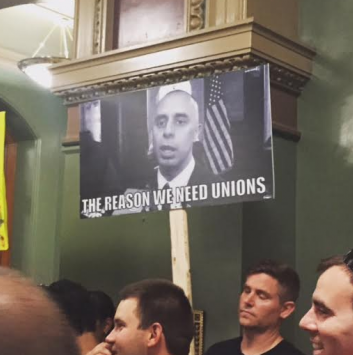
The Providence Journal’s Katherine Gregg reported on May 1 that there’s a move afoot in the Rhode Island General Assembly to increase pensions of retired state and municipal workers and public school teachers by granting “stipends’’ in years when they don’t get cost-of-living increases. That’s even though the state employee and teacher funds are even less funded, at 53 percent and 55 percent, respectively, than they were in 2011 – 57.4 percent and 59.7 percent (at least in part because the state Retirement Board cut to 7 percent from 7.5 percent the projected annual rate of return).
This is yet another legislative effort to garner support from public-employee unions. Relentless!
Meanwhile, GoLocal reports: “The City of Providence’s pension fund — the largest municipal plan in the state of Rhode Island — is in ‘Critical’ status. Providence is underfunded by more than $1.356 billion. And, the majority of municipal plans across the state are also designated as critically underfunded, a total of 20 other municipal pension plans.
“Critical funding status is defined by Rhode Island General Treasurer Seth Magaziner as pension funds that are forty percent underfunded.’’ Exciting!
But thank God we’ll never have another recession to stress-test this situation….

Companies in authoritarian regimes, such as China, do the bidding of dictators. Thus we must be very wary of letting the likes of the huge Chinese telecom company Huawei Technologies into our telecom networks. Huawei makes mobile phones, tablets and computers — and assembles the software, routers and networks to operate WiFi and high-speed Internet.
In the latest reminder of the threat: London-based Vodafone Group, a telecommunications conglomerate, has found hidden “backdoors’’ in Huawei’s Internet routers that can give Huawei (and thus the Chinese dictatorship) access to telecom networks. But Western companies such as Vodafone rather cynically seek to do deals with Huawei because of the Chinese company’s attractive pricing and because they want as wide a range as possible of vendors to select from. But they’re opening themselves and their home countries to massive industrial espionage, and worse, such as sabotage of the electricity grid, vote-tabulation systems and other infrastructure, by an expansionist, disciplined and ruthless China.
Unfortunately, the Trump administration has been confusing on this threat. While White House officials had prepared an executive order to effectively ban the Huawei from any contracts to build 5G wireless networks in the U.S. for fear that it could spy for the Chinese government, Trump, perhaps trying to make nice with Beijing to get a politically popular trade deal, has said that America should strive to win the race for 5G wireless supremacy “through competition, not by blocking out currently more advanced technologies.’’
Surely, he doesn’t believe, after the long Chinese record of industrial espionage and surveillance, that Huawei will play fair in this competition.
Then there’s Democratic presidential hopeful Joe Biden, who has ridiculously played down the Chinese threat, saying it’s “not competition" for the United States.
"China is going to eat our lunch? Come on, man," Mr. Biden said while campaigning last week, citing China’s many problems.
"They can't figure out how they're going to deal with the corruption that exists within the system. I mean, you know, they're not bad folks, folks. But guess what, they're not, they're not competition for us." Actually, China has plenty of “bad folks’’. Its regime, after all, runs concentration camps and harvests prisoners’ organs while imposing a surveillance system that might have impressed Orwell even as it continues to steal Western tech. Is old Joe Biden that naïve, or do his son Hunter’s business deals in China play a role in his comments?
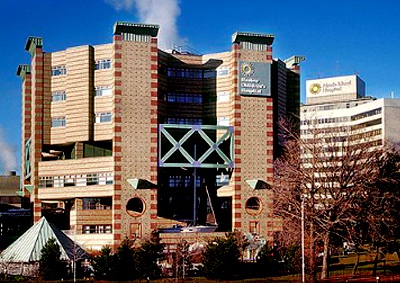
Perhaps in the fullness of time, we’ll find out to what extent, if any, executives’ personal rivalries and job-protection concerns have played roles in Lifespan’s battle to prevent Boston-based Partners HealthCare from taking over Care New England. Is the Ocean State too small to have two big hospital systems?
xxx
As Democrats keep health care a hot topic in the public square, few discuss one factor in America’s sky-high costs – that American physicians are the world’s highest paid, but then so are its hospital and pharm execs. It seems politically easier to go after the nation’s drug-price scandals.
The Asphalt Jungle
America’s infrastructure continues to crumble at a good clip. Congressional leaders met last week with Trump to discuss a big program but apparently nothing came out of it other than some updated rhetoric. And with the big GOP tax cuts, primarily for the rich and companies, there’s little new money around to pay to fix, let alone improve, our roads, bridges, mass transit, Amtrak, airports, electricity grid and water systems.
This will eventually sharply slow economic growth.
Meanwhile, a shout out for The Public’s Radio’s (still trying to get used to the name, which reminds me of state-controlled media) Shane McKeon for his piece on how using asphalt for roads, while cheaper at the start, costs governments more in the long run. Concrete is much stronger and is far less susceptible to pothole development than asphalt. The only main drawback to concrete, in addition to its higher cost to lay down, is the mild bump-bump-bump you feel driving on it, as I remember from the ‘50s and ‘60s when many major roads in Connecticut were concrete.
The asphalt addiction is just another example of American short-termism, which wastes so much money in the long term.
To read/hear Mr. McKeon’s thoughts about asphalt addiction, please hit this link:
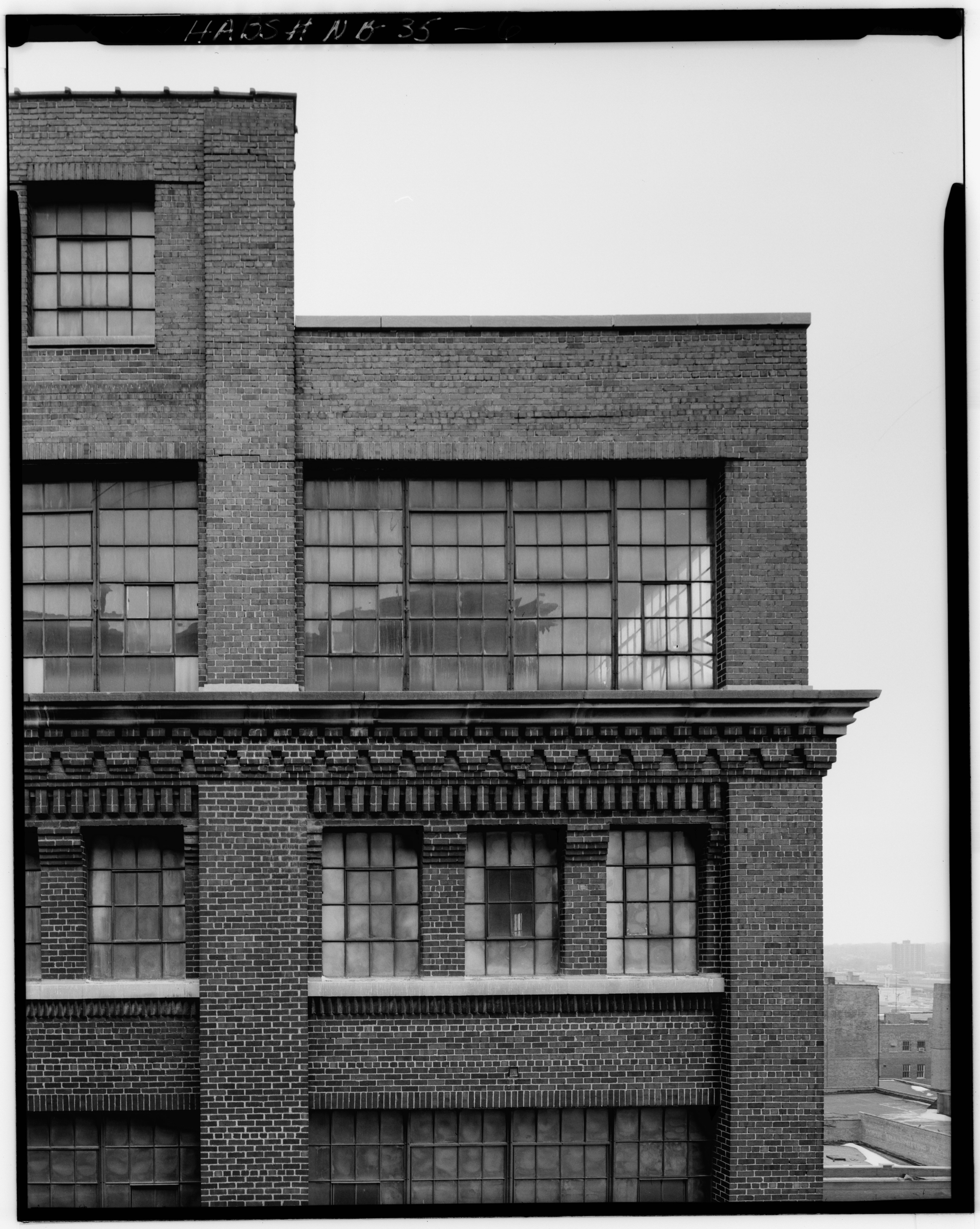
To see a cautionary note on communities making deals with big companies look at a Bloomberg News story on Omaha.
Back in the ‘80s, food giant Conagra had threatened to leave the city (whose most famous resident is vastly rich investor Warren Buffett of Berkshire Hathaway) unless 24 very solid red-brick warehouse buildings, collectively called Jobbers Canyon, built in the early 1900s and of the sort that are now often turned in lofts for residences and businesses, were torn down. So what quickly followed was the largest destruction of a National Register of Historic District in history, along with Conagra getting big tax breaks, and its replacement with a low-slung, suburban-style corporate headquarters.
But in 2015, the company’s execs decided to move the headquarters to Chicago for “access to innovation and brand-building talent” (aka young techies). People are getting sick of suburban office parks. Urban settings, with the social and intellectual energy you associate with them, have become much more popular in recent years, especially with young people (and increasingly retirees, too).
So now a developer wants to turn the Conagra site into a dense mix of residences, offices, restaurants and other uses. The warehouses torn down in the ‘80s would have been attractive structures for such a mix.
Justin Fox, who wrote the article, notes the deep regret that followed the destruction of New York’s old (completed in 1910) Pennsylvania (train) Station in 1963; it was a Beaux-Arts masterpiece. It was replaced by the hideous, claustrophobic current Pennsylvania Station. Now, New York’s nearby grand old central post office (completed in 1912) is being converted to a terminal with something of the glory of the old Pennsylvania station, which I remember well. (We had to go there to get on trains heading south.) What’s old is new again.
Mr. Fox writes wisely that “{T}he Jobbers Canyon saga is an indication that in trying to lure a corporation to town or keep it there, city officials should focus on changes and commitments that they’d be happy with even if that corporation went away.’’
To read his article, please hit this link:
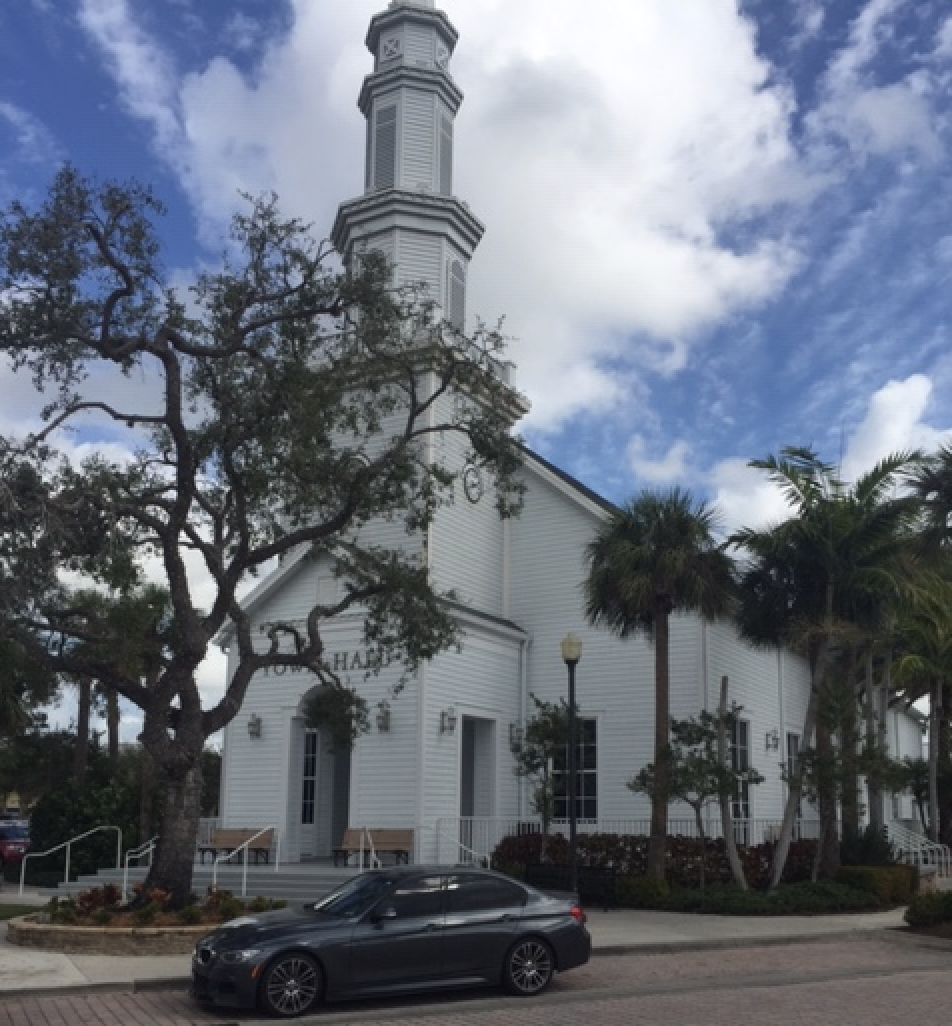
A couple of months ago I was visiting some relatives in a large gated community in Port St. Lucie, Fla., where live lots of people liking Florida’s weather (or at least its winters) and disliking Northeast taxes. What most struck me, besides the cat-consuming alligators, was how much the nearby village center was constructed to look like a New England small town instead of the “there’s no there, there’’ appearance of much of Florida, with its innumerable strip malls and shoddy houses and condo developments. People still long for something evoking a longer history than you’re usually reminded of in Florida, if only a Disneyfied version such as in Port St. Lucie.
Advice to the Peasants From JPMorgan Chase
There was an amusing slice of American economic life last week in JPMorgan Chase’s advice to customers in a Monday Motivation Tweet on how to save money.
It ran thus:
"You: why is my balance so low
Bank account: make coffee at home
Bank account: eat the food that's already in the fridge
Bank account: you don't need a cab, it's only three blocks
You: I guess we'll never know
Bank account: seriously?"
JPMorgan withdrew the Tweet after complaints about the bank’s $25 billion federal bailout in the 2008 crash (it was repaid) and JPMorgan Chase CEO Jamie Dimon’s $31 million compensation for 2018. He makes about 364 times the median compensation of Chase employees.
The vastly profitable ($32.5 billion for 2018) Chase showed crummy PR but, still, there’s no doubt that many low-paid workers spend an inordinate amount of money on daily luxuries such as Starbucks and other pricey coffee and prepared food. And many still smoke – a very expensive habit. But who are we to begrudge folks life’s little pleasures?
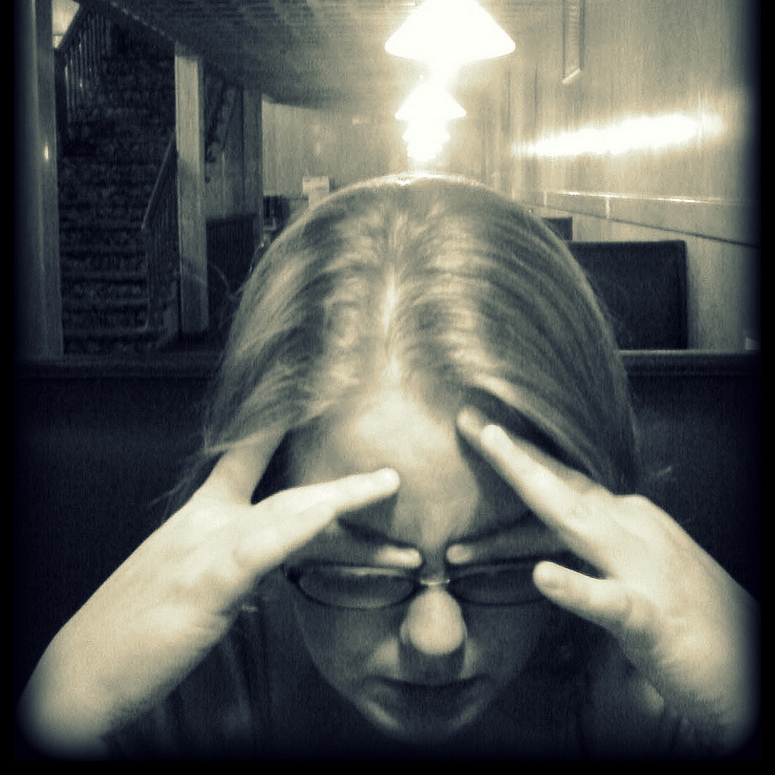
A recent Gallup poll found that about 55 percent of American adults felt “stressed’’ during “a lot of the day’’ before the poll was taken, considerably worse than the 35 percent Gallup found internationally. 45 percent said that they had felt “a lot’’ of worry the day before, higher than a global 39 percent.
Assuming that these numbers are fairly accurate, why are they so high, especially when economic data look pretty good? My hunch is that reasons include the continuing breakdown of family and community cohesiveness and the steady drumbeat of alarming, and usually hyped, news. And while the unemployment rate is low, most workers know that job security is not to be relied on.
The anomie level has always been pretty high in America anyway, with its heavy emphasis on individualism and going it alone.
Earth to earth, and biodegradable
Having long thought that expensive coffins and other accoutrements of human burials are a waste of money and not particularly good for the environment (I’ve had somewhat awkward arguments about this with relatives after family deaths) I applaud this week’s opening of “The Ellipse,’’ at beautiful Swan Point Cemetery, on Providence’s East Side. This will be an area for burials in which, the cemetery administration says, “a
process is followed by which all elements going into the earth are biodegradable, ‘’ most especially, of course, the corpses. Hold the preservatives and the metal coffin handles!
(But cremation is the neatest way to go.)
Of course, except in those rare families with strong genealogical interests, knowledge of, and interest in, our ancestors is pretty much nonexistent beyond our grandparents’ generation. We fade into the past remarkably fast.
I do like visiting Oak Grove Cemetery in Falmouth, Mass., which was founded in 1849 but includes the remains of plenty of 18th Century (and maybe even late 17th Century) people moved there from family graveyards. In a sign of how stable small-town life was in those days, there are dozens of what’s left of my ancestors there, including some recent entrants. I was mildly disappointed to learn that there’s no room left for myself and my immediate family. But then I thought: Why take up room?
Katherine Lee Bates, who wrote the lyrics for “American the Beautiful,’’ is buried in Oak Grove.
Delightful Reading
A Reader’s Delight, by the late Noel Perrin, is indeed generally delightful as he surveys in short, chatty and often funny essays 40 pieces of fiction, essays and poetry. There’s a lot of serendipity here as he affectionately discusses mostly little known, or once known but now largely forgotten, writers (such as the complicated and under-rated novelist James Gould Cozzens) that he’s discovered or rediscovered. This is a nifty book to pick up and read an essay in for a few minutes between doing other things.