


Whitcomb: Making Hospital Bills Less Surprising; Providence Schools Crisis; Help for ‘Hilltowns’
Robert Whitcomb, Columnist
Whitcomb: Making Hospital Bills Less Surprising; Providence Schools Crisis; Help for ‘Hilltowns’

-- Attributed to various people
GET THE LATEST BREAKING NEWS HERE -- SIGN UP FOR GOLOCAL FREE DAILY EBLAST
"You have to love a nation that celebrates its independence every July 4th, not with a parade of guns, tanks, and soldiers who file by the White House in a show of strength and muscle, but with family picnics where kids throw Frisbees, the potato salad gets iffy, and the flies die from happiness. You may think you have overeaten, but it is patriotism."
-- The late columnist Erma Bombeck (1927-1996)
“Another summer! Our Independence
Day Parade, all innocence
of children's costumes, helps resist
the communist and socialist.
Five nations: Dutch, French, Englishmen,
Indians, and we, who held Castine,
rise from their graves in combat gear—
world-losers elsewhere, conquerors here!’’
-- From “Fourth of July in Maine,’’ by Robert Lowell (1917-1977)

It’s an understatement to say that pricing and billing is opaque in American health care, and a lot of that is intentional – to maximize profit and revenue. As Health and Human Services Secretary Alex Azar noted:
“Everyday American patients are being taken advantage of by a system that hides critical information from them that they need to make decisions for them and their families.’’ He should be an expert on high health-care costs. He was previously president of the U.S. division of the huge drug company Eli Lilly & Co. and on the board of the Biotechnology Innovation Organization, a pharmaceutical industry lobby dedicated to keeping U.S. drug costs the highest in the world.
So kudos to Trump for ordering the Department of Health and Human Services and other federal agencies to develop regulations ordering hospitals to disclose information showing what patients and insurers “actually pay’’ for medical services, including, crucially, telling patients before treatment the out-of-pocket costs that they’d face for treatment. This is to cut down on the many unpleasant surprises that patients get in the world’s most expensive health-care “system’’.
The idea, of course, is to “empower’’ patients to comparison-shop for the lowest costs. After all, most patients don’t find what price they’ll be stuck with trying to pay until after, and sometimes well after, treatment.
What with continuing concentration of hospitals into increasingly powerful chains with great pricing power, and what will probably continue to be opaque and often incomprehensible descriptions of the treatments on offer for illness and injury, the Trump order will likely only have quite limited effect on patients’ costs. Most will continue to have far too little knowledge and bargaining power to do much about their bills. Still, the Trump order should help a little.
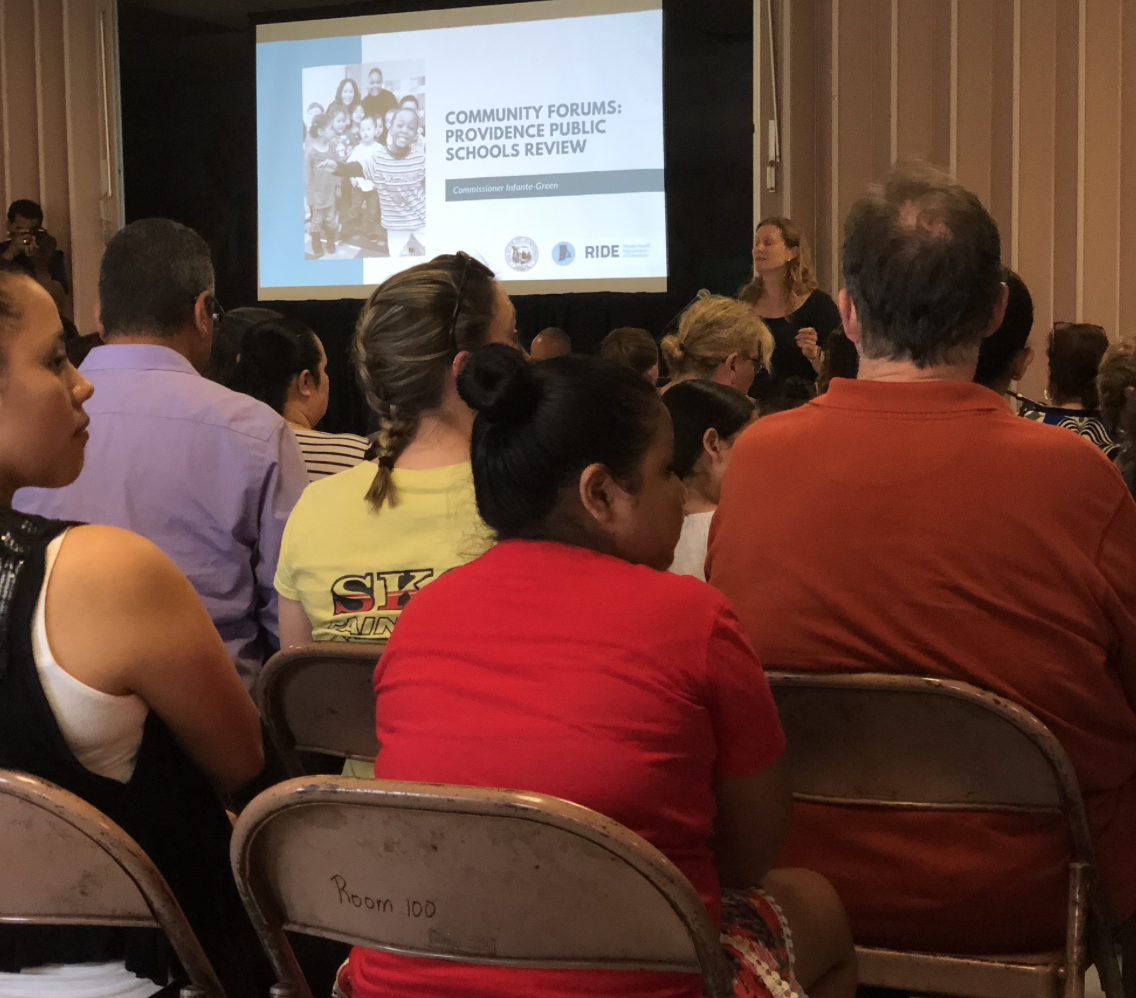
The Johns Hopkins University report on the disastrous state of Providence’s public schools reconfirms what’s been obvious for a long time – that the city is administratively, sociologically, politically and maybe psychologically incapable of fixing its schools and the state must step in as soon as possible and take over. Rhode Island cannot indefinitely afford to have its biggest city (and at the heart of New England’s second biggest metro area) and capital with such poorly performing schools. It’s an ongoing social and economic disaster.
A state takeover won’t be pretty: Among other things, labor contracts will probably have to be torn up, people fired and some schools closed. By the way, my children attended Providence public schools.
Helping Mass. “Hilltowns’’
An article by Catherine Tumber in the usually interesting Commonwealth (as in Mass.) Magazine looks at the challenges facing western Massachusetts’s “Hilltowns,’’ which are just east of the Berkshires. Some of the issues raised recall those facing rural and exurban towns in hilly interior western Rhode Island and interior eastern Connecticut. The heavily forested and rocky area includes towns with many poor people, in part because some of these towns – really more like villages -- had mills that have long since closed, and the region’s farms tend to be hardscrabble. Vacationers and rich weekend and summer folks favor the Berkshires themselves.
So Hilltown leaders are banking on such things as tourism, arts, history and, sigh, marijuana cultivation to reenergize their economies and draw more visitors. One thing that many Hilltowners don’t want is cheap-goods store chains such as Dollar General, whose arrival often kills beloved local stores.
As in Rhode Island and Connecticut, counties are generally pretty insignificant in Massachusetts. I wonder if giving some counties more power would give areas with little political clout, such as the Hilltowns, more political pull at state houses.
To read the Commonwealth article, please hit this link:
Killer Policies
If Democratic presidential candidates devoutly desire, at some subliminal level, Trump’s re-election they should demand that people self-identifying as African-Americans be paid reparations for slavery (which would be an interesting genealogical and legal project requiring heavy use of supercomputers), support open borders, obsess on the rights of gay and transgendered people and greatly liberalize laws regarding abortion. Of course, some Democratic candidates have done just these things. Oh, yes, they should also make a point of speaking a lot of Spanish at big public events, which will scare away potential voters who might otherwise vote Democratic on bread-and-butter issues but who fear, fairly or not, being overwhelmed by illegal immigrants.

‘Brown Furniture’ Bathos
My clan has some elderly furniture and other old stuff. There’s a maple grandfather clock made for a great-great-something grandfather of mine called Rufus Noyes in the 18th Century, my father’s desk, with numerous hiding places for documents, from the same period, some uncomfortable old chairs from Victorian times, some old bureaus and end tables, some musty religious and other books from the 1600’s, my murdered great uncle William Dale White’s limited edition of the complete works of Alphonse Daudet and other odds and ends, including a nice portrait of a Whitcomb lady ancestor of mine done in about 1830 and looking a bit like the poet Emily Dickinson, and a pretty good painting of Minot’s Light, with three-masted schooner, off Cohasset, Mass., where I lived as a boy. None of it has much value, except emotionally. There’s a family story with each of these things.
Indeed, the value, especially of the furniture, could be falling as I type, if a rather sad Yankee magazine article on the antiques business is on mark. It’s titled “The Death of Brown Furniture,’’ and basically asserts that Millennials, being more interested in “experiences’’ than in “things,’’ aren’t interested in really old stuff, although many apparently like such “Mid-Century Modern’’ furniture as Danish modern.
The veteran antiques dealer and frequent Antiques Roadshow guest Ron Bourgeault, who is quoted in the article, is probably correct: Society’s and especially younger folks’ waning interest in, and knowledge of, history explains at least some of the falling price of antiques. That’s too bad. If we don’t know where we’ve been, it’s harder to know where we’re going. I don’t have all that much interest in the precise genealogy of my New England/Minnesota/New York/English/Scottish/French ancestors but I love to learn the stories associated with these old artifacts, some of which contain some useful lessons.
I remember with a pang my mother throwing out Victorian and Edwardian furniture back in the late ‘50s, perhaps after a few drinks. A lot of it was ugly, but, again, each piece had story with it, happy or sad.
Regulatory Reform in Rhode Island
‘’Simplify, simplify, simplify’’
-- Henry David Thoreau
One of the better initiatives of Rhode Island Gov. Gina Raimondo’s administration has been to try to simplify the state’s regulatory system, especially to make it easier to do business in the state, which has had a national reputation for being difficult, in part because there are 39 cities and towns in this tiny jurisdiction.
Apparently, considerable progress has been made.
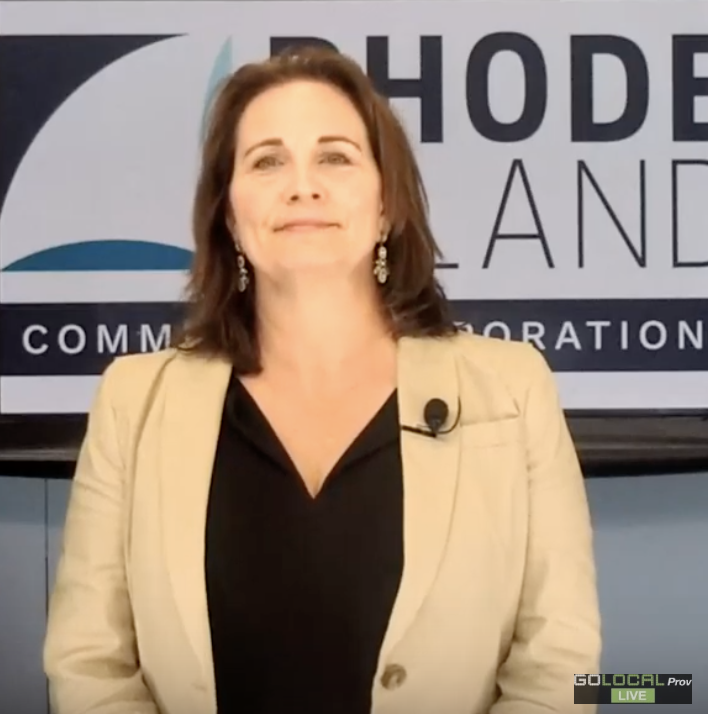
"A couple of years ago we undertook an effort and called it a 'road show' and we went out to every chamber of commerce, every trade association we could possibly, see every BNI (Business Network International member} every Rotary [Club], every merchants’ association -- we tried to get out to well over 350 events, several thousand business owners and we got to hear from them" about regulatory issues, Ms. Tanner told GoLocal CEO Josh Fenton.
Regulatory and statutory simplicity helps to develop a healthy business climate, as does a fair and easy to understand (without a CPA) tax system to pay for good public services and transportation and other physical infrastructure. Some other states, such as Massachusetts, Minnesota, Hawaii and Vermont, have fairly high taxes but generally good services and infrastructure. But Rhode Island has long been known for having mediocre services (though it’s generally been getting better in recent years) and crummy (and indeed crumbling in some places) infrastructure. That’s a major reason that so many Rhode Islanders complain about their taxes: They don’t think they’re getting their money’s worth.
How to Do Urban Renewal
Tom Condon wrote a nice piece for The Connecticut Mirror on how to do and not do “urban renewal’’ with a focus, of course, on the Nutmeg State. A few particularly important things: Don’t tear up and/or divide city neighborhoods with huge limited-access highways, and try to avoid replacing structurally sound and attractive old buildings with sterile glass and steel structures. When I lived near New Haven in the early and mid-’60s I remember how arrogant “urban renewal’’ tore apart that city. Without the presence of very rich Yale University as a moderating force, the well-meaning renewers, especially then-Mayor Richard Lee and city development director Edward Logue, would have done even more damage to downtown New Haven. The repair work has been underway now for a generation, and the place looks much better.
Mr. Condon’s cites a new book by former New York City planner and Yale Prof. Alexander Garvin called In the Heart of the City. As an explanation for the turnaround in some cities in recent years, he cites crime reduction, the creation of Business Improvement Districts to clean and promote downtowns (Providence has one) and the rise of the Internet, which has let companies sharply reduce the space they need for storage of documents. This has freed up a lot of space in buildings – space that can be converted to housing, this increasing population density downtown, which has provided more customers for local businesses and reduced crime (more eyes on the street), in a kind of [virtuous circle.
To read Mr. Condon’s article, please hit this link:
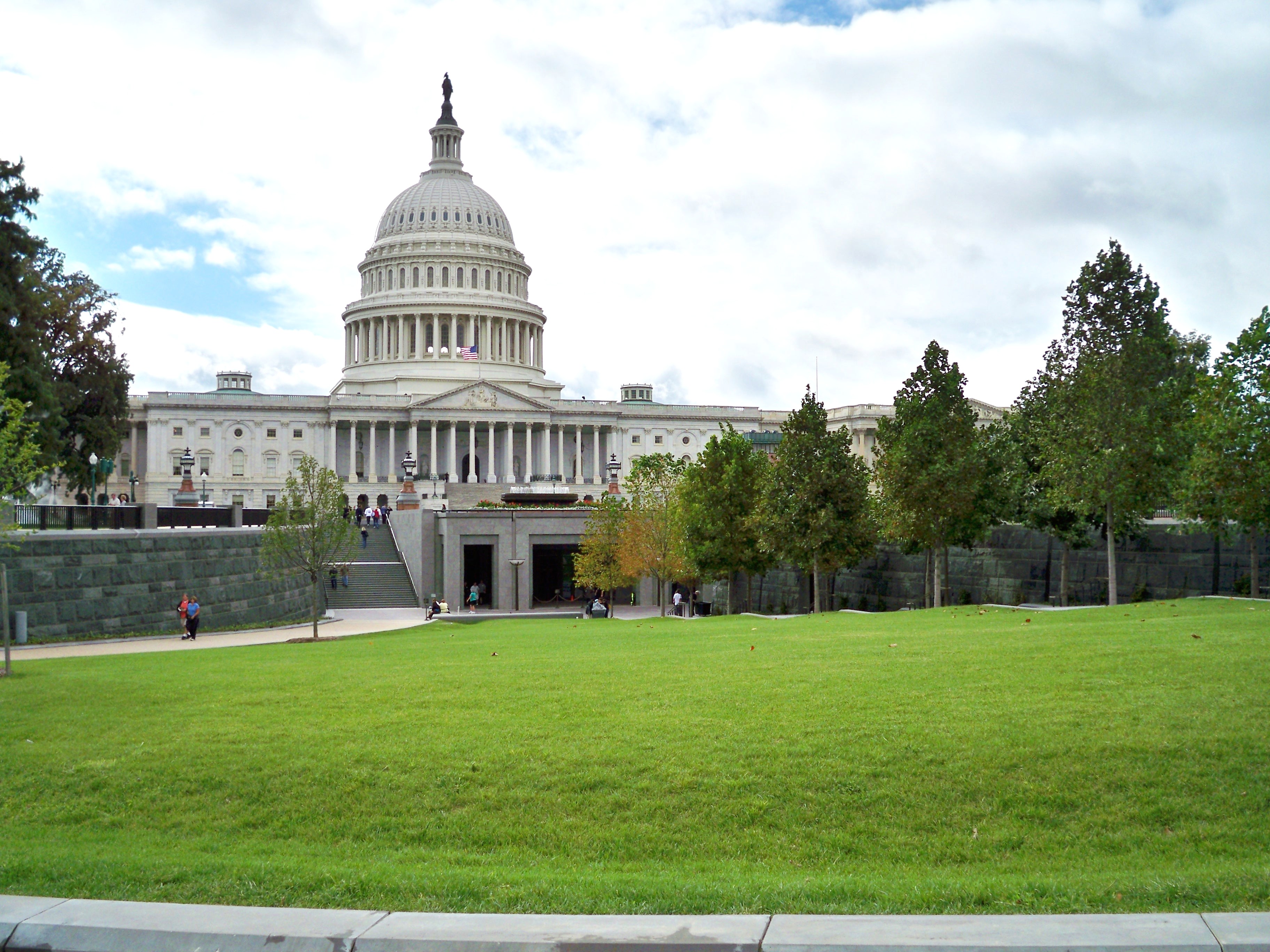
Yes, Congress needs a pay raise. Congressional leaders of both parties thought just a few days ago that they were close to enacting a 2.6 percent cost-of-living adjustment after a decade without a raise. But base-electorate-fearing House freshmen of both parties balked at that.
Such cost-of-living adjustments used to be automatic, but they were suspended in 2009 as the Great Recession rolled on. Inflation has outpaced the frozen $174,000 a year for rank-and-file members; the House speaker receives $223,500 annually, the Senate president pro tempore $193,400 and the majority and minority leaders in both chambers receive $193,400.
Remember that members must work in high-cost Washington with maintaining their home-state residency requirement. Hours for members of Congress and their staffers are very long and the work very complicated and stressful.
Roll Call’s Patricia Murphy wrote: “According to Homeadvisor.com, plumbers typically charge between $45 to $200 per hour. A car mechanic makes $80 to $100 per hour. In terms of a job that the lawyers in Congress might do, a partner at a Washington, D.C., law firm may bill out for $600 to $1,000-plus per hour.
“Compare all of those salaries to a rough estimate of what a House member makes. If you assume a 12-hour day (on the short end of a day in session), along with time for travel and events in the district, working five days a week, the job pays about $55 per hour. If you assume a six-day work week, which most staff can tell you is more realistic, it pays $46 per hour.’’
One of the leading Founding Fathers, John, Adams, worried that without adequate pay, "all offices would be monopolized by the rich,’’ which is the general direction that Congress and the top levels of the Executive Branch has been heading for some time. And many of the wealthy in office will tend to look after the interests of the wealthy, of all people.
There’s another big problem with no raise: Congressional staffers, who do most of the research for, and drafting of legislation, can’t be paid more than members of Congress. So over time, staff – and legislation -- quality will tend to slide. In the long run, you pretty much get what you pay for. Not adequately paying members of Congress and their staffers is a false economy.
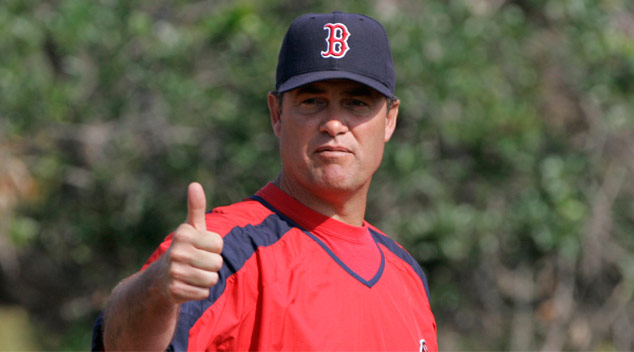
There was a lovely story in The Boston Globe on June 25 about former Red Sox manager John Farrell, who was fired in 2017 and now has a part-time job skippering his lobster boat off Massachusetts’s North Shore. (Farrell’s father, by the way, had been a lobsterman in New Jersey.
While he had a fiery reputation as manager, as a lobsterman. Now “{h}e’s very easygoing, laidback, and you can just tell he just loves what he’s doing right now,” Nathan Noonan, Farrell’s stern man said.
“It’s peaceful,” Mr. Farrell told The Globe. “It’s a completely different world out on the water.’’
Maybe a lot more of us should get out on the water to calm down.
To read the profile, please hit this link:
Back in the ‘40s
Two exciting popular histories mostly about the ‘40s – Madame Fourcade’s Secret War: The Daring Young Woman Who Led France’s Largest Spy Network Against Hitler, by Lynne Olson, and Victory City: A History of New York and New Yorkers During World War II, by John Strausbaugh.
The first is about the organization called Alliance run by the glamorous aristocrat Marie-Madeleine Fourcade. (The Nazis dubbed Alliance “Noah’s Ark’’ because its agents used animal names as aliases.) Alliance provided key intelligence to the Allies (mostly to the British), most important information about the beaches and roads, and other facts pertaining to German defenses, in Normandy, and about Nazi missile development. That missile program could have been catastrophic for the Western Allies if it had come to full fruition. The book is full of escapes, captures, betrayals, and immense and enduring courage.
Mr. Strausbaugh, for his part, gives us a fast-paced narrative, filled with brilliant character sketches, of how World War II made New York a kind of capital of the world. His reporting on how the Great Depression and immediate pre-war years affected New York, and America, is also engaging.