


Whitcomb: New State Tax Systems Coming? ‘Autonomous’ Shuttle; Roe v. Wade’s Future
Robert Whitcomb, Columnist
Whitcomb: New State Tax Systems Coming? ‘Autonomous’ Shuttle; Roe v. Wade’s Future

“At Fenway, Pedro blew seven innings
of unhittable smoke. Nomar stretched
GET THE LATEST BREAKING NEWS HERE -- SIGN UP FOR GOLOCAL FREE DAILY EBLASTa triple into a home run. My son and I
ate dogs, almost caught a fly. His first
Major League game. Repeatedly,
my son kissed my arm, his thanks
inningless, our lives beyond all harm.’’
-- From “Body and Soul,’’ by Peter Harris
‘’The genius of you Americans is that you never make clear-cut stupid moves, only complicated stupid moves that make us wonder at the possibility that there may be something to them that we are missing.’’
-- Gamal Abdel Nasser (1918-1970), Egyptian president, 1954-70
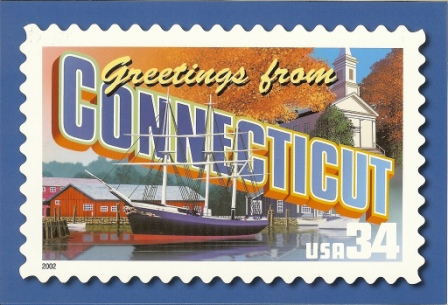
Connecticut Gov. Ned Lamont and that state’s legislative leaders are considering replacing most of the state income tax with a payroll tax, though apparently not this year.
It would be a complex plan but the core of it seems to be to have employers pay a 5 percent state payroll tax on all wages and salaries. The assumption is that employers would cut pay by 5 percent to make themselves whole. This, it is argued, would end up reducing the amount that employees must pay in federal income tax and Social Security and Medicaid taxes. Behind this is, among other things, the state trying to find ways to offset the effects of the $10,000 limit on state and local tax deductions (targeting mostly Democratic-run states) set by the Republican tax law of 2017 as well as to replace most of the Connecticut income tax.
Officials in neighboring states will, I assume, be watching to see what, if anything, happens with these Connecticut tax-reform ideas. In any case, the 2017 tax law will force numerous adjustments in state and local taxes in various places over the next few years.

May Mobility’s year-long free shuttle small-bus service between the Rhode Island State House and Providence’s hip Olneyville neighborhood is getting underway. These vehicles have attendants who can override the vehicles’ computers, just to be super safe, but the buses are supposed to be self-driving – i.e., ‘’autonomous.’’ The company calls its “Little Rhody’’ pilot project the first attempt at autonomous public transit in the country; it will serve as a research project that will probably get a lot of national attention.
I assume that the ultimate plan is to have no attendants (or maybe call them emergency drivers) – perhaps another scary sign to people contemplating becoming bus, cab or Uber/Lyft drivers for want of other job options.
After all, how long could such a service continue if attendants must be paid to travel around with so few passengers per vehicle? These mini-buses carry only six passengers. I assume that there will eventually be a modest charge for these rides. But when will many passengers feel safe to travel in buses without attendants, even if data show that they’re much safer than vehicles driven by people?
In any event, it’s an exciting project. If people flock to it, it could revolutionize urban and even suburban travel by getting more people out of their cars, and it could be a boon to further redevelopment of Olneyville while reducing the necessity of having so many wind-swept parking lots.
State Ratings Redux
The sort of ratings done by the likes of U.S. News & World Report are flawed because they’re always comparing, in varying degrees, apples and oranges, but they can suggest some interesting things.
Consider, for instance, U.S. News’s latest rankings of the states, which evaluate the states’ economies, including business climate, health care, education, transportation infrastructures, environmental protection and so on.
The “best’’ were, in order: Washington, New Hampshire, Minnesota, Utah, Vermont, Maryland, Virginia, Massachusetts, Nebraska and Colorado. The “worst’’ were: Louisiana, Alabama, Mississippi, West Virginia, New Mexico, Arkansas, Alaska, Oklahoma, South Carolina and Pennsylvania (the middle of Pennsylvania topographically and socio-economically resembles West Virginia).
Note that despite the endless GOP promotion of the low-tax (except for regressive sales taxes), low-regulation mostly Southern states as wonderful places to move to, the 10 “best’’ were mostly dominated by Democrats. Exceptions are Mormon-dominated Utah and traditionally very Republican Nebraska. Then there are the moderate Republican governors of Massachusetts, New Hampshire and Maryland, with legislatures controlled by the Democrats. The 10 “best’’ states’ leaders tend to believe in strong social safety nets, well-funded education, hardy environmental protections and so on. Among the Republican-dominated 10 “worst’’ states, there are Pennsylvania and Louisiana, with GOP-run legislatures and Democratic governors, and New Mexico, with a Democratic governor and legislature. The “worst’’ states tend to favor big-business interests above all.
The 10 “best’’ generally have high per-capita incomes, the “worst’’ low ones.
Long Democratic-dominated (it would be better off with a vibrant two-party environment) and too-small Rhode Island, which lacks the great economic engines of such high-tech centers as Massachusetts and Washington State, was ranked 26th – second worst in New England. Maine, which was presided over by a right-wing Republican governor from 2011 to this year, was 32nd. Connecticut was ranked as 21st best; it’s sort of two states – rich along the coast and in Litchfield County, much poorer in other areas.
The Trump-loving Deep South remains the poorest part of America. Do many voters there vote against their own economic self-interest because of politicians’ use of such conservative social issues as gun rights and abortion?
Amazonian Gig Economy
Amazon, which has a huge distribution center in Fall River, continues to gobble up the e-commerce business even as it strives to control costs. So to reduce its reliance on the likes of the U.S. Postal Service and UPS while greatly expanding, it’s seeking to convert many of its employees into freelance delivery people by offering to cover up to $10,000 in startup costs per-former employee, plus the equivalent of three months of his or her former salary.
This will be a great deal for Amazon, which won’t have to pay health benefits, etc., to the delivery-service drivers, who will, of course, continue to have to closely follow the orders of this near-monopoly. And these new “entrepreneurs’’ will, after their startups, have to pay vehicle and other costs. As small players, rather like Uber and Lyft drivers, they’ll have weak bargaining power, especially if the government continues to avoid filing an antitrust suit against the company. The high price of ‘’personal independence’’. What will happen to these folks when autonomous vehicles become dominant? That’s probably a decade away.
Massachusetts is making back the $87 million that it spent on Boston property connected with General Electric’s headquarters move there – plus $11 million in profit, helped by the city’s booming economy. (GE, however, has not been booming.) Also, the company has not taken the $25 million in tax breaks offered by Boston. GE will remain in the Seaport District, but with a considerably smaller footprint than foreseen when the company decided to move its headquarters from Connecticut.
So some government incentives to lure companies work out okay. That especially when you’ve got a highly competent governor such as Bay State Republican Gov. Charlie Baker and Boston’s able Democratic Mayor Marty Walsh who craft careful offers to protect taxpayers.
The Fog of Trade War
Of course, China has long been stealing U.S intellectual property and has forced American companies into unfair joint ventures there and so on. We had tolerated it for far too long, under Presidents George H.W. Bush, Clinton, G.W. Bush and Obama. But Trump’s very erratic, incoherent and strident approach (read his early-morning Tweets) to trade negotiations with Beijing is causing such confusion and even chaos that he’s upsetting some global supply chains, and making business planning difficult, which will hurt some U.S. companies. Most businesses hate government-policy uncertainty, which tends to make them cut back on investment and hiring if it goes on for a while. And it would have put us in a stronger bargaining position if we’d forged partnerships with allied nations to press the Chinese to stop their unfair trading practices rather than taking such a unilateral approach. But Trump is quite right to try to keep Huawei, the Chinese telecom company, out of America, where it would be a national security threat.
Will the trade war cause a U.S. recession? I’m more worried about our swelling private and public debt and financial-sector deregulation and consequent excessive risk taking.
Who’s in Charge?
“The United States is formidable but they have a model which is completely steered by big private-sector players and which is no longer subject to democratic checks and balances.”
-- French President Emmanuel Macron at a Paris tech summit
xxx
“Trump’s greatest gift to the country is the gift of destruction — not of the country, but of the coalition he leads and the complacent oligarchy that strangles our democracy. The greatest irony of a fool like Trump is that by betraying his working-class base and wrecking his party, he may well help make American democracy great again. He is the unwitting agent of reform.’’
-- Yale law Prof. Jack Balkin
Wishful thinking? American democracy may be in terminal decline.
xxx
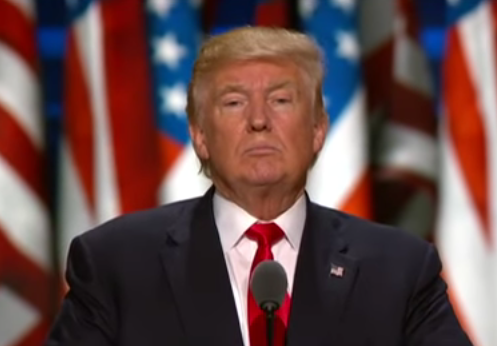
Alabama May Speed Roe v. Wade Demise
One of the best things that could happen to the Democratic Party might be for the U.S. Supreme Court to throw out Roe v. Wade and send the abortion issue back to the states. That would make it make it much less of a national issue for the GOP to use to get out its base, especially the Evangelicals, and win the Electoral College, in which rural, right-wing states have disproportionate power. The Alabama legislature has approved legislation to virtually ban the procedure, including, outrageously, in cases of rape and incest. That will inevitably end up in the Supreme Court in some fashion.
The states are supposed to be in charge of domestic law, and abortion would seem to fall under that. But the more fervid anti-abortionists want to have the procedure banned across America.
I think that most Americans will eventually push back hard against right-wing Evangelicals, some of whose leaders are greedy and hypocritical frauds (and shills on TV) who push the preposterous assertion that “Christianity is threatened’’ in the U.S. while admiring the most immoral president in our history. Most of us do not want to take directions from these theocracy industrialists.
Warning to Tech Titans
Kudos to the U.S. Supreme Court, in a 5-4 decision, for letting a class-action suit against Apple proceed. The suit alleges that the huge and immensely rich company is engaging in monopolistic behavior by making Apple device owners buy apps for them only in Apple stores. The hope is that this case might encourage long-overdue antitrust action against such other, too-powerful tech companies as Facebook, Amazon, Google and Microsoft, thus encouraging newer, smaller companies to enter the sector with their innovations while lowering costs for consumers.
Meanwhile, Chris Hughes, a co-founder of Facebook, says that that behemoth should be broken up because it has far too much political and economic power. He also felt obligated to say his (former?) friend Facebook CEO Mark Zuckerberg is a nice man. Given the ruthless way he has run the personal-data-stealing enterprise, I don’t agree. Rather, I see a mild-mannered sociopath.
Forget the Kids
The federal government reports that America’s birth rate fell again last year.
The provisional report found a tad under 3.8 million U.S. births last year. It was the fourth year in a row in which the number of births dropped, and the lowest number of births since 1986 (when the U.S. population was considerably smaller than now) and came in spite of what is in some ways a strong economy. The birth rate fell sharply in the Great Recession.
The fertility rate fell to 1.7 births per U.S. woman. That would mean that our population would soon decline – except for the immigrants, illegal and otherwise, who also tend to have more children.

While the data suggest more job shortages, for example of people to help care for aging Baby Boomers, it’s also good news for the environment. Less sprawl and pollution.
At least among native-born Americans the lure of having large families has long since worn off.
I well remember the large families of my boyhood, with three to seven kids per household common in my small-town neighborhood, which was about 75 percent Protestant then! (There were five siblings in my family.)
I recommend “When Everyone Was Pregnant,’’ a John Updike story, written in 1971 with nostalgia for the ‘50s and in response to the disruptions of the ‘60s by the children spawned in the late ‘40s and early ‘50s.
A Queen of the ‘50s
Speaking of the ‘50s, a moment of silence for Doris Day, who managed to mix innocence and a sort of buffered sexuality, or at least sensuality. She was perhaps more cute than beautiful. She died last week at 97.
I found her singing in that decade cloying, preferring her earlier, Big Band stuff. Pop (not talking about rock) songs in the ‘50s weren’t nearly as melodic and literate as those in the ’30s and ‘40s.
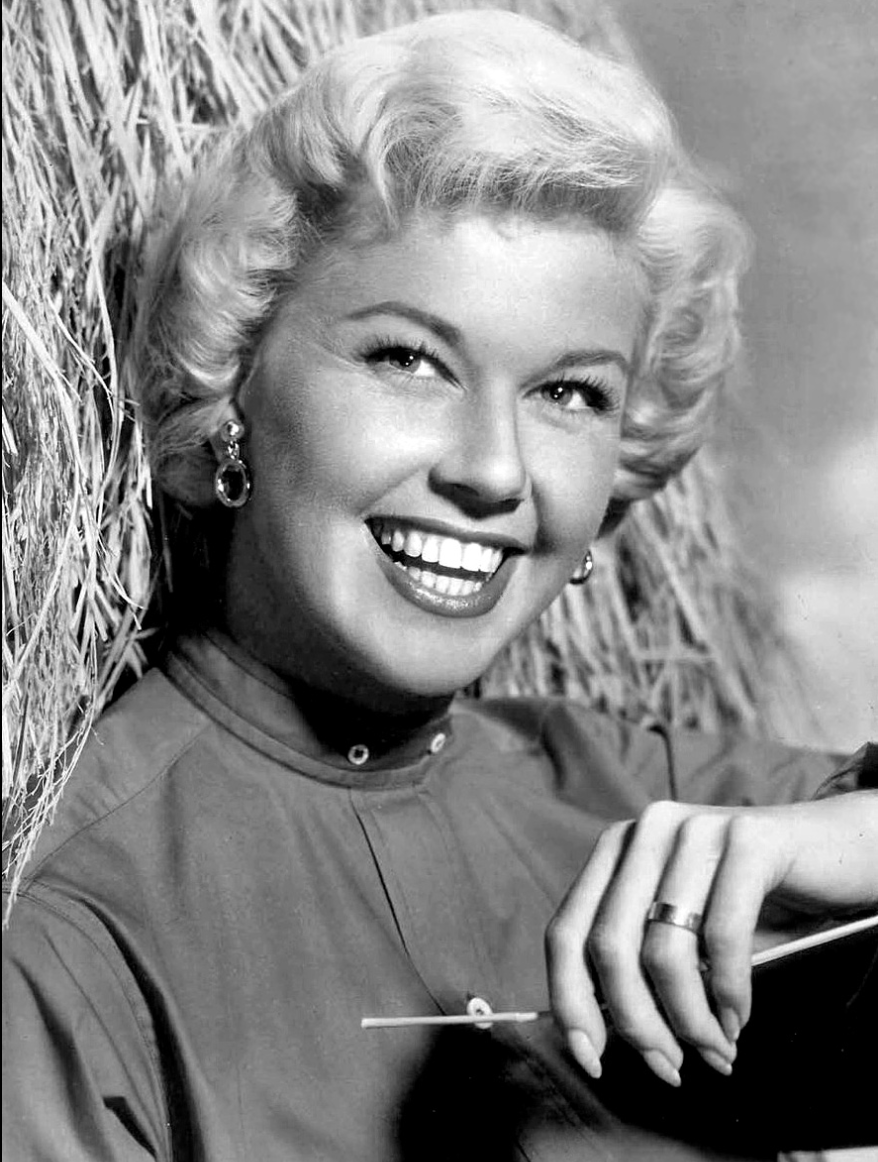
Her songs, mostly sung before rock totally took over, evoke for me old times, some good, some bad. On long car trips, I sometimes hear them played on radio stations playing “standards’’ for older people. The announcers on such shows sound ancient.
Ms. Day was by all accounts a loyal, decent and valiant person – she stood by Mr. Hudson when he was dying of AIDS -- but was increasingly skeptical of people in general, in part because of three problematic husbands and the vagaries of Hollywood. So, she devoted her later decades to the protection of dogs. Which of course brings to mind Harry Truman’s alleged line “If you want a friend in Washington, get a dog.’’
Her career was edifying, although it seems almost prehistoric now.
A Calif. Way to Control Housing Costs
A major reason that housing costs are so high is single-family zoning, which obviously sharply limits the number of housing units that can be put up. Thus, as I’ve noted before, planners around America are paying closer attention these days to a measure in California, much of which has very high housing costs, that would let duplexes, triplexes and fourplexes be built on much of the land now zoned for single-family houses. How many people would be happy living in this greater density, after perhaps growing up in suburban sprawl? Maybe with today’s smaller families, more than you might think.
New Englanders are generally more used to housing density than most Californians.
The Privacy Paradox
There’s increasing concern about the relentless erosion of privacy in the Digital Age. There are surveillance cameras all over the place, bad actors are snooping on us in the Internet and so on. But this comes even as computers and the Internet keep us off the street and other public places more and more. On a beautiful spring day the sidewalks are empty. Everyone seems to be inside staring at screens. Many of us seem to have much less of a public life than we used to. In a way, our privacy has increased.
Too soon
It's sad that flowering trees drop their petals so swiftly, briefly covering byways with white and pink. Fall foliage lasts longer.
Rogues Well Treated
The late St. Clair McKelway’s (1905-1980) reporting on eccentrics, con men and even garden variety trimmers is hugely entertaining because of his accumulation of telling personality details and a deadpan literary style seasoned with a peculiar affection for his subjects, who include the likes of counterfeiters, recluses, an embezzling imposter and arsonists. A superb collection of his work is Reporting at Wit’s End: Tales from The New Yorker.
The stories still retain a great freshness although they tell of people who, like McKelway, are long dead.