


Whitcomb: I Was Naïve About Jump Bikes; IGT a Better Bet; Aquidneck in 2050; No Phones
Robert Whitcomb, Columnist
Whitcomb: I Was Naïve About Jump Bikes; IGT a Better Bet; Aquidneck in 2050; No Phones

He is barking the same high, rhythmic bark
that he barks every time they leave the house.
They must switch him on on their way out.’’
-- From “Another Reason Why I Don’t Keep a Gun in the House,’’ by Billy Collins
GET THE LATEST BREAKING NEWS HERE -- SIGN UP FOR GOLOCAL FREE DAILY EBLAST
“There have been times…when the weather has mobilized its forces and ripped New England wide open. Those times are the hurricanes.’’
-- Edward Parks, in The American Land
“Happiness is a mystery like religion, and should never be rationalized,’’
-- G.K. Chesterton (English writer, 1874-1936)
Wrong on Jump
A couple of weeks ago I implied here that though we’re in the Wild West period of such rentable personal-transportation options as dockless Jump Bikes, we shouldn’t worry too much about them.
But I grossly underestimated the potential for mayhem with these bikes in some parts of Providence, as seen in recent episodes of teens, almost all boys, stealing these things for out-of-control rides that have included scaring, and even assaulting, some hapless pedestrians. These punks also ignore all traffic rules and in so doing threaten to cause serious car and truck crashes.
Jump is owned by Uber.
What to do? First off, what Mayor Jorge Elorza announced last week: These dockless bikes are being pulled from service, at least for a while. He said:
“As part of a commitment to provide residents and visitors with convenient and equitable intermodal transportation options, a joint public safety effort will collect bicycles and explore options to enhance security mechanisms for the {Jump} system and to promote responsible ridership.”
Let’s look for long-term solutions to the problem. Perhaps this will involve only allowing bikes that must be docked -- i.e., station-based. Station-based systems can obviously be better monitored by police than can systems in which bikes (and scooters) can be picked up and left willy-nilly all over place, most irritatingly in the middle of sidewalks. This limitation, of course, will make them less accessible to many people, but so be it. Further, the police and courts must crack down hard on wild riders and thieves who abuse shareable bikes and scooters -- and publicize the punishment. And Uber (not unfamiliar with scandal) must be compelled to improve JUMP’s anti-theft technology ASAP. That applies to other companies offering similar services, too.
It’s too bad that the actions of a few would deprive many of the opportunity to use this handy, nonpolluting and fun transport, but public safety demands it.

Maribeth Calabro, the head of the Providence Teachers Union, was absolutely right when she told GoLocal last week that students’ cellphones should be limited or banned (I vote for the latter) in public school classrooms in the city. Anyone who has spent time with groups of young people (and some adult groups, too) knows how disruptive and attention-destroying these devices can be. The public schools have enough problems trying to keep order while attempting to teach.
Too Demanding?
How many of the complaints alleging too rigorous discipline in the Achievement First charter school network simply stem, as I suspect, from students and teachers being called on to work hard and otherwise behave in ways that will move forward these mostly socio-economically disadvantaged kids, some of whom are growing up in often chaotic circumstances?
The Future of Aquidneck
EcoRI News’s Frank Carini had a good story on Aug. 18 about how Aquidneck Island could run out of its currently unprotected open space by 2050, and not because of a big increase in population but because of sprawl development, whose ugliness is all too apparent on the roads leading to Newport. This still unbuilt-on space includes farmland (vineyards, sweet corn, etc.), woods and other open space. There’s still considerable inland natural beauty left on the island that many tourists who head for, say, Newport’s spectacular Ocean Drive don’t notice.

Also needed is a much, much denser public transportation network that would reduce car dependence and the sprawl it fosters.
Remembering that Aquideck is an island, albeit a big one by Northeast standards, should remind people of its fragility.
To read Mr. Carini’s piece, which includes graphics, please hit this link:
Soon Another Reason to Avoid the Cape? IGT a Better Bet
The casino mania continues apace, with the latest scheme being a proposal to build a slots palace, and, incredibly, horse track, in Wareham, near the Bourne Bridge, the western road access to Cape Cod. If you think Cape traffic is bad now…. (I used to love horse tracks but not so much now that I know more about how some of the animals are treated.)
But wait! There’s more! A Chicago developer called Neil Bluhm continues to push for a casino in poor old Brockton, once “The Shoe Capital of the World’’; the Mashpee Wampanoag Indians still want to put up a casino in Taunton, once “The Silver City,’’ and the Aquinnah Wampanoag Indians continue to demand a gambling joint on Martha’s Vineyard near the famously colorful clay cliffs called Gay Head.

Still, I think a lot of the folks from southeastern New England flocking to Encore right now are going there mostly out of curiosity. When that fades, and winter weather arrives, making travel to Greater Boston even more unpleasant than it is now, I think that will fade a bit, even with such come-ons as the luxury bus service between Gillette Stadium and Encore.
Anyway, IGT, as an international tech company serving a wide customer base, would seem a sturdier reed for Rhode Island to lean on for economic development than one casino company – that is, if IGT actually stays in the Ocean State! Corporate promises about staying in localities and states that have offered companies assorted incentives such as tax breaks tend to evaporate remarkably often.
Meanwhile, we’ll see what the effects of online sports betting on casinos turn out to be….
Shareholders and Other ‘Stakeholders’
For about 50 years the mantra for publicly traded companies has been “raising shareholder value is all that counts.’’ That means keeping the stock price and dividends as high as possible. The interests of other “stakeholders’’ – employees, local communities and, yes, sometimes customers -- were to be ignored in varying degrees. This has led to stratospheric senior executive pay (much of which is based on their companies’ stock price) and a tendency to have a short-term focus, which has led too many big companies to give short shrift to research and development and other programs that build the long-term prosperity of companies. (Remember the amazing science and technology that came out of Bell Labs, part of the then heavy regulated near-monopoly American Telephone & Telegraph Co.?)
But individual investors and huge mutual funds, pension funds and nonprofit organization endowments, especially of colleges and universities, have generally been happy with shareholder-value primacy. However, many millions of Americans have little, if any, money in the stock market, directly or indirectly.
Shareholder value as the be-all-and-end-all hasn’t been great for the many workers whose inflation-adjusted pay and benefits have been slashed to increase profit margins and boost senior execs’ stratospheric compensation and communities ravaged when, say a big local factory is closed with little warning.
And so the Business Roundtable, the leading association of big public company CEO’s, has issued a “Statement on the Purpose of a Corporation’’ that sounds like something from the ‘50s and ’60s, when many, perhaps most “Fortune 500’’ companies presented themselves as paternalistic and community-minded. The new statement says the companies have a “fundamental commitment’’ to, besides shareowners (the owners!), customers (oh, them), employees, communities where the companies operate and suppliers. The argument is that, in addition to being seen as the right (and to the public popular) thing to do, this old-fashioned view of companies’ public responsibilities will nurture an environment that’s good for business, eventually. But how this will fly with the owners, aka shareholders, institutional and individual, is far from certain. Will, for example, union pension funds accept lower returns for a few years? Maybe hypocrisy alert coming?
Clearly, the populist reaction to the extremes of the gilded, “greed is good’’ age we’ve been living in since the ’80s is scaring some of its biggest beneficiaries.
Shopping With What?
American consumers have continued to spend at a good clip, and are increasingly seen as saviors who will keep us out of the clutches of recession. (Caution: Some economists say the rise of Amazon has made it more difficult to measure with precision the fluctuations of retail spending.)
How much of the current buying is with money borrowed via consumers’ credit cards, whose interest rates exceed 13 percent on unpaid balances while annual inflation is at around 2 percent and wage gains not much higher? The average individual credit-card debt this year is about $5,331, and about 55 percent of credit-card holders carry a balance on which they’re paying the aforementioned plus-13 percent interest. Just a modest uptick in the unemployment rate could have exciting effects….

We Need Trains, Trains, Trains
The $25 million improvement plan announced for the Providence train station is heartening. Even more so would be a big advance in the frequency and reliability of train service between Boston and Providence. Happily, Massachusetts Gov. Charlie Baker and Rhode Island Gov. Gina Raimondo agree it’s very important for our economy and environment that that happens. We desperately need to get thousands of cars off the road between the two cities. In particular, the gridlock on highways in and around Greater Boston is getting so bad it’s threatening its long-term prosperity.
A big new train program would be a boon for both metro areas by reducing the time to get around for work, thus raising productivity, and boosting the synergy of New England’s two biggest metro areas, such as, for example, by better connecting Providence’s famous design community with the Boston/Cambridge/Route 128 tech center and by offering those suffering from Greater Boston’s astronomical housing costs cheaper and otherwise more agreeable alternatives in northern Rhode Island and adjacent Massachusetts.
We should encourage a sort of informal merger of the two metros.
New electric-powered trains, instead of less efficient diesel ones, and maybe additional track will be needed. What is clear is that more and/or wider roads would make things worse by drawing in more cars, burning up more fuel, taking more open space and creating more air and water pollution.
Meanwhile, we’ll need to consider “congestion pricing’’ for drivers, analogous to what such sectors as movie theaters have done. See this piece in Commonwealth Magazine for a good explanation:
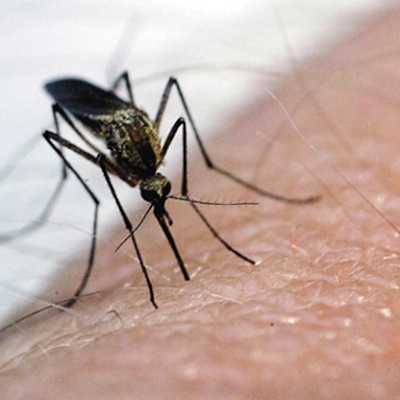
Eastern Equine Encephalitis, a rare but dangerous disease carried by mosquitoes, is popping up earlier than usual this year in southeastern New England because of our very warm and humid summer. So, Massachusetts authorities have ordered spraying. Let’s hope they do it with as much precision as possible and don’t kill a lot of bees, which of course are essential for pollination, and which are already under a lot of environmental stress, much of it manmade.
Two Island Tribes
Block Island includes a curious mix of very rich people who a decade or two ago would have been in the Hamptons but now have McMansions on the island and day-trippers too many of whom seem more interested in getting drunk with their pals than in enjoying the little isle’s scenic grandeur.

Trump: “I’ll build a beautiful wall along our southern border and Mexico will pay for it.’’ Not. “I’ll fix America’s infrastructure.’’ Not. “I’m looking at background checks for gun buyers.’’ Guess not. “I’ll do a great deal with North Korea, China…” Not. “We’re considering a payroll tax cut.’’ Well, probably not. And, oh yes, let’s offer to buy Greenland and when its owner, Denmark, a NATO ally declines, insult the Danish prime minister. (Why would Greenlanders want to be ruled by the current version of America anyway?)
You might think that this incoherence and impulsiveness would finally hurt our wanna-be Mussolini with his base, but I suspect that many of his MAGA minions just see his seamless web of demagoguery and ignorance as evidence that this spoiled con man is one of them – a kind of regular guy, but with more money (thanks to Daddy). And in a 24-hour news cycle they quickly forget what he said anyway, and fact-checking is so boring!
Perhaps all he has to do is keep the Niagara of easy money and exploding public and private debt flowing until November 2020, delaying the inevitable recession, and the GOP-dominated Electoral College can renew his Oval Office occupancy, and hand the Republican loser of the popular vote the party’s third such victory in 20 years.
Still, let’s always remember the late British Prime Minister Harold Wilson’s warning: “A week is an eternity in politics.’’
Weighing Risks
I heard a U.S. immigration official say on the radio last week that the Trump administration’s crackdown on Central American families fleeing toward the U.S. border is meant, among other things, to reduce the lethal risk the families face in walking away from their homes and across Mexico. But so dangerous is the gang violence in much of Central America that it’s less risky for some families to flee north than to stay in home.
On the Wharves
I’ve spent a lot of time on wharves, and I especially think of them in August, when their smells of saltwater, fish, creosote, diesel and gasoline reach their greatest intensity. Standing there at the edge of water, maybe looking at the eelgrass wave in the water a few feet away, I think of how summer is waning as a back-door cold front replaces the sultry southwest wind with a salty breeze from the east that’s cool enough to remind me of fishing for smelt as a kid in October off the “floats’’ (wooden floating wharves) in the harbor near our house, using a bamboo pole and multiple hooks. (Smelts, by the way, are best fried in butter.) Or I remember the east wind coming off Boston Harbor and cooling off my summer workmates and me as we smoked on the loading platforms along the promiscuously polluted South Boston waterfront and I mulled the threats and opportunities involved in returning to college in a couple of weeks.
On the Cape’s West Falmouth Harbor, there’s a very old and small granite-block wharf in front of what used to be my paternal grandparents’ house, since torn down and replaced by a tall McMansion but, as the builder emphasized to angry neighbors, on the “same footprint.’’ The little wharf provided me with a couple of lessons in the passage of time:
Low tide now exposes sand and mudflats going right up to the front of the wharf (or “dock’’ as we called it, even though docks are more precisely the area between wharves).
So why was it built? It turns out that a little stream emptying into the harbor had silted up the water abutting the wharf. In the 19th Century, the water in that part of the harbor (once famous for its shellfish, before a disastrous oil spill, in 1969) was much deeper. And the rather mysterious structure was apparently built to provide access for people coming in small boats to a freshwater spring a few feet up the slope from the wharf.
Before You Die….
Some of the “things-to-do-before-you-die guides’’ can be pretty thin stuff. But 1001 Books You Must Read Before You Die, with entries by more than 100 distinguished critics and a preface by the famous biographer, novelist, and historian Peter Ackroyd, is superb. The critics get to the gist of each writer’s work and precisely place the authors in the psychological, cultural and historical context in which the work was written. The concision and yet depth of these short essays are formidable. This book is a great investment for all who love books.
World Tour
Readers interested in foreign affairs might want to check out the new season of the Providence Committee on Foreign Relations.
See: Thepcfr.org