


Whitcomb: Woodstock Hype; Gano St. Swim; Warmer Water; Gun-Debate Diversion; Luxury Public School
Robert Whitcomb, Columnist
Whitcomb: Woodstock Hype; Gano St. Swim; Warmer Water; Gun-Debate Diversion; Luxury Public School

the invisible beetles began
to snore and the grass was
GET THE LATEST BREAKING NEWS HERE -- SIGN UP FOR GOLOCAL FREE DAILY EBLASTas tough as hemp and
was no color….’’
-- From “I Remember,’’ by Anne Sexton (1928-1974), Massachusetts-based poet
“Life is a crowded superhighway with bewildering cloverleaf exits on which a man is liable to find himself speeding back in the direction he came.’’
-- Peter De Vries (1910-1993), Connecticut-based writer and editor
Some of the elderly commentariat has turned to the 50th anniversary of “Woodstock,’’ that Aug. 15-Aug 18, 1969 musicale and bacchanal in Bethel, N.Y. The spectacle, which produced many, many photos of attendees in the mud as they listened to rock stars, has of course become listed as one of the great epochal events of the “Sixties’’ (which as a cultural phenomenon might be said to have begun after the assassination of John F. Kennedy, on Nov. 22, 1963, and ended with Richard Nixon’s resignation on Aug. 8, 1974). I can well imagine how boring many Millennials must find stories about Woodstock.
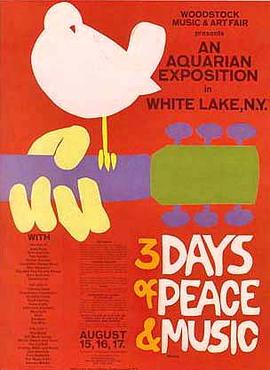
I am in that generation. Still in college, I had a summer job as a news assistant at the now long-dead tabloid the Boston Record American. I had no plans to go into journalism. The job, in the Record’s mostly unairconditioned (fans and salt tablets instead) but beautiful stone building in downtown Boston, was a lifeline for me when another summer job fell through at the last minute.
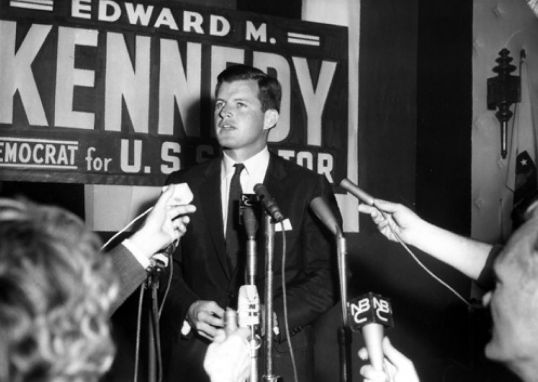
And my newsroom colleagues didn’t even seem to be very interested in the moon landing, which had come on July 18. Nothing could beat an old-fashioned scandal involving Massachusetts’s Royal Family.
Barrington’s Fancy New School
Reading the Providence Journal story “First class all the way,’’ about Barrington’s luxurious, almost glitzy new middle school, I thought of how satisfying it can be to have children in an affluent suburban town in a nation where public education is primarily funded by local property taxes. Then I read of the post-Newtown, Conn., school massacre safety features, including a “top of the line lock-down system.’’ And Ms. Borg reported that the school is the first in Rhode Island “that automatically links to the police and fire departments when a school alarm is triggered. To enter the building, a visitor is first buzzed into a vestibule before being buzzed into the main building.’’ Sad but needed these days, I suppose.
I wonder how people in our urban school districts responded to the story, though probably few read it.
Brilliant but Forgettable
My wife and I went to the rap musical Hamilton, about the life of Alexander Hamilton, a father of the U.S. Constitution and the creator of first America’s financial system, at the Providence Performing Arts Center. The show has tremendous drive, energy, and ingenuity, though it was hard to hear all the words in this complex biographical/historical musical. Having a little knowledge of Hamilton’s astonishing life would help maintain understanding through this long, but not too long, production. Read before you go, if only Wikipedia.
PPAC, under its superb president, J.L. (“Lynn”) Singleton, continues to be one of our region’s jewels.
My only negative observation, if it is that, is that few people, if any, will remember Hamilton’s mostly very loud music, unlike many of the melodic masterpieces, many with witty lyrics, from the golden age of Broadway musicals, from about 1920 to 1960 and that remain standards. Oh yes, and the crush of people in the refreshment and restroom area was daunting.

Media Matters
The recent death of Nicholas Cardi, one of the Cardi brothers who own southern New England’s Cardi’s Furniture chain, reminded me of the golden age of local retailing, and so of the golden age of local news media, which received much of their revenue from dozens of such companies. Decade after decade, these loyal retail advertisers helped the likes of The Providence Journal and local TV and radio stations prosper, and pay for substantial news staffs. Some of them, such as Cardi’s, are still around, but many have departed this vale of tears or have been bought up by national retailers, most of which now face existential challenges in the Age of Amazon and are cutting way back on advertising in “legacy media’’ like newspapers and sending more and more of their ad dollars to the likes of Google and Facebook.
My guess is that the asset-stripping, debt-heavy GateHouse Media’s planned takeover of Gannett, another big newspaper chain, wouldn’t help either of them and that more heavy layoffs, including of more journalists, would follow the merger, which might never happen. GateHouse owns The Providence Journal, among many other local papers, The Internet continues to destroy newspapers’ business model --- sad for many of us who will always prefer to read on paper.
Perhaps in a year or two, especially if there’s a recession, The Providence Journal will start to publish a paper product only on Sundays, with a focus on relatively time-insensitive features, leaving its Web site to cover the day-to-day stuff.
Sad Human Interest Immigration
It would be nice if the “mainstream media’’ presented more of a 360-degree picture of illegal immigration instead of mostly telling sad “human interest’’ stories about illegals. The immigration issue is very complicated and includes that illegal immigration has tended to suppress Americans’ wages and has stressed social services in many places.
Warm Water
I read last week that the water temperature at an observation buoy in Nantucket Sound was a tropical 77 degrees! That recalled a new study by the Gulf of Maine Research Institute, in Portland, reporting on how “marine ecosystems around the world are experiencing unusually high ocean temperatures more frequently than researchers previously expected. These warming events, including marine heatwaves, are disrupting marine ecosystems and the people who depend on them.’’ The Gulf of Maine, by the way, is warming faster than 99 percent of the world’s ocean water. That’s rapidly changing marine life there.
To read more on the report, please hit this link:

Warmer water, of course, is another sigh of global warming and the rising seas that go with it as the ice melts in Greenland and Antarctica. GoLocalProv had a reminder of that in an Aug. 5 story about how the Rhode Island Department of Transportation‘s plan to reconfigure I-195 ramps in the Gano Street area in Providence’s Fox Point neighborhood might be put underwater, so to speak, by rising levels over the next 30 years, if data from such authorities as the National Oceanic and Atmospheric Administration and the Rhode Island Sea Grant and the University of Rhode Island’s Coastal Resources Center are any indication.
Building near the coast will get a lot more complicated….
To read the GoLocal article, please hit this link:
Global Warming, Maine Style
Global warming is associated with higher levels of carbon dioxide, which turns the oceans more acidic, hurting, especially, shellfish. So a project called Ocean to Plate to Ocean has gotten 10 restaurants in Portland, Maine, to collaborate in collecting discarded oyster and clam shells from Portland restaurants and dumping them in Casco Bay to reduce its acidity. King Canute against the tide? Ocean acidification has increased an estimated 30 percent from when fossil fuels first began to be heavily used in the 18th Century.
To read more about this project, please hit this link:
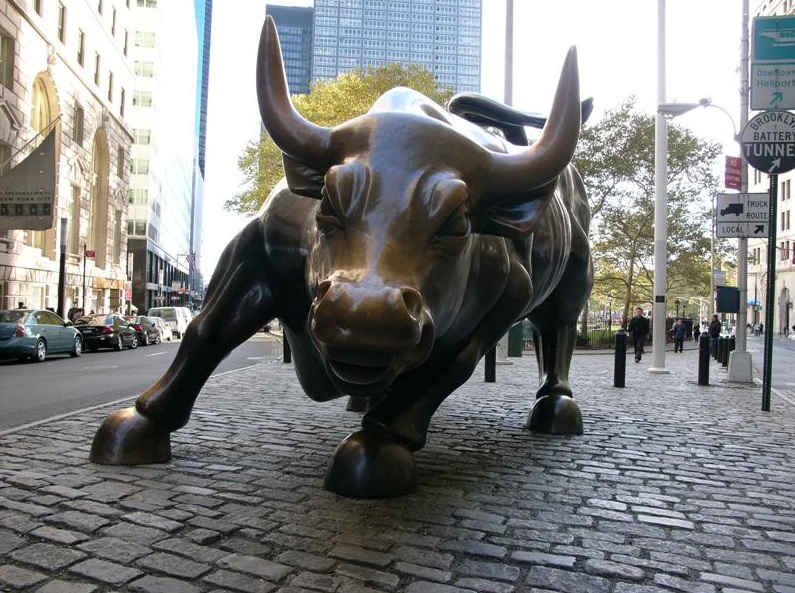
Trump’s anxiety-ridden demands that the Federal Reserve Board cut interest rates, even more, will further undermine confidence in the future of the economy. And of course, weakening the independence of the economists at our central bank will severely hurt their ability to rigorously address monetary and macro-economic challenges. And given that the Fed, and some other central banks, have already used up most of their tools to keep the 10-year expansion going, I wonder how much more the Fed can do to protect our debt-drowning, trade-warring economy from recession. Trump knows little about economics. His main economic experience was running a crooked family enterprise infamous for its serial bankruptcies.
Some of the U.S. expansion since Trump took office, besides cheap money, has been caused by extreme government fiscal stimulation through big tax cuts for corporations and rich folks and higher levels of government spending. The consequent huge increase in government debt is what traditional Republican orthodoxy had denounced! Indeed, the GOP-run Congress during most of Barack Obama’s presidency made much noise about the debt as it rejected Obama proposals for more economic stimulus (including overdue big infrastructure projects) to help the nation further recover from the Great Recession. But Obama was a Democrat….
As soon as Trump, assisted by Vladimir Putin, was in office, debt was no problem, as long as it helped super-fuel the economy and especially the one economic metric that Trump most worships – The Dow Jones Industrial Average. Trump’s biggest selling point has been the economy. We’ll see how long that lasts. Certainly, he’ll try to juice up things through the next election.
By the way, the media tend to hype daily moves in the Dow. For instance, the 767-point drop on Aug. 5 sounded scarier than it deserved. It was only a 2.9 percent decline. Pretty small stuff compared to real crashes, such as that of October 19, 1987, when it fell over 22 percent, or the series of crashes in October 1929 that helped bring on the Great Depression.
And don’t blame Trump alone for the trade war with China, which started it with their vast theft of U.S. intellectual property and other aggressive actions to build up the Chinese economy.

Gun-rights folks, some of them tending to the fanatic, are turning up the smoke machines to block the enactment of such common-sense laws as banning the sale to the general public of military-style assault rifles and high-capacity magazines, which let shooters mow down lots of people without stopping to reload.
The smoke includes saying that video games and social media play a big role in mass shootings. They do not.
There are violent video games and dubious social media in other developed nations, all of which have much lower levels of gun violence than does the U.S.
Republican –and Democratic -- politicians have a point when they say there should be better laws to identify mentally ill people who might be disposed to mass shootings. So there’s a bipartisan push on for more “red flag laws’’ that would let judges order police to confiscate guns from people who show signs that they might engage in homicide or suicide. But it can be very difficult to identify such people. (“He was quiet, never gave us any trouble but seemed a little strange…”)
The gun-violence problem, and especially the mass shootings that America is infamous for, can be mostly explained by these numbers: The United States has 42 percent of the world’s guns and only 4.4 percent of the world’s population. And some of the very easily available guns are far more suitable for fighting wars and thus killing as many people as possible as fast as possible than for, say, duck hunting and self-defense. With the gun companies’ lobbying arm, the National Rifle Association, and the Republican Party having merged, don’t expect real change any time soon. So much for the need for a “well-regulated militia’’ cited in the Second Amendment…
A huge gun-buyback program, like Australia’s, would help, but that will probably never happen. America will remain the land of mass shootings, albeit with some states (especially the Northeast) safer than others (“Red States’’).
Whither Outlet Towns
Quite a few New England towns, such as Freeport (home of L.L. Bean) and Kittery, Maine, Westbrook, Conn., and Wrentham, Mass., have long positioned themselves as venues for higher-end retail outlets for national brands and gotten a hell of a lot of tax revenue from them. But Amazon and other online retailers are taking big bites out of them and many stores are closing. Some of the vacant space is being rented by local stores, but paying much lower rent than the prestige national brands did.
Housing is too expensive for many people. So how much of this dead retail space can be converted to housing; and if all or most of the stores now in these outlet malls close, can they be reconfigured into latter-day, mostly residential village centers or have to be demolished?
The ‘Public Option’ Redux
The problems of the U.S. health-care “system’’ are fairly obvious: sky-high costs driven by duplication and other inefficiencies; the world’s highest payments to providers; favoring the most expensive specialist physicians instead of primary-care providers, whose focus is on prevention, and near-monopoly pricing by drug companies.
The last issue could be addressed fairly quickly by letting the government, especially through the huge Medicare and Medicaid programs, negotiate for lower prices, as in other developed nations, virtually all of which have better average health care than does the United States. But instead, U.S. politicians (leery of offending drug company lobbyists) talk of letting Americans buy cheaper drugs from Canada, which would screw up our (former?) ally’s health system. Our leaders are adept at diversions: Problem with mass shootings? Crackdown on video games! U.S. drug companies screwing the public? Buy pills from Canada!
On the Democrats’ Medicare-for-all arguments, it mystifies me why they can’t agree that the best way to reach universal coverage is the old “public option’’ that Obama dropped in the face of GOP opposition when the Affordable Care Act was being crafted: People can keep their private insurance or sign up for Medicare and give up all or part of their private insurance. My guess is that over time, most people would slide into Medicare well before age 65 because it’s usually better than private insurance. But this is America: Give them a choice.
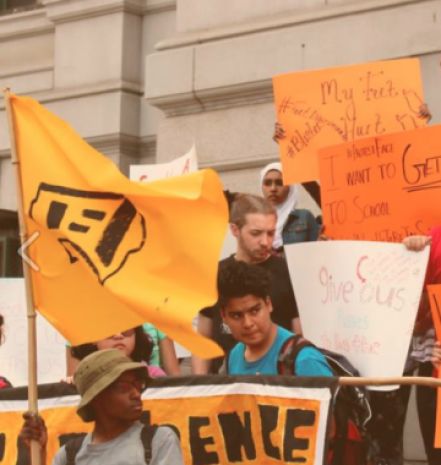
As economists and political columnists frequently note, you can help middle-and-lower-income people by redistributing tax money from the better off through direct payments and such services as health care and you can help them more indirectly through higher minimum wages and boosting private-sector unions, whose long decline explains part of America’s widening income inequality and very slow income growth among the nonrich.
As big companies have gotten more and more power, and labor unions have weakened, many workers’ ability to raise, or even maintain, their standard of living have eroded to near nothingness.
Pete Buttigieg, the presidential candidate, has come up with a package of proposals that would make joining and organizing unions easier, such as making it much easier for “gig’’ workers to unionize and encouraging “sectoral wage bargaining,’’ in which a union representing all the non-management employees in a local sector, say fast food, would sit down with local representatives of that industry and negotiate. Workers’ ability to protect their interests and share more of the corporate wealth they helped create has been diminishing for decades. They deserve to get back more of it, but they can only do this collectively.
By the way, I oppose public-sector unions because of the intrinsic conflict of interest with politicians. Of course, public employees need to be protected by civil service law.
Soccer at McCoy
The recent victory of the U.S. women’s soccer team got me thinking again of how wonderful it would be if McCoy Stadium could be reconfigured into the home of a professional soccer team. Demographics suggest that soccer will continue to grow in America faster than the other major sports.
Dog and Human Life at a Park
Off the Leash: A Year at the Dog Park, by the once dog-fearing Matthew Gilbert, is a colorful portrait of various canines, and especially Mr. Gilbert’s lab, Toby, and their owners, some of them with industrial-strength quirks, at a park in Brookline. There’s lots of joy, humor, tension and occasional conflict. We’ve usually had dogs and so the book brought back memories. (I used to take our current canine to a Providence dog park, but there were too many pit bulls around.) The little book, which from time to time is cloying and even maudlin, also reminded me of how irresponsible most dog owners were in the little town I grew up in, where almost everyone let their mutts run free, angering, among others, the farmers whose chickens and cows the dogs harassed, and drivers, who couldn’t avoid running over a lot of the beasts.
Discord on the Board
(Reflections on 30+ years on the Bristol County (R.I.) Water Authority Board of Directors, serving Bristol, Warren and Barrington)
Nine directors: that’s three each from three towns,
Most decisions based upon solids grounds.
Now and then disrupters with egos to spare
Feel compelled to bring their discord to bear.
Once, thoughtless personnel comments verbalized
So scared senior staff that they unionized.
That little mishap took three years to reverse.
Some learned their lesson: could have been worse…
Some now insist on ‘Still beating your wife?’ questions,
Instead of calmly offering suggestions.
Others are happy to ‘Stick it to staff!’
Whenever they find a meaningless gaffe.
All meetings are open and shown online,
Competence displayed or we’re asinine.
While each director deserves respect,
The Board’s image is foremost to protect!http://thepcfr.org
-- “Discord on the Board,’’ by Allan C. Klepper
Abroad at Home
Readers interested in foreign affairs might want to look at the Providence Committee on Foreign Affairs' speaker series. Hit this link: