


Whitcomb: Coal-Powered Regime Whacks Windpower; Raimondo's 3 Genders, More Health-Care Goliaths
Robert Whitcomb, Columnist
Whitcomb: Coal-Powered Regime Whacks Windpower; Raimondo's 3 Genders, More Health-Care Goliaths

-- Bertrand Russell (1872-1970, English philosopher, mathematician, social critic and essayist)
GET THE LATEST BREAKING NEWS HERE -- SIGN UP FOR GOLOCAL FREE DAILY EBLAST
I see it as it looked one afternoon
In August,—by a fresh soft breeze o'erblown.
The swiftness of the tide, the light thereon,
A far-off sail, white as a crescent moon.
The shining waters with pale currents strewn,
The quiet fishing-smacks, the Eastern cove,
The semi-circle of its dark, green grove.
The luminous grasses, and the merry sun
In the grave sky; the sparkle far and wide,
Laughter of unseen children, cheerful chirp
Of crickets, and low lisp of rippling tide,
Light summer clouds fantastical as sleep
Changing unnoted while I gazed thereon.
All these fair sounds and sights I made my own.
“Long Island Sound,’’ by Emma Lazarus (1849-1887), most famous as the author of “The New Colossus,’’ engraved at the base of the Statue of Liberty (“Give me your tired, your poor…’’)
GOP Effort to Kill Offshore Wind -- Pushed By Coal Efforts
At the last moment, just before a federal tax-credit deadline, the Trump regime has announced it will delay a final decision on approving the big Vineyard Wind offshore wind-turbine project for yet more “review’’ of the already studied nearly unto death project. The move means that the project will probably lose the tax credit in effect right now and require congressional and presidential approval to get it renewed – legislation that the coal industry’s most powerful servant, Senate Majority Leader Mitch McConnell, of Kentucky, might kill.
Does the sudden delay announcement come mostly because the Trumpists want to undermine competition with the fossil-fuel industry, which it’s in bed with, or to stick it to a Democratic part of the nation that would benefit from a big increase in locally created, and clean, energy, or because of complaints from some fishermen? (Wind-turbine towers actually tend to increase the number of fish in the areas where they go up by acting as reefs.)
The delay, or sabotage, might kill the project, by among other things, killing its financing. And it certainly means that the 80-megawatt project for south of Martha’s Vineyard can no longer start generating electricity for 200,000 electric customers (and many more people in those customers’ homes and businesses) by the end of 2021, as had been the plan.
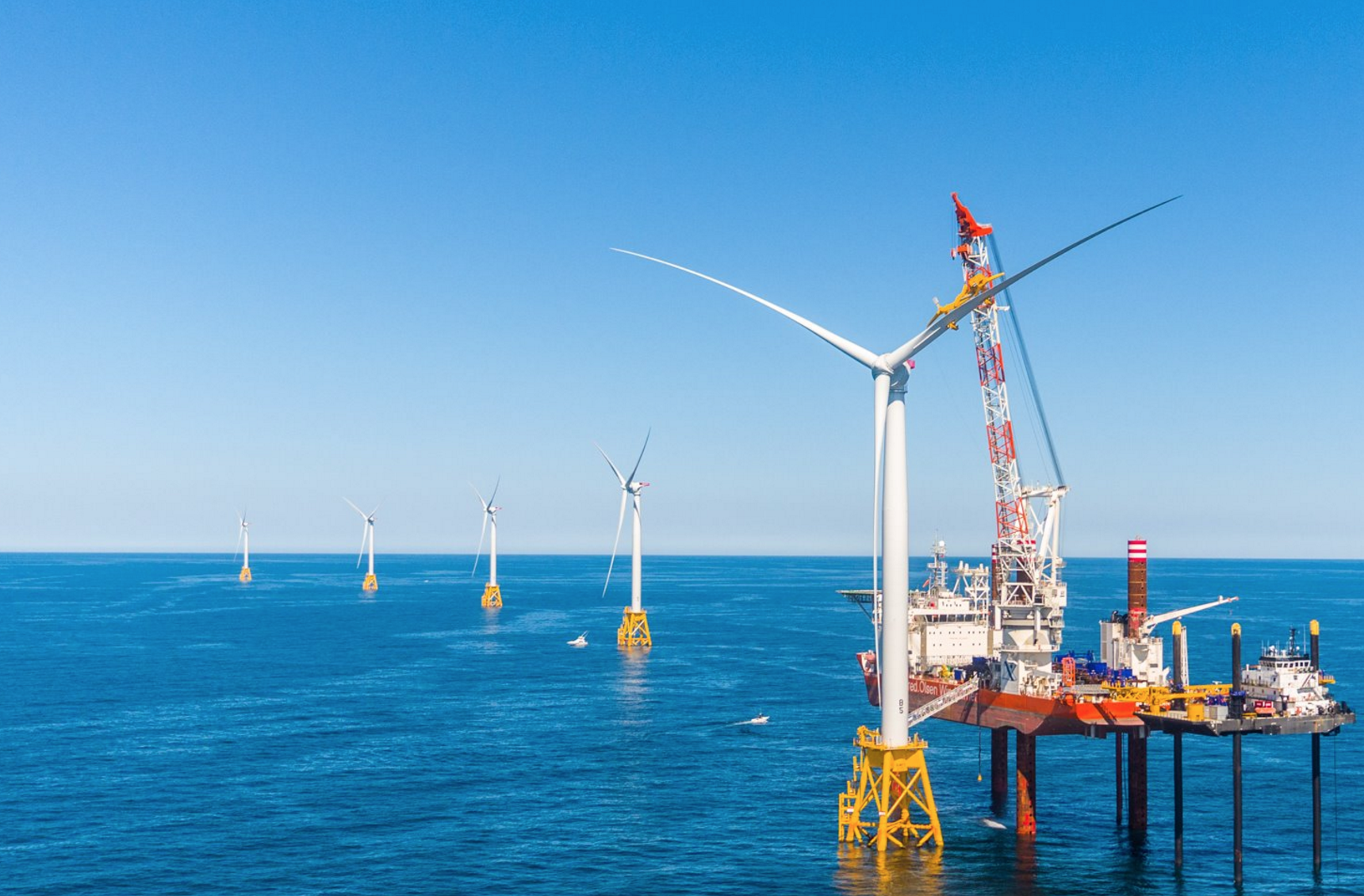
The delay, typical of the interminable red tape and politicization that block other needed infrastructure work in America, will discourage similar windpower projects. Meanwhile, an irony is that the fishermen who oppose Vineyard Wind and similar projects meant to help wean us off fossil fuel are enabling, in their small way, such global-warming effects as hotter seas and ocean acidification that kill off some important fish species. In any event, America continues to be about the worst developed country in which to try to get big projects built. That’s one reason a lot of it’s starting to look like a Third World nation. And whatever happened to Trump’s big plans for infrastructure?
Meanwhile, for an alarming look, with graphics, at how global warming is changing America, please hit this link:
It shows that Rhode Island is a particularly hot spot.

So consolidation of New England’s health-care biz continues apace. Two big Massachusetts-based health insurers – Harvard Pilgrim Health Care and Tufts Health Plan -- plan to merge. This follows Beth Israel Deaconess Medical Center and Lahey Hospital merging this year into the very big Beth Israel Lahey Health, and Rhode Island-based CVS taking over health insurer Aetna. And huge Partners HealthCare, the Boston-based hospital and physicians network group (Massachusetts General Hospital, etc.), made a run this year at taking over Rhode Island-based Care New England. And the latter outfit was in failed talks to merge with Lifespan, a merger that economics might still force – to be followed by that merged creature being eaten by a Boston group, producing a flock of golden parachutes for redundant executives?
The economics of the healthcare business means that there will be more such mergers. Big will get bigger. This may include Partners coming back to Rhode Island to try to gobble up Care New England or Lifespan or both. Or maybe Beth Israel Lahey Health will try to invade the Ocean State.
With the huge economic power – especially pricing power – and lobbying clout of the new insurance behemoths, state regulators will have their hands full trying to regulate them. Still, the merger, which would affect several million New England customers and their families, would create an entity with impressive bargaining weaponry to curb the very high prices enabled by the size and global prestige of the hospital behemoths. So let ‘em merge.
Bridge to a Better City
The new Providence River Pedestrian Bridge is a lovely piece of work that will serve both as a stylish (love the wood!) connector between the East Side and downtown and as a destination point itself. If the crowds in its first few days are any indication, its $21.9 million cost will prove to have been well worth it. But there’s a big IF. Will it be properly maintained and policed? And, oh yes, please replace those faulty chessboards.

Slower Cities, Please
Citylab.com published a good story the other day about efforts to make city driving safer and, even in impatient America, more pleasant (or at least less unpleasant), by making it steadier, if often slower, via various traffic-calming initiatives, including lowering the speed limit, narrowing driving lanes (while widening sidewalks) and so on. I hope that Providence and state officials think about this as they make such dramatic changes as reconfiguring traffic from Route 195 to over the Henderson (“Red”) Bridge and into Wayland Square, on the city’s East Side.
Certainly, cutting speed limits saves lives. The Insurance Institute for Highway Safety has estimated that as states have generally raised speed limits, staring with the encouragement of the Reagan administration, the United States has experienced an additional 37,000 traffic deaths. Raising speed limits has also increased fuel consumption, thus doing its bit to accelerate global warming.
Encouraging the use of small personal vehicles such as bicycles and electric scooters will also help. For that matter, so gridlocked have become big cities, and even some of their suburbs, that bikes and scooters often move much faster than cars and trucks.
To read the citylab.com piece, please hit this link:
An Identification Issue
“But there are more than five sexes and only demotic Greek seems to distinguish among them.”
― Lawrence Durrell, in The Alexandria Quartet

Rhode Island Gov. Gina Raimondo trendily wants her state to join others that will offer drivers’ licenses that don’t indicate the person’s sex. The change would let people put an “X’’ rather than a “M’’ or “F”
Of course, people are entitled to think of themselves as any sex they want and to have organs lopped off or created and to take hormones to change themselves into some sort of “gender’’ they weren’t at birth. But the fact is that, outside the very few cases of physical androgyny, people are physiologically either male or female. And for police and others in the justice system knowing the sex of individuals can be very useful, indeed sometimes essential. If these drivers undergo a sex-change operation, then fine, switch to one of the two sexes. But the “X’’ category will cause trouble.
Not Much in a Name
New England has too many small private colleges; some of them are not financially viable. So some have decided to change their name to “university’’ to make themselves sound more important and alluring. Accrediting organizations require a certain minimum number of graduate courses for such nomenclature
Lasell College, in Newton, Mass., is the latest New England college to decide to call itself a university; Assumption College, in Worcester, has done the same thing.
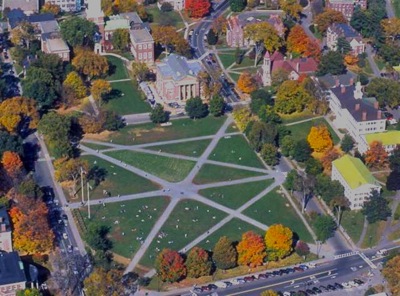
Two internationally known New England institutions – Boston College and Dartmouth College – are universities but for historical reasons – they started out and have remained devoted most strongly to undergraduate liberal arts education -- have refused to change their names. Admirable.
As Long as We Don’t Have to Pay for It
In other wacky education news, a PDK Poll of the Public’s Attitudes Toward the Public Schools, 60 percent of parents agree that funding for public education is too low, but half of that group would rather cut other government stuff than have to pay more income, sales and property taxes to educate young people. They do, however, like “sin taxes’’ on booze, cigarettes and gambling, the revenues from which are less reliable than broader-based taxes. Meanwhile, of course, many older people (comprising an ever-larger percentage of the population) with grown children tend to oppose higher taxes to pay for schools because it doesn’t directly benefit them; those with grandchildren in their communities are a partial exception.
And when public schools in a community are underfunded, many affluent people tend to put their children into private institutions, which then depresses the affluent parents’ inclination to support local public education with higher taxes – in a vicious circle of underfunding
I think some of this stems from decades of anti-tax -- and anti-government – rhetoric and maybe even a general increase in selfishness spawned by economic anxiety.
To read more, please hit this link:

“I will never let anyone — least of all a racist failed businessman and television-huckster son of a slumlord from Queens and an immigrant from Scotland — define my Americanness. I am an American, Kolkata-born. I will call my adopted country loudly, with all my strength, to account….’’
-- Suketu Mehta, in an essay in The Washington Post
To read it, please hit this link:
Of course, the U.S. immigration system is a mess: We need humane but far better run and staffed border controls and we to make it clearer to the rest of the world that we can’t take everyone who wants to move here. But we also need to regularize the status of people illegally living and working in America for a long time, especially those brought in as children. It’s logistically and otherwise impossible to send the estimated 12 million illegals “back to where they came from.’’
In any event, Trump’s new plan to crack down on legal immigration by denying legal immigrants such social services as Medicaid and Food Stamps -- obviously hurting poor people – while prioritizing the road to Green Cards and citizenship for affluent, well-educated people aid poses some big problems.
Certainly, America can always use more educated people to take well-paying jobs but we also need people with fewer advantages to do other jobs (while they seek to climb America’s increasingly slippery pole to higher status), particularly as the birth rate of native-born Americans stays very low. Meanwhile, yes, Trump and others seeking to lessen the legally mandated role of “family reunification’’ in immigration law have a point: It encourages disorderly immigration and in some cases fraud.
Then there’s that the government almost never prosecutes the businesspeople who knowingly and illegally employ illegal aliens, as witness the recent ICE raids in Mississippi and the Trump Organization’s brazen employment and cheating of illegals. The Feds go after the powerless. Obeying the law is for the little people….
The Associated Press, meanwhile, said its analysis of U.S. Census data show that low-income immigrants here legally use Medicaid, Food Stamps and other federal social services less than native-born low-income citizens. And depriving legal immigrants of social services would result in more sick people needing to be treated for free (to them, but not the public) in hospital emergency rooms and other strains on public services that could make the Trump program a false economy. Taking immigrants off Medicaid would greatly reduce their access to preventive care, which helps keep people out of the hospital.
The Italian and Irish immigrant ancestors of Ken Cuccinelli, the acting director of U.S. citizenship and immigration services, who announced the Trump plan last week, might not have been allowed into America if the Trump plan had been in effect. But he was sadly accurate when he said that the “huddled masses’’ cited in Emma Lazarus’s poem “The New Colossus,’’ engraved at the Statue of Liberty, were all expected to be Europeans, and not throngs from what we now call the “Third World’’.

The alleged shooter in the El Paso mass murder, Patrick Wood Crusius, denounced the “Hispanic invasion’’ of Texas. They don’t teach history much anymore, so it bears noting that Texas and much of the rest of the Southwest became part of the United States through an “Anglo’’ invasion of Mexico from the U.S., aggression whose most fervent advocates were folks seeking more land on which to use slaves. But I’ll take the U.S. legal and political systems, then and now, over Mexico’s, which had the ill fortune to inherit too much from the Spanish.
Also consider the role that the U.S. government and big American companies played in keeping Central America corrupt fiefdoms dangerously dependent on agricultural monoculture – a history that helps explain, along with Americans’ thirst for illicit drugs, why so many Central Americans are so desperate to get to the U.S. border. We are the authors of much of those little countries’ ills. (Folks in Boston used to semi-joke that Central America was run from the United Fruit Co. headquarters.)
Messy stuff, history.
God Helps Those Who Help Themselves
I’m sure that many of the big businessmen who give money to Trump (such as at a recent big fundraiser in The Hamptons last week) find his behavior repellent but he has pleased them by cutting their taxes and reducing those pesky regulations, implemented with uneven success, meant to protect the public. The hell with the country! It reminds me of senior corporate execs engineering stock buybacks by their companies in lieu of investing in R&D or other activities that would boost the firms’ long-term prospects. That’s because the execs’ biggest compensation is company stock, whose per-share value rises with buybacks. This might not be good for the company, but, hey, the execs may be retired or off to another big job when the damage becomes clear. Robber baron greed!
The Only Constant Is Change
“August is the month of the high-sailing hawks. The hen hawk is the most noticeable. He likes the haze and calm of these long, warm days. He is a bird of leisure and seems always at his ease. How beautiful and majestic are his movements!’’
-- John Burroughs (1837-1921, naturalist and essayist)
New England’s woods and some backyards look as jungle-like these August days as a tropical rain forest. While gazing at the thick greenery, and/or slashing your way through it as I do in our little backyard, now thick with invasive species lured by our lengthening growing seasons, it’s hard to visualize the same spaces brown and gray six months from now, just as it’s hard to visualize the space becoming thickly green in a few months when gazing on it in February.
But one of the joys of living in New England, more than in most of the world, is that nature looks a bit different each day. Now you see more and more brown leaves falling off fatigued trees, asters blooming with lovely funereal colors reminding us of fall, and even weeds slowing down.
Masters of the Memoir
The late Hilary Masters was an erudite but unpretentious master of the personal essay, some of the best of which are in a collection called In Rooms of Memory. He wrote about love affairs, relationship disasters, the pleasures and pathologies of family life and what he learned from ruminating while traveling, by train, plane and especially driving, around America and Europe, often alone. I especially liked his take on small Midwestern river towns and way-off-the tourist-track burgs, and their small hotels, in deep rural France. He was especially eloquent – even haunting – about the wisdom gained from, and the misleading tricks of, memory. Like his hero Montaigne, he was always asking himself “What do I know?’’