


Whitcomb: Back to Afternoon Darkness; More Mass. Healthcare Action; Save RI’s New Train
Robert Whitcomb, Columnist
Whitcomb: Back to Afternoon Darkness; More Mass. Healthcare Action; Save RI’s New Train

And a late bird flies across,
Where the pines, like waltzers waiting,
Give their black heads a toss.
Beech leaves, that yellow the noon-time,
Float past like specks in the eye;
I set every tree in my June time,
And now they obscure the sky.
And the children who ramble through here
Conceive that there never has been
A time when no tall trees grew here,
A time when none will be seen.
-- “At Day-Close in November,’’ by Thomas Hardy (1840-1928)
GET THE LATEST BREAKING NEWS HERE -- SIGN UP FOR GOLOCAL FREE DAILY EBLAST
“All I really wanted was to sit in the shade with a glass of wine and watch the dancers.”
-- Adlai Stevenson, (1900-65, Illinois governor, Democratic presidential nominee and diplomat, shortly before his death)
Dark, Dark Dark
So Eastern Daylight Savings Time has ended for this year and we’re back on Eastern Standard Time. Too bad!
Still, I continue to hope that the New England states, with the possible exception of Connecticut, whose southwestern corner is tightly connected with New York City, will eventually adopt year-round Daylight Savings Time – or call it Atlantic Standard Time, which is used in Canada’s Maritime Provinces.
This will lengthen the light in the afternoon and address how far east New England really is. It would raise the spirits and productivity of most people.
Yes, many public and private school schedules now force many students (and their parents!) to get up when it’s still dark during Eastern Standard Time. But many studies have shown that students, and particularly teens, would do better with a later school opening time anyway. This would, of course, conflict with early hours at many businesses. Perhaps some employers could make things more flexible for parents – for instance letting them start work later and end later.
So now we enter what many, including me, find the dreariest month – sullen, gray and brown and getting darker and darker throughout – with only a good Nor’easter lending it some pizazz as it blows through the now open woods. But November can also have a sere, spare and quiet beauty.
Massachusetts continues to lead the nation on health-care reform. It has long had among the greatest concentrations of medical care and research in the world, in large part because of its universities and associated hospitals. And the health-insurance law nicknamed “Romneycare,’’ after then-Gov. Mitt Romney, who helped lead it into law, morphed into the national Affordable Care Act, aka “Obamacare.’’
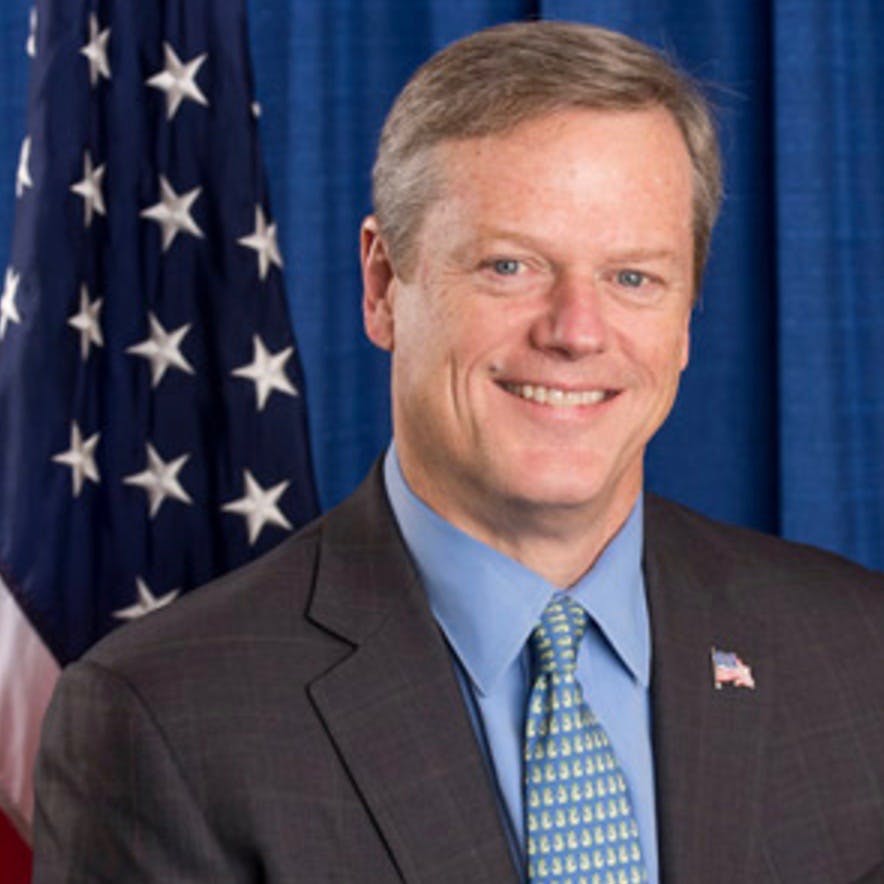
And now Gov. Charlie Baker, a former long-time CEO of the insurer Harvard Pilgrim Health Care, has come up with a big bill to further improve care in the commonwealth while trying to limit price increases.
Before I go on, consider the “super users’’ – the 5 percent of patients whose care comprises about half of America’s health-care costs. Some almost seem to live in hospital emergency rooms and many have mental illnesses and/or substance-abuse issues that sent them there.
The governor’s bill would require hospitals and insurers to increase by 30 percent over the next three years their spending on primary care and behavioral health, but without increasing overall spending. Given how many illnesses and injuries are made inevitable by thin primary care and often difficult to obtain mental-and-behavioral-health treatment, that makes sense. The governor says that less than 15 percent of the total medical expenses are spent on the combination of primary care and behavioral health. Instead, the big money goes to treat severe and chronic illnesses, many cases of which could have been prevented and/or at least diminished with much more available – and promoted -- primary care and mental-and-behavioral-health coverage. Mr. Baker’s package would also simplify insurance paperwork for mental-and-behavioral-health providers to help expand coverage in this sector, which is still woefully low compared to so-called “physical health,’’ as if the brain isn’t an organ.
American health care is pretty good at rescuing people in extremis but mediocre at preventing what they need to be rescued from.
There are other fine things in the package, including boosting state monitoring of drugs and their prices -- including those drugs bought through the private market and not just Medicaid -- that cost more than $50,000 per person per year – and expanding telemedicine, which cuts expenses in a number of ways.
I hope that other states, and the Feds, try some of these ideas, too. As usual, Massachusetts is a beacon for those seeking to build better health systems.
The Woonsocket-Worcester Line
Let’s hope that Boston Surface Rail Co. can settle its dispute with the Rhode Island Department of Transportation over the company’s use of the historic train depot (built in 1882!) in Woonsocket and be able to start passenger rail service (and bus service to supplement it) between that city and Worcester sometime next year. It would be one of America’s first private passenger rail companies since the creation of quasi-public Amtrak, in 1971.
The service would be a boon to those who want to stay off crowded Route 146, in the Providence-Worcester corridor, and serve an area now with very thin public transportation. And consider that huge CVS is based in Woonsocket; more than a few of its employees would be happy to use public transportation.
Remember that Greater Providence is the second-largest metro area in New England, after Boston, and Worcester proper the second-largest city; Providence proper is the third-largest.
Anything to get more people off the roads between Greater Providence and Worcester would he most appreciated! The service would be particularly appreciated in the winter: The area crossed by Route 146, being fairly high (by New England standards) and well inland, gets lots of snow most winters.
Boston Surface Rail asserts that the Rhode Island Department of Transportation has been difficult to deal with. RIDOT should prioritize improving non-car travel in this important corridor. Why is it that it seems so difficult to get new projects launched in the Ocean State?
To read GoLocal’s story on this, please hit this link:
We Need to Be Able to Get There
America’s transportation planners need to gradually stop shorting non-car travel. It could do this by, among other ways, setting aside much more dedicated space for buses and bikes. Consider the much improved – faster, smoother -- traffic on Manhattan’s 14th Street as a result of New York City creating red-painted bus-only lanes on the street. Private car traffic is now banned there for most of the day. And this has not hurt local commerce; indeed, it seems to be helping it.
Maybe red bus lanes would help in such dense, busy urban centers as Providence and Newport too. The faster and more reliable the bus service, the more customers and thus finally more public resources, in a virtuous circle. To learn more, please see City Lab HERE and NYC Street Blog HERE
Car-mania, Still
Strolling through a section of the East Side of Providence on the misty, quiet afternoon of Oct. 30 I noticed again how much of the properties are devoted to cars. In and around some of these low, one-and-two story houses from the ‘50s and ‘60s, which reminded me of the affluent West Side of Los Angeles, at least a third of the space – garages, driveways –is for vehicles.
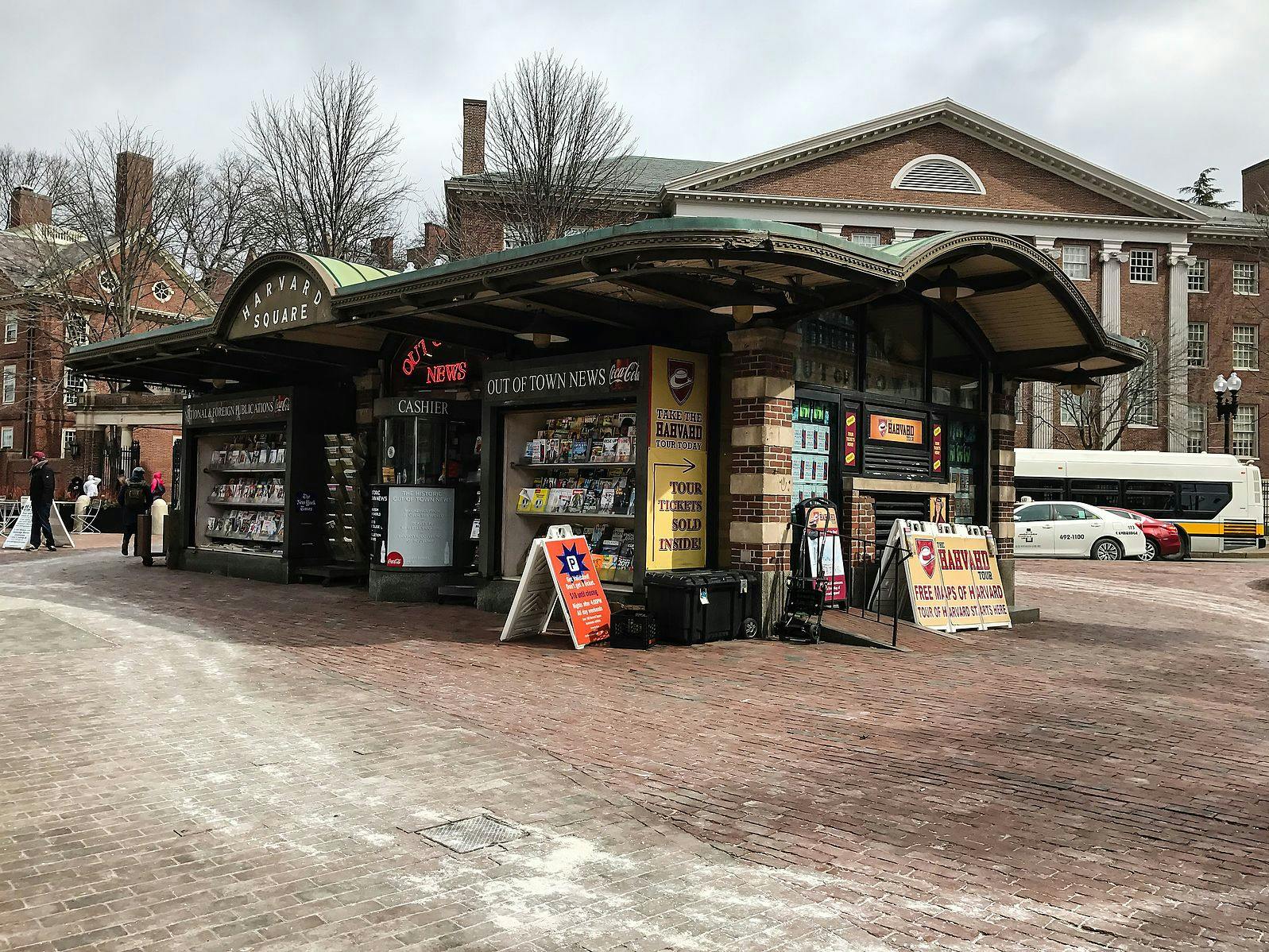
The closing last week of the beloved Out of Town News, in the middle of Harvard Square, Cambridge, testifies to the challenges of the print media in the World Wide Web age, even in such a center of worldly literacy as the neighborhood of America’s most famous university (and with mighty MIT down a few blocks). I remember happily browsing the emporium’s magazines and newspapers from around the world when I lived in Cambridge for a few months, in 1970-71. Sometimes I’d rush over there to get an early edition of The Boston Herald Traveler for which I had written a news story to see what the editors may have done to it. Often the ink was still wet. During my early months in the newspaper business, I’d get considerable pleasure from seeing my byline; the pleasure then faded. Who cared?
Happily, physical books are still doing well. It’s tough on the eyes to read a lot of pages on a screen. Please hit this link to read “On the Joy of Physical Books”:
But Will They Move?
“The long-term solutions to many of our (Californians’} problems are obvious. To stave off fire and housing costs and so much else, the people of California should live together more densely. We should rely less on cars. And we should be more inclusive in the way we design infrastructure — transportation, the power grid, housing stock — aiming to design for the many rather than for the wealthy few.’’
-- Farhad Manjoo, author of True Enough: Learning to Live in a Post-Fact Society, in a New York Times column. To read it, please hit this link:
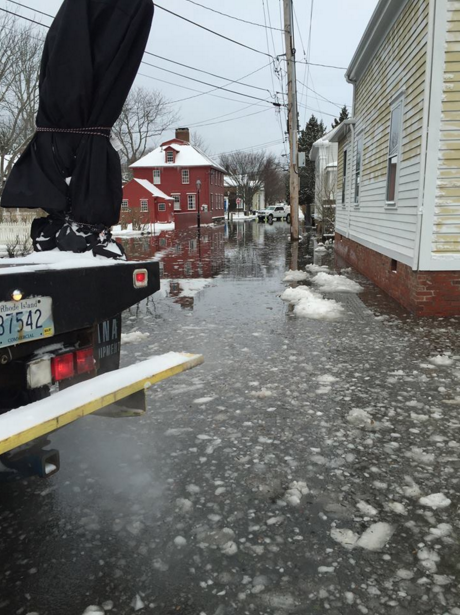
A new study, perhaps controversial, in Nature Communications, says that sea-level rise will become more of a crisis than many had already feared because of new estimates of how many people in the world will be living below the high-tide level. The study says that about 110 million people now live below the high-tide level – protected by dikes, sea walls, etc. (See New Orleans, The Netherlands, etc.) But, the researchers say, that number could reach 340 million by 2100. Long stretches of the New England coast would be affected, with southern Massachusetts, Connecticut, Rhode Island, Connecticut and Boston’s Seaport District among those areas most threatened, along with, say, Newport’s Point neighborhood (soon to be our very own 18th Century style Atlantis?).
“In terms of global estimates, I think the analysis convincingly shows that the situation is probably even worse than previous studies suggested,” said Stéphane Hallegatte, an economist at the World Bank who studies climate change and disaster exposure. “We are talking about hundreds of millions of people who will be directly exposed.”
“Most dikes and protection systems have been built for the sea level of 50 years ago or more, and will be increasingly ill-designed to protect people against floods, leading to rapidly increasing coastal flood losses in the absence of large upgrades,” Mr. Hallegatte said. “Upgrading those systems will be expensive but is unavoidable if one wants to avoid unacceptable economic losses in large cities.”
This gets me to the question of how many people will be willing and able to move because of climate change. Many people have to live near the sea; many others just want to live near it. (That reminds me that famed high-end developer James Rouse helped get the Providence Waterplace Park/river relocation going with a suggestion that “the World’s Widest Bridge,’’ covering the uppermost part of the Providence River, be removed. “People love the water,’’ he noted.)
But obviously, millions will have to leave the immediate coast over coming decades, and federal and other flood-insurance must be changed to address the growing flood threats.
Something of the same quandary applies in California. Global-warming-related climate change, along with over-density of population, in alluringly scenic but drying and fire-prone areas, makes worse fire seasons inevitable. Of course, the work of some Californians – e.g., grape growers in the lovely Napa and Sonoma wine regions – has economically anchored them to increasingly dangerous areas. Where can they go next? The effects of climate change are exacerbated by developer-driven zoning laws that encourage sprawl building in brush and treed areas perfect for rapidly moving infernos and, as in the rest of America, delayed (or no) maintenance of electricity infrastructure, which sparks fires. Some of the big blazes in the Golden State were started by malfunctioning, decayed and/or dangerously sited Pacific Gas & Electric and Southern California Edison wires and other infrastructure. Would publicly owned utilities be more responsible?
The entire southern tier of states faces far more serious global-warming-related issues (extreme storms, droughts, floods) than does, for example, the Northeast, Upper Midwest and Pacific Northwest. Will there be a slow reverse migration from south to north over the next few decades, reversing the flow to the Sun Belt that has transformed the American economy and politics since the ‘50s (aided by huge improvements in air conditioning)?
To read the study, please hit this link:
Affluent Parents Push for Better Schools
Yes, education policy calling for high standards is important, but, as I’ve written, the biggest reason that Rhode Island public education lags so far behind Massachusetts’s is simply that the latter, with the nation’s highest per-capita income, is so much richer than Rhode Island, whose per-capita income is placed at 18th or 19th.
A more prosperous state means more tax money to put into schools and, very importantly, a higher percentage of affluent and, thus highly educated, parents with the desire and power to push their communities and state to elevate education. So fixing Rhode Island’s public schools calls for narrowing the economic gap between the two states. But it’s a great strength of the Ocean State that it’s next to such a dynamic, innovative and prosperous place that spills some of its wealth into adjoining states and creates some public-policy models to emulate.
Another Memoir
“The Brat in Your Classroom,’’ Michael John Carley’s memoir of his troubled time at Moses Brown School in the ‘70s, in the Oct. 27 Providence Journal, was often a good read, including sometimes quite funny, and I must assume much of it was accurate. (He includes pictures of teachers’ comments from the time.) The enthusiastically self-promotional Mr. Carley, who’s on the autism spectrum, identified himself as a “playwright, a diplomat, executive director of nonprofits,’’ along with having had other impressive roles. He described such nasty if usefully cinematic episodes as being beaten by the police. Was all this fact-checked? As my father used to say: “Remarkable, remarkable, if true.’’
The piece falls into the rapidly growing category of memoirs detailing the overcoming of tough problems of youth – presented in sort of made-for-TV-or-the movies narratives – and it speaks to Americans’ greater and greater obsession with themselves, as reflected in social media and elsewhere. Of course, we’re all at the center of our personal universes, but we’ve been taking that to extremes lately.
Eli Pariser, the chief executive of Upworthy, a Web site for "meaningful" viral content, has noted:
“We thought that the Internet was going to connect us all together. As a young geek in rural Maine, I got excited about the Internet because it seemed that I could be connected to the world. What it's looking like increasingly is that the Web is connecting us back to ourselves.’’
Perhaps in an age when promoting one’s “personal brand’’ is granted such economic importance this is inevitable. And naturally, most of us have the desire, especially as we approach old age, to try to make sense of our messy histories and to control the narrative, if only for our children. And don’t underestimate the desire for revenge, expiation and, if the storyteller is a particularly strong writer, money.
Of course, a major attraction to running such magazine-style pieces in The Journal (where I labored as an editor on and off for decades and that I still loyally read daily) is that you don’t need paid local reporters to fill up that space with news, of all things. Another, and to me stranger, thing is the increasing number of long tributes to the paper’s own remaining staffers in the paper – space that might otherwise be used for news, if only from other newspapers and news services. It comes under the heading of meta:
Definition: “Referring to itself or to the conventions of its genre; self-referential’’. This is happening in many other now very short-staffed newspapers, too.

In other Asperger’s news, we have the soft-spoken sociopath Mark Zuckerberg continuing to repeat the lie that Facebook is not a media company as he refuses to have FB delete obvious factual lies by politicians in their ads. That’s because these lies, by riling up users, boost activity on Facebook, which increases profits. Selling rage can be very profitable. The relentless lies on the site continue to do damage to democracy and our civic culture in general.
Many Facebook employees are mortified by Zuckerberg’s money-trumps-all approach. They sent him a letter proposing that campaign ads be fact-checked. They also oppose FB ads that micro-target audiences, and urge that FB users be warned more generally about potentially fraudulent ad campaigns (which might be financed by foreign dictatorships such as Russia).
The letter, obtained by The New York Times, notes what should be obvious:
“Free speech and paid speech are not the same thing.’’
“Misinformation affects us all. Our current policies on fact-checking people in political office, or those running for office, are a threat to what FB stands for. We strongly object to this policy as it stands. It doesn’t protect voices, but instead allows politicians to weaponize our platform by targeting people who believe that content posted by political figures is trustworthy.’’ But what does Facebook “stand for’’?
It should be said that responsible news media do fact-check political ads as well as ads for goods and services. They can’t catch everything but just having a publicly known policy of monitoring ads for accuracy cuts down on the lies and fraud.
YouTube, owned by Google, is another lucrative cesspool of disinformation and misinformation.
Twitter, for its part, is showing some commercial courage by deciding to ban all political advertising, though the manic early-morning Tweeted lies and slurs from Trump will continue and of course people will keep Tweeting and re -Tweeting political propaganda in general. The genie is long out of the bottle.
For an interesting piece titled “Everyone on the Autism Spectrum,’’ hit this link.
Portable Pain
I finished writing this week’s column in a physician’s waiting room, a frequent venue for me these days. With some trades, including the writing racket, computers let you work almost anywhere, which is too bad. Much healthier to read the glossy and soothing old travel magazines, filled with pictures of blue mountains and palm trees along pristine beaches, you find in such places. Or maybe not at a doctor’s office. What germs might be lurking in those old pages?
Doctors in the White House
“Trump has, one way or another, changed our national life irrevocably. When one side of a political struggle has shown itself willing to commit crimes, collaborate with foreign powers, destroy institutions, and lie brazenly about facts readily ascertainable to anyone, should the other side—can the other side—then pretend these things did not happen?’’
-- From “America’s Goodly Veneer Was a Lie,’’ by Garrett Epps, professor of constitutional law at the University of Baltimore, in The Atlantic.
To read the essay, please hit this link:
No big surprise! As many of us could tell, the “transcript’’ of Trump’s now infamous phone call with new Ukrainian President Volodymyr Zelensky, in which Trump sought to shake down Mr. Zelensky for dirt on Joe Biden and his son Hunter in debunked conspiracy theories, was doctored by the White House staff to remove some incriminating words and phrases. But then, mysterious ellipses already suggested the doctoring.
Lt. Col. Alexander Vindman, who listened into the call as the Ukraine expert on the National Security Council, discussed this coverup in testimony to Congress last week. I salute his courageous patriotism.
As with the Mueller Report, “redacted’’ by Trump henchman William Barr, whose official title is U.S. attorney general but who operates solely as Trump’s private lawyer, the regime is hard at work hiding and destroying evidence – activities for which the Trump Organization has been well known for decades.
I wonder if Trump will also try to, er, adjust announced federal government data to ward off unpopularity when the now slowing economy goes south again. Reminds me of Darrell Huff’s 1954 book, How to Lie With Statistics.
xxx
The creepy and robotic Mike Pence is establishing new records daily for obsequiousness and lies in defense of his boss.
Your Laundry Is Ready
Apparently it’s not all that hard to funnel foreign money (illegally) to U.S. politicians to gain access to whomever might be helpful. Consider how a Pakistani-American named Imaad Zuberi, as a straw donor, has funneled foreign funds to the likes of Obama’s inauguration committee and to Republican and Democratic candidates. And he was utterly cynical, having raised money for Mr. Obama and Hillary Clinton, before switching financial support to Trump after the Electoral College put him in office!
Public financing of political campaigns would reduce this sort of corruption, as would reversing the Supreme Court’s Citizens United ruling, which unleased a Niagara of unregulated campaign money. But don’t hold your breath for any change. Too many powerful politicians and businesses benefit from the current arrangements.
Sense of Place by the Sea
The Irishman John Banville’s elegiac novel The Sea is a meditation on love, loss (sudden and gradual), and the joys and pains of childhood and maturity. But it also contains, among other gems, some very funny social comedy and sharp descriptions of the interior and exterior architecture of the old houses in the book, as the narrator remembers them and in real time. Indeed, they are almost characters themselves. Permeating the book is a powerful sense of place, especially that of a seaside resort town in and out of season, which should appeal to New Englanders more than most people. My only big complaint is that Mr. Banville’s prose can be so intense that when you’re in the book, you want to lie down every once in a while to rest from it.