


Whitcomb: Advances From Disasters; Infrastructure Redux; Wampanoags Whomped Again
GoLocalProv News Team
Whitcomb: Advances From Disasters; Infrastructure Redux; Wampanoags Whomped Again

“It is a mild day in the suburbs
windy, a little gray. If there is
GET THE LATEST BREAKING NEWS HERE -- SIGN UP FOR GOLOCAL FREE DAILY EBLASTsunlight, it enters through the
kitchen window and spreads
itself, thin as a napkin, beside
the coffee cup, pie on a plate….
“Later, there will be
no reason to remember
this, so remember it
now: a safe day. Time
passes into dim history…’’
-- From “Small Talk,’’ by Eleanor Lerman
“A genuine New Englander learned by example never to take anything for granted. Once, when I remarked that it was a nice day, my Uncle Henry looked up at the sky, turned in every direction, and seeing there wasn’t a cloud anywhere, took the pipe from his mouth and finally conceded, ‘Well, maybe.’’’
-- From Fetched-up Yankee, by Lewis Hill
“The happy ending is our national belief.’’
-- Mary McCarthy (1912-89), American novelist and critic
xxx
World War II, for all its horrors, accelerated technology that over the long-run has helped humanity, though most of the advances started before the war. Consider the refinement and expansion of radar, the development of jet engines, the mass use of antibiotics and the creation of sophisticated mobile hospitals. “Necessity is the mother of invention.’’
This may well be the case with the COVID-19 pandemic, which is spawning high-speed research not only in virology but also in how to improve public-health administration. As a world health-care center, New England will take a leadership role in this work.
For a thorough daily review of developments in the region in response to the pandemic, check out The New England Council’s Web site –
A plea to give the phrase “a grim milestone’’ a rest.

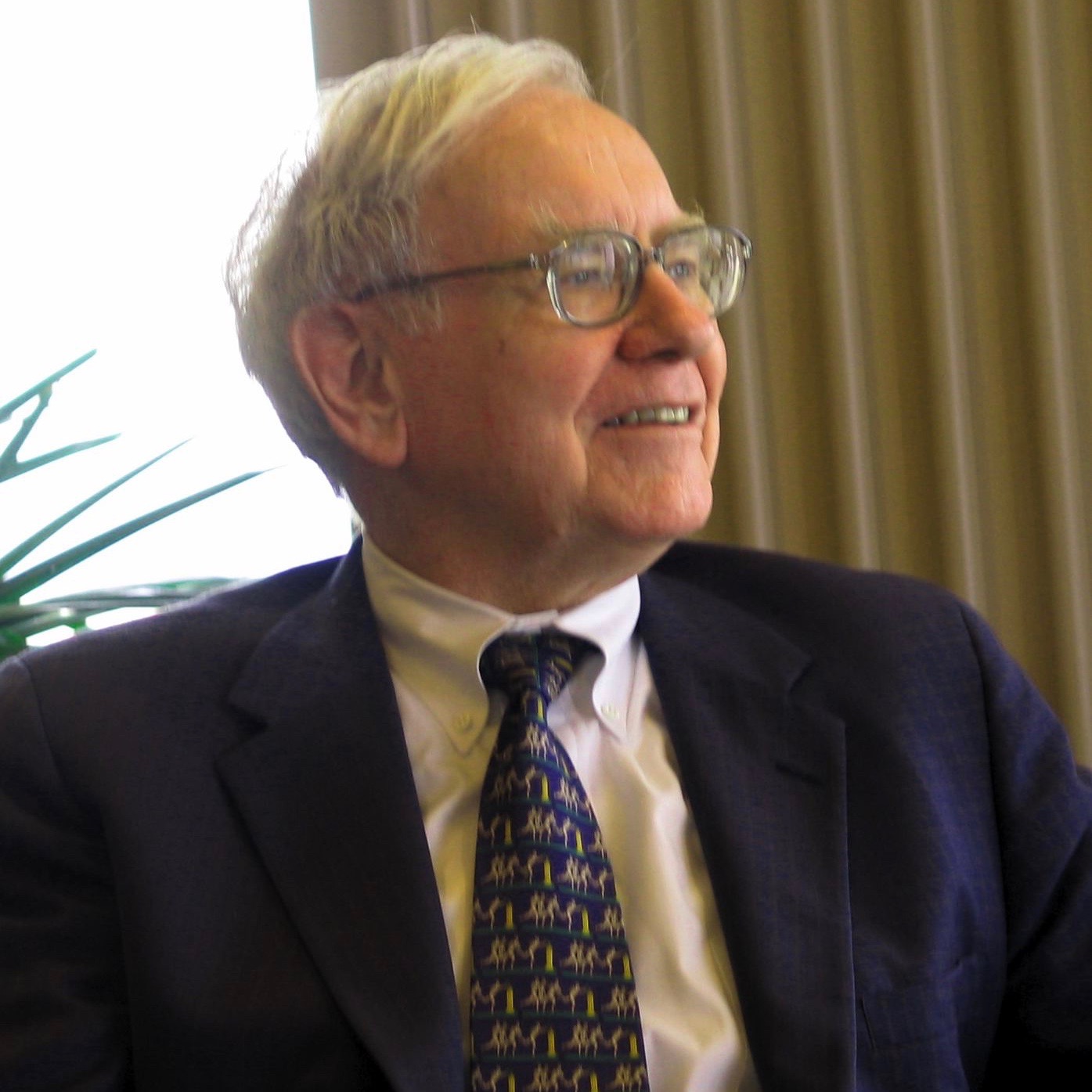
It will be interesting to see how much the pandemic exposes the dangerous degree of overborrowing by corporations and others encouraged by the Federal Reserve Board’s irresponsible cheap-money policies over the last few years. As Warren Buffett quipped:
“Only when the tide goes out do you discover who's been swimming naked.’’
When you consider the pandemic’s extreme impact on the economy and already sky-high corporate debt, made potentially more perilous by the higher interest rates that may eventually accompany vast new government borrowing, a long, as well as deep, recession may be coming. And the slowing or reversal of globalization, and strengthening economic nationalism, will eventually tend to bring back inflation as cheap goods from abroad become less available. But first, it’ll be deflation as the recession/depression deepens.
As with COVID-19 itself, there are far too many variables and unknowns to make a confident guess about what the economy will look like a year from now. But companies and individuals with patience and low debt burdens can seize opportunities. And American dynamism will eventually come through to turn us around.
So private-equity vultures want a big piece of the federal rescue program too! You can bet that, yet again, Wall Street will have done a lot better than Main Street when our current exciting adventure ends.
xxx
FINALLY! -- U.S. and other experts are now saying that data from Chinese authorities on the scope of the COVID-19 pandemic that started in Wuhan are fake and the outbreak there has been far bigger and more lethal (in terms of the number of deaths) there than the regime has claimed. As I’ve advised here before, do not believe reports churned out by dictatorships. That’s not to say you shouldn’t be skeptical, if much less so, about numbers reported by democracies, as The Wall Street Journal has reported about Italy, where, the paper reports, the real death toll is much higher than the official one.
Indeed, for that matter, we have no idea how many people have the virus in the U.S. and how many deaths it has caused. There are “reported cases’’ and the many more we don’t know about, and sometimes “cause of death’’ is misattributed. The virus kills some people at home who haven’t been tested. And we’re still learning about the extent and means of contagiousness. Will the pandemic fade in the month or two ahead and then return in the fall? Maybe things will turn out worse than expected -- or much better. Has coverage of the pandemic too often descended into hysteria or is understatement more the problem?
We’ll be getting quick lessons in virology.
Information can be confusing and contradictory, and change from hour to hour. Call it the “fog of war’’. Listen to serious people seeking the facts and who are willing to publicly change their mind. “When the facts change, I change my opinion. What do you do, Sir?’’ the economist John Maynard Keynes said to someone he was debating.
Meanwhile, Massachusetts Gov. Charlie Baker negotiated a deal in which the Chinese have shipped more than a million protective masks to America on the New England Patriots jet. Hit this link:
Thanks, my friend Jim Freeman, a financial adviser, for flagging this and for recalling Yogi Berra’s alleged line when informed that Dublin, Ireland, had elected a Jewish mayor: “Only in America!’’
xxx

So consider helping your local nonprofits, along with local small businesses, to keep them alive – NOW.
Hit this link to read a GoLocal editorial on this:
xxx
If you have the square footage to do it, this is the spring to plant a vegetable garden. Think of World War II “Victory Gardens’’. Read this:

In the 2016 election campaign, Trump, as did Hillary Clinton, promised that rebuilding America’s physical infrastructure would be a priority. But as it turned out, his real priority was tax cuts, including a huge one for himself. But now under the pressure of the pandemic and the coming election, he’s touting a vague $2 trillion infrastructure plan. Congressional Democrats want a big infrastructure program, too. Well, good! It would put many more people back at work and make the country more competitive. I’ve been amused, by the way, at how the GOP, once claiming to be the party of small government and fiscal responsibility, has become the one of exploding federal deficits and ever-expanding presidential power. “Conservatives’’? Not at all.
The over-concentration of presidential power and publicity has been a cancer on our federal republic for years, under Democratic and Republican administrations. The main difference now is that the president is a sociopath. The news media are to blame, too. They over-cover the president, because it’s easier for the presentation of personal drama, and less complicated than covering the other branches – Congress and the judiciary.
Bad gamble
The U.S. Interior Department has rescinded the reservation status of the Mashpee Wampanoag Tribe, which has been seeking permission to build a casino on land it owns in Taunton. The Cape Cod-based tribe itself will be allowed to keep federal recognition as a Native American tribe but the federal action presumably kills the plan for a casino.
The casino business is inherently sleazy and casinos (which aren’t open now because of you-know-what) are cannibalizing themselves. Far better to create a highly diversified long-term economic development plan, but gambling revenues continue to look alluring as a quick fix.
The fewer casinos the better. But I still feel sorry for the tribe, especially knowing that their casinos would have competed with Twin River’s two nearby casinos, in Lincoln and Tiverton, R.I. Twin River has close connections with the Trump administration, ruled by a former and failed Atlantic City casino mogul. Surely politics had nothing to do with the decision…..?
Do the North End Right
Big plans to develop/spiff up Newport’s somewhat gritty North End may well go into the freezer for now as the country slides into recession. But when we come out of the crisis and the country (slowly?) recovers, I hope that whatever gets built is highly diversified in order to help Newport reduce its dependence on retail (an imperiled sector these days anyway) and tourism. Locally based stores instead of big boxes. A mix of housing. Some “blue economy’’ (marine-related) operations. Look at:
And I hope that rather than more car-dependent suburban sprawl, that development is pedestrian-friendly. So much of The City by the Sea is beautiful, but much of the North End isn’t. Wouldn’t it be great if it were transformed over the next few years as the state’s road changes stitch it closer to the famously beautiful area to the south.
To read more, please hit this link to an eco RI News article
Respiratory Relief and Not
Life’s little ironies, British American Tobacco – a devoted purveyor of lung cancer and emphysema -- says it’s developing a vaccine for COVID-19 using tobacco plants!
The company asserts that the vaccine is:
· “Potentially safer given that tobacco plants can’t host pathogens which cause human disease.
· “It is faster because the elements of the vaccine accumulate in tobacco plants much more quickly – 6 weeks in tobacco plants versus several months using conventional methods.
· “The vaccine formulation KBP is developing remains stable at room temperature, unlike conventional vaccines which often require refrigeration.
· “It has the potential to deliver an effective immune response in a single dose.’’
This reminds me a colleague in my International Herald Tribune days back in the ‘80s who heavily smoked Pall Mall cigarettes and never seemed to get the colds and flu that would sweep through the office, leading us to call it “a giant Petri dish.’’
My colleague’s line was that “no germs can survive in my lungs’’ because of his smoking. He’s now 85.
xxx
In other respiratory news, the Trump administration, given more cover by COVID-19, is eviscerating Obama administration vehicle fuel-economy rules, which would please Trump’s pals in the fossil-fuel industry. The Hill reports:
“The new rule cuts the year-over-year improvements expected from the auto industry, slashing standards that require automakers to produce fleets that average nearly 55 miles per gallon by 2025. Instead, the Trump rule would bring that number down to about 40 mpg by 2026, bringing mileage below what automakers have said is possible for them to achieve.’’
People have focused on the fact that the Obama rules were aimed at reducing carbon-dioxide emissions, which cause global warming, but. of course, burning gasoline and diesel fuel releases other stuff too, some of it toxic. By limiting fuel-economy improvements, the administration could end up costing consumers more in gasoline purchases than they might save by being able to buy cheaper cars.
To read more, please hit this link:
And this, in which he calls the murderous Saudi dictator Mohammed bin Salman his friend.
A Quarter for Art
In these times, we need art more than ever to take us to new places. Thus it was very pleasant to learn that the U.S. Mint has chosen to create a new quarter to honor the Weir Farm National Historic Site, in Ridgefield and Wilton, Conn. It’s the first quarter to honor the visual arts.
The site commemorates American impressionist painter J. Alden Weir and other artists who stayed at the site and/or lived there, such as Childe Hassam, Albert Pinkham Ryder, John Singer Sargent and John Twachtman.
Only two sites run by National Park Service are devoted to the visual arts, and they’re both in New England. The other one is the Saint-Gaudens National Historic Site, in Cornish, N.H., the site of famed sculptor Augustus Saint-Gaudens’s estate and art colony. (J.D. Salinger – the reclusive writer lived in Cornish, too.)
Springtime for Dictators
It’s tragic that Hungarian President Viktor Orban has succeeded in using the COVID-19 as cover to turn himself into a quasi-fascist dictator. The country’s parliament has just given him open-ended powers to rule by decree. His regime has already been destroying freedom of speech and taken other measures to solidify his rule. The European Union, whose principles include democracy, human rights, including freedom of expression, and the rule of law, should throw Hungary out of the E.U. since the organization’s principles include democracy. The atmosphere of fear and uncertainty that we’re living in now is terrific for would-be tyrants.
Losing Letters
Wartime letters amongst relatives, friends and colleagues have provided a lot of evocative reading for some of us as well as material for historians. I used to occasionally read such letters and telegrams, some very romantic, written in World War II, myself. But in our age of texting, email, Skyping, Zooming and so on, how much of our communications during our current crisis will be accessible to current and future historians?
Goats and Mayors
Goats have seemingly taken over the streets of Llandudno, in North Wales, during the lockdown there. This looks to me more sweet than ominous. In our urban but rather treesy neighborhood I have lately noticed more wildlife around, mostly squirrels, chipmunks and rabbits.
To read more about the Welsh goats, please hit this link:
xxx
Less soothing is hearing/seeing Italian mayors raging at citizens for failing to follow quarantine rules. But some of it is hilarious. Why can’t we gesticulate like that? To see this wild show, watch below
Old Books Again
Mostly stuck at home, often in my cave-like study in the basement (I look up through a window at a 45-degree angle at the trees enthusiastically budding despite the chill), I have been gazing at the spines of some of my old books and recalling those and others I loved. When I was a little kid, I used to bicycle to our town’s public library to take out Doctor Doolittle books, then came science books, histories (which led me to be a college history major) and adult fiction as fantastical in its own way as Doctor Doolittle adventures. My favorite books are all about overcoming, or trying to overcome, dangers or at least challenges, even if the challenge is just inertia.
On the Way to Greenland and Walking Around
One of my favorite books remains N by E (north by east) by the writer and artist Rockwell Kent (1882-1971). It’s a rigorous and romantic account of his voyage from New York Harbor to Greenland in the summer of 1929, right before the Great Depression. My coach and, for a year, Latin teacher John Small gave me a first edition (1930) of the book in 1964. Mr. Small, who fought in the Battle of the Bulge, had the same mix of mysticism, fatalism and physical and mental toughness that Kent had. While I continued to throw out my decaying old paperbacks, I savor my old hardcover books, which will last a lot longer than what we put on screens.
xxx
Poet and essayist Ross Gay’s new book of essays, The Book of Delights, while sometime treacly and often overwritten, still encourages readers to strengthen their powers of observation, especially as we walk around, as more of us are doing these days to escape for a little while COVID-19 claustrophobia. And then there’s the profoundly eccentric (maybe crazy?) Swiss writer Robert Walser (1878-1956), who harvested rich anecdotes and insights from his strolls. His best book is The Walk.
As we walk around you notice that the air seems cleaner and, of course, quieter these days. That makes the shriek of leaf blowers all the more jarring. You might also notice little things of beauty you might have missed in a more “normal’’ time – a wildflower growing up out of a crack in a sidewalk or the subtle gray-green beauty of lichen on a stone wall as a ray of sunlight hits