


Whitcomb: Pawtucket Back in Game; Growing Greens; Wind to Gas; Storms Are Cheap
Robert Whitcomb, Columnist
Whitcomb: Pawtucket Back in Game; Growing Greens; Wind to Gas; Storms Are Cheap

and effortless, dreaming myself
into the past. Perhaps, I thought,
words could replenish privacy.
Outside, a red bicycle froze
into form, made the world falser
in its white austerity….’’
-- From “The World,’’ by Jennifer Chang (an American poet and scholar)
GET THE LATEST BREAKING NEWS HERE -- SIGN UP FOR GOLOCAL FREE DAILY EBLAST
“For darkness is the rule and light its exception, as death is the rule and life its exception. Light and life are anomalies, the dawn is their continual affirmation.’’
-- From Norwegian writer Karl Ove Knausgaard’s essay book Autumn
“It {the Western Alliance} must be a spiritual union…It cannot be written down in a rigid thesis or in a directive. It is more of a brotherhood and less of a rigid system” {to confront the totalitarian Soviet Union}.
-- British Foreign Secretary Ernest Bevin to the House of Commons, on Jan. 22, 1948
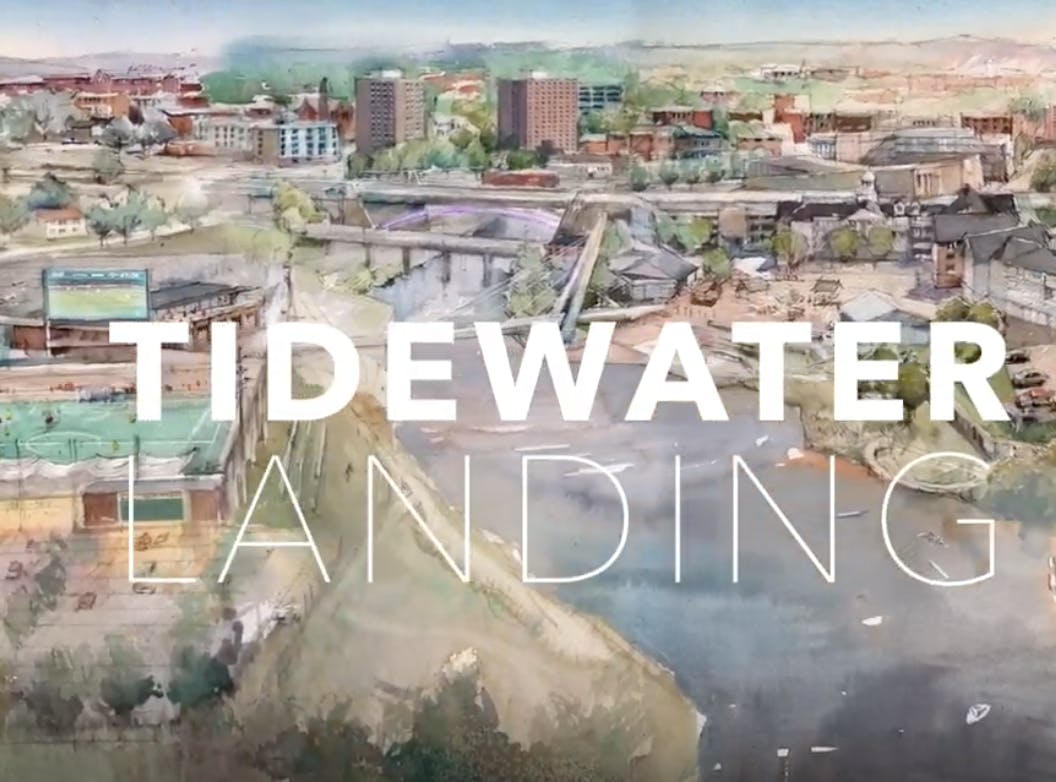
The project would leverage people’s love of being along the water – in this case, the Seekonk River (which I always think is the Blackstone in that part of Pawtucket) – and presumably heavily promote the project to people from very expensive Greater Boston who might want to live in Pawtucket, further encouraged to do so by the Pawtucket-Central Falls MBTA commuter rail station, scheduled to open in 2022. A big question is how successful the soccer stadium would be, however popular the greatest international sport has become around here, considering that the major league New England Revolution is based just up the road at Gillette Stadium, in Foxboro.
The public part of the financing totals $70 million to $90 million, most of it from a commonly used tax technique called “tax increment financing.’’ This lets developers use part of the tax revenue created by developments to help pay to build them. Also involved in what the developers call “Tidewater Landing’’ are often controversial federal “Opportunity Zone’’ tax breaks that are supposed to encourage economic development in low-income areas but, many note, greatly benefit-rich developers. But then, most tax breaks favor the rich. (See below.)
In any case, I hope that this is not one of those projects whose fate is tied in knots in layer upon layer of regulatory red tape. America used to be known for doing big projects; now, big – and needed— projects often seem impossible because of the veto power of too many interest groups, public and private. And there is no such thing as a perfect project. For an overview of our big-project paralysis, using New York’s Penn Station as Exhibit A, please hit this link:

365-day growing season in Providence
Gotham Greens, in Providence, is the most exciting new business in the city for a long time. The company will grow about 10 million heads of leafy greens a year inside its 110,000-square-foot facility, now open. This gives our region a tad more food independence by letting crops be harvested even through our annual cold snap called “winter’’ and in what had been an industrial wasteland. There are other tracts in the city that could be converted to year-round food production.
That includes crops that can be grown in rooftop greenhouses. Then there’s the stuff to grow on open rooftops seasonally. Hit this link for more information:
These Tax Laws Favor the Better Off
Regarding how the tax laws favor the affluent: There are the business deals such as the aforementioned Pawtucket project, there is that capital gains are favored over earned income, and then there’s something you might rarely think of: For every year you delay taking Social Security after your full retirement age until you turn 70, your benefit rises 8 percent. Obviously, affluent people can afford to wait while poorer people might urgently need to start collecting as early as age 62, though they’d be giving up a lot of money over the long run.
From Social Security: “The current full retirement age is 66 years and 2 months for people born in 1955, and it will gradually rise to 67 for those born in 1960 or later. Early retirement benefits will continue to be available at age 62, but they will be reduced more. When the full-benefit age reaches 67, benefits taken at age 62 will be reduced to 70 percent of the full benefit and benefits first taken at age 65 will be reduced to 86.7 percent of the full benefit.’’
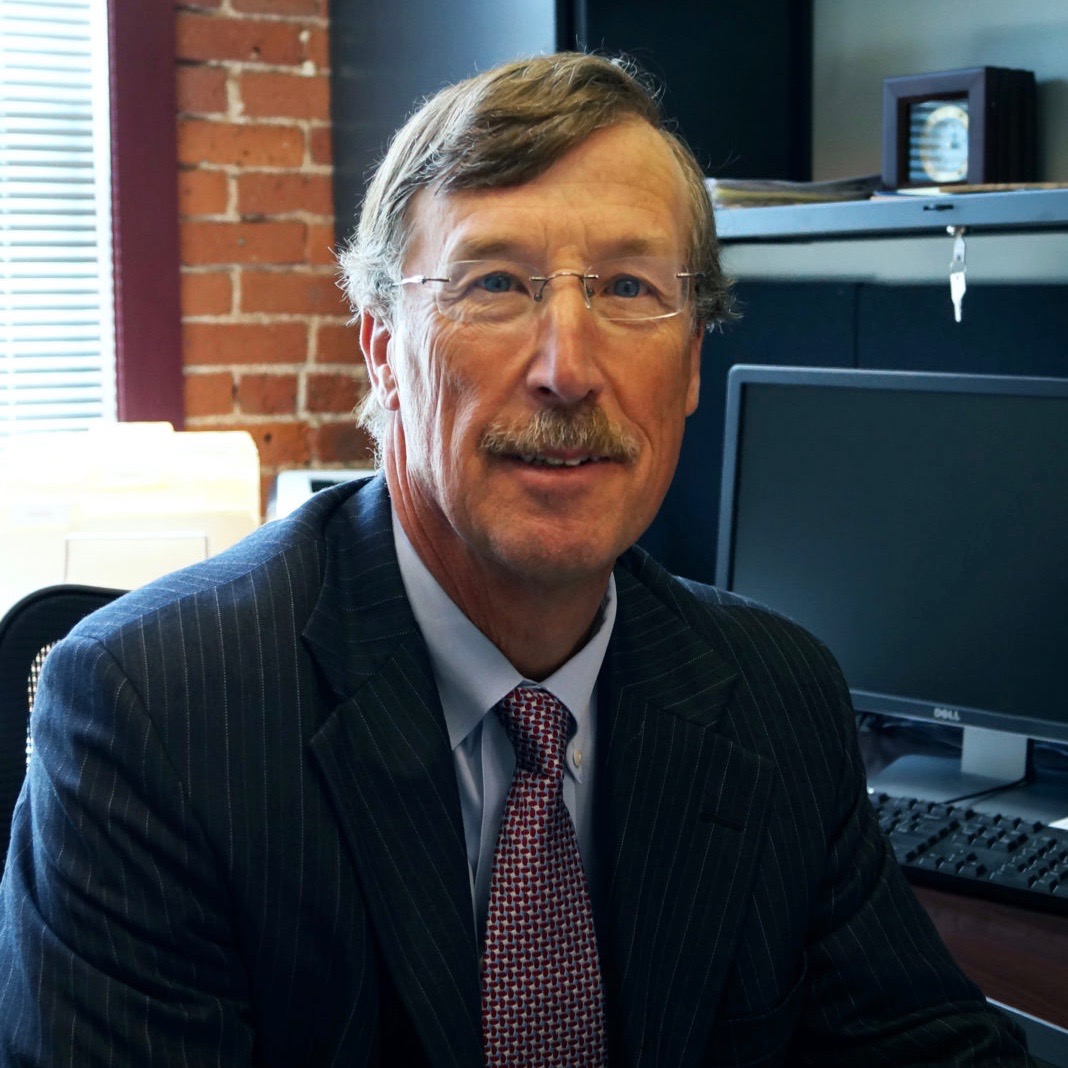
The public needs to know more about the seemingly outrageous demand by Care New England that its CEO, Dr. James Fanale, be made CEO of the new company to be created by the proposed merger of CNE with the much larger Lifespan. Was this about power for the sake of power, and money? (Dr. Fanale’s compensation would presumably grow if he were to become czar of a much bigger organization.) Many health-care experts say that this merger is necessary to maintain high-quality health care in Rhode Island because of efficiencies/economies of scale and to compete with the Boston health-care behemoth.
Seasonal Tree Trauma
Oh, no! Not another Rhode Island Christmas crisis! In this case, it’s that there’s a big artificial Christmas Tree, or call it a holiday tree, in the State House. Naturally, so to speak, the Christmas tree growers think this sets a bad example. But aesthetically, does it make all that difference? You can even replicate the piney smell of a real tree with a spray.
And there’s no cleanup.
Ah, our Christmas trees – so fresh and lovely when we buy them, so forlorn when we dump them, dried out and with needles raining on the dirty old snow, on the curb a few weeks later.
xxx
Standing around the piano in the living room singing (drunkenly?) Christmas carols used to be a feature of this season in far less electronic times. No more. Somehow, Tweeting people holiday greetings lacks a certain emphasis.

Here’s another little-noticed but hopeful sign for wind power and other renewable energy:
Governing.com reports that Maine might host a pilot project that “converts surplus electricity from wind farms and other renewable generators into a gas that can be stored in underground pipelines
“Plants that demonstrate these technologies are running in Colorado, and in California, which already produces more solar power than its grid can handle. And in Europe, where electricity is more expensive, plants like this are starting to be built at commercial scale.’’
Power-to-gas technology uses surplus renewable electricity to create hydrogen and natural gas, or methane.
A pilot plant, Governing reports, “could use surplus electricity and equipment called an electrolyzer to extract hydrogen and oxygen from water, capture the hydrogen and mix it with natural gas in the pipeline system.’’
“A further step could turn the hydrogen into natural gas through a process using carbon dioxide.’’ They’re already doing this in Germany. Of course, natural gas is a fossil fuel, but this beats fracking….
With battery capacity being steadily improved and the aforementioned advances, the future for renewable energy looks better and better. To read more, please hit this link:
Paper for the Public
"I could stand in the middle of 5th Avenue and shoot somebody and I wouldn't lose voters."
-- Trump at a 2016 campaign rally
Well, maybe he could get away with it at a Republican rally.
xxx
“There is no Republican Party. There’s a Trump party.’’
-- Former GOP House Speaker John Boehner
All U.S. voting systems should have paper ballots as backups! The Russians are hard at work trying to hack into state voting systems. For example, just a few weeks ago they tried to get into the Ohio agency in charge of the Buckeye State’s voting systems. They’re looking for vulnerabilities before next year’s presidential and congressional elections, which they will try to steal for their boy Trump and his allies. Hey, it worked in 2016!
Voting machines are not supposed to be connected to the Internet for security reasons, but, Salon reports, analysts have “discovered remote-access software on machines in key swing states and other flaws that could expose the systems to hacking. Motherboard recently reported that election systems in 10 different states have connected to the Internet in the last year.’’
The U.S. House passed a bill last summer that would have provided $600 million for states to buy new voting machines that could not be linked to the Internet and would provide for paper backups. But the measure was blocked by Senate Majority Leader Mitch McConnell (aka “Moscow Mitch’’), who had also stopped Senate election security bills. Finally, Moscow Mitch, who’s running for re-election next year, agreed to legislation to provide $250 million for election security.
To read more, please hit this link:

GoLocal has reported on Providence City Council President Sabina Matos’s proposals for reducing the trouble, and especially violence, associated with the city’s many nightclubs. The problems are particularly acute in the warm weather, when patrons and would-be patrons are more likely to mill around outside these joints and get into fights. She proposes, in GoLocal’s paraphrase, a measure that, among other things would prohibit the issuance of any new 2 a.m. closing time liquor licenses in C-1, C-2, and C-3 zones -- commercial corridors next to residential neighborhoods (Atwells Avenue, Broad Street, Chalkstone Avenue, etc.) Good idea in itself. But shouldn’t the current number of these establishments be reduced?
Her idea is to try to concentrate such businesses downtown and other areas that she sees as primarily nonresidential which, she hopes, would be easier to police. But a caveat here: Downtown’s residential population has been increasing rapidly in the last few years.
Ms. Matos’s legislation would also require an increase in video surveillance cameras in certain establishments. Good idea.
To read more, please hit this link:
Is Recycling Worth It?
At our house, we resolutely separate out our recyclable materials. But with China no longer accepting this stuff and recycling costs surging, I wonder if we’re approaching the end times for recycling as we know it. Some communities are canceling their recycling programs. I have also long wondered how much water and energy (to heat the water) is used to clean plastic and metal objects before throwing them in the recycling bin. The Christmas season is the biggest time of the year for recycling.
The Wonderful World of Weather
There was terrific televised storm hype during Thanksgiving week, as perfectly normal-for-late-November storms moved across America, inconveniencing all those poor people who chose – in the face of grim historical evidence – to travel then. There’s much more weather stuff on TV news now than 30 years ago. Much of the meteorological melodrama can be explained by two things: the layoffs of many journalists who would otherwise have been covering other, more important news, and the easy availability of free or cheap video. You usually no longer need a cameraman or woman.
Videos of bad weather are cheap dates for news-media outlets.
Feature of News
The World Wide Web continues to pull advertising money away from most newspapers. They’re dying in droves, and local-news deserts are spreading, especially in rural and exurban areas – reducing the sense of community and making it easier for local public officials, business people, and others to engage in corruption.
There’s a new national journalism program called Report for America, which is part of the nonprofit The GroundTruth Project, which seeks to ameliorate the local-journalism crisis – a little – by giving small grants from a total $5 million program to help pay new journalists for one year, starting next June. The idea is that Report for America will fund half the costs of these positions, with the rest to be covered by the news outlets and perhaps by some local-community fundraising. Local news organizations (such as GoLocal24, which mostly serves the Rhode Island, Greater Worcester and Portland, Ore., areas ) play a key role in the civic life of their communities and many citizens mourn their disappearance from many markets.
The Public’s Radio, the NPR station (and so nonprofit) based in Providence, is one of the 164 news outlets chosen to benefit from the program.
Meanwhile, many historians are increasingly distressed that some publishers throw out virtually all back issues of many newspapers and newspapers. The media companies note that most of this stuff can be digitized and stored in computers. But, as I have written, digital documents degrade and computer systems change. The physical papers, kept in the proper storage setting (humidity, etc.), will last much longer than the digitized copies.
For a memorable screed against throwing out physical periodicals and books, which many libraries continue to do with abandon, read Nicholson Baker’s 2001 book Double Fold.
Historians are also concerned about the decline of letters and personal journals on paper.

Come From Away is a clever, sometimes funny, sometimes sad musical about airline passengers stuck in Gander, Newfoundland, for days after 9/11. But as with many, perhaps most, musicals these days, the music is pounding, pneumatic and repetitive, with few if any stretches you can remember. And it seems that melodies are an endangered species. We enjoyed the show, at the Providence Performing Arts Center, although we long for George Gershwin.
PPAC is a grandiose, kitschy and Art Deco spectacle, although, despite its size, it can feel claustrophobic. And the balcony rows are so tight that you feel your legs becoming paralyzed after half an hour. But then most people were shorter and skinnier when it first opened, as a movie palace, in 1928.
Stories on the Edge
Calvin Trillin’s collection of American Stories gives a panoramic tour of crazy situations around the country. The book was published back in 1991 but the 12 stories in the book remain vivid. The tales include an incendiary drive-in-movie critic, the life and times of a famed police reporter in Miami, the war between Ben & Jerry’s and Haagen-Dazs, a land dispute turned deadly in Virginia and a murder roiling the church-going citizens of Emporia, Kansas.
Mr. Trillin notes: “Unlike the writer of fiction, a reporter does not have control over the characters; people are invariably uncooperative about arranging their lives to suit the rhythms and structure of the well-told tale.’’