


Whitcomb: Pandemic Prevention; How to Get Green to Take Off; Mattiello in 9th Inning?
GoLocalProv
Whitcomb: Pandemic Prevention; How to Get Green to Take Off; Mattiello in 9th Inning?

on the snow, glows inside
like a huge jewel ….
GET THE LATEST BREAKING NEWS HERE -- SIGN UP FOR GOLOCAL FREE DAILY EBLASTThe whole house
shimmers with its freight
of living souls, and the souls
of disembodied memory.’’
-- From “Another Full Moon,’’ by Kate Barnes (1932-2013), a Maine poet
“The world owes all its onward impulses to men ill at ease. The happy man inevitably confines himself within ancient limits.’’
-- Nathaniel Hawthorne (1804-64)
‘’The typical northeaster is a product of the Gulf of Mexico or the Atlantic Seaboard of the Southeast, and February is the time of year of greatest cyclonic activity in these areas.’’
-- David Ludlum, in New England Weather Book
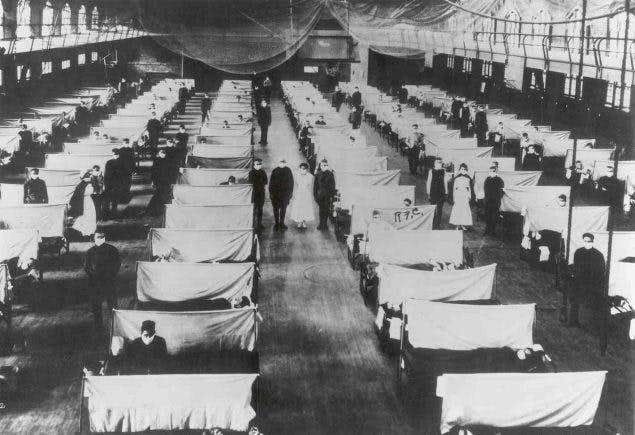
Back in 2003, I flew to Taiwan (one of my favorite nations) during the epidemic of Severe Acute Respiratory Syndrome— the SARS virus that started, as do so many viruses, in very crowded China. Inconveniently, I was coming out of a bad cold, with bronchitis, and was doing my fair share of coughing on the plane, most of whose passengers were wearing face masks (even without a public-health threat like SARS, many East Asians wear face masks as a matter of course). My coughing clearly distressed my fellow passengers; some moved to vacant seats further away from me.
So, I feared that I’d be stopped at the Taipei airport and quarantined for 10 days. Luckily, my guide (who told me “no worries!”) for the series of meetings I had planned for my week on the island, managed to get me through -- or was it around? -- the passport and other controls, and the week went well as my cough subsided. I didn’t have SARS, and the epidemic was eventually stopped after some weeks.
The experience impressed on me how fast epidemics can spread in a time of international jet travel, ever-bigger cities (especially in the Developing World) and, particularly in much of Asia, because of the close proximity of hundreds of millions of people to domesticated and wild animals that can carry dangerous viruses that can rapidly mutate and threaten humans. Still, there’s hope that the decline in the number of rural (and not so rural) Chinese keeping pigs, poultry and other animals in their backyards as the country becomes more urbanized might reduce the spread of dangerous viruses. And, of course, medicine marches on.
But it seems inevitable that a true worldwide virus pandemic will eventually kill millions.
How ready are we? The World Health Organization, part of the United Nations, needs more resources to plan for and coordinate the battle against epidemics. (By the way, Taiwan is not a member of the WHO; it only has “observer’’ status because China, throwing its weight around in its claim that it owns the island democracy, keeps it out.)
The U.N. hosts assorted hypocrisies, idiocies, and corruptions. But real and threatened epidemics is just one huge reason why we need it.
And the Trump administration, which doesn’t particularly like international coordination, has shut down an office charged with responding to global pandemic threats, curtailed the Centers for Disease Control and Prevention’s foreign-disease-outbreak-prevention efforts and ended a surveillance program set up to detect new viral threats. Perhaps it will reconsider in an election year.
xxx
Looking at the televised scenes of Wuhan, the epicenter of the Coronavirus epidemic, I couldn’t help but compare its splendid roads with ours. The Chinese worship infrastructure while we’ve let much of ours crumble.
But there’s a new initiative coming from the nonprofit, nonpartisan legal-and-regulatory-reform group Common Good (commongood.org) called “Campaign for Common Sense’’ one of whose key goals is to cut the maddening red tape that delays and even kills crucial transportation and other public infrastructure projects in America.

In other travel news, T.F. Green Airport has seen declines in passenger traffic and has lost service that had been provided by several airlines in the past couple of years. That’s in part because of the grounding of the Boeing 737 Max, an airplane particularly efficient for small and medium-size airports.
Depressingly, except for flights to Toronto, Green no longer has international flights; nor does it yet have nonstop service to the West Coast. The big growth potential once seen in the longer Green runway built, after far too long a delay because of Warwick nimbyism/local politics, to lure bigger planes to serve these distant places, is still unfulfilled.
But part of the problem is simply marketing. Too few travelers know how pleasant and convenient Green is. Far too few people realize that Green is usually far easier to use for those traveling to all of southeastern New England than is Logan International Airport, in often gridlocked Boston. Or that there’s an MBTA station to serve Green, which is right off Route 95, the main street of the East Coast. Green should also be more heavily promoted as an entry point for Cape Cod and the Islands, and even for eastern Long Island, via the New London-Orient Point ferry. And Rhode Island has a large college-student population, many of whom come from outside New England. Can Green’s charm and conveniences be better promoted to them? And shouldn’t the name be changed to something more likely to draw travelers? New England International Airport? Southern New England International Airport? As with Connecticut’s Bradley International Airport, it’s important to get “International’’ in there.
I don’t think I’d use “Rhode Island’’ in the name – too many from far away confuse it with Long Island – or Providence – too many confuse it with Provincetown.
Given the density of population in its current and potential markets and its companies and institutions (including the Navy complex on Aquidneck Island) with national and global interests, Green, not Bradley, should be the second-biggest airport in New England, after Logan.
Offshore Farming
New Englanders take note!
The federal government is considering authorizing the proposed Kampachi Farms aquaculture project in federal waters off southwest Florida, resembling the Velella Farm demonstration pen in Kona, Hawaii. The project, the first like it in the contiguous United States, would raise 20,000 almaco jack fish for human consumption. The fish would be raised in a chain-link mesh pen anchored to the bottom of the Gulf of Mexico.
The Washington Post reports that “the pen would be 17 meters across and 7 meters deep, sunk to 40 meters below the surface, anchored to the bottom and with a feed barge tethered to its side.’’
Such aquaculture could be a boon.
After all, demand for seafood is constantly growing and America imports around 80 percent of its seafood, with about 50 percent of that raised through aquaculture. Much of this fish is from Asian and other nations where health regulations lag. We’re rapidly emptying the oceans of wild-caught fish. And catching them kills much bycatch, such as dolphins and whales, while fishing boats’ fuel pollutes waters in many places and adds to global warming.
Inevitably, some residents of southwest Florida (with many affluent and politically powerful winter and year-round residents) assert that the fish farm, about 45 miles southwest of Sarasota, would hurt the eco-system (as if massive fishing of wild fish doesn’t do that). And some complain that the project would involve privatizing federal waters. But the Feds have always rented out massive tracts of government land for such private enterprises as timber harvesting, cattle raising and mining.
It strikes me that this project would probably be too small to substantially impact the local eco-system. In any event, I hope that (biological and chemical?) ways can be found to ensure that such promising enterprises succeed environmentally as well as commercially. Call the Marine Biological Laboratory in Woods Hole for advice. This project could become a model for fish farming off New England.
To read a Washington Post article on this, please hit this link:
Book author and former New York Times science editor Cornelia Dean, an expert on coastal erosion, will discuss possible ways to use geo-engineering to address the challenges of global warming at the Feb. 5 dinner meeting of the Providence Committee on Foreign Relations (thepcfr.org; [email protected]).
xxx
Speaking of Florida, in my Jan. 19 remarks about the crucial role of Henry Flagler and his Florida East Coast Railway in developing what had been an impoverished and thinly populated backwater, I should have mentioned the essential role in building the railroad and associated projects of often brutally treated convicts (many jailed for such minor offenses as vagrancy) and people held against their will for debt peonage and put to work on Flagler’s and other moguls’ projects.
In debt peonage, employers (with the power of local law enforcement behind them) compelled workers to pay off a debt with work. While Congress outlawed the practice in 1867, the practice continued for a long time in the South. This especially affected African Americans, many of whom were former slaves. Many workers, paid a pittance and having to get food and other essentials from their employers, were often unable to re-pay the debt, and so were trapped in a continuous work-without-pay cycle.

I’m getting the sense that the end of the Rhode Island House speakership of Nicholas Mattiello, the most powerful politician in the state, may be coming sooner than had been anticipated because of spreading opposition in the Democratic caucus and real or perceived scandals. Drip, drip...Approaching critical mass? It should be said that the speaker has done some good things for Rhode Island, especially for its economy.
Sport of the Future
It’s important to remember that Fortuitous Partners’ plan to build a soccer stadium as a key part of a $400 million mixed-use project is not necessarily based on the current audience for soccer in southeastern New England as much as where it might be in five or ten years. While Major League Baseball’s audience has been slipping, professional soccer is clearly growing, and various factors, including the love of soccer in various national and ethnic groups, make this growth likely to continue or even accelerate. It is, after all, the leading world sport.
They Want Out of Worcester
The Worcester Business Journal reports that more than half of that city’s renters want to move to another city. Quoting Renter Migration Report, it cited Boston, at 43 percent, as the top destination for Worcester refugees. Providence – embarrassingly? -- came in a very distant second, at 4.3 percent, and the old mill town of Norwich, Conn., at 4.2 percent. Ah, the magnetism of New England’s only world city! But maybe the WooSox will hold back a few of these dissatisfied residents.
The Triumph of Pure Cynicism
“For Trump was doing the heavy ideological lifting that went all but unappreciated by the NatCons. He fed the richest in society in the currency they prefer – dollars – and he fed his fans lower down with a temporarily effective substitute – recognition.’’
-- From “Trumpism After Trump,’’ by Thomas Meaney, in the February issue of Harper’s Magazine
It is no surprise that most Republican senators are putting their fear of the GOP Fox “News’’-driven “base’’ and their love of high-end tax cuts and deregulation above country as they strive to ignore the brazenly impeachable (including illegal) abuses, which they know damn well that Trump committed. But then, the public record of his adult life is a litany of fraud, rapacious selfishness, power lust and non-stop lying. Nothing new now.

The only thing that would dilute their timidity, in my view, is a slide in the cheap-money economy this year that could erode the size of the fearsome base.
If he gets re-elected, and given the composition of the Electoral College, I’d give him at least a 50/50 chance of doing so, it will be exciting to see how his second administration deals with a recession, now that the Federal Reserve, partly in an effort to keep the stock market high and Trump happy, has pretty much used up its biggest tool against recession – low interest rates. Meanwhile, even as the federal budget deficit swells because of tax cuts and ever-increasing spending, our leader briefly indicated he’d be open to cuts in Social Security and Medicare, but you’ll probably hear no more of this until after the election. In a time when old-fashioned pensions are disappearing from the private sector, and secure long-term jobs are less common, such cuts will get extreme pushback. Which isn’t to say that Medicare costs aren’t out of control – mostly because of our fragmented and profit-driven health-care “system.’’ Meanwhile, there’s administration talk of cutting – before the election, natch! -- the FICA tax, which funds Social Security, Medicare and Medicaid. But few people really care about the federal budget deficit anymore.
Given that Trump is particularly popular among older Americans, it will interesting to see the reaction to such proposed cuts if he’s re-elected (perhaps with 5 million fewer votes than his Democratic foe).
For a sickly entertaining look at the cesspool from which Trump emerged and his enablers, read The Fixers: The Bottom-feeders, Crooked Lawyers, Gossipmongers, and Porn Stars Who Created the 45th President, by Joe Palazzolo and Michael Rothfeld. And now the squalor has enveloped the White House and much of Congress….

The Iowa caucuses are a grossly unrepresentative charade of an “election.’’ But because these “gatherings of neighbors’’ are publicized as the first “official’’ vote in a presidential election year, the news media hype them, doing considerable damage to the democratic process in a presidential election year. As for the New Hampshire Primary, it’s is not exactly “demographically representative’’ of the country but at least it’s a conventional secret-ballot election.
Speaking of the Granite State, I remember that when I lived there, in 1966-1970, I saw how much its citizens enjoyed the primary show, especially since it provided color (especially red, white and blue) and noise during the cold and gray, white and brown of March, when the primary used to be held. Some of the larger venues – most famously the old New Hampshire Highway Hotel, in Concord – at which often skeptical and flinty but generally polite citizens went to meet and chat with candidates, took on almost a carnival air. Of course, the World Wide Web and cell phones have eroded the intimacy and relative privacy of these encounters and thus the relative frankness of the conversations – an erosion that began with television.
But in the wild year of 1968, when I was there, the primary was still pretty cozy.
New Hampshire law quaintly decrees that the presidential primary shall be on the second Tuesday in March (the date when town meetings and non-partisan municipal elections are traditionally held), but it lets its secretary of state change the date to ensure that the primary will take place at least seven days before any "similar election" in any other state, with the Iowa caucuses not considered a “similar election’’. The primary, after all, brings tens of millions of dollars into the state.
In recent election cycles, the Granite State primary has taken place the week after the Iowa caucuses, which this year will be tomorrow. So this year the primary will be held on Feb. 11. I find this a bit sad because when the primary was held in March, it acted, along with those annual town meetings, as a pleasant reminder that spring wasn’t far off. On some primary days, you could smell newly exposed wet earth and see the maple sap dripping from the spiles into galvanized buckets.
What’s Important
The death of basketball great Kobe Bryant and eight others, including his 13-year-old daughter, in a badly planned helicopter trip, is inevitably being treated as a world-historical event -- one far more important than the Coronavirus, the “boring’’ impeachment trial, Trump’s Mideast peace plan or the 70th anniversary of the liberation of Auschwitz. But then the very smart and charismatic Mr. Bryant was a prince of the sports-and-entertainment industrial complex, kinda like Trump. Watching pro sports, TV (where those sports dwell) and movies is escapism; so is obsessing on the death of celebrities and competing in how florid you can get in expressing shock and sadness when famous people you don’t know die, especially so young.
As for helicopters: They’re more dangerous to ride in than commercial airplanes, if less than private planes. If you can avoid riding in copters, do so. (I’ve flown in ‘em.)
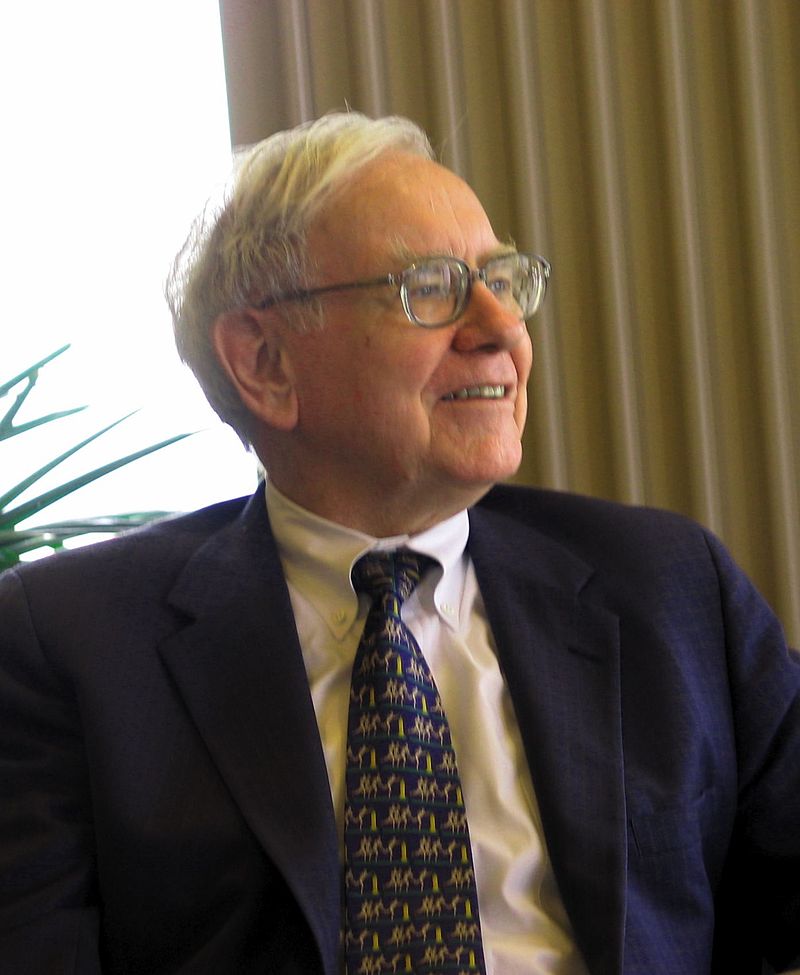
I got a pang when learning last week that Berkshire Hathaway, famously run by Warren Buffett, is selling the huge holding company’s remaining newspapers to Lee Enterprises. Buffett has always said that he loved newspapers as civic enterprises and because most were very profitable until the World Wide Web.
So, print on paper continues to fade. Thinking of this, I’ve been looking at some very old (but worth little) family books I inherited, some going back to the mid 1660s, with the oldest ones bound up with Puritan religiosity. Back then, to own books was considered a privilege, a gateway to the past and a guide to the future. I wonder what medium will serve those functions 400 years from now, when my old books, unlike, say, emails and ebooks, might still exist.
xxx
I see that some folks in Providence’s rather hip Fox Point neighborhood are trying to stop digital billboards. They might be unsuccessful but I’m sympathetic. We’re already awash in distracting screens (such as the one I’m starring at now). Exhausting electrons!
A Middle-Class Saga
Matthew Thomas’s great and realistic novel We Are Not Ourselves is a three-generation Irish-American family saga, mostly set in and around New York City. Its core is an extraordinary deep, unblinking and nuanced epic of the progression of early-onset Alzheimer’s in a husband, and his wife’s and son’s exhausting efforts to deal with it. It’s also a social history of our insecure urban middle class in the 20th Century and beyond as its members strive for their versions of the American Dream while being buffeted, as most of us are, by unpredictable tragedies, and they must find ways to accept what life has dealt them. I think that this book will have a permanent place in American literature.