


Whitcomb: Benefits of Holiday Stress; Black Swans; Pay Companies AFTER; Scallops in Acid; Free Fares
GoLocalProv
Whitcomb: Benefits of Holiday Stress; Black Swans; Pay Companies AFTER; Scallops in Acid; Free Fares

We fray into the future, rarely wrought
Save in the tapestries of afterthought.
GET THE LATEST BREAKING NEWS HERE -- SIGN UP FOR GOLOCAL FREE DAILY EBLASTMore time, more time. Barrages of applause
Come muffled from a buried radio.
The New-Year bells are wrangling with the snow.’’
-- From “Year’s End,’’ by Richard Wilbur (1921-2017, a New England-based poet who twice won the Pulitzer Prize)
“I made no resolutions for the New Year. The habit of making plans, of criticizing, sanctioning and molding my life, is too much of a daily event for me.”
— Anaïs Nin (1903-1977)
French-Cuban-American writer
Saying that the holidays can be stressful, what with all the people, events and spending many of us worry about, is a cliché. But even if it is, at least this time of year imposes the discipline to get in touch (or more in touch) with people you may not have talked with all year. The dispersal and fragmentation of American society should make this reaching out all the more needed. As, oddly, with trying to round up records for your tax returns, it sort of refamiliarizes you with who you are or at least where you came from.

xxx
After a day and night of very subfreezing temperatures, it got to about 40 degrees the other week, and I spotted a small fly walking on a car hood. Life bounces back so fast around here!
Alone Together
“Think how we spend our leisure time now compared to 10 years ago: alone with our Netflix, Instagram, Spotify. No wonder our mental health is eroding and we seem to hate everyone else.’’
-- Gerard Baker in his Dec. 20-21 essay in The Wall Street Journal, “Farewell to the 2010s, the Uneasy Decade of Populism’
A few years ago, we had a nice family to lunch. They’re a very internationalized crew. Anyway, what struck me in almost comic form was that they were spending much of the meal on their new smartphones, making global travel plans and otherwise communicating with the wide world. (The very ugly table around which we sat, by the way, has quite a history: It was made in a French military prison in Lebanon in the 1920s. My wife bought it off the daughter of the French army officer in charge of the prison.)

I’m old enough to remember when small towns had “party lines’’ that enabled operators of what was called “The Phone Company” (a tightly regulated monopoly) to monitor phone calls and do such things as telling pranksters (usually kids) to hang up, or to call an ambulance. It was truly a community service. It wasn’t always a very efficient system but it could be pretty entertaining, and some family disasters were averted through the heroic efforts of operators at their switchboards.
To read The Atlantic’s article, please hit this link:
Lost Lunches
A cousin of this phenomenon is the dearth of working people taking the time (or being allowed to take the time) to go to lunch with workmates and others; rather, they eat their lunches at their desks. Thus, another opportunity for maintaining social skills falls by the wayside.
Maybe a nice New Year’s Day resolution would be to spend a bit more time with people in the flesh. But cellphones and computers are engineered to be addictive….
To read about changes in work-day lunch patterns, please hit this link:
Flocks of Black Swans
“Past performance is not indicative of future results.’’
-- Mandatory warning in investment documents
New Year's Predictions
About New Year’s predictions: Many of them are based on creatures called the “conventional wisdom’’ or “the general consensus’’. Most turn out to be wrong in varying degrees because there are so many variables in real life.
Although we have computers that process data at astonishing speeds, they obviously can’t fully account for the effects of people acting unpredictably and/or irrationally, which, in varying degrees, is how they often (usually?) act. And that there are more people than ever adds to the complexity. Then there’s that Nature does its thing without consulting us. What if Hurricane Dorian, which hit the Bahamas with winds up to 220 miles an hour, had moved only slightly west and hit South Florida head on? The, say, $200 billion or more in damage would have hammered the U.S. economy.
Some readers might remember the “black swans’’ made famous by Nassim Nicholas Taleb: He looked at how it’s impossible to get at the probability of some rare events that are beyond normal expectations in science, finance, technology and history
Mr. Taleb is an essayist, scholar, statistician, former options trader and risk analyst who has deeply studied randomness, probability, and uncertainty. Read his 2007 book The Black Swan.
Consider the black swan called 9/11, which changed so much: It caused wars, reduced our civil liberties, made travel more difficult and encouraged already dubious U.S. fiscal and monetary policies that helped create the Crash of 2008 and the Great Recession, which helped set the table for Donald Trump.
And digitization continuously speeds up changes, which affects all of life. Back in the ‘60s, British Prime Minister Harold Wilson was quoted as saying “a week is a long time in politics.’’ Now you can say that a day is a long time in politics, in the economy and elsewhere.
2020 will feature lots of dramatic headlines and near-hysterical “breaking news’’ on electronic media. Most of it will end up forgotten in days, except by a few people most directly affected, such as relatives of those killed in plane crashes. The vast majority of such headlined stories have no effect on the course of history. The article that may turn out to have the most long-term significance might be buried on the bottom of page 13 of a newspaper.
I always liked the crazy poet Ezra Pound’s remark that “literature is news that stays news.’’
xxx
Of course, there’s the very political year of 2020, with perhaps more black swans than usual. Perhaps the fat and old Trump will keel over, to be succeeded by his robotic valet Mike Pence. Perhaps the old but not fat Joe Biden will die. Perhaps the mostly GOP-run U.S. Supreme Court will surprise us and force the release of Trump’s financial records.
One thing’s for sure: The word “conservative’’ will continue to be misused by those in Trump’s tribe, many of whom tend to be in the strongman-cult /neofascist camp.
Traditional conservatism opposes rapid changes, and promotes honoring civic-minded traditions, including civility and public integrity, while abhorring demagoguery. It also respects careful economics – pay as you go and not ever-deepening deficits. Traditional conservatism, perhaps best exemplified by the writings of Edmund Burke, emphasizes the need for the principles of a transcendent moral order. So much for that these days!
xxx
So, as always, there’s lots of stuff to be stressed about in the public square as we head into the new year. The best way to deal with it is to concentrate on the things that remain almost entirely private for us, including enjoying the daily beauties around us, such as while walking on a bright cold, dry, still late January day and noticing it’s staying light later. And tightly ration TV watching and social media use!
And So It Goes…
Of course, the crazy Joseph Giachello, who murdered one person – Julie Lynn Cardinal – and injured two other people in Westerly and then killed himself, had no trouble buying a revolver with which to do the deed despite a history of mental illness and potential violence. America provides innumerable opportunities for obtaining guns. With the effective merger of the National Rifle Association and the national Republican Party -- and that so many guns are around anyway—Americans must simply accept the inevitability of shootings like the one is usually peaceful Westerly.
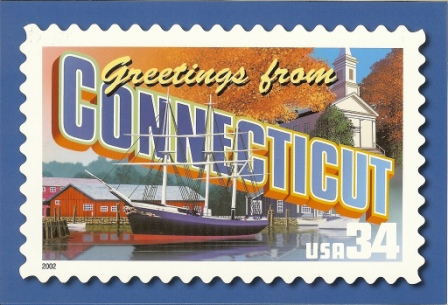
David Lehman (perhaps, unfortunately, a former Goldman Sachs partner) has some interesting ideas about how to boost still rich Connecticut’s economy and, particularly, how to lift its troubled cities. Gov. Ned Lamont, a Democrat, has named Mr. Lehman to be commissioner of the Nutmeg State’s Department of Economic and Community Development. He may have some lessons for Rhode Island and Massachusetts.
Some of his ideas are predictable, such as improving commuter rail service and the roads, more and closer partnerships with colleges and universities and boosting job-training for growing occupations, such as health care, software, and engineering.
But what has jumped out is that instead of handing out tax breaks and other financial incentives to get companies to move to, or expand in, the Nutmeg State, he’d have the state hand out these goodies only after they created well-paid jobs. Bloomberg News noted that would be a gamble in the current relentless arms race among states and localities to lure jobs. But Connecticut, with its location between the two thriving (at the moment) economic powerhouses of New York and Boston, might be better placed than most states to succeed with this new strategy.
Mr. Lehman also wants to encourage a resurgence of the state’s cities, which, with exceptions in some parts of them (e.g., the area around Yale in New Haven) are in poor shape. He wants policies that would double the populations of its cities -- which now range from 100,000 and 150,000 -- over a 25-year period. He told Bloomberg: “We’ve got the suburban and rural thing covered.’’ New economic growth will be “in these higher density transit-oriented developments.” Note that as in Massachusetts (and a lesser extent in Rhode Island) the growing emphasis is on using mass transit to maintain and spur prosperity.
Back when I lived in Connecticut, in the ‘60s, its cities still had large and stable middle-class populations, in large part because of a still-thriving industrial sector. Mr. Lehman will be a hero if he can bring the middle class back to these places.
Meanwhile, the rhetoric continues about masses of millionaires said to be fleeing Connecticut and other high-tax states to move to Florida. Of course, some people do move because of taxes but the phenomenon is exaggerated (I know a bunch of these folks.) As this commentary from the left-leaning Institute on Taxation and Economic Policy notes:
“{M}most millionaires are married, are more likely to have children, and are economically and socially tied to where they made their money. {In Connecticut’s case many in nearby Manhattan} They benefit from where they are living because they have ‘home field advantage’: they know the area, have connections, and most are ‘working rich’ and moving could actually set them back in their career and productivity. There is a reason they chose to live there in the first place, whether that be career opportunities, the education and public services offered, or overall quality of life. By the time they are making enough to think about moving to save on their taxes they are already deeply embedded into their communities and living comfortably enough that the state tax savings at stake would not fundamentally change their quality of life even if they somehow did find a way to continue earning a very large income in a new locale.’’
“The people who do tend to move most frequently are young college graduates and the lowest income residents looking for higher pay and a better quality of life, and state tax rates are not central in these groups’ decision making.’’
Of more interest to me is what the long-term impact of all these people moving to Florida will be on the Sunshine State’s taxes. Will a growing demand for services lead it to impose an income tax to pay for them? And what will be the effect of rising seas from global warming on property values (and property-tax collections) there?
To read more about Mr. Lehman’s plans, please hit this Bloomberg link:
To read more about high-end tax refugees, please hit this link:
Eating Away Scallop Shells
Ocean acidification caused by the man-made increase in atmospheric carbon dioxide may well mean that many more scallops than now will not make it beyond the larval stage, or if they do they’ll be small because the acidity dissolves shells. The fishing port of New Bedford hauls in hundreds of millions of dollars worth of scallops a year. Maybe its fishermen will become another source of lobbyists against American myopia about global warming.
To read more, please hit these links:
xxx
Hyatt is the latest big company to cut back on the use of single-use plastic items: It will stop providing those little bottles of gel shampoo, conditioner and shower. Lots of this plastic ends up polluting rivers, lakes and the ocean, killing innumerable creatures. Good for the companies taking some action against this slow-motion catastrophe.
How different is sea glass, whose weathering along beaches turns it into something that can be quite beautiful, and unlike plastic, it doesn’t decompose into something toxic. Indeed, this “sea glass’’ is used in jewelry.
Fare-Free Kansas City
Watch this experiment. Smart Cities World reports:
“Kansas City (Mo.) is to become the first major U.S./ metropolitan area to offer no-cost public transportation, following a unanimous vote by the city council.
“The resolution directs the city manager to set aside funding to cover fares starting next year and “make fixed-route public transportation fare-free within the city,” according to a report from local TV station KSHB.
“The city’s light rail (streetcar) service is already free with the aim of boosting economic activity by increasing downtown mobility options and improving resident and visitor access to jobs and services.
“According to 435 Kansas City’s Magazine, the free bus service is expected to cost around $8 million and has been pitched as a major help to low-income residents who rely on transit to commute to work.’’
Free public transit might create far more tax revenue through boosted economic activity than it costs.
To read more, please hit this link:
xxx
Another possible advantage of mass transit, especially rail: Less pressure to use corrosive/toxic road salt on as many roads.
That Takes Care of That
A Saudi court has sentenced to death five people for the murder of Washington Post journalist Jamal Khashoggi. Of course, those people do not include the man who ordered the murder, Trump’s pal Crown Prince Mohammed bin Salman, who didn’t like Mr. Khashoggi’s criticism of the corrupt tyranny that Salman leads. The executions, among other things, will remove from this vale of tears some who might be bold enough to talk about the plot to kill Khashoggi.
Mormon Money
I have long disliked organized religion’s transformation into businesses and political groups. The worst are the TV evangelical con men who rake in millions for themselves and their scam churches and shill for corrupt pols such as Trump. But you also have to worry about respectable denominations such as the Mormons who use the tax-exempt status of their institution --- The Church of Jesus Christ of Latter-day Saints -- to sequester vast sums.
Even some Mormon heads were shaking upon news of a whistleblower’s complaint that accuses the church of piling up $100 billion in tax-free accounts supposedly set aside for charities but not dispensed to them, as IRS rules would mandate. Reminder: The taxes they don’t pay, the rest of us have to help pay.
In any event, the Mormons have a great deal of political power, especially with the Republicans, and so probably nothing will happen. But we need an agonizing reappraisal of what constitutes a “nonprofit’’. It should be said that the Mormons do great charitable work, mostly for people in the denomination’s own community. This helps make the Mormons’ home base, Utah, a generally congenial state.
To read more, please hit this link:
xxx
What started the practice of misusing the word “incredibly’’ for “very” or even “rather’’. Or saying “utilize’’ for “use’’ and other pomposities?
Northern Exposure
Jan Morris’s book O Canada: Travels in an Unknown Country, about 10 communities in that vast nation, is a charmer. My favorite is her chapter about St. John’s, Newfoundland. Among her remarks: “In fact the people of St. John’s are irresistible talkers about themselves, and their peculiar accent, which strikes me as a cross between Irish, Devonian, and Atlantic seal, makes the flow of their infatuation all the more unguent.’’