


Whitcomb: Woman of the Year; Slowing Population; Charitable Shrinkage; Trees, Then Buildings?
Robert Whitcomb, Columnist
Whitcomb: Woman of the Year; Slowing Population; Charitable Shrinkage; Trees, Then Buildings?

-- The late editor and essayist Richard Todd (1940-2019) describing himself in his book The Thing Itself: On the Search for Authenticity
GET THE LATEST BREAKING NEWS HERE -- SIGN UP FOR GOLOCAL FREE DAILY EBLAST
“Even if guns beget more guns and more death, maybe nothing more than just their existence makes us feel safe and we are afraid to temper that emotion with more regulation.’’
-- Texas communication consultant James C. Moore in the wake of the shootings in the West Freeway Church of Christ, in White Settlement, Texas. His entire commentary on this can be found Here:
(The city got its now politically incorrect name because it was the lone settlement of white pioneers amid several Native American villages in the Fort Worth area in the Texas Republic in the 1840s)
xxx
So tomorrow is Epiphany, “The 12th Day of Christmas.’’ When I was young, some parents tried to stretch out the seasonal excitement with minor gifts on Jan. 6. But for most kids, the air went out of the balloon late on Christmas afternoon, or at the latest on the morning of New Year’s Day, as they looked gloomily to returning to school on the tundra of January.
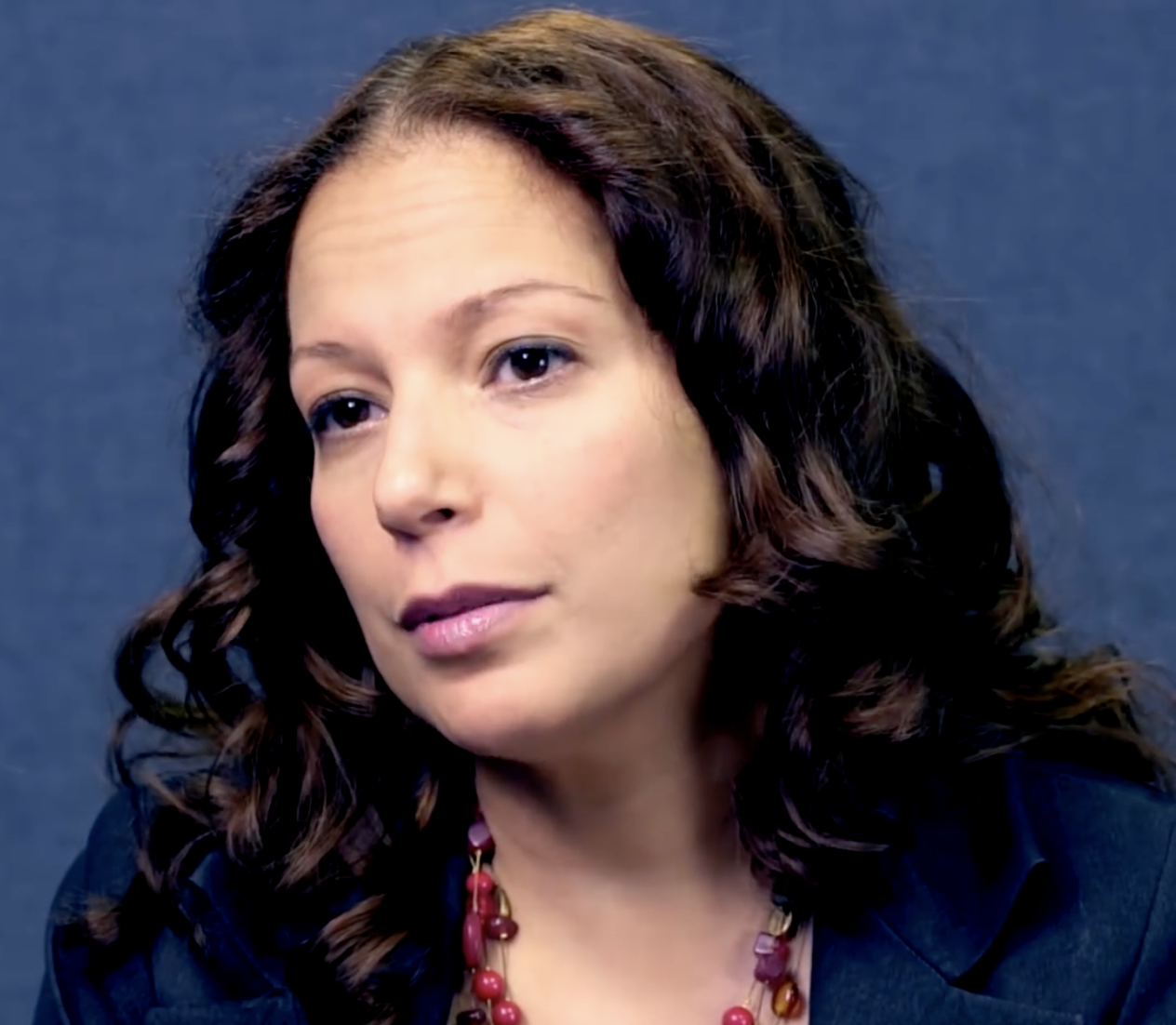
GoLocal has named Angélica Infante-Green, Rhode Island’s education commissioner, as its “Woman of the Year.’’ She is the right choice. The forthright Ms. Infante-Green has been the sort of leader that the Ocean State’s public schools have long needed. She’s been clearly explaining to the public the state’s urgent socio-economic need to fix its schools, with particular urgency in what is by far its biggest district – Providence. She can turn for guidance next door. Massachusetts, as a result of reforms going back to the ’90s, has, overall, the best public schools in America.
Let’s hope that Ms. Infante-Green sticks around for a few years to see some of her reforms come to fruition. But she probably won’t, especially if she receives national attention for any early progress in Rhode Island.
Meanwhile, I’ll bet some closed stores and churches would be better places for schools than some of Rhode Island’s decrepit old school buildings. To read the GoLocal piece on her, please hit this link:

It still looks as if Rhode Island will lose a congressional seat as a result of the 2020 U.S. Census. This loss of political clout will make it all the more important that the state’s officials collaborate more closely with, particularly, Massachusetts and Connecticut, but also with Maine, New Hampshire and Vermont, to promote regional interests.
More broadly, there is good news: U.S, population growth continues to slow, with the population expanding only 0.5 percent from July 1, 2018, to July 1, 2019. The natural increase, which factors in the number of births and deaths, was fewer than one million people.
The most recent slowing can be attributed to native-born women having fewer children than in previous generations, as well as lower immigration, much of it caused by tougher enforcement and anti-immigrant rhetoric, some of it cruel and misleading. Immigrants skew young and tend to have more kids than native-born Americans. A result of all this is that the population continues to age.
The growth rate during the 2010s, at about 6.7 percent, is estimated to be the lowest for a decade since the government started taking population counts, in 1790.
Obviously, there are drawbacks to the decline, in economic growth (an over-rated metric when considering quality of life) but big benefits, too, in that slowing population growth puts less pressure on the environment, meaning less land being paved over and making it easier to limit carbon dioxide emissions and toxic pollutants. And highway traffic and affordable housing would be in better shape with population growth slowing.
It will also tend to mean a calmer country with less crime, which tends to be committed by young adults.

"In our age, when social media can instantly spread rumor and false information on a grand scale, the public's need to understand our government, and the protections it provides, is ever more vital.’’
– Chief Justice of the United States John Roberts in his annual report on the state of the judiciary, in which he also warned that Americans have come “to take democracy for granted’’ and that education about our system of government “has fallen by the wayside.’’
Kudos to Rhode Island Secretary of State Nellie Gorbea for continuing to press for a new and highly accessible home for the state archives. These archives are very important for public officials, historians and citizens in general. And the Ocean State has a very colorful and complicated history. Archives perform an important civic role. They remind me of the old line that “if you don’t know where you’ve been you don’t know where you’re going.’’
And new, well-designed state archives, with exhibits, could become an important tourist stop.
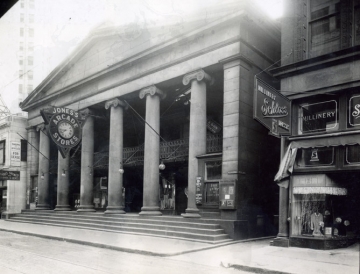
It says something about American’s changing demographics and housing sector that The Arcade, in downtown Providence, built-in 1828 and often called “America’s First Mall’’ is going condo, including retail on its first floor and, even more interesting, the tiny apartments on its second and third floors. These units range from 225 to 800 square feet. I suppose that buying them will appeal to simplicity-seeking and/or crash-strapped folks under 40, many without cars, and to older single people. And people wait longer these days to marry, if they do at all, and delay having kids. Thus, many don’t want or need much space.
These 48 “micro-lofts’’ will start at $130,000 to $140,000 each and the 20 spaces for shops at $125,000.
What a difference from the McMansions that have sprouted up in the past couple of decades!
Having these condos owned by their occupants should be a further stabilizing force in downtown Providence, unless, perhaps, a lot of the owners try to rent them out themselves, resulting in heavy turnover of occupants.
Please hit this link to read the GoLocal story on this:
Those Little Nonprofits
I’ve been on a bunch of nonprofit boards in various places over the years, library-related, disease-related, journalism-related, foreign affairs related, etc. I’ve learned a lot from these roles, although much of the work turns out to be tedious and thankless, with occasional administrative screwups. And I’ve found that often 5 percent of the people do 95 percent of a board’s work and are expected to contribute money heavily on a regular basis and, when things get particularly tight, provide emergency transfusions. And if there’s a paid staff, it’s usually underpaid and overworked.
Some donors to nonprofit institutions are in it for their egos, especially those who demand that their names go in big type in buildings they help pay for at already rich and famous institutions as the donors seek to buy yet more status. (Think Sacklers.) And some others use their philanthropy in complex wealth-preservation strategies. But most just want to support the public mission of the charities they give to.
Whatever, the nonprofit sector remains one of the jewels of American culture, providing a vast variety of services. But how long will this go on?
The GOP tax law of 2017 has reduced the number of people who itemize stuff, such as charitable contributions, on their tax returns and overall charitable giving has fallen. Giving USA reported last summer that there was a 1.7 percent decline in overall giving to charitable organizations in 2018, as the new tax law went into effect, and that contributions from individuals slipped 1.1 percent, or 3.4 percent when adjusted for inflation. Giving by individuals as a percentage of total giving fell to 68 percent in 2018 from 70 percent in 2017. A small decrease, but dispiriting in a time of general prosperity.
And while the very rich increased their giving, the increase was less than their increase in wealth.
Some of the fallure might also be explained by the general decrease in civic participation noted at least as far back as Robert Putnam’s 2000 book, Bowling Alone. Whether we’ve become more selfish in a society so strongly driven by the desire for personal wealth -- and showing it off – is unknowable. But Americans do seem more socially fragmented these days. That might be reducing the desire to give to charities.
Anyway, I hope that especially those folks who want the government to do as little as possible will be as generous as they can, especially to small, struggling charities. And thank the volunteers.

Newport Polo is opening an indoor arena for winter polo this month, but in Seekonk, of all places!
Polo, associated with being rich, has been identified with the City by the Sea since the first Gilded Age, in the late 19th Century. Tennis, golf, and yachting – like polo also linked with wealth -- have also been big in the city since the first Gilded Age.
Newport Polo (home of America's first polo club, established in 1876), is best known in the recent quarter-century as host of the Newport International Polo Series.
Will its indoor incarnation expand its membership base around here? After all, polo is great fun to watch. Probably not much. It’s a very expensive sport – horses cost a fortune to buy and maintain.
For more information, please hit this link:
Put Trees in First
Joan Wickersham writes in The Boston Globe: “I remembered how, ten years ago, the great Italian architect Renzo Piano told me about a proposal he had made to the university, that they begin by planting trees, enough trees to turn this land {hundreds of acres in Boston’s Allston neighborhood} into an urban forest. The trees would have created a healthy natural ecosystem, with its own cooling and flood controls. My point is not to pick on Harvard’s current planning. The Allston land will eventually be filled with high-performance hard-working buildings.’’
“But I am wistful about that forest that never happened, which would have created an environment in which the buildings wouldn’t have had to work so hard. Piano’s visionary question was not just ‘What should we put on this land?’ but rather ‘What kind of land should this be?’”
An interesting idea – start a development with the vegetation and landscaping, then fit in the buildings.
To read Ms. Wickersham’s column, please hit this link:
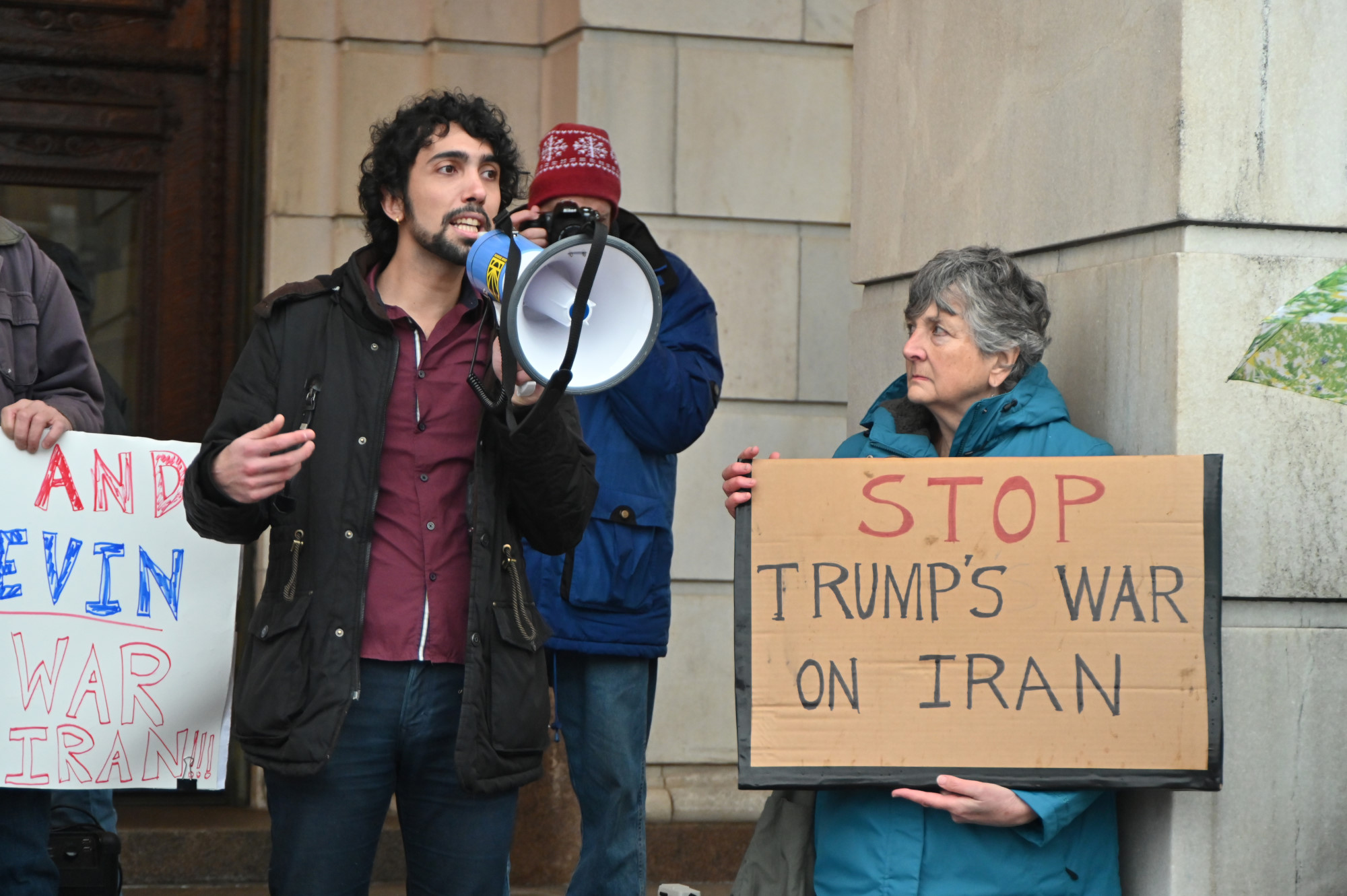
Despite his heated and sometimes incoherent and contradictory rhetoric, Trump has, at least until the last few days, been fairly careful with his actions against Iran and its pals in Iraq and Syria. He does think that we should retaliate if Iranian-backed militias directly attack Americans, as they did recently in Iraq, killing an American civilian contractor and injuring four U.S. servicemen.
In response, the United States has conducted airstrikes against five targets in Iraq and Syria associated with these militias, killing dozens of people and enraging many Iraqis, and then – more importantly -- launched a drone strike near the Baghdad airport that killed Qasem Soleimani, one of Iran’s top military figures and leader of its forces abroad. The Iranians will seek revenge. As of this writing, I don’t know what it will be.
I’d be surprised if the U.S. goes much further than it has, especially since it’s a presidential-election year and Americans are fed up with Mideast wars, which often seem destined to go on to the end of time.
The interminable violence in the Mideast is a reminder of another reason why we should move away from the fossil fuel that helps make the region so geopolitically important and dangerous.
Putin’s 20th Anniversary!
Vladimir Putin has been running Russia for 20 years as of New Year’s Day. His intelligence, ruthlessness and self-discipline have been crucial in returning Russia to a bit of the great-power status it had when it was the dominant force in the old Soviet Union. This is despite the fact that his nation’s population has been falling for years and its only important economic sector is oil and gas.
This cold and greedy dictator has been fortunate that the West has had weak leaders for much of that time. And now, what used to be considered the most important Western leader, the president of the United States, has a deeply compromised relationship with the Russian tyrant, whether because of financial deals, blackmail or some combination thereof.
Putin could hang onto power for at least another decade. I wonder how Trump’s successors would handle him.
Freezing, Thawing Air
David Brooks, writing in the Concord Monitor, reports on a fascinating idea for generating electricity: A British company called Highview Power wants to build an “air liquefaction’’ plant, which involves freezing air so that it is compressed and then letting it thaw and having it spin a turbine as it expands. The plant would be built in northern Vermont and open in 2022.
Mr. Brooks reports:
“Their Vermont proposal could store enough energy in liquid air to generate 50 megawatts for eight hours, according to Highview. Fifty megawatts isn’t a game-changer – Seabrook (N.H. nuclear} Station can generate 1,200 MW – but it isn’t trivial. It’s equal to almost all the large hydro dams in New Hampshire, combined.
“More important is that eight hours of storage is longer than any utility-sized battery storage system around. Most batteries are lucky to hit four hours, not really enough to cover shortfalls that intermittent wind and solar can create.’’
Still, those who think that the convenient fossil-fuel-powered economy will go on forever are living in Fantasyland. There will be innumerable experiments and failures and small and big success, but however much people driving their big, gas-guzzling SUV’s may abhor the prospect, fossil fuels are on the way out, first slowly then fast.
Slower Science
Innovation has generally been slowing in America since the 1980s, which in turn has held back productivity growth. The arrival of sexy consumer electronics such as the iPhone was exciting, as was the appearance of social media (though they’ve done more social and political harm than good). But there’s been nothing with the huge impact of electrification, trains, cars and planes, radar….
I wonder if the decline in federal funding for basic research has something to do with this. As Science magazine reported in 2017:
“The federal government no longer funds a majority of the basic research carried out in the United States. Data from ongoing surveys by the National Science Foundation (NSF) show that federal agencies provided only 44% of the $86 billion spent on basic research in 2015. The federal share, which topped 70% throughout the 1960s and ’70s, stood at 61% as recently as 2004 before falling below 50% in 2013.’’
In 2018, University World News reported “The United States has been the leader in fundamental research for the past seven decades, remaining the single-largest contributor to worldwide research, but this is changing. In 2000 the US accounted for 40% of global research and development (R&D) output, falling to 29.3% by 2013. A central reason for this reduction is China’s investment, which {was expected to} surpass the U.S. in total R&D funding by 2019.’’
And the Trump administration often seems anti-science.
Somehow I don’t think that new apps for ordering pizza or accessing your social media will move the needle much. We need new physical inventions. And reminder -- the Internet itself was a federal government invention and the World Wide Web, which brought the Internet to the masses, was invented by Timothy Berners-Lee while he worked as a government employee for the European Organization for Nuclear Research, in Geneva. Is this “socialism,’’ like Social Security, Medicare, the Interstate Highway System….
Could be a Better Show than The Apprentice
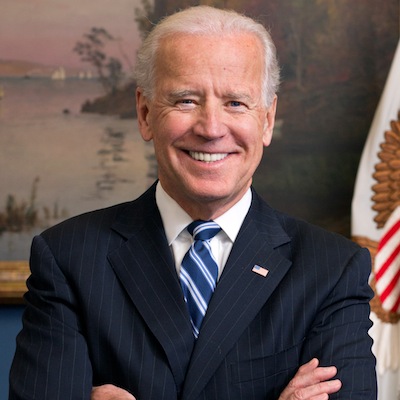
In a diversionary/smoke machine maneuver, some Trumpists want Joe Biden and his son to testify (but about what??) in a Senate trial of the caudillo’s obvious and recorded corruption regarding Ukraine. Fine, as long as Trump testifies! After all, he’s the defendant.
xxx
xxx
It sifts from leaden sieves,
It powders all the wood,
It fills with alabaster wool
The wrinkles of the road.
It makes an even face
Of mountain and of plain, —
Unbroken forehead from the east
Unto the east again.
It reaches to the fence,
It wraps it, rail by rail,
Till it is lost in fleeces;
It flings a crystal veil
On stump and stack and stem, —
The summer’s empty room,
Acres of seams where harvests were,
Recordless, but for them.
It ruffles wrists of posts,
As ankles of a queen, —
Then stills its artisans like ghosts,
Denying they have been.
-- Emily Dickinson (1830-86. She rarely titled her poems, many of which were based on her observations of her town of Amherst, Mass.)