


Whitcomb: Testing, Testing, Testing; Following the Pollsters’ Parade; Forced From Flood Plains
Robert Whitcomb, Columnist
Whitcomb: Testing, Testing, Testing; Following the Pollsters’ Parade; Forced From Flood Plains

-- Charles Stross, British science-fiction and horror writer.
GET THE LATEST BREAKING NEWS HERE -- SIGN UP FOR GOLOCAL FREE DAILY EBLAST
“Time for the pretty clay,
Time for the straw, the wood.
The playthings of the young
Get broken in the play,
Get broken as they should.’’
-- From “Kept,’’ by Louise Bogan (1897-1970), Maine-born poet who was the first U.S. poet laureate.
“There are only two classes of people in the world – doctors and patients.’’
-- Rudyard Kipling (1865-1936), famed writer, in a 1908 address to medical students in London.
xxx

I’m afraid that the prevention pandemic -- the lockdowns, rigid quarantines, cancellations and loud warnings -- could do more damage – economically and physically -- than the disease itself as public officials go to CYA extremes. Will patients without the virus forgo going to the doctor and hospitals for serious medical issues because of COVID-19- connected backups? And it can’t be good for our immune systems to have so much anxiety poured on us from above and physical inactivity isn’t good for us either.
I saw two very different reactions to the pandemic this last week. One is that the show must go on (generally my view in life) and that the new virus is simply another bug, like the flu, that crops up from time to time, that the chances of getting sick are minimal, and we should go about our business. That was the reaction of a lady I called last Tuesday to see if a talk I was supposed to give to a group in Florida this Wednesday was still on. She basically said that her group was ignoring the thing and pressing on as usual. “People get the flu every year, after all,’’ she told me. “People should calm down!’’
But then a colleague of hers called Thursday to apologetically say they were cancelling. I couldn’t tell what the biggest factor was: Trump’s disastrous speech the night before or news Thursday morning that somebody got off the plane at the West Palm Beach airport who might have COVID-19. It’s getting mighty difficult to plan these days! “Things are so crazy, and my husband is very upset about the stock market!’’ she told me.
Another reaction came from a friend of ours who normally takes the train between Boston and Providence. Because she fears getting infected by someone in an MBTA car, she’s driving instead. I always feel safer on a train than on Route 95 myself.
The virus seems likely to further slow, or even reverse, the globalization that picked up with the end of the (First) Cold War. COVID-19 will tend to accelerate the quasi-xenophobia that heated up with 9/11; the Crash of 2008; the pushback against the influx of immigrants into Europe from the Syrian Civil War; Brexit, and Trump’s election. More fear of “The Other.’’ This will tend to shrink the global economy, intensify animosities between nations and discourage international cooperation, including in medical research.
xxx
Note:
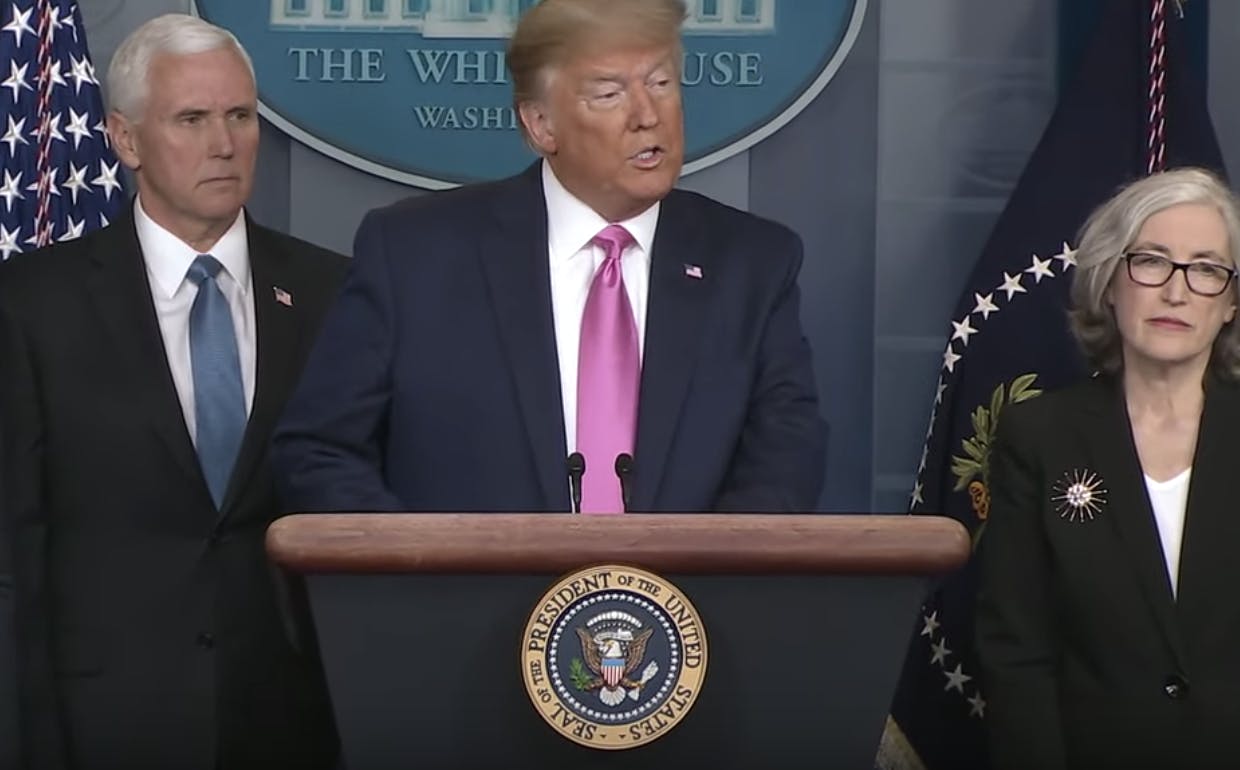
Trump's travel ban did not initially extend to the two European countries where he has golf courses: the United Kingdom and Ireland. And, yes, there are COVID-19 cases in both countries, and the London area is one of the biggest global crossroads. And, by the way, mainland Europeans wanting to go to America could have just gone to Britain or Ireland and flown here from there.
In any event, after questions were asked about the British Isles exclusion from the ban, Ireland and the U.K. were added to the list.
Trump, fearful of the economic effects of the virus on his re-election chances (and of the criminal investigations into him and his business interests if he loses), is pushing the idea of a payroll-tax cut that would run until the election. That’s a bad idea because, among other things, it would undermine Social Security, which is financed by the payroll tax; it wouldn’t help those generally lower-income people who have already lost their jobs as a result of COVID-19, and it would only help a relatively few old people – the group most vulnerable to the virus.
The best approach to help protect the economy in this situation is to focus first on fighting the virus and its direct effects on public health rather than trying to, well, pump up the Dow Jones Industrial Average and buy votes with, for example, an election-targeted payroll-tax cut.
There should be a massive increase in testing for the illness. The U.S., with its fragmented (but world’s most expensive) health-care “system,’’ has lagged badly in testing for the virus. The Feds, working with the states, should also act to provide free care to those who have the virus, perhaps including setting up temporary clinics, for the duration of the crisis. Such things as temporary unemployment-insurance and sick-pay changes, expanded Food Stamps and other food aid, loans to small businesses and delaying income-tax filings might help a little in reducing the economic pain. But no program will do much to dent the fact that the poor and contingent workers will suffer the most from the COVID-19 crisis. Anything that Trump and Congress can do to alleviate that would be most appreciated. At this writing, negotiations between Congress and the White House on an aid package were, to say the least, confusing.
xxx
One effect of this novel virus may have been to take votes away from Bernie Sanders and give them to Joe Biden. In tense times, more Americans than usual might seek a calming and moderate voice.
xxx
Geoffrey Fowler, a tech columnist, wrote a darkly comic column for The Washington Post on being quarantined. Among his remarks:
“It’s a Netflix-and-quarantine life. But it’s not particularly chill.
My San Francisco self-quarantine is an experiment to see how far an app-operated life can stretch. The experience is easy, but it hasn’t put me at ease. Video conferencing fails 50 percent of the time. The online tools I’m using — Slack, Microsoft Office, Dropbox — treat work as paramount, so it never really goes away. I’m paying double for food delivered by apps. My Apple Watch, which tracks physical activity, beeped with a message: Geoff, you can do better. I turn on my Apple TV, and the outbreak is there, too, pitching Contagion, the trending movie about dying from a disease spread in part by touching your face. (I indulged the paranoia.)’’
To read his column, please hit this link:
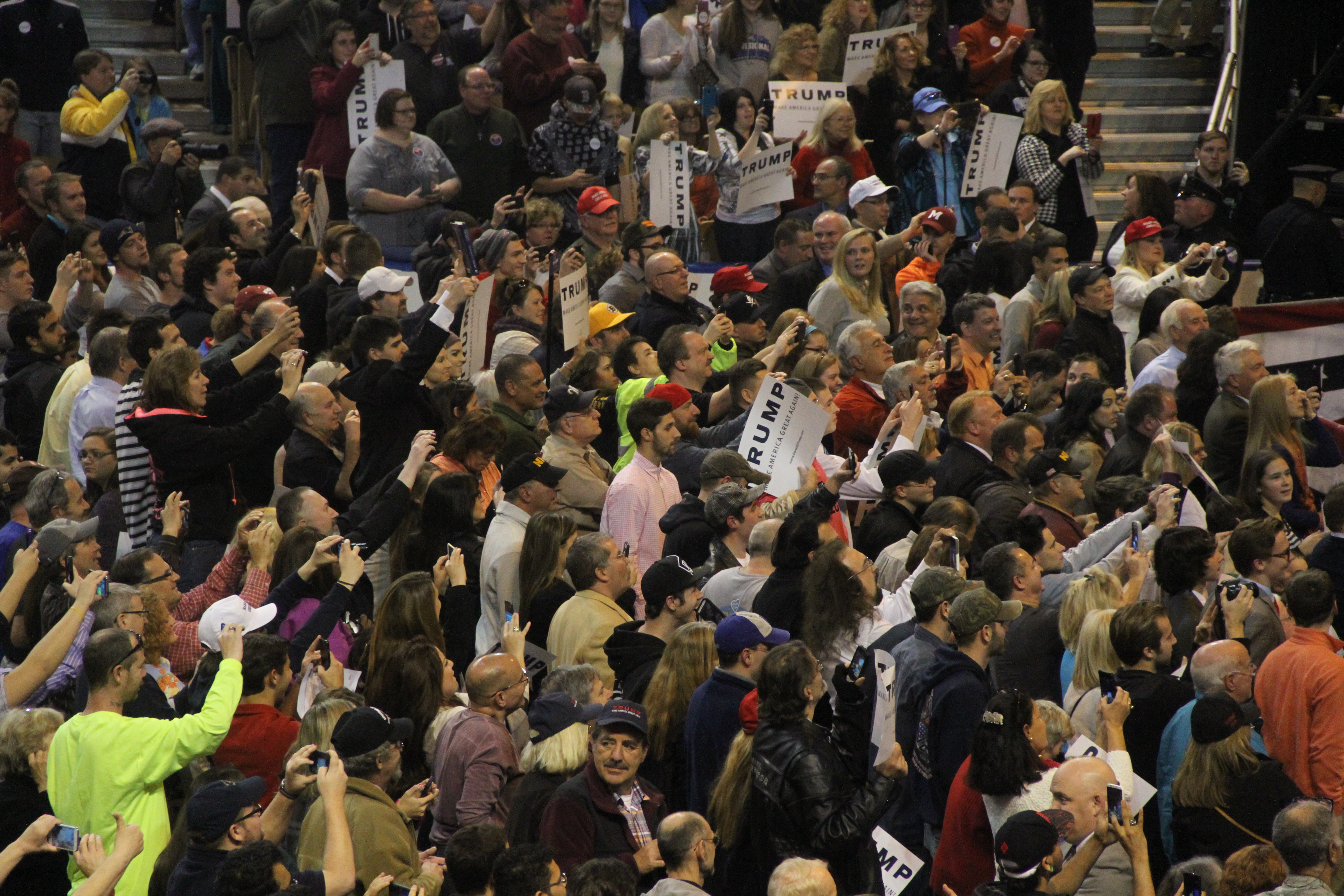
It seems as if the polls now lead the voters rather than the other way around. Many people voted for Joe Biden in the recent primaries apparently because they saw polls that suggested he’d do better against Trump than would Sanders. And/or after Biden won the South Carolina primary and his national poll numbers shot up, they wanted to be with a winner. Of course, we don’t know for sure if the gaffe-prone Biden would do better against the ruthless Trump in the general-election campaign.
One of the unfortunate things about the power of polls early in presidential primary campaigns is that they tend to give short shrift to little known candidates who might be among the strongest general-election candidates – an example is former Montana Gov. Steve Bullock or even Sen. Amy Klobuchar. Obviously, already very well known and long-established candidates will poll high at the start of a primary campaign and thus get more campaign cash to pull themselves even higher in the polls. And so it goes. Too bad!
Force Them From Flood Zones
The New York Times reports that the Trump administration is commendably letting the Army Corps of Engineers tell localities to use the threat of eminent domain to get people to move away from increasingly flood-prone areas or else lose federal flood-mitigation money.
This is part of a shift toward the Corps paying local governments to buy and demolish homes at clear risk of flooding.
The Corps, with the agreement of the administration, realizes that building sea walls, levees and other protections, such as ordering that houses be put on stilts– for which the Corps pays two-thirds of the cost and localities and states the rest – is very expensive and often have to be repeated. Better for safety, and the taxpayers, that people be forced from these places, which are increasingly inappropriate for buildings because of global warming’s effects. But people naturally love being along the water, so such threats get much pushback.
The barrier beaches of South County would be places where we could expect the Corps to get tough like this. Whatever Trump’s manmade-global-warming denials, it’s heartening that his administration is taking this unpopular but needed approach. To read The Times’s story, please hit this link:
Regionalize, Regionalize!
North Providence is taking over Pawtucket’s fire-dispatching. It’s a sign that Rhode Island’s cities and towns, most of which have small areas because they were incorporated so long ago, are increasingly recognizing the need to regionalize as much as they can to save money in this tiny state.
Exeter’s Free Police
Rural, or at least exurban, Exeter is the only city or town in Rhode Island without its own police department. Instead, the State Police covers it at no charge. In other words, the state’s taxpayers are helping to keep the town’s property taxes low. (Low-crime Exeter, by the way, has some very big landowners.)
This ain’t fair! The town should either start its own police force or pay the state the estimated cost of having the State Police cover it.
Blind Intersections
There are nonsexy and relatively inexpensive ways to improve transportation, such as better maintaining sidewalks, putting up more bus shelters, setting aside more car-free roads and so on. A citylab.com essay by David Zipper reminded me of one needed improvement:
Preventing drivers from parking so close to intersections (including exits from parking lots), which blinds other drivers as well as pedestrians and byclists who seek to turn into a road.
His article reports that the National Association of City Transportation Officials recommends 20-25 feet of clearance. I run into this visibility problem daily when trying to turn into a street from a parking lot. Most of my visibility is blocked to my left as cars are parked to the turnout.
Mr. Zipper suggests:
“{R}ather than simply blocking off the curb adjacent to the intersection, why not turn it into something useful, like parking corrals for bikes and scooters? That is what Washington, D.C., plans to do in 100 intersection-adjacent locations across the city. (Parking was already illegal in these places, but cars were often left there anyway.)’’
To read his piece, please hit this link:
xxx
Nimbys vs. New Housing
Newton, Mass., has provided a strong example of why housing costs are so high: It’s tough for developers who propose projects that would increase local density in a nation where many still see the ideal as the one-family house.
While 60 percent of voters in Newton (an affluent and very liberal town) supported, in a referendum, the Northland Newton project, which will provide 800 units of housing, 140 of which will be classified as “affordable,’’ the road to the development has had a lot of potholes. Although the City Council also supported it, the developers had to go through an 18-month permitting process, and make many concessions, among other torments. Such delays drive away many developers and thus prevent the construction of new housing that could moderate housing costs by increasing supply, especially in places like Greater Boston and the San Francisco region, where these costs are astronomical.
In a Boston Globe essay, Katherine Levine Einstein and Maxwell B. Palmer, assistant professors of political science at Boston University, wrote:
“Across Massachusetts towns, from 2015 to 2017, only 14 percent of those speaking at permitting meetings about multifamily housing were in favor of the development. As the Northland referendum shows, true public support is much higher.’’ Opponents tend to be older and richer.
“Indeed, recent election results underscore an unfortunate liberal inconsistency on housing policy. On Super Tuesday, Democratic primary voters flocked to the polls to endorse candidates with robust plans to improve and increase the nation’s housing stock. The platforms of former vice president Joe Biden and Senators Bernie Sanders and Elizabeth Warren all advocate for housing policies that would make it easier to build more housing. In Newton, more than 90 percent of voters cast a vote in the Democratic primary. A sizable portion of those voters opposed those same principles when it came to their own backyards: At least 35 percent of Newton Democratic voters opposed the Northland project.’’
“Sanders’s positions illustrate this disjoint between national and local housing preferences. Sanders’s housing plan outlines regulatory and funding measures that would increase the supply of national housing for residents at a variety of income levels. Yet, he opposes local housing developments and endorses politicians in local races who fight critical zoning reform.’’
It’s a variant of the old “don’t tax me, don’t thee, tax the man behind the tree.’’
Forget rent control, which worsens housing costs by discouraging construction and expansion of multifamily owner-occupied or rental property. The way to control housing costs is to build more housing.
Ornament Needed in Blowhard Boston?
My friend and former colleague David Brussat wrote an interesting piece in his blog that argues that certain architectural details of the sort found on pre-Modernist buildings can reduce urban wind-tunnel effects that are particularly irritating in Boston.
To read his essay, please hit this link:
He writes:
“Ornament {on the outside of buildings} not only does its intended job of protecting architecture; it also retards the wind rushing down and across façades.’’ So should the proposed 46-story Hope Point Tower in Providence have gargoyles?
Dictator Unto Decrepitude
It’s no surprise that Russian President/Dictator Vladimir Putin, 64, like any tyrant, is taking steps to let him remain leader for a long, long time to come. Putin is looking to at least 2036 as an exit date. And for many Russians, seeking stability above all else, that may be soothing. But open-ended dictatorships end up ruling over increasingly sclerotic and corrupt governments that are unwilling and unable to adapt to a nation’s changing conditions and needs.
Please read Christ Stopped at Eboli. Many Italian immigrants to America have come from Lucania, in southern Italy, a region that has always been much poorer than north of Rome. This memoir of Carlo Levi (1902-1975) -- a physician, writer, painter and anti-Fascist banished in the ‘30s to a small town there, where he lived in a kind of semi-house arrest -- tells you a lot about how that impoverished, harsh and mountainous land, rife with superstition, fatalism and malaria, but enriched with hospitality, molded the character of many of those who moved here.