


Whitcomb: On Taxes, Stay Close to Mass.; Suburban Atlantis; Clubs’ Crisis; Koch Network
Robert Whitcomb, Columnist
Whitcomb: On Taxes, Stay Close to Mass.; Suburban Atlantis; Clubs’ Crisis; Koch Network

sparrows fly through it
and sunlight shines into it, day after day…’’
GET THE LATEST BREAKING NEWS HERE -- SIGN UP FOR GOLOCAL FREE DAILY EBLAST
-- From “The Present,’’ by Dick Allen (1939-2017); he was Connecticut’s poet laureate in 2010-15
“To be conservative is to prefer the familiar to the unknown, to prefer the tried to the untried, fact to mystery, the actual to the possible, the limited to the unbounded, the near to the distant, the sufficient to the superabundant, the convenient to the perfect, present laughter to utopian bliss.’’
-- Michael Oakeshott (1901-90), British philosopher and political theorist
Winter Trap?
This eerie open (if mostly cloudy) winter has left some of us feeling that we’re being led into a trap – that we’ll be hammered before March is out. But meanwhile, the snow drops have been blooming for weeks and crocuses are trying to pop in sunny places.

As happens in most years, new proposals have cropped up in the Rhode Island General Assembly to impose tax increases on high earners. Well, I think that public needs, both at the state and nation levels, will require tax increases on the wealthy and the middle class, too. Education and physical infrastructure should be at the top of the spending list, and something must be done to slow the swelling of the national debt, which is a slow-motion disaster. Modest tax increases on estates seem the fairest place to start to get more revenue, and a way to narrow the ever-increasing advantage of people with wealthy parents.
But the tiny Ocean State must remain tax-competitive with much bigger Massachusetts. You could almost say that whatever Massachusetts does in taxes, Rhode Island has to follow. For that matter, most major tax changes should start at the federal level, to minimize the race-to-the-bottom effect, in which states cut taxes (and public services) to lure rich companies and individuals. Those public services primarily serve low-income and middle-class people,
The role of taxes in the decisions of rich people on where to live is exaggerated. Surveys have shown that bigger concerns are the locations of family and (personal and business) friends, weather, local culture, crime rates, such natural attractions as proximity to water, mountains and so on and, yes, even the quantity and quality of public services, some of which even very rich people must use.
Still, there’s no doubt that for some rich folks, taxes are a big factor. And we obviously want wealthy folks around, to spend money and invest in local businesses. Thus, the General Assembly should be very careful indeed about tax increases that drive people to the Bay State. And any extra money from tax increases should be clearly earmarked for public education -- kindergarten through college-- and to improve Rhode Island’s subpar transportation and other public infrastructure. Both of these will tend to make the state more economically competitive.
And please beware of using higher tax rates to offset the revenue lost from giving rich companies special tax incentives to lure them here or get them to expand here. The macro-economic benefits are usually much exaggerated – and short term – and unfair to companies that aren’t getting these goodies.
Last summer, the W.E. Upjohn Institute released a useful study of the effectiveness of cities’ and states’ tax-incentive programs. To read it, please hit this link:
Of course, politicians, often with the support of many voters, will continue to chase big-name companies and often get into stupid bidding wars to attract them. The report’s abstract says: “{O}ur current place-based jobs policies, under which state and local governments provide long-term tax incentives to megacorporations, are poorly targeted and designed. Such incentives are as large in nondistressed areas as in distressed areas, and they are excessively costly. What reforms are needed? First, job growth policies should target distressed areas.’’
Suburban Atlantis?
I wonder how much planners and “resilience’’ projects can really do to save the very low-lying communities of Barrington and Warren from the growing threats posed by sea-level rise and storm surge. Parts of these towns look as low as Holland but without the dikes. Maybe large sections of these towns are not great places for long-term real-estate investments….

Nearby, in East Providence, and on higher ground, is the lovely Metacomet Golf Club, which has been in a financial crisis, and apparently is being sold to a development company called Marshall Development. That firm plans to turn the site into a mixed-use property. Might that include a gated community? How about with a nine-hole golf course? A three-hole one? A putting green?
Metacom encompasses 105 acres – lots of open land to play with!
Fewer people seem to have the time or the inclination these days to spend the hours necessary to play 18 holes anyway. And golf is a very expensive sport.
Further, the population is aging. Even with golf carts, there are more and more people for whom even golf is physically too much.
And America has a housing shortage. A lot of that land now taken up by golf courses is enticing to build on. After all, the land is mostly open.
Other old clubs, usually originally created primarily for men, also are struggling. Fewer successful people can, or want to, take the time for a leisurely lunch, and it’s long been unfashionable to drink at lunch. That activity used to be major attraction of club lunches. But tax changes under Reagan and Bill Clinton reduced the deductibility of what used to be called “the three-martini business lunch.’’
I remember with a pang the boozy “business” lunches I had in New York and Paris; I usually drank little or nothing, but most of my table mates knocked back the stuff. One of these people offered me a job, which I took. Later on, one of my bosses in Paris insisted on my joining him for frequent vinous lunches at a restaurant near the office to “plan.’’ I’d be lucky to escape in two hours to rush back to my deadline work. Toward the end of the meal, the very patient waiter would ask my boss “Another Irish {coffee), monsieur?’’
When back in the early ‘70s, I was briefly an intern at Business Week magazine, in New York, two editors took me to lunch several times at a famous restaurant called Sardi’s. They always ordered a bottle of wine, and one of them a cocktail. Then, after an hour-and-half lunch, we’d straggle back to the office, where one of them, the executive editor, would light his pipe and run the daily editors meeting with great skill and astonishing memory for economic data. The other went to sleep in his office.
But the most impressive three-martini lunch man I broke bread with was a college classmate and an account executive for a big ad agency who seemed to spend most of his waking hours in overpriced Manhattan restaurants. He often paid for our lunches on his expense account, although as a young newspaper editor I was in little position to help his agency. “Let’s just call it business development,’’ he told me.
It was all very unhealthy but often great fun.
First of Many in Pawtucket/Central Falls?
I’m not crazy about the tax incentives that would be involved (see above), but Peyser Real Estate Group’s proposal to build (!) a seven-story, mixed-use building (150 apartments and ground-floor retail) in Pawtucket, near the Pawtucket-Central Falls Commuter Rail Station under construction, may happily presage more development in the two cities. That’s based in part on the idea that the station, scheduled to open in 2022, will lure refugees from Greater Boston’s fearsome housing-cost bubble.
Free Tuition Now, Pay Them Back Later
Some colleges and universities (including Purdue) are covering all or part of the cost of tuitions in return for a cut of graduates’ future earnings, say 10 percent a year. Sounds nice, but who knows how it will work out over the long run? We just don’t know what sorts of jobs will appear and disappear in coming years – too many variables. Even many now high-paying jobs requiring higher education may disappear with the onslaught of artificial intelligence.
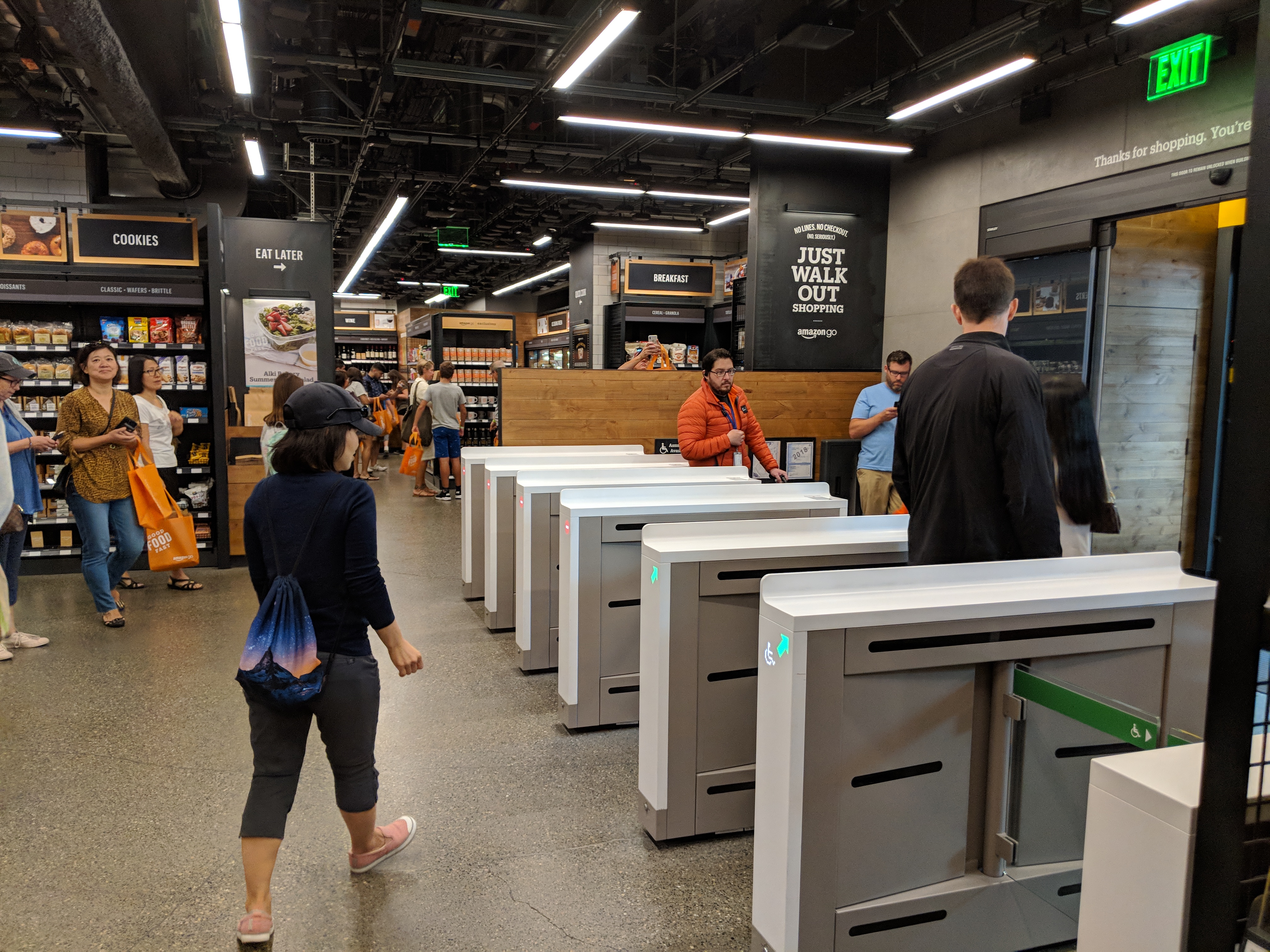
Speaking of losing jobs – Amazon has opened its first cashierless grocery, in Seattle. I’d guess that there will be plenty of these in several years, meaning that many thousands of people who have had cashier positions as their main occupation or as a second job will have to look elsewhere for work. For many customers, the convenience of these stores will trump whatever desire they might have to deal with real people instead of devices. For that matter, plenty of folks like to avoid as many direct social interactions as they can, preferring to spend their days and nights communing with screens.
Where will these lightly skilled people go? Maybe some will become home health care and/or nursing-home employees to look after the ever-swelling flood of old people.

Using part of Providence’s Industrial Trust Building (aka “Superman Building”) for an expanded (beyond the Shepard Building) University of Rhode Island presence in the city might be the most plausible basis for saving the Art Deco pile. Obviously not all of the building, with its stepbacks, is adaptable for classrooms, library space and other academic functions, but some of the lower floors are. Then the upper floors, with their spectacular views, could be sold or rented out for high-end apartments, small start-up businesses or small professional offices.

Providence resident Steve Key, responding to our friend William Morgan’s whimsical ideas and sketches, in a recent GoLocal column, about what to do with the infamous stuck-up railroad bridge over the Seekonk River, recommends installing a catapult (“Provipult”) that hurls famously rude Massachusetts drivers found in Providence flying back over the state line. Anything to better safeguard Rhode Island’s roads.
To read Mr. Morgan’s piece, please hit this link:
Bi-national Energy Swap
Some energy experts propose that, to cut electricity prices and fossil-fuel emissions, that the solar and wind facilities being built in New England help power Quebec on sunny and/or windy days down here, letting the reservoirs up there used to produce hydroelectric power fill up. Then when it’s cloudy and/or calm down here, we get the Canadian power. Denmark (wind power) and Norway (hydropower) are already doing this
Sounds reasonable except that the plan would require that four transmission lines be installed – which would inevitably run into much well-heeled opposition! It’s usually much tougher to do such projects in the United States than in Europe.

Nick Glass, a communications specialist at “Koch Companies Public Sector,’’ politely wrote to complain about my words in last week’s column. The offending words were: “The Koch Brothers and some other plutocrats will pull out all the stops to keep their man in the Oval Office.’’
Mr. Glass wrote:
“The phrase ‘Koch Brothers’ is inaccurate here, as it generally refers to
Charles and David Koch, and David passed away in August 2019. The other two
brothers (William and the late Frederick) are not involved. Additionally,
the political network {“Koch Network”} associated with Charles Koch did not endorse President
Trump in 2016, and it has made no such endorsement this year either.
“Therefore, the inclusion of the reference to the ‘Koch Brothers’ is not
appropriate, and I recommend clarifying for readers.’’
While some in the vast Koch Network, the core of which is the huge, very well managed and family-controlled Koch Industries, have expressed public distaste for some of Trump’s policies, particularly on immigration and trade, and his crude and divisive rhetoric, it has pushed for and gotten what it most wanted from him – big tax cuts for companies and rich people, deregulation and “conservative” judges and regulators. You can bet that they want to continue that – especially as they’re staring at Bernie Sanders, a “democratic socialist” (actually he’s just a social democrat), as the Democrats’ potential presidential nominee. (By the way, William Koch has been a major contributor to Republican candidates.)
The Koch Network, founded by Charles and David Koch, is a collection of tax-exempt groups and companies in which the source of campaign cash is often hard to trace.
Some of the Koch Network people who have worked with the Trump regime include:
Corey Lewandowski, one of Trump’s presidential campaign managers in 2016. He had worked for Americans for Prosperity, a Koch-backed group; Alan Cobb, who was national director of state operations of that organization, became a senior adviser to the Trump 2016 election effort; Marc Short, now chief of staff to Vice President Pence, had been president of Freedom Partners, another Koch-backed group; Donald McGahn, a lawyer who worked for Freedom Partners, became for a time, Trump’s White House counsel.
There are others.
Tim Phillips, the long-serving president of Americans for Prosperity, told The Washington Post that he and his colleagues regarded 2017 as “the most productive year . . . in the existence of this network” at the federal level and that the Koch policy apparatus had been invited to take part “from day one” in formulating the tax changes that Trump signed into law in December of that year.
Robert Whitcomb and GoLocal CEO Josh Fenton
Kudos to Michael Bloomberg for not jumping on the trendy marijuana-legalization campaign that was generally touted at the Democratic presidential debate last Tuesday. Mr. Bloomberg noted that much research needs to be done on the neurological effects of pot use, especially in young people. This has been treated far too lightly.
The debate was almost as chaotic as the Republicans’ primary debates in 2016.
I wonder how many other Americans would be willing to have their pasts raked up in such detail as are the past lives of political candidates. I admire candidates’ courage and rhinoceros skin.
xxx
I wonder who might quickly become the front-runner for the nomination if Bernie Sanders (78) keels over from another heart attack in the next few months.
Which reminds me: If an old friend wants to get together, always try to accept.
National Service
World War II, with its huge manpower demands, brought together many Americans of widely different backgrounds, with many benefits, such as reducing racial bias. Now, when Americans are so divided politically, socially and economically, we could use a new broad but voluntary national service program, mostly for young adults, that would bring people together to help address community needs, in infrastructure repair, education, health care and other areas. The volunteers would be paid very modestly and receive free housing, perhaps something like foreign exchange students staying with host families.
To reduce suspicion and hate, let’s encourage more Americans to actually meet and work with fellow citizens they might not otherwise encounter. This isn’t as “socialist’’ as Medicare.
What’s My Line
There’s an entertaining boundary dispute underway between Kittery and York, Maine, that reminds us how old New England is. The origins of the dispute go back to at least 1653, when Puritan invaders from Massachusetts drew a straight line to mark part of the two towns’ boundary with each other.
But, reports The Boston Globe, “property {ownership} changes and long-forgotten handshakes had incorporated wobbles and bumps into what became an accepted, meandering boundary from Brave Boat Harbor to the present-day Town of Eliot, which borders both Kittery and York.’’
The argument commenced in 2018, when York developer Duane Jellison had bought property on Route 1 that he believed “was evenly divided between York and Kittery. His surveyor concluded, instead, that the majority of the property is in York,’’ The Globe said.
I suspect that there are grounds for similar disputes all over New England, especially those parts settled by Europeans (and taken from the Indians) in the 17th and 18th centuries. Let the litigation spread, giving us all some fascinating history lessons
To read The Globe’s story, please hit this link:
A Whale of an Ecological Role
“….we believe they almost loved us.
What we can never know is
how we failed to let them feel
What we meant in our deepest instinct,
In the great dance of our silence,
At the latitudes where we winter….’’
-- From “Species,’’ by Philip Booth (1924-2007)
Increasing attention is being paid to the role that whales, which are, of course, air breathers, play in the health of the ocean and beyond by bringing nutrients up through the water column from deep below, where they generally feed. Near the surface, the tiny plants and animals collectively called plankton feed on the nutrients and themselves become food for small creatures that become food for larger animals, including humans. And plant plankton produce a lot of our oxygen.
This is something to think about when looking at man’s destruction of such species as North Atlantic right whales.
Hit this link for more information:
Wikipedia and Us
Lincoln’s Language
Looking at Providence Journal editorial-page editor Edward Achorn’s exciting new book, Every Drop of Blood:
The Momentous Second Inauguration of Abraham Lincoln, I thought of how important rhythm and cadence are in effective speech – if they are used well, even a long and complicated sentence can sing. Mr. Achorn’s title comes from the most stunning passage (to me) in the speech, an address many consider the greatest in American history:
“Fondly do we hope, fervently do we pray, that this mighty scourge of war may speedily pass away. Yet, if God wills that it continue until all the wealth piled by the bondsman's two hundred and fifty years of unrequited toil shall be sunk, and until every drop of blood drawn with the lash shall be paid by another drawn with the sword, as was said three thousand years ago, so still it must be said ‘the judgments of the Lord are true and righteous altogether.’’’
Will we see these heights of political rhetoric (which is almost theological) again?
xxx
Novelist and essayist Alison Lurie can write memorably about many things, as she does in her latest essay collection, Words and Worlds: From Autobiography to Zippers. But I especially liked her stuff on children’s books, with such characters as Pinocchio, Babar, Aslan, Harry Potter and Rapunzel, and, if you want to consider them as children’s books characters, Tom Sawyer and Huckleberry Finn.