


Whitcomb: Cities vs. Countryside in COVID-19 Crisis; Baker, Raimondo Handling It Well
Robert Whitcomb, Columnist
Whitcomb: Cities vs. Countryside in COVID-19 Crisis; Baker, Raimondo Handling It Well

“Spring hills, dark contraries:
a glade in a fall valley,
its one flower steeped with sun.’’
From “Sixty,’’ by Philip Booth (1925-2007)
GET THE LATEST BREAKING NEWS HERE -- SIGN UP FOR GOLOCAL FREE DAILY EBLAST
“Whatever is a reality today, whatever you touch and believe in and that seems real for you today, is going to be – like the reality of yesterday – an illusion tomorrow.’’
-- Luigi Pirandello (1867-1936), Italian writer, best known for his plays
“When spring came, even the false spring, there were no problems except where to be happiest. The only thing that could spoil a day was people and if you could keep from making engagements, each day had no limits. People were always the limiters of happiness except for the very few that were as good as spring itself. ‘’
-- Ernest Hemingway in A Moveable Feast, his memoir of life in Paris in the 1920s. It’s slightly weird to me, by the way, that it will soon be misleading now to refer to The Twenties, Roaring or otherwise, now that we’re in the, what? Viral Twenties?

The current emergency may be making far more people aware of early-spring Nature because far more are walking around outside to battle claustrophobia and to get exercise, partly because most gyms have been closed. But it’s not a very social experience, as, for example, people tend to keep on the other side of the street from fellow walkers. Still, at least they’re looking at the flowers and trees more than they might have in a “normal spring.’’
I’ve been thinking that this would be a good time to head up to New Hampshire and Vermont, get a room at a Motel 6 and check out maple-syrup-making operations for a few days. Yeah, COVID-19 will be circulating up there too but the scenery is therapeutic.
An old friend of ours who lives in Florida part of the year has several dozen acres of field and woods in the Clayville section of Scituate, R.I. She only half-jokingly suggested that she’d move full time back to Clayville and “live off the land,’’ as people there (mostly) did 250 years ago. It wasn’t that long ago, historically speaking, that many of our ancestors lived on farms. My maternal grandfather’s family had a couple of farms in Upstate New York, and even some of my New England ancestors in the great-grandparent generation had working farms in Massachusetts. Those who didn’t might have had a couple of cows and some chickens.
Newspapers Shrinking to Death
With many newspapers shrinking unto death, all they seem to have room for is COVID-19 stuff; there are many other important things happening around the world that aren’t being reported. As the late Bill Kreger, a news editor to whom I reported at The Wall Street Journal once observed: “Sometimes the most important story starts out at the bottom of Page 37.’’ What might we be missing?
Well, The Boston Guardian reports that property and violent crime is down in its circulation area this year. But maybe that’s a virus-related story? As newly unemployed people run out of money will property crimes increase?
Then there’s an inspiring little item from the March 24 Wall Street Journal: Voters in Mexican border city of Mexicali have admirably told the U.S. company Constellation Brands not to complete a $1.4 billion brewery there because the facility would take so much water that it could jeopardize the irrigation-dependent agriculture in the region.
In other heartening, if mostly symbolic, news, the U.S. has indicted Venezuelan dictator Nicolas Maduro and some sidekicks for drug trafficking and is offering $15 million to those who aid his capture. Don’t expect Maduro to appear any time soon in a federal court, but the move is apt to make him nervous.
And there’s the important unhappy news that the world’s greatest coral reef, Australia’s Great Barrier Reef, had just suffered another mass bleaching caused by global warming, whose associated increase in carbon dioxide makes sea water more acidic. For more information, please hit this link:
More virus-free stuff below!

With some medical-supply chains from China and now India broken, the idea of reducing our dependence on some Chinese imports, as Trump and many others have proposed, is quite right. But domestic supply chains can be compromised, too, by pandemics. That includes food. Thus the more food we can grow and ship regionally the better – e.g., via the huge Gotham Greens greenhouse in Providence.
xxx
My heroes! A fine bookstore open near our house has remained open, God bless ‘em, with proper space precautions inside. It offers some mental trips into brighter days.
xxx
Much has been made of the dangers of living in cities in times of epidemics because of the density. Quite a few people, mostly rich folks, have, for example, left New York in the past couple of weeks to “shelter in place’’ in rural and/or summer resort places – angering many of the locals. But too little has been made of cities’ advantages during such times.
The biggest is having lots of hospitals and other health-care facilities, and thus lots of health-care professionals, of which there are obviously far fewer in exurban and rural areas. Indeed, many rural hospitals have been closed in recent years. (So have some urban hospitals, such as Pawtucket’s Memorial Hospital. Can and should Memorial be reopened? Its closure has put intense pressure on nearby Miriam Hospital.) The fragmented, inefficient and astronomically expensive U.S. health-care system is a mess. The failure to have adequate testing systems and equipment in place to address the current crisis is yet another symptom of how disordered it is.
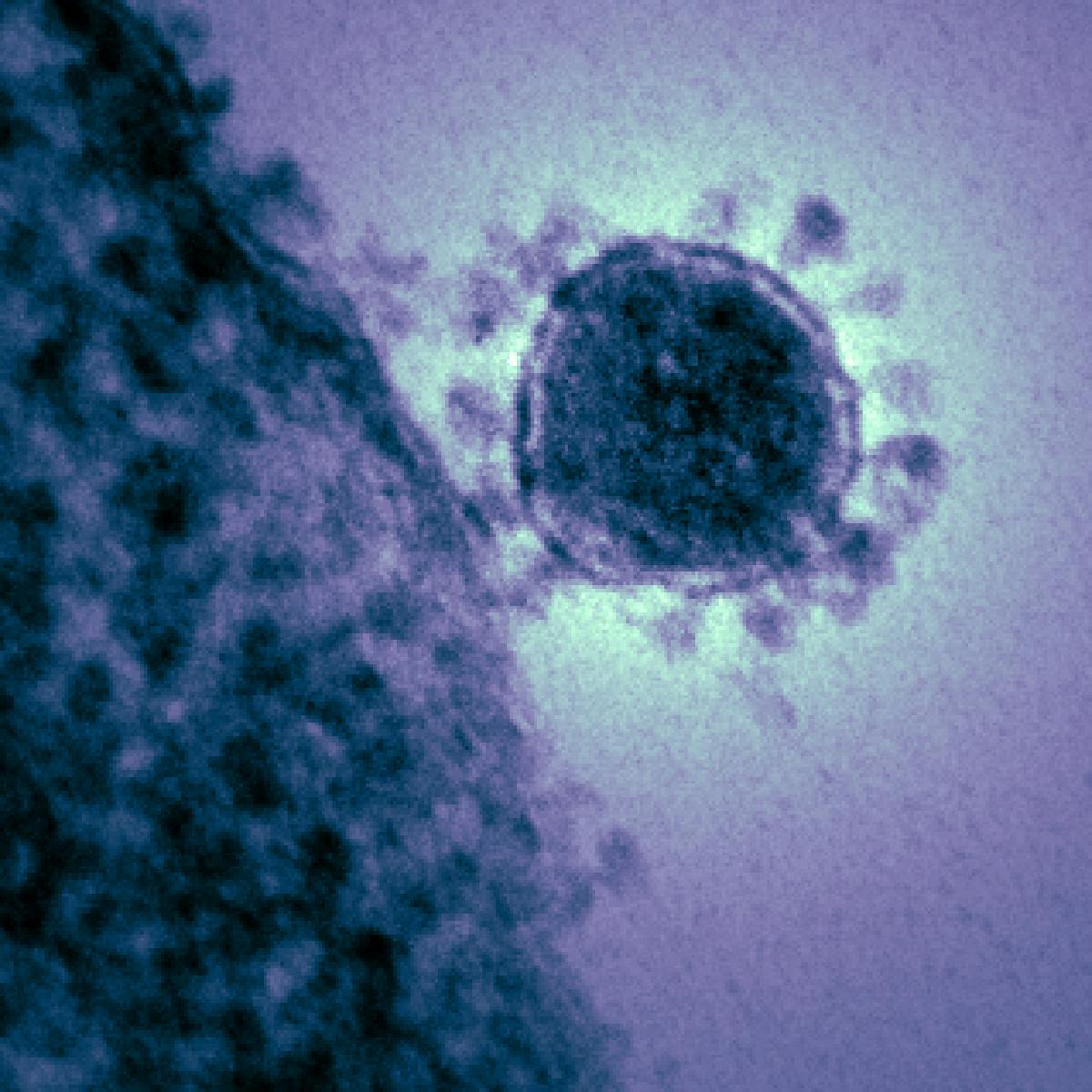
The failure to have enough testing kits, and protective gear for health-care professionals, has resulted in a huge undercount in the number of people with COVID-19. So many of us have it now, but have no, or mild, symptoms. The development of extensive “herd immunity’’ through mass exposure, is probably well underway. The surge in reported cases probably mostly just reflects belated testing. Speaking of “reported” cases, don’t believe numbers from China (or Russia).
Ironically, as my friend insurance executive Josh Fitzhugh noted: “New York City may be one of the first places that could reopen for business because most residents will have been infected and either recovered or unfortunately passed away.’’
In any event, with our health-care “system’s’’ inadequacies, we must focus even more on the most vulnerable populations – the immuno-compromised and the elderly – and limit our ambitions regarding the wider population. Eventually, herd immunity will bring the pandemic to heel, although there will be, as with flu epidemics, recurrent waves of sickness. But a vaccine, and better treatments, will probably be available within a year or so to stop or at least mitigate such epidemics. Be it “by Easter,’’ as per Trump, or later, when social-distancing rules are to be loosened, they should be eased gradually, not all at once, so that the sudden resulting increases in real or suspected cases don’t further overwhelm health-care personnel and institutions.
Throughout the crisis, the core emphasis should be on tracking cases by testing so that medical resources can be most effectively geographically deployed and the most at-risk populations isolated. Then whack-a-mole, maybe for years.
Meanwhile, watch this extended interview by an old friend at The Press and the Public Project with Dr. John Ioannidis of Stanford University. Dr. Ioannidis cautions that we do not have reliable data to make long-term decisions about COVID-19, and that an extended lockdown could have far graver effects than the disease itself.
Dr. Ioannidis is C.F. Rehnborg Chair in Disease Prevention, Professor of Medicine, of Health and Research Policy, of Biomedical Data Science, and of Statistics, and is the Co-Director of the Meta-Research Innovation Center at Stanford.
By the way, some major work on researching COVID-19 to develop a vaccine is being done at Boston University’s National Emerging Infectious Diseases Institute in Boston’s South End and elsewhere in Greater Boston. Yes, it’s supposed to be a very secure location though it unsettles some of the neighbors. To read more, please hit this link:
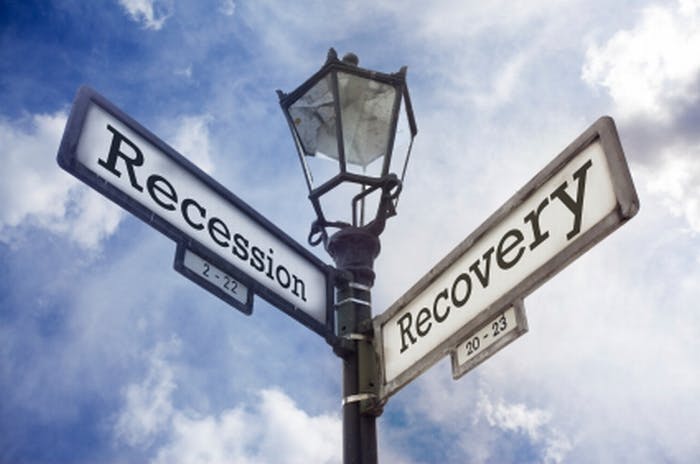
After a few more weeks of severe social controls, we must start opening up the economy again – to have the resources to address the longer-term public-health, economic and social effects of the virus. When a country has a market economy, it has few alternatives to doing so. That said, COVID-19, even without the social controls now in place, would have accelerated a run into a recession already made inevitable by the business cycle turned toxic by burgeoning corporate and public debt and runaway speculation in the financial markets, fueled by politically driven Federal Reserve Board policy. (And if you thought public debt was bad before….)
People calling in sick with the virus, and an increase in death rates, would be hitting the economy now anyway even without states’ and localities’ severe social-distancing orders.
Then there are aging populations, ever-widening economic inequality, trade wars, and, perhaps, the growing economic effects of global warming. How unfair all this is to the young adults hammered by the Great Recession (also caused by runaway speculation fueled by deregulation) of 2008-09, with painful lingering effects for years after! But they plug on….
As to where this pandemic is going public-health-wise, economy-wise or politics-wise: A hearty “Who knows!” But I do think that New Englanders, with a tendency to follow the facts, to be more skeptical than other Americans and with stronger health-care systems and institutions, will do better than in most of the United States. As our flinty second president, Massachusetts’s John Adams, famously noted:
“Facts are stubborn things; and whatever may be our wishes, our inclinations, or the dictates of our passion, they cannot alter the state of facts and evidence.”
xxx
Trump has grossly exaggerated his actions in the early days of the virus crisis, which he downplayed for weeks. His only early action against the virus came on Jan. 31, when he blocked most foreigners who had recently visited China from entering the United States. Good! But his order didn’t apply to Americans who had been traveling in China.
He’s also lately bragged again that he patriotically doesn’t take the $450,000 presidential salary even as he sends millions in taxpayer dollars to his resorts, clubs and other facilities of the Trump Organization…And so it goes: a nonstop smoke machine.
And the Electoral College may well keep him in office. Demagogues, who prosper by appealing to many citizens’ fear and wishful thinking, and know how to use their lack of interest in important, if boring, facts, can do very well in crises. That’s especially if they have developed superb skills of mass-media manipulation, and especially of television. (It also helps to have a foreign dictator helping out.) Biden looks like a weak candidate, at this point.

This goes too far: Rhode Island Gov. Gina Raimondo said Thursday she plans to give State Police the power to stop any car with New York license plates in order to obtain contact information from the driver and passengers as part of her COVID-19 quarantine program.
Sounds brazenly unconstitutional to me! As the ACLU noted:
“While the governor may have the power to suspend some state laws and regulations to address this medical emergency, she cannot suspend the {U.S.} Constitution. Under the Fourth Amendment, having a New York state license plate simply does not, and cannot, constitute ‘probable cause’ to allow police to stop a car and interrogate the driver, no matter how laudable the goal of the stop may be.’’
I think that Governor Raimondo, except for the excess above, and Massachusetts Gov. Charlie Baker have done fine jobs overseeing their states’ response to the virus: They are calm, articulate, data-savvy and very well-informed. What a difference from Trump’s fantastical campaign-rally-style “briefings.’’ More “Deep State” experts, please, and less noise from our Duke of Deception. (Still, I’ll miss the daily spectacles, if they ever end, especially Mike Pence’s impersonation of a butler -- or is it Stepinfechit? -- and Dr. Anthony Fauci with arms crossed and looking at the floor as the carnival-barker-in-chief unloads yet another whopper for his adoring Red State audience to consume whole.
Hit this link to see how one media outlet is responding to Trump’s “briefings.’’
Just Obsess on the Asteroid
A counter-irritant in medicine is something, such as heat or an ointment, that produces surface irritation of the skin, thereby counteracting underlying pain or discomfort.
Maybe we should consider the news below as benignly giving ourselves something else to worry about than COVID-19:
An asteroid expected to be 1.1 miles to 2.5 miles wide will fly close by Earth in late April, though it it’s not expected to collide with us. If it did, however, things could get quite exciting: “large enough to cause global effects,” says NASA.
It’s projected to pass within 3,908,791 miles of the Earth, moving at 19,461 miles an hour.
Safer and Cheaper Than Disney World
In a happy reminder of summer, there’s an elderly Cape Cod couple’s uber-charming and kitschy (36-hole) Sandwich Mini Golf, on what used to be a cranberry bog. Construction started on the course back in 1950.
"Even in the winter, he’s repainting," Sylvia Burke said of her husband, Maurice (“Mo’’), who started construction on the course in 1950, when he was 15, reported WBUR’s Gary Waleik back in 2016. "In the evening hours, he’ll be busy carving signs. Every sign that’s on the mini-golf is all hand-carved by him." There’s a Mo’s Mountain on the course, by the way. The attraction is squeezed between scenic Route 6 A and a salt marsh. (Salt marshes are the defining characteristic of the Cape Cod Bay side of the peninsula.) A brook flows under the course’s bridges, around a simulated giant lily pad and past a white whale and a lighthouse – all very Cape Coddish.
“I love Sandwich Mini Golf because each time I play there, I feel like a kid. My wife and children seem to love it as much as I do. It’s one of our very happy places,’’ Mr. Waleik wrote.
To read his story, please hit this link:
To see Sandwich Mini Golf Web site, hit this link:
Next stop: “Tourist cabins” and lobster-shaped ashtrays.
xxx
The old leaves have been raked away from the gardens, exposing to late freezes the bulb flowers, which have been coming up early this year. But I guess there’s enough sugar in them so that they’ll survive.
The wind through fir trees makes a soporific sound that you can’t hear when the deciduous trees are in leaf.
A huge skunk sat itself down in the middle of the street near us and wouldn’t budge. Its weapon of mass destruction was so awesome that even our rather aggressive dog, after some intense barking, kept his distance.
Out of the Closet and Onto Stage and Screen
The recent deaths of two elderly gay writers reminded me of how much society has advanced in accepting some previously marginalized groups over the past half-century. One is Mart Crowley, who has died at 84. His 1968 play, (followed by a movie) The Boys in the Band, while sometimes hokey, showed a group of homosexuals in ways that set aside some of the clichés about gays.
But there were some cringe-worthy lines; probably the most famous is “You show me a happy homosexual and I’ll show you a gay corpse.’’ Or that was then….
At the time, the play was considered quite sensationalistic. References to homosexuality were more often than not suppressed in the performing arts in those days.
The other writer is dramatist Terrence McNally, who has died at 81. While he created a broad range of characters, and collaborated in many musical productions, he was well known for presenting gay situations, such as Love! Valour! Compassion! and Lips Together, Teeth Apart. Both writers, by creating work seen by the general public, reduced bigotry toward this minority.
Florida Farce
Naked Came the Florida Man is Tim Dorsey’s latest hilarious novel about Serge A. Storms, a crazed but very literate (to the point of extreme parody) and witty vigilante who travels the Sunshine State with his stoned pal, Coleman, rectifying injustice, often in notably creative and, yes, cruel ways. Hidden treasure, hurricanes, exploding boats and high school football drama are included on the book’s menu, which is informed by a remarkably well-researched history of a state known for sunny weather and shady people.