


Whitcomb: Next for Colleges? Stadium Stall; This Shoreline Summer; After Decade of Biz Debt Binging
Robert Whitcomb, Columnist
Whitcomb: Next for Colleges? Stadium Stall; This Shoreline Summer; After Decade of Biz Debt Binging

all combed amiss, the grasses of the marsh
jostle and yearn after the coursing wind.
GET THE LATEST BREAKING NEWS HERE -- SIGN UP FOR GOLOCAL FREE DAILY EBLASTStartled, beneath the tufted hummocks runs
the cocoa-brown mole in his labyrinth.’’
From “Marsh,’’ by Alfred Nicol, a Massachusetts North Shore poet
“The world is full of happy people, but no one ever hears of them. You have to fight and make a scandal to get into the papers.’’
Gene Stratton-Porter (1863-1924), American author, nature photographer and naturalist.
“Telling those companies that their Japanese executives and German executives are not welcome in the United States to oversee their plants is going to be an interesting conversation for those governors and senators. There are hundreds of thousands of workers in our region that are employed by those companies. I am sure that that is going to be a difficult message.”
Greg Siskind, a Tennessee immigration lawyer, in response to Trump’s confusing new orders on immigration and visits to the U.S. that’s being pitched to his Fox News base. Very few people are coming to America now in any case.
Does anyone else besides me find the expression ‘’stay safe’’ cloying?
But what happens next September? Many colleges and universities are now agonizing over whether COVID-19 will let them safely physically reopen. If not, how many students and their parents will be willing to spend tens of thousands of dollars to take classes via the likes of Zoom? The claims that online learning is almost as good as in-person classes are laughable. Zoom, Skype, et al., are technically impressive but frankly, as a teaching vehicle, they suck (to coin a phrase) compared to in-person instruction.
So, I’d guess that many students will decide to take a “gap year,” with the idea of entering, or returning to, college in the fall of 2021. The trouble is that there won’t be many jobs available for them in the interim and that some of their colleges will die as the pandemic dries up their tuition and fees revenue.
It’s not clear how Trump’s latest immigration/foreign visitor orders might affect, at least indirectly, many foreign students at American colleges and universities, most paying full freight. The American Council on Education says that more than 1 million foreign students attend U.S. colleges and universities, contributing more than $39 billion to the economy and subsidizing American students.
Whitcomb on GoLocal LIVE
Now Out of Bounds
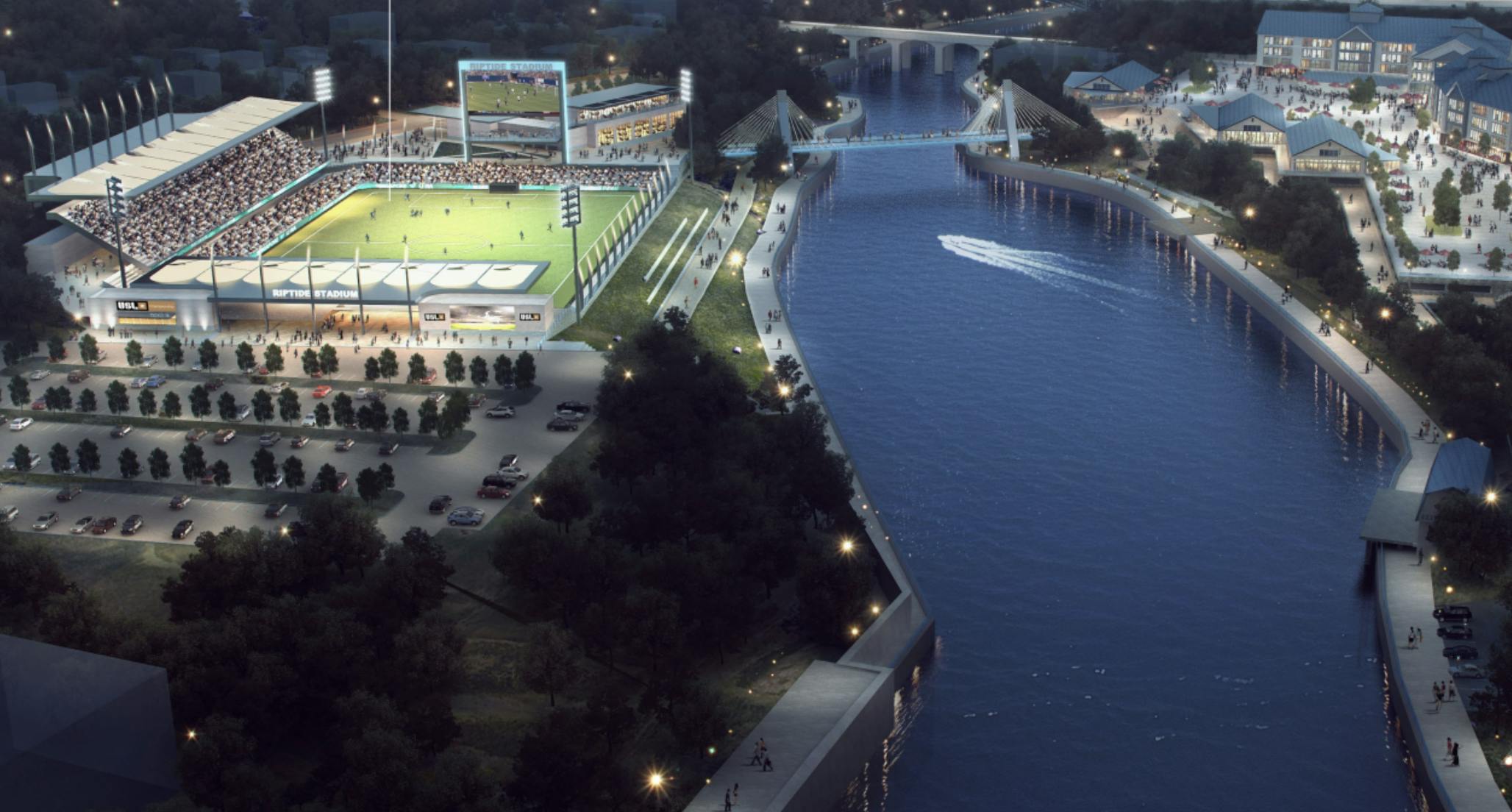
I like to watch soccer (and even used to play it a little), and I think that for the long term a soccer stadium in Pawtucket, as a sort of successor of baseball’s McCoy Stadium, might do well because of developing demographics. But given the dreary new pandemic economy, Fortuitous Partners’ proposed $400 million minor league soccer-retail and hotel project in “The Bucket” seems only a pipe dream, at least for the next five years. The company wants tens of millions in public financing, but, to say the least, much bigger stuff is in the way now. And the benefits to the public of partly government-financed stadiums are usually grossly exaggerated in the best of times.
To read a GoLocal article on this, please hit this link:
The very able, cool, and corrupt U.S. Senate Majority Leader Mitch McConnell, who has often been Trump’s most important enabler in the federal government, says he favors letting states declare bankruptcy because of the soaring costs of the pandemic. This would let the states run away from their pension obligations to retired state workers. Since such workers tend to be Democrats, that would be no skin off the cynical Kentuckian’s nose.
On the Shore: Summer Angst or Opportunity?
New England shoreline and mountain resort areas are looking nervously at the fate of their businesses this year. They worry that fear of getting COVID-19 and/or of stringent social-distancing rules will slash their customer base and swiftly drive some of these hotels, restaurants, marinas, seasonal-rentals agencies, etc., out of business. But maybe the region can position itself to the wider East Coast, and the Upper Midwest, as a nearby safe (no plane trips and crowded terminals needed to get there), charming and relatively economical place to visit. Things should look a lot clearer in a month, by which time, we dearly hope, things can start to be loosened up a bit. Actually, they have to be.
xxx
I worry that open-ended social controls, especially banning in-person meetings of, say, more than 50 people, will kill many nonprofit organizations that are an important part of civil society. Is any attention being paid to this?
Finally, Make News Thieves Google, Facebook Pay
Since their creation, Google and Facebook have been publishing for free (i.e., stealing) journalists’ work and eating up much of the advertising that used to support journalism. This has driven many news companies out of business, and left many of the surviving ones on life support, with great damage to civil society in democracies. So, it was very good news indeed to read that the Australian government plans to force these far-too-powerful companies to pay news organizations for the use of their content. Let’s hope that other governments take similar action. It would also be nice if antitrust officials took a more serious look at these behemoths.

Bear in mind that the number of cases of COVID-19 and deaths from it are very undercounted mostly because of the dearth of testing – a lack not being seriously addressed by the Trump administration, which has seemed to want undercounting of cases for political reasons. The numbers you read about are only the confirmed numbers.
Greatly expanded testing would disclose a lot more cases, which would tend to back up the need for continued social controls, which would hurt the economy, which would hurt the caudillo’s re-election chances. As he spends his days watching TV and Tweeting, he worries about what would happen to him legally if he loses the election given his long trail of corruption.
The very competent, coherent and calm response to the COVID-19 crisis by three Republican governors – Ohio’s Mike DeWine, Maryland’s Larry Hogan and Massachusetts’s Charlie Baker -- is a reminder that thoughtful right-of-center governance is still possible in the states because governors have to deal closely with on-the-ground reality, unlike the president and many members of Congress, who just bloviate in bursts in between being errand boys and girls for lobbyists. The Washington-based part of the GOP is polluted beyond repair. The hope for real conservatism is in the states.
I sympathize with the nation’s governors in having to make decisions, based on ever-changing data, on when to reopen their states. The closings have done vast economic damage (which itself causes public-health damage) but opening too early could cause enough new public-health damage to more than offset the economic benefits from reducing or ending the controls. The governors’ decisions will require courage either way.
Show Business
No big surprise: Many of those anti-lockdown demonstrations are being organized with the help of right-wing groups financed by very rich people (such as hedge-funder Robert Mercer). Trump’s sleaze favors them. They want even more tax cuts for themselves and fewer environmental and other regulations that, for all the flaws of some of them, were imposed to protect the public. And, of course, their fortunes give them great power in Washington, D.C.
Yes, many of the demonstrators, albeit riled up by the professional liars at Fox, sincerely believe that the government has no right to tell them what to do, even in a health emergency. I sort of admire their adherence to principle. Extreme libertarianism is an ancient tradition in America. In the anti-lockdown show, they’ve also dragged in their interpretation of the only part of the U.S. Constitution many of them seem aware of: the Second Amendment.
The demonstrations remind me of how some right-wing plutocrats use such social matters as guns and racial resentments to rile up certain groups, particularly older white men, to vote for people like Trump who will do the fat cats’ bidding. Then there’s Fox News, created by the cynical Rupert Murdoch and the late Roger Ailes, as a well-oiled lie machine. They knew that spewing conspiracy theories and otherwise drumming up a loyal audience wallowing in wishful thinking would boost ratings and bring in the ad revenue.
As for its talking heads, such as Laura Ingraham and Tucker Carlson, I think John Oliver put it best:
"They only pretend to believe these things on television for money."
Meanwhile, the Russians, as in 2016, are hard at work for their man Trump by doing such things as hacking into institutions’ e-mail banks and planting stuff in the social-media swamp.
The mild-mannered, elderly, and not brilliant Joe Biden and the Democrats, in general, will be hard-pressed to counter the ruthlessness of the Trump campaign.
Minority Rule
We like to think of our federal government as a democracy. But if you associate democracy with majority rule, it has become a strange one.
Consider that the last two Republican presidents lost the popular vote – G.W. Bush and Trump -- and that four of the five “conservative” justices on the Supreme Court were put into their jobs by G.W. Bush or Trump and that the Republicans controlling the Senate represent a minority of the national electorate. And I won’t go into the effects of gerrymandering….
A Decade of Debt Binging, and Now….
“The economy is not fragile because of the virus. The virus exposed the fragility of the economy.
“2009-2019 produced the slowest recovery in history while requiring the highest debt expansion and lowest rates in history.
“And now policy makers are doubling down on the same.’’
-- Sven Henrich, a celebrated financial-market analyst at Northman Trader
So we’ve had big tax cuts and massive government spending, except on things like transportation and other physical infrastructure and research and development, that would have made America richer and more competitive over the long run.
People increasingly wonder why the stock market can often surge while the economy tanks. Well, it’s to no small degree because the Federal Reserve Board, now led by former investment banker Jay Powell, is obsessed above all with pumping up financial assets – the care and feeding of Wall Street, not Main Street. No wonder that corporate debt has been exploding for years with cheap money, a debt that poses another high hurdle for an economic recovery.
To hear/see an interview with Mr. Henrich, please hit this link:
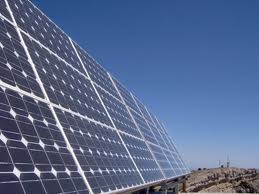
In part, at least, because of the clearer skies left by less burning of fossil fuel at coal-fired power plants, etc., because of the pandemic, solar power has been doing very well lately, with, for example, Germany’s solar sector last Monday generating record amounts (32,227 megawatts) of electricity. The competition is hurting the profitability of the coal plants of Europe’s biggest economy. Good.
Which takes me to the collapse of oil prices. Energy-sector analysts have two superficially conflicting views on this regarding fossil-fuel burning, which is fueling global warming. One is that cheaper oil products, especially gasoline, will cause a big increase in their use, at least short term. The other is that the collapse of much of the oil business, as frackers and others go out of business, will boost the renewables sector. A few people may remember the cleaner air, too.
xxx
Will crooks use mandatory face masks as cover in crime sprees? An irony: Some places, such as France, had banned face coverings, such as by Muslim women, so that such coverings can’t be used to hide the identity of criminals.
xxx
Some pleasant design changes may come out of COVID-19. My favorite is the erosion of the barbaric open-offices concept – a bunch of people working with little or no privacy in big rooms. Now, interior architects are eying putting more barriers between individuals’ workspaces, including cubicles and private offices, as part of permanent social distancing. This would be a step forward for civilization.
Apparently, we’ll also be seeing a big increase in “touchless” stuff, some of it creepy in a way, such as voice-activated light switches and elevators. And electronic surveillance will intensify. For example, get ready for room sensors that take your temperature, and then summon the pandemic police to take you away. Paging Dr. Orwell.
Cramped Times
Watching helmet-wearing little kids on their bikes -- and they must be getting tired of killing time away from school these days -- I thought of how much more cramped people are these days, if in many ways healthier, than not that many decades ago. We didn’t worry about bike accidents, cars had no seat belts, we often left the house unlocked and adults usually drank (often too much) and smoked without embarrassment. Even without the wonders of the World Wide Web, I think we used to have more fun.
The news media say that many people are afraid, no, terrified of COVID-19 itself, as opposed to such secondary effects as poverty. I can’t say that I am. I mostly fear the possible results of my own actions. Such things as pandemics, storms and wars are, of course, out of my control.
Three Springs
As the leaves push out, I think of three memorable springs, for me, anyway. The first is the spring of 1966, when we seniors were rapidly heading for graduation at our boarding school at the edge of the lovely Litchfield Hills, in Connecticut. While we faced the pressure of final papers and exams, and saw the Vietnam War looming, all in all, it was a delightful time. One reason is that a nice youngish married couple – the Woods -- with a couple of kids lived in a house down the road. They were friends of one of my classmate’s parents.
A bunch of us, ranging from four people to seven, would often bicycle to their rambling white 19th Century house and hang out. On a couple of occasions, they had us to dinner, where illegally (?) they served us wine, and everyone would smoke in their backyard, whose spring lushness and freshness I still recall. Thus, we enjoyed the pleasures of adulthood without its responsibilities. It got better and better as the leaves thickened and we luxuriated in the first hot days. It may have just been the fact that it was a time of transition for us, and so everything seemed intensified, but I can’t remember a more beautiful spring.
Finally, a few days before graduation, which I was slightly dreading because as the head of the student government I had to speak before the commencement multitudes, the Woods gave us a farewell dinner, which I found moving. That was the last time that our group all met together. And, not surprisingly, several of us have been dead for years.
Then there was the spring of 1970, during my senior year at college, when everything was disrupted by partial college closings associated with protests against the war in Vietnam and Cambodia. The proximate cause was the fatal shooting of four anti-war student demonstrators at Kent State University, on May 4. Many colleges, including mine, Dartmouth College, decided (wrongly, in my view) to let everyone take all courses pass/fail and took other measures that turned the final weeks of that academic year into an excuse to have a hypocritically good time. As President Nixon reduced our military in Vietnam, and then the draft was ended, the protests faded, whatever was happening to the Vietnamese.
In any event, the Upper Connecticut Valley was much warmer than average that year and gorgeous. That late spring almost felt like summer camp. Frisbees flying everywhere. I left with only vague ideas of what I’d be doing next.
And now, half a century later, the Class of 2020 has had its in-person commencement postponed to June 2021, as the black swan of COVID-19 flies over. I wonder how many graduates will make it to that one.
The third spring I vividly remember came in 1972, as I was preparing to get my master’s degree at Columbia University, which was then still recuperating from the student unrest of the previous few years. Although graffiti-splattered-New York City was then in decline because of old industries leaving and/or shrinking, corporate headquarters fleeing to Connecticut, crime, labor strikes and municipal mismanagement, “The City’’ to many young people was still the most exciting and alluring place to be in America, and not all that expensive compared to most of the stretch from the ‘80s to the last couple of months, when COVID-19 has driven down housing and other prices.
I remember how easy it seemed to get a job, which I did before commencement, and the bright prospect of adventures to come. I felt, briefly, fancy free, as I strolled through Riverside Park up to Columbia, at 115th Street, from the big apartment at West 88th Street I shared with, numbers depending on the month, three to five people directly or indirectly connected with the movie and TV business. The rather ugly, city-tough, plane trees were unfurling and I smelled the inexplicable scent of wet bread. The city seemed full of promise, and it will again.
Tales of the Tale Bearers
V.S. Pritchett (1900-97) was one of Britain’s great men of letters. (John Updike was a rough equivalent here.) He was a superb short-story writer as (an unenthusiastic) novelist, an essayist and critic. All this background comes into play in The Tale Bearers, his very engaging collection of essays on important English and American writers, including Kipling, Conrad, Swift, Bellow and others.
Of a character in Mary McCarthy’s novel Birds of America, he wrote (weirdly): “In a novel he would be thin, as he is; but in the Euro-American laboratory he is a ready piece of Puritan litmus.’’ In his essay on Evelyn Waugh he remarks that "all humorists suffer from overwork” and that "Italy played its ancient trick" on the introverted gay man E. M. Forster and turned him into a “pagan’’.