


Whitcomb: Join the Herd; Open Up State Briefings; Plant Your Way Out; Plastic Eater
Robert Whitcomb, Columnist
Whitcomb: Join the Herd; Open Up State Briefings; Plant Your Way Out; Plastic Eater

again, like the rented animals in Aïda.
In the late morning the land breeze
GET THE LATEST BREAKING NEWS HERE -- SIGN UP FOR GOLOCAL FREE DAILY EBLASTturns and now the extras are driving
all the white elephants the other way.
What language are these children shouting in?
He is lying on the beach listening.’’
-- From “Rhode Island,’’ by William Meredith (1919-2007). A Montville, Conn., resident, he was U.S. poet laureate in 1978-80.
“There are many civil questions that arise between individuals in which it is not so important the controversy be settled one way or another as that it be settled.’’
-- William Howard Taft in 1921, the year in which the former president started his service as chief justice of the United States
“The multitude of the sick shall not make us deny the existence of health.’’
-- Ralph Waldo Emerson (1803-82)
“This is getting old.
And so am I.”
-- A gent’s remarks on the street the other day as he walked by

A fourth thing, call it a benefit or at least an interesting phenomenon, is that the economic shutdown has made the air much cleaner and clearer. The COVID-19 crisis shows very visually how much air pollution we churn out. These emissions kill many millions of people around the world each year. And waters are (temporarily) cleaner in many places, too.
Many people still hope that things will return to “normal’’ soon, say by the fall. No, they won’t. COVID-19 will be around for several years and so will variants of how we have been forced to act in the last month or so. A vaccine won’t come on the market for a year or two, and while social distancing, face masks, testing and contact tracing help to flatten the curve of those showing up in our health-care “system” at the same time, they also lengthen the time in which the disease remains a mass threat.
The current public-health responses delay the development of the herd immunity that comes from many millions (and maybe billions) of people contracting the virus, most with no or very mild symptoms. And it’s early on in understanding the COVID-19 virus. Scientists don’t yet know the extent to which contracting the virus gives survivors immunity, including how long such immunity might last. There’s a spectrum in immunity to viruses, from none to a little to a lot, provided by the antibodies that act as the body’s defense reaction.
And then what about those who have seemingly recovered from the disease but who then test positive again? Hit this link:
Whitcomb joined GoLocal LIVE on Friday
Herd Immunity
It’s the spread of herd immunity, along with, we assume, a vaccine, that will eventually stop the pandemic, albeit killing, or otherwise harming, a lot of people along the way, though possibly not as many people who would die because of the social controls. Consider the socio-economic damage from anything like the current restrictions being extended for, say, through the summer!
Some experts think that the COVID-19 crisis may not end until 2024. Gotta let a lot more people get infected!
So we have to start opening up large parts of society soon to rapidly expand herd immunity, while sequestering in varying degrees those groups, especially the elderly and those with underlying chronic conditions, most at risk from becoming very sick or dying from COVID-19. Perhaps doing such things as bringing back younger, less vulnerable employees to workplaces first. (That will also, unfortunately, tend to encourage yet more age discrimination.)

What about the long-term effects on nonprofit social organizations? I fear that many such groups will shut down for good, and sooner than you’d think, because too many people will shy away from congregating in large groups and/or will be told by officials not to meet. Some authorities bandy around the idea of barring indefinitely gatherings of 50 or more people. That would be a tragedy for civic culture. “Zooming’’ doesn’t quite do the trick.
Whatever, the energy and ingenuity of Americans will get us through our travails even as the early years of this decade range from traumatic to tedious and back again.
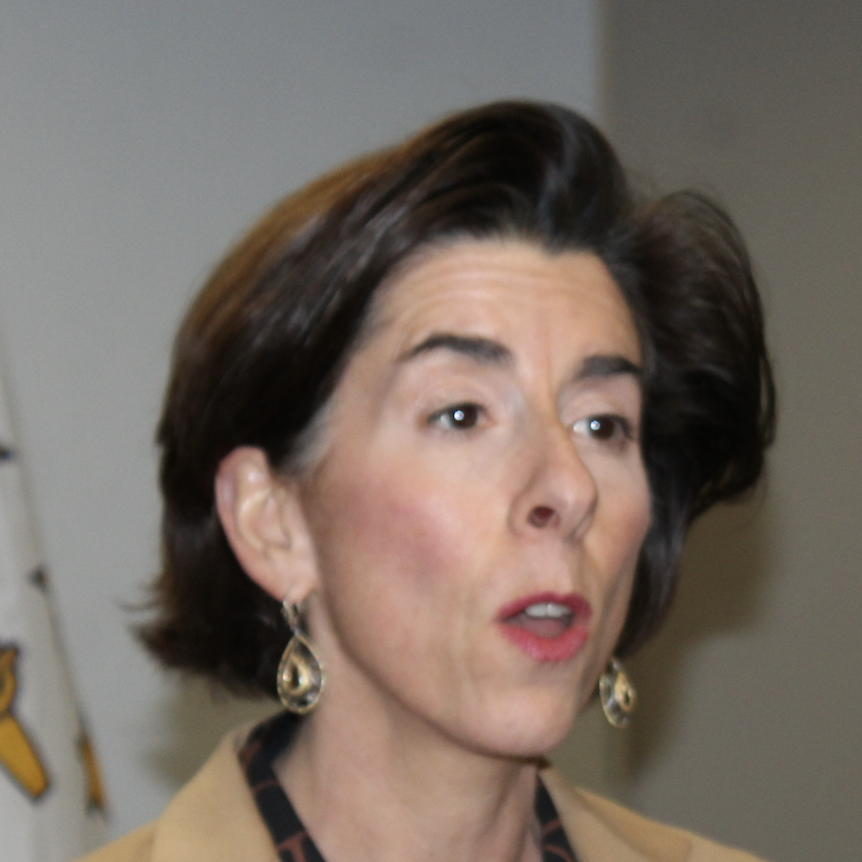
Rhode Island Gov. Gina Raimondo and state Health Director Dr. Nicole Alexander-Scott would do well to take live oral questions and follow-up questions, as well as written ones, from journalists at the daily broadcasts of COVID-19 briefings to help citizens better understand all their instructions and other guidance. Massachusetts Gov. Charlie Baker takes oral questions – all broadcast-- at his briefings as, so far as I can tell, do most other governors.
Here’s the drill with Ms. Raimondo’s briefings:
You can submit a question in writing to be read by the PR woman for the legislature. No, follow-ups.
Then after the broadcast, she will answer a limited number of questions not broadcast.
Again, no follow-up questions and the public can't hear those questions or responses.
The governor’s careful, calm and highly disciplined approach to this complicated and exhausting situation is in general admirable. But the public would be better served if these briefings provided more of the clarity that go with real-time back-and-forth questions.
Only Yesterday
I had a little frisson the other day overhearing, in an ad for PBS, 43-year-old John F. Kennedy asserting in his Inaugural Address (which I heard at the time, during a snowstorm) that “A torch has been passed to a new generation’’. He’d be 102 now! (How time flies if you sleep eight hours a day.) And consider that the two main presidential candidates now are 73 (Trump) and 77 (Biden). Torch shortage?

Sheltering by the Sea
All will be well (for some people)! Residential Properties Ltd. has announced the sale of 30 Seagate Rd., Narragansett, for $4.45 million, making it the highest sale in Narragansett this year. And just in February, 72 Cormorant Rd., also in Narragansett, was sold for $2,950,000.
A Plastic Eater?
It’s important to bring forward good news, especially now! So, I give you news that German scientists have found a bacterium that eats the chemical components of polyurethane, a plastic that’s used in many products and is a major source of pollution on land and particularly in the seas. This may lead to better ways of managing plastic waste.
To read more, please hit this link:
Fence Us In
Some businesses plow on. Our cedar back fence blew down in Monday’s southerly gale. The fence is more important than ever because it provides us with a protected (including for our sometimes-volatile dog) outdoor green space in these claustrophobic times. Better that old barrier collapsing than the dead tree in an adjoining yard crashing down on our roof in a tropical storm (which Monday’s extratropical tempest reminded me of). When I was a kid we looked forward to tropical storms for providing us with new supplies of firewood.
Anyway, the fence guy, whose little company also deals with tree threats, showed up the next morning perhaps more eager to help than in less recessionary times. Government predictions call for a hefty hurricane season this year, and so he may have more customers than he can handle come August, September and October.
xxx
National Grid (the “nation,’’ by the way, is the United Kingdom) has planted little warning flags, looking from a distance like daffodils, all over the place in our neighborhood warning of gas lines below. Colorful warnings everywhere these days amidst the proliferating flowers.
xxx
Our younger daughter, who lives in, and is now trapped in, Brooklyn, sent some photos of rooftops that looked as if they’re covered with pristine snow. In fact, they’re simply painted white to reflect heat in the summer, is a reminder of a bigger (if longer-term!) problem than COVID-19 – global warming. A nice effect, as is the evening cheering of health-care workers from windows and front stoops. New York! Still the world’s greatest city.
xxx
Whether it’s because bored, shut-in people just want something “productive’’ to do or they actually fear food shortages due to COVID-190-related supply-chain problems and panic buying, more people seem to be planting vegetable gardens now (despite the threat of late frosts), starting off with such easy crops as peas and carrots that can be harvested later in the spring. And indeed, some once plentiful foods can no longer be found on some supermarket shelves.
xxx
There’s something therapeutic about referring to those little guidebooks that identify wild animals and plants on your daily pandemic walks.

“Trump was the moral test, and the Republican Party failed. It’s an utter disaster for the long-term fate of the Party. The Party has become an obsession with power without purpose.’’
---Stuart Stevens, longtime Republican strategist, in his coming book It Was All a Lie: How the Republican Party Became Donald Trump
There’s bound to be dubious stuff, as well as good stuff, in the gigantic, thrown-together federal “stimulus’’ or is it “relief’’ (?) program, given who has the most power in Washington. And you can bet that Wall Street and not Main Street will be the biggest beneficiary. America remains one of the most socialist nations – socialism for powerful industries.
For years, the Fed, under pressure from the White House, has promoted massive financial-asset speculation, which would have ended in a crash with or without a black swan-like COVID-19.
And now consider the $170 billion gift to real-estate investors (now who might that include….?) in the form of tax savings. The giveaway was slid into the package by Senate Republicans. The law lets this crowd offset financial losses, not just this pandemic year but also from 2018 and 2019 – before the pandemic. Genius! Don and Jared, how can we thank you enough?!
Still, showing my compassion, I note that commercial real estate is bound to suffer for a long time because companies won’t be using as much office space as a higher percentage of remaining employees mostly work from home and as continuing travel cutbacks take a chain saw to the hotel business.
Meanwhile, there are early indications that a disproportionate share of relief money is being sent to Red States. Hit this link:
Mobster vs. Monopolist
Trump hates the U.S. Postal Service, which he alleges undercharges Amazon, run by Jeff Bezos, whom Trump envies and so detests. And Mr. Bezos owns The Washington Post, which tries to vigorously report on the Trump mob. So the mobster-in-chief rejects a bailout of the Postal Service, which is far more essential to America than many of the institutions being bailed out. And he would love to hamstring efforts to encourage voting by mail this pandemic year in lieu of the usual crowds at polling places, because he thinks, correctly, that those votes will tend to be against him.
Oh yes. Trump votes by mail himself. I myself think that voting in person is better – except in a pandemic. That’s not only because it might be less vulnerable to fraud but also because showing up to vote at a polling place is a celebration of democracy.
In any event, the Postal Service, whatever its flaws, is an important part of America’s connective tissue, especially for the underprivileged, and needs to be protected.
By the way, none of this is to say that Amazon, like Google, Facebook and some other tech-based companies that have become so huge in the past two decades, aren’t too powerful and shouldn’t be broken up, as the now hollow Antitrust Division of the U.S. Justice Department would have done a half-century ago.
xxx
Another triumph of unembarrassed hypocrisy! The Week magazine noted:
“The Wisconsin Supreme Court justices who stopped thousands of voters from casting absentee ballots had no problem doing so themselves.
“Thanks to last-minute action by Gov. Tony Evers (D) and a holdout from Wisconsin's GOP-held state legislature, the state's Supreme Court, controlled by the Republicans, was left to determine whether Wisconsin's presidential primary could be delayed amid the COVID-19 pandemic. The justices voted 4-2 in favor of overturning Evers's delay — and every one of them had already voted absentee themselves, the Milwaukee Journal Sentinel reports.’’
The case went up to the U.S. Supremes, whose 5-4 majority, of course, backed their Wisconsin GOP colleagues, as they will in most future voter-suppression efforts.
White-power Terrorists
It was good to learn that the Trump administration has decided to label a Russian white nationalist group called (in translation of course) the Russian Imperial Movement, whose recruits include some Americans, as terrorists. The group espouses violence against minorities. This is the first time that the administration has done such labeling. There’s been no labeling of similar U.S. groups, in part, perhaps, because they are part of Trump’s base.
Hit this link to get a colorful view of a bit of that base:
China’s Nukes
Crises give cover to regimes to do nasty things. Consider, for instance, that China might be secretly testing nuclear weapons despite an international ban on all such tests. And might Russia be doing the same thing?
To read more, please hit this link:
Audit This
The novel Collusion, by Barbara Dean, is a terrific thriller about financial crime, murder and attempted murder, social climbing, and fraying and budding romantic relationships. Starring a bank auditor and an FBI agent, and some very memorable villains, it’s mostly set in New York City and Charleston, S.C., whose atmospheres Ms. Dean very adeptly evokes. There are scenes of high suspense in the book worthy of a movie by Alfred Hitchcock.