


Whitcomb: Back to School; The Lure of Smaller Cities; Living in an Old Church; No-Toilet Crisis
GoLocalProv
Whitcomb: Back to School; The Lure of Smaller Cities; Living in an Old Church; No-Toilet Crisis

and motors of a slow night, and no place to rest
but rain to walk—How it rings the Washington streets!
GET THE LATEST BREAKING NEWS HERE -- SIGN UP FOR GOLOCAL FREE DAILY EBLASTThe umbrella’d congressmen; the rapping tires
of big black cars, the shoulders of lobbyists….’’
-- From “America Politica Historia, in Spontaneity,’’ by Gregory Corso (1930-2001), a “Beat’’ poet
“Ridicule often checks what is absurd, and fully as often smoothers that which is noble.’’
Sir Walter Scott (1771-1832), Scottish historical novelist
xxx
“The art of being wise is the art of knowing what to overlook.’’
-- William James (1842-1910), Harvard-based philosopher and psychologist

To reopen the physical schools, measures can be taken to protect everyone, such as rearranging/staggering classes and using big screens so that one teacher can teach in more than one classroom at a time, allowing fewer students in a room. And maybe the kids should continue to wear masks some of the time. But continuing to block in-person teaching would have very bad academic/intellectual, social and economic effects, especially for the socio-economically disadvantaged.
And so while this will be a work in progress, in response to changing health data, it was good to hear Rhode Island Gov. Gina Raimondo announce last Wednesday that the state’s public schools will open Aug. 31, but with these provisions, among others:
- Fewer kids on buses
- Masks likely to be mandated.
- Desks further apart
- More controls to prevent kids (and others) from going to school sick
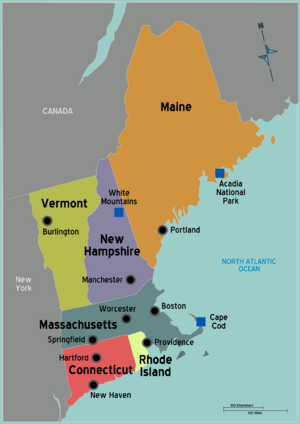
Rhode Island, Massachusetts, and Connecticut face huge tax-revenue shortfalls because of the pandemic. In the past, big deficits in recessions have led state governments to slash spending on important public services, including education, health, transportation and parks. Those cuts can make states less economically and socially healthy over the long term.
So, I agree with the public-finance experts who suggest that it’s better that the states borrow money than slash now, especially in the current very-low-interest rate environment, to help get through the pandemic. How much to be borrowed will depend to some extent on how much federal aid might be coming in the next few months.
Yes, America is swimming in debt, public and private, which could drown us all in the end. Taxes will have to be raised and government made more efficient and cost-effective, with fewer regulatory and administrative layers. And public-employee pension systems must be overhauled. See commongood.org for some suggestions on making government more economical and more effective.
Ah, that always painful job of trying to balance services and taxes.

It’s sad that the beautiful but now unused Hood Memorial African Methodist Episcopal Church, in the Elmwood section of Providence, is empty. And I can understand that a developer’s proposal to have the church rezoned from a place of worship to a multi-family dwelling with 18 “micro lofts’’ would raise concerns about a gentrification that can alter the neighborhood in ways that some current residents might dislike.
Still, unless some other financially feasible plan comes up, to, say, turn the church into a community center or library, transforming it into housing seems quite reasonable, and certainly beats tearing it down. Abandoned structures are depressing and an invitation to vandalism and other crime, and having people move into refurbished old buildings adds to a neighborhood’s security and vitality.
To read the GoLocalProv article on this, please hit this link:
To Smaller Cities
Some people are deciding, with the impetus of COVID-19 and, perhaps, recent public protests, to move out of big cities such as Boston. I suppose most of them will move to the sprawl and car culture of the suburbs. But I think that some others will move to smaller cities not far away from the big ones to try to keep some of the benefits of urban life, such as the proximity of services, cultural institutions and so on.
In southern New England that would include Providence, Worcester, and New Haven, all of which, whatever their flaws, have many lovely neighborhoods, cultural assets, some dating back to their 19th Century economic apogees and some to the (incomplete) urban renaissances of the past couple of decades. Even troubled Hartford has many attractions. Then there’s the too often overlooked New London, with its colleges and dramatic location on Long Island Sound and the Thames River and ferry service to the East End of Long Island. And there are gorgeous old towns nearby.
I look forward to seeing what kind of inter-urban migration develops over the next year or two.
It might be considered a bit ghoulish at this point for smaller cities to try to recruit residents from the big metros but I’m sure it can be done politely.
Toilet Trauma
The partial or total closures of many facilities, public and private, will continue over the summer, presenting serious challenges to state and regional tourism officials who are pitching summer trips to New England, especially to its coast, mountains and lakes. With so many places closed, many travelers will find it very difficult to find bathrooms. As word spreads of this no-toilet trauma, many folks will avoid long car trips.
That especially holds true for women, because of obvious plumbing differences from men. I noted a small example of this last weekend. My family and I use a beautiful private beach on Buzzards Bay whose only facilities were a couple Porta-Potties. The family that manages the beach, in association with the Audubon Society, has removed those portable outhouses because of the pandemic. That will scare off some members, especially those coming from from Providence, 40 minutes away.
Other parts of the world, such as Western Europe and Japan, have far more public toilet facilities; they have been kept open and sanitized in the pandemic. The U.S. is more barbaric.

My mother’s family were Minnesotans, and while they were not always nice, I’ve often heard in the news media the expression “Minnesota nice,’’ signifying a civic-minded, polite, hard-working population. And so I was a bit surprised by the riots that followed the murder of George Floyd.
But African-Americans in Minneapolis, as elsewhere in America, have suffered from many years of quiet racial discrimination, such as through past redlining of real estate, a preference for hiring and lending money only to whites, mistreatment by the police and other signs of bias that continue to hold down black people. It has been more vicious in the Red, former Slave States, but the damage continues in northern cities such as Minneapolis, too – building up a lot of frustration and rage.
And the ever-widening gap between the rich and everyone else in America disproportionately hurts African-Americans because they have been kept down so long. This probably applies when looking at the very troubled life of George Floyd.
By the way, consider this:
The ratio of the compensation of the CEO of Framingham-based TJX, the retail-store chain, to the median pay of his employees was 1,596 to 1 in fiscal 2019. Ernie Herrman’s total compensation that year, including stock and long-term incentive awards, was nearly $19 million. The median pay of TJX employees was $12,000. To be sure, many are part time.
Of course, minority groups are disproportionately represented in low-paid jobs.
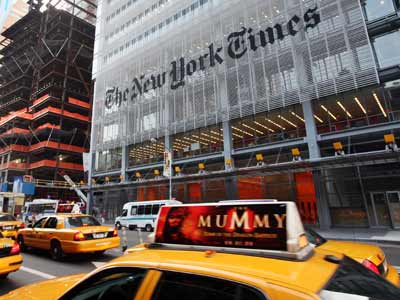
The New York Times was wrong to fire its opinion editor, James Bennet, for publishing a fascistic screed by Arkansas Sen. Tom Cotton, of course, a Republican, pushing for federal troops to be sent to quell disorders in the wake of the killing of George Floyd. Readers, especially in a national publication such as The Times, should be offered a wide range of opinions. For The Times to capitulate so swiftly to the outrage of some to running the piece was unedifying to say the least. Print the likes of Cotton and the responses. Sunlight is the best disinfectant.
I was an editorial-page editor for many years and it was one of my duties to publish stuff I vehemently disagreed with.
xxx
Are some of those yelling “Defund the Police!” (which won’t happen) secretly on Trump’s payroll? Few phrases could be as useful to the re-election of our lawless “law and order” leader. Meanwhile, even as national politicians stake out positions on police reform, we ought to remember that policing is overwhelmingly a state and local issue, not a federal one. It’s up to mayors, city councilors, governors, etc., to fix police forces.
“I felt like anything rather than rejoicing at the downfall of a foe who had fought so long and valiantly, and had suffered so much for a cause, though that cause was, I believe, one of the worst for which a people ever fought, and one for which there was the least excuse.’’
-- Ulysses S. Grant on Robert E. Lee
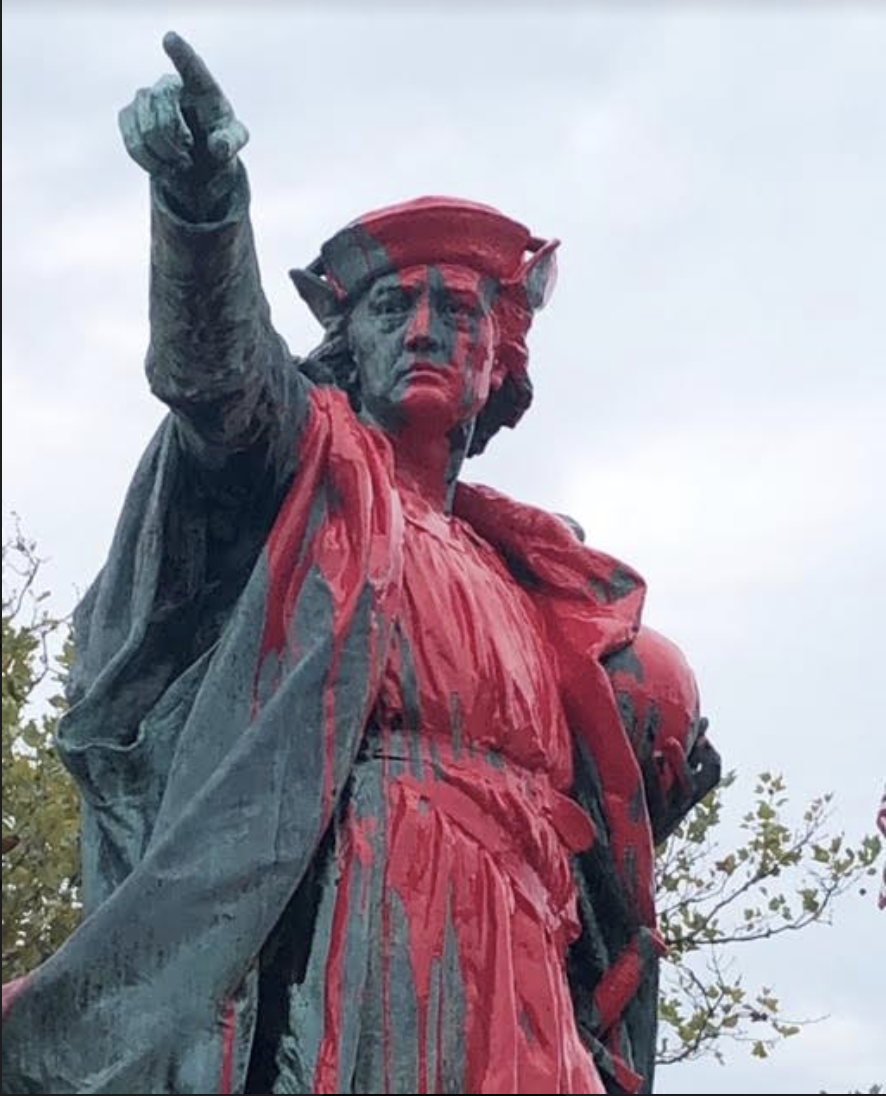
I bounce back and forth on taking down public statues of historic figures who are bad models, such as Robert E. Lee, the Confederate general (thus traitor) and nasty slaveowner. History, well, happened and we need to be reminded of it and learn from it. Maybe take the statues to museums, and put plaques on them explaining why they were put up? Anyway, that’s generally up to the localities and the states to decide.
But I’m all in favor of changing the names of military bases named after Confederate generals, who were, after all, like Lee, traitors and defenders of a vicious institution. (Of course, Trump opposes that since it would offend his base in the old Slave States.)
Meanwhile, there are moves afoot to stop the showing of the 1939 movie Gone With the Wind, with its lies about “happy” slaves and purportedly genteel (for the slave owners and their families) plantation life in Georgia. But Americans, especially young people, should learn about the dishonesty about race that was pervasive when the movie was made. Indeed, things were much worse in the ’30’s, when segregation was the law in much of America and lynchings were common, but it’s still bad.
So show/see the movie while hoping that some ways can be used to briefly put it into historical context before the film starts. (My mother dragged us to revivals of the film in big movie theaters in the late ’50s. Other than the burning of Atlanta, I found it a bore.)
xxx
I drove behind a pickup truck with Rhode Island plates the other day that had both an American flag flying and a big Confederate decal! Far from the first time I’ve seen this.
Hey! The Confederates were the traitors!
And So It Goes
National Republican leaders, mostly in Congress, know that Trump is a dangerous sociopath but they fear his fanatic Fox and MAGA-rally fans and shut up. But cynics and cowards that they are, these Republicans will start pulling away from him by Labor Day if his poll numbers keep heading down.
xxx
For a useful look at the early years of the liar and thug who is the U.S. attorney general, please hit this link:
Marvelous Maugham
I came across a copy of a 1957 book entitled The Best Short Stories of W. Somerset Maugham the other day. It’s a treasure. While many of the stories are in long-lost “exotic’’ settings, and there are a few archaic phrases, the globe-trotting Maughan (1874-1965) remains addictively readable, both for such famous short stories as “Rain’’ and “The Alien Corn’’ and for such novels as The Razor’s Edge and Cakes and Ale. Just because he was for a couple of decades probably the most popular author of fiction in the English-speaking world doesn’t mean that he wasn’t also a great writer.
I’ve always liked that he often used the first-person singular voice and placed himself as a writer/character in much of his work even as it’s clear these stories are, to varying degrees, fiction. This give them an extraordinary clarity and coherence. Also memorable is his tolerance. He once said:
"It must be a fault in me that I am not gravely shocked at the sins of others unless they personally affect me."