


Whitcomb: Fresh From Our Farms; Excavating the Past; Accentuating the Bad; Drugged America
Robert Whitcomb, Columnist
Whitcomb: Fresh From Our Farms; Excavating the Past; Accentuating the Bad; Drugged America

“I cannot say what loves have come and gone,
I only know that summer sang in me
GET THE LATEST BREAKING NEWS HERE -- SIGN UP FOR GOLOCAL FREE DAILY EBLASTA little while, that in me sings no more.’’
-- From “What Lips My Lips Have Kissed, and Where, and Why,’’ by Edna St. Vincent Millay (1892-1950), American poet
“All attempts to adapt our ethical code to our situation in the technological age have failed.’’
-- Max Born (1882-1970), German-British physicist and mathematician
‘’Jazz is the result of the energy stored up in America.’’
-- George Gershwin (1898-1937), American composer

They’re sense-of-community places where people of all sorts come together, usually on Saturdays, to shop, talk and get local information (and gossip) in a way they can’t in a store. Such places are precious in our increasingly atomized world, in which so many of us spend so much time alone staring at screens.
And even on a hot day, it’s healthy to get outside.
Here’s an interesting article on the future of small farms, focusing on one in Vermont:
xxx
While it’s messy on windshields, the gold of pine pollen at this time of year is cheering. It means summer.
xxx

One of the problematic aspects of age is that memories from the first decades of life – many of them unhappy -- tend to come back stronger than ever after the too busy and distracting middle years, when you’re trying to make a living, raise children and so on. Paul F.M. Zahl, a retired Episcopal priest and a theologian, wrestles with this in his engaging book Peace in the Last Third of Life: A Handbook of Hope for Boomers.
He's right to emphasize that coming to understand and accept what you did or what happened to you in your early years is very important in easing your final innings. He does this with a psychiatrist’s skill, seasoning it with Christianity. (I myself am not religious, except in having a rather vague sense of something like the numinous and a sense there are other realities; it’s all a mystery. Why is there something rather than nothing, etc.?) But whether or not you’re believer, there’s a lot of good advice in this book.
The economy is, by all important measures, very strong, indeed the strongest of any major developed nation. Unemployment is near record lows; productivity is up, and inflation is, by fits and starts, slowing after a surge because of pandemic-related national and international supply-chain snarls; (excessive?) pump-priming to curb unemployment, and opportunistic price-gouging by many large oligopolistic companies (the list continues).
But many Americans think that the economy is terrible. One reason is that the cost of some key things, especially food and housing, remains higher than before COVID and won’t return there. And those expenses are obviously a much larger percentage of spending for poor and middle-income people than for the rich.
Still, the biggest cause is negative “news’’ – much of it misinformation and disinformation promoted by far-right media, especially on cable television and social media, with the aim of returning Trump and his servants in the GOP/QAnon party to power, where they can squash their foes, loot and lie to their heart’s content, do everything possible to please their plutocratic enablers in return for goodies and do deals with dictators. But then, the general human tendency is to be more interested in bad news than good – the old “if it bleeds, it leads’’ approach to maximize ratings.
The bad-news bias accelerates the decline in trust in our institutions, from government to traditional media to academia, that’s been underway since the Vietnam War and Watergate.
And media audiences have increasingly been sequestered by political opinion, which certain outlets find very lucrative. Too many of us don’t want to leave forums where everyone agrees with us. Anxiety-provoking! (Yes, I look at right-wing stuff daily.)
Hovering in all this is the national trauma of COVID, with its massive societal disruptions and endless conspiracy theories, which continue. It still haunts and divides us economically, politically, and culturally, and it will be a very long time before we recover and historians can explain what happened.
In any case, most people know little about the complexities of the economy and have no plans to learn. That makes them an easy audience for demagogic lies about it, in an era in which politically infused media undermine trust at every turn. The low level of public education about economics, including economic history, also doesn’t help.
And selling paranoia and distrust can be very good business.
Speaking of mistrust, Trump, et al., are always going after the alleged “Deep State,’’ of Civil Service-protected federal employees, many of whom are highly skilled and trained specialists in such needed services as scientific research, health care, environmental protection, anti-fraud enforcement and so on. But the real “Deep State’’ are lobbyists for assorted businesses and other sectors who quietly get members of Congress to do their bidding.
Read “Bad Is Stronger Than Good’’:
What will the economy do? It will fluctuate amidst innumerable variables.
xxx
Some projections are that Rhode Island will lose population over the next decade. First off, we need to bear in mind that there are too many variables to make secure projections about population. These include the effects of global warming (especially in the South and West), politics and technological developments, especially in artificial intelligence. And then we might want to mull whether a lower population in the second most densely populated state would necessarily be a bad thing. (New Jersey is the most crowded.)

There’s a bill in the Rhode Island legislature that would let the state buy Canadian prescription drugs at wholesale, presumably mostly for its Medicaid program, which could save the state many millions of dollars a year. U.S. prescription drugs are several times more expensive than similar drugs in other Western nations.
U.S. drug makers like to say that their medicines are so expensive because of drug research and development. But according to studies published in the Journal of the American Medical Association and elsewhere, there’s no connection between the amount that a pharmaceutical company spends on R&D and its drug prices. The U.S. companies spend much more on advertising and sky-high executive salaries than do pharmaceutical companies with long-established and highly innovative and productive R&D programs in other Western nations. For various reasons, which include their demographics and governments’ healthcare policies, citizens’ health in those countries is generally better than in the U.S.
Our companies, richly represented by lobbyists on Capitol Hill, charge what our remarkably uncompetitive market will bear.
xxx
The Oregon Legislature has wisely voted to repeal the state's three-year-old law decriminalizing hard drug possession for personal use. In so doing, it’s accepting the (to me obvious) fact that this sort of decriminalization leads to more overdose deaths, crime and all-around social disruption, particularly in cities. Oregon joins cities around America, including San Francisco and Washington, D.C., that are cracking down on hard drug use and sales, especially on the street.
This brings me to the warning by Kimberly Roy of the Massachusetts Cannabis Control Commission that the unregulated and untested intoxicating hemp products being peddled in some stores, restaurants, and service stations are a “public menace’’ for health as they take business away from regulated pot enterprises.
Be careful.
xxx
Curbing America’s most expensive in the world medical costs and making our healthcare “system’’ more efficient would include heavy government subsidies for medical education so that so many new physicians wouldn’t feel compelled to go into high-paying specialties instead of primary care in order to pay off their medical school loans.
Some Europeans nations have tuition-free medical schools.
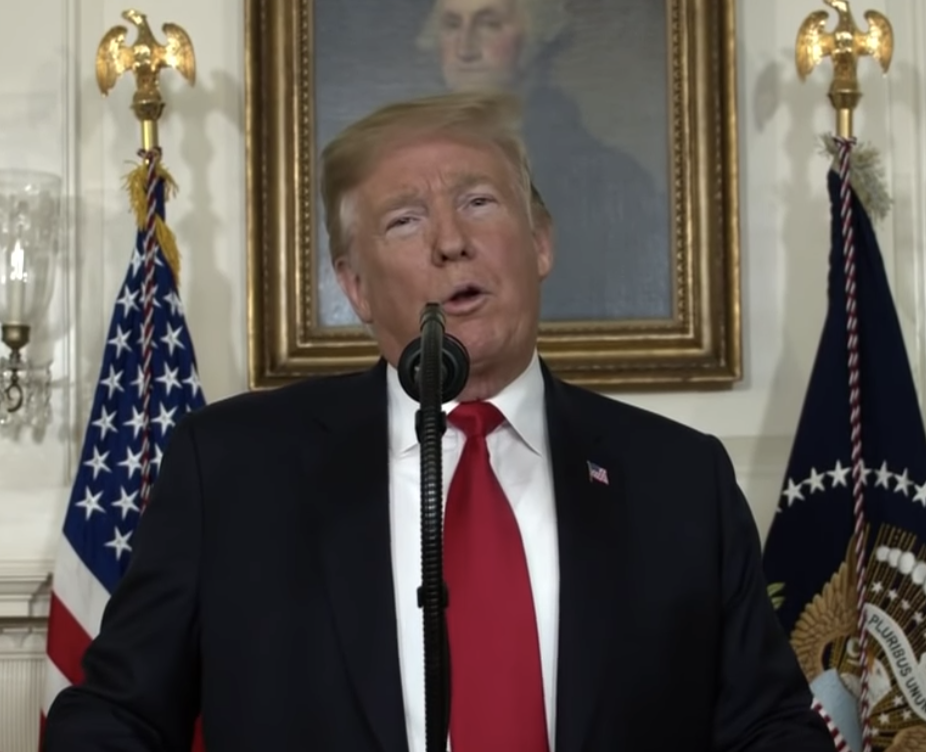
The defense in Trump’s “hush money’’ trial focused on the past lies of Michael Cohen, the former fixer of the would-be fascist dictator and kleptocrat-in-chief. The aim was to set the smoke machine on high enough to make people forget that Trump, from adolescence on, has been among the most relentless liars in American history. To help him defraud customers, voters and anyone else he can con, he has always hired people, like Cohen, to relentlessly lie for him, which is what eventually landed the fixer in jail. Indeed, being a shameless liar is a requirement for high-level employment in the Trump Organization.
I can’t but think that the jurors in the trial, in which Trump was found guilty on all 34 counts, may have been influenced by the fact that, being New Yorkers, and having closely witnessed the hyper-narcissist’s endless lying over the years, found it difficult to believe any assertions by him or his lawyers.
New Yorkers tend to be well-informed and so skeptical where they should be, unlike a dangerously large percentage of other Americans.
Whatever! Chances are that enough millions will ignore the obvious facts and put Trump back in the White House. I’d guess that Biden will get more popular votes, but the anti-majoritarian Electoral College, created with a pro-slave-state bias, is likely to give the election to Trump, who remains the most successful demagogue in American history. Then the decadent, bamboozled voters will get what they think they want (revenge against the “cultural elites,’’ etc.), good and hard, as America slides deeper into the sewer.
xxx
As the horrific Hamas-Israeli war continues, I wonder if both the Gazans and the Israelis would be better off if Israel abandoned its stop-and-start-and-stop attacks (with the stops often coming from U.S. pressure amidst videos of death and destruction), and instead went all out to defeat Hamas (whose aim is the annihilation of the Jewish state) as fast as possible.
Reminder that Hamas, an Islamic fascist terror organization, is still fighting in Gaza, taking refuge in the world’s largest tunnel complex and in residential and other buildings, using civilians as human shields, and launching rockets at Israel.
Get it over with? Anything that ends with Hamas looking something like the victor will lead to even more violence. In any case, after the war, Israel will have little alternative to working on (if not succeeding with) a deal with the Palestinians for a two-state solution. That means the exit of corrupt Prime Minister Benjamin Netanyahu, whose government presided over the huge intelligence failure that allowed Hamas’s bloody Oct. 7 attack on Israel. He’ll probably be out of office by the end of the year.
xxx
Such a change {in Russian policy} is going to be catalyzed by a Russian defeat, not by a Russian victory {in Ukraine}. The Crimean War was followed by the liberation of the serfs. The Russo-Japanese War was followed by the 1905 revolution. In 1917, when Russia was basically losing World War I, we had two revolutions.
The Soviet Union lost in Afghanistan, and that was one of the causes that gave us (Mikhail) Gorbachev, and then they lost the Cold War. So Russia can certainly lose. And often, when it is lost, it catalyzes political change inside Russia.
-- Historian Timothy Garton Ash in a Kyiv Independent interview
World-historical double standard: Putin threatens Armageddon if Ukraine, fighting for its life, uses weapons from allies to attack Russia even as the invader uses weapons and weapons parts from fellow tyrannies Iran, North Korea and China to kill Ukrainian civilians and soldiers. Putin particularly enjoys murdering people in residential neighborhoods, stores, etc., in his open-ended terror campaign.
Let Ukraine, the victim, fully defend itself.
xxx
Yes, Biden’s tariff plan – mostly directed at imports of Chinese electric vehicles, solar panels, semiconductors and batteries – will raise prices of those products in America. But better than sending so much money to, and making us more vulnerable to, an aggressive dictatorship that wishes the West ill.
xxx
I miss such old expressions as “church key” -- a device for opening bottles and cans before the arrival of tabs to open beer cans or twist off bottle tops. I remember summer cookouts where someone always seemed to be asking: “Who has a church key?’’
And to say someone’s “a good egg’’ and to say “neat” and “swell.’’ To hear someone warn, “I don’t want to hear any more guff from you!”