


Tom Sgouros: Bad Accounting Equals Bad Policy
Tom Sgouros, GoLocalProv MINDSETTER™
Tom Sgouros: Bad Accounting Equals Bad Policy
Last week I wrote about how accounting changes about health benefits to retirees is responsible for the poor financial condition of the US Postal Service. But it's much more than the mail that's affected. The changes in how governments account for "Other Post-Employment Benefits" (OPEB) are also responsible for the squeezing of state and local budgets across the country, including here.
If you do some googling with "OPEB liability" you'll learn that across the country the "unfunded liability" for OPEB benefits is more than $2 trillion. In Rhode Island, the state is in for $775 million and the cities and towns owe around $3.6 billion more, according to a survey done by Ted Nesi at WPRI in May. Like the pension unfunded liability, these are huge and scary numbers. But also like the pension liability, the new method of accounting for these debts leaves the payment schedule out of the picture. So when are these terrible debts due?
The answer is that they're due sometime between now and when the youngest employee on the state payroll has retired and died. In other words, around 60-70 years from now. Does it sound a little less scary now? Can you spare a little ire for the Government Accounting Standards Board who in 2004 decided to insist we account for those expenses in the exact same way we account for bonds due next year?
GET THE LATEST BREAKING NEWS HERE -- SIGN UP FOR GOLOCAL FREE DAILY EBLASTPanic can make it all worse
This isn't to say these debts can be ignored, nor is it even to say they aren't serious. But it is to say let's not panic about them, and here's why. In 2008, panic about the impending cost of these benefits provoked Governor Carcieri and the legislature to change the rules about health care for retirees. The change, decided in late nights at the state house, but apparently not reviewed with any care, resulted in a huge wave of retirements as pretty much everyone who was eligible to retire jumped at the chance.
By September of that year, twice as many people had retired as usually do in a single year, and the Governor announced he was not going to replace them. The result was a disaster for the pension system. According to the treasurer's office, in 2008, the pension system paid out $649 million in retirement benefits while it took in $525 million in employee and taxpayer contributions. This is a $124 million gap, but counting the investment income earned, this left the fund with more at the end of the year than at the beginning. Not great, but not terrible.

In other words, we made the pension fund annual deficit twice as bad with a short-sighted and hastily-arranged "reform" meant to address a relatively small long-term problem. This was an utter disaster for the pension system -- a hurricane Irene, but without the army of electric line repair trucks from the midwest to help clean things up. Whatever the outcome of the pension reforms in the works, we and our employees are going to be paying for that debacle for decades.
Health care -- the real problem
Some will take issue with my characterization of the OPEB problem as small, and they're partly right. Exploding health care costs are indeed a huge problem, but to talk of them as a problem of the retirement system is just silly, comparable to imagining that our state's lack of affordable housing is a problem of retirees alone. The high cost of health care is a problem for everyone. Most of our nation's long-term deficit problem is attributable to the cost of health care. Much of our state's is as well. And much of the financial pressure on my family is involved with the cost of health care, too.
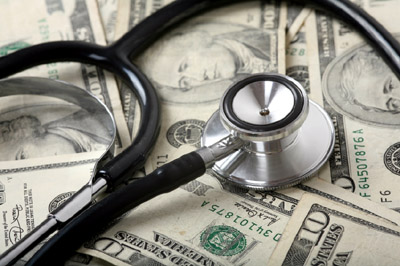
The financial projections that predict the monumental cost of retiree health care also predict the utter bankruptcy of our nation and most of the businesses and families in it. In a world where we acquiesce to 8% inflation in health care over the span of decades, paying for the health care of retired state employees is going to be the least of our worries. A system that produces exorbitant profits for insurance companies, big pharma, hospital chains, clinic investors and so on down the line, is a system we can trust to bring us all to financial ruin. Except the CEOs who run it, of course.
So that's the story behind the OPEB health care costs you see. A change in the accounting rules produced panic over debts that won't be due for decades, fueled by estimates of health care inflation that will be far more of a disaster for our nation than just for our retirement system. President Obama's health care reform will help control costs in the future, but Republican obstruction forced Democrats to abandon the most promising ways to control costs in order to pass the skeleton of something useful.
In Rhode Island, no recent Governor and precious little of the Assembly leadership has seemed at all interested in actually addressing health care costs in a substantive way. The only reforms we've seen proposed in a decade involved little nibbles around the edges of the problem (creating insurance pools for small businesses), pretend reforms (a health insurance commissioner without the authority or resources to really regulate prices), or simply denying health care to poor people, retirees, and state employees. So tell me: is the best thing to do about health care costs simply to forget about addressing health care costs any further, and bankrupt the post office, our schools, and our towns -- in advance -- or cut health benefits for poor people and government employees still further? Sadly, that is what passes for hard-headed wisdom in the halls of power these days.
Tom Sgouros is the editor of the Rhode Island Policy Reporter, at whatcheer.net and the author of "Ten Things You Don't Know About Rhode Island." Contact him at [email protected].
If you valued this article, please LIKE GoLocalProv.com on Facebook by clicking HERE.