


Tom Sgouros: Short Takes
Tom Sgouros, GoLocalProv MINDSETTER™
Tom Sgouros: Short Takes
Mortgage abuse

The story of the foreclosure fraud settlement is confusing and has a lot of parts. The short version is that many banks had systematically avoided local land registration rules and bollixed up their paperwork so badly that they were foreclosing on many people without legal title or justification. All 50 state Attorneys General got together to propose a settlement with most of the nation's biggest banks that will allow the banks to resume foreclosures in exchange for a pot of money, perhaps around $20 billion, that states can use to try to ameliorate the effects of the foreclosure crisis. This deal appears to be in some jepoardy right now, with the New York AG having been booted from the executive committee over his insistence that some of the banks remain liable for prosecution over laws they broke.
There is some precedent for this kind of deal, in a deal made in 2008 between a smaller group of state Attorneys General and Bank of America, which had just acquired the mortgage giant Countrywide after it went bust that year. The idea was that BofA was supposed to modify the terms of many of Countrywide's bad loans, and take other measures to reduce the number of foreclosures.
The Nevada attorney general's office blew up that deal this week by suing BofA, saying the bank had failed to meet almost all of the agreement's terms, and had continued to deceive its borrowers (and investors) all through the very processes that were supposed to help them. The suit alleges that BofA duped its borrowers into borrowing more than they could repay, victimized them in a misleading mortgage modification program, and engaged in foreclosures with fraudulent documents. The suit goes on at great length about all of these, and it's quite entertaining reading, if you enjoy reading about crimes that seem likely to go unpunished.
GET THE LATEST BREAKING NEWS HERE -- SIGN UP FOR GOLOCAL FREE DAILY EBLASTThe fact is that the foreclosure mess was created in no small part by financial institutions breaking laws. We're not just talking about the well-documented unscrupulous brokers pushing mortgages on people who couldn't afford them, using scandalous "teaser" rates to disguise terrible deals, or pushing people into more expensive mortgages even when they qualified for less expensive ones. The banks also utterly ignored our centuries-old system for preserving land title, throwing ownership of millions of houses into question. This was nothing less than vandalism, and on a colossal scale. Many of the banks also engaged in actual fraud to cover up the lack of title or proof of ownership.
These are actual crimes, and not just breaches of contract or mere negligence. Families lost homes, businesses went bust, communities lost prosperity, because some well-dressed bankers decided they could simply ignore existing law and make up new rules. The question our Attorneys General have to answer (and this includes Peter Kilmartin) is: will the banks simply be able to pay a little money to atone and thereby prove that some crimes have no serious consequences for the lawbreakers?
Urban abuse
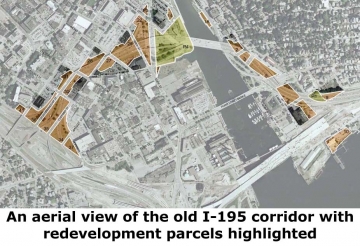
Even more significant than this direct abuse was the indirect sort: the vast loss of real estate wealth triggered by the flight to the suburbs -- made possible by those very same highways. As I've noted before in this space, in 1950, four of the five richest towns in the state were Providence, Pawtucket, Woonsocket, and Central Falls. By the early 1990s, those were four of the five poorest.
And the destructive reflex of our road-builders is hardly a thing of the past. Savants at DOT deemed the Sakonnet River bridge too expensive to repair ($75 million), so it's now being replaced (more than $130 million, plus borrowing costs), at the cost of several homes and businesses, mostly on the Tiverton side. Try explaining to one of those former homeowners how the failure to maintain the existing bridge justified the state's taking of their house overlooking the Bay.
Our state support of public transit is not all I wish it was, and in conversations about it, I often hear people complain that the buses don't support themselves. People who believe that's an issue seem never to consider the monumental expenses of supporting our car culture -- in dollars, pollution, and destroyed homes and businesses. Our cultural embrace of automobiles didn't just happen; we made it happen. There was a concentrated effort over many years by federal, state, and local policy makers to promote cars, build roads, and develop suburbs. This is largely what is behind the poor condition of our cities, but the fashion is to pretend that it's due to some lack of character in mayors and teachers instead.
Tom Sgouros is the editor of the Rhode Island Policy Reporter, at whatcheer.net and the author of "Ten Things You Don't Know About Rhode Island." Contact him at [email protected].
If you valued this article, please LIKE GoLocalProv.com on Facebook by clicking HERE.