


John Perilli: Brain Drain Should Scare Us
John Perilli, GoLocalProv MINDSETTER™
John Perilli: Brain Drain Should Scare Us
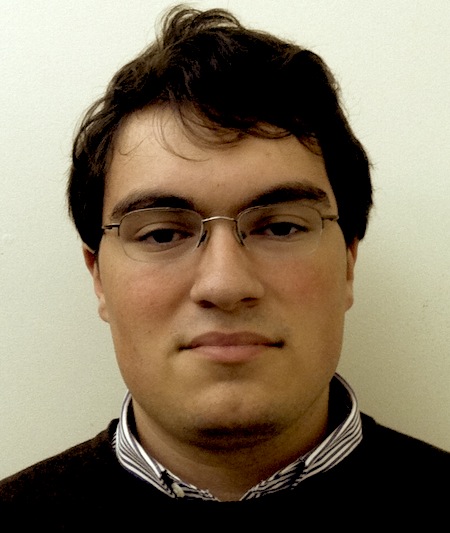
The problem of skilled young workers leaving the Ocean State, especially recent college graduates, has been variously pegged as a labor market issue, an education issue, and a business climate issue, with most proposed solutions only taking one, maybe two of these areas into account. However, we have failed to treat brain drain with the comprehensive seriousness it deserves. We must attack brain drain with a broad set of policies, rather than with patchwork solutions, and we must attack it soon: The issue could make many of our current political headaches, including pensions and structural deficits, much worse in the long run.
A Grim Situation
GET THE LATEST BREAKING NEWS HERE -- SIGN UP FOR GOLOCAL FREE DAILY EBLASTNationally, around seven out of every ten members of the college class of 2008 stayed in the same state as their alma mater after graduation, according to the Federal Reserve Bank of Boston. In Rhode Island, this rate is just above three out of ten––a paltry 45th in the country. Because of our small size and our abundance of private colleges, we can never hope to compete with national leaders of retention such as California and Texas, but we are still fifth in New England, only ahead of Vermont.
Before the finger-pointing begins, consider this as well: among graduates nationwide who left for other states, nearly six in ten said that it was better employment opportunities that drove them to move. New England graduates were no exception. This means that Rhode Island's higher-than-average unemployment rate, currently around 9.2 percent, shoulders a good amount of the blame for brain drain.
It harkens back to the old refrain: Jobs, jobs, jobs. Any policy that helps lower our unemployment rate will reduce the flight of our skilled workers. But with younger workers, there is much more at stake. Workers between the ages of 25 and 34 are more likely to move than any other members of the labor force. If older workers can't find jobs in Rhode Island, their unemployment is cyclical; if workers in those critical early years can't find jobs, we could lose their labor permanently.
Still, you might say, why does it really matter if younger workers are leaving? If some bright young computer wizard wants to go to California and work for Apple, then why discourage them? Go west, young man or young woman, go west! After all, you could argue, mobile workers are the sign of a healthy economy. Let young people pursue opportunity wherever it leads.
The Problems
I have nothing against young workers who seek to maximize their opportunities out of state, but they leave many people behind. Older workers who have families and children in the Ocean State cannot simply pack up shop and leave––they face costs both moral and monetary, such as uprooting their families and selling their houses. Then, there are retirees both on and off the state pension system, who are even less mobile. What happens to them if all the young taxpayers leave? In a country where both social and geographic mobility are celebrated, there is still a complex social welfare apparatus at the state level which needs revenue to run.
Look at the recent fight over pension reform. Could our state handle more political turmoil over that issue, with possibly even deeper cuts on the table? The more young workers leave our state, the higher becomes our average age. The higher our average age, the more retirees we will have as a fraction of our total population. And regardless of how our retirees are financing their autumn years, whether it be with local pensions, federal payments such as Social Security, or private savings, they will not be contributing much revenue as a group to state coffers. This lack of revenue, along with our advancing age, could deal a one-two punch to our pension system that no set of taxes could fix.
The revenue problem also spreads to other parts of the public sector. The General Assembly is already trying to figure out how to deal with years' worth of structural deficits, which will only get worse with the exodus of young workers. If history is any guide, this could put a wide range of important social services on the butcher's block, from our state hospitals, to our public universities, to the DCYF. The engine of American economic growth might go on, but we would still be left behind.
The Solutions
To avoid this worst-case scenario, we ought to spend what we can now to combat brain drain before it costs us even more in the long run. A number of good bills are already in the General Assembly pipeline. State Rep. Chris Blazejewski, a rising Democratic star from the Lower East Side of Providence, introduced a bill in 2011 that would give college graduates staying in Rhode Island a tax credit on their student loan payments, giving them an incentive to seek employment in the Ocean State. Unfortunately it was shelved due to a lack of money.
This bill is a good place to begin, but we need a more concerted effort. Alongside tax credits, we need better funding for our public universities, more encouragement for startups, hiring incentives for businesses, and other improvements that would make our state a place young, ambitious workers would want to stay. A steep tab, for sure. But there may be no one better placed than Rep. Blazejewski to get the ball rolling. This past session, Blazejewski was appointed to House Speaker Gordon Fox's leadership team, giving him a say in what legislation the General Assembly does and does not pursue.
This coming session, I'd like to see a large program of policies that aim to help young workers, like last year's "Moving the Needle" bills for businesses. Obviously, some trades would have to be made with Rhode Island's more conservative legislators for such a package of bills to pass, but we cannot go forward as a state without cultivating a cohort of skilled young workers. Human capital is a fundamental part of economic growth. We cannot complete our recovery without it. Otherwise, we'll be caught scrambling again to make ends meet, like we were during last year's budget debate when the General Assembly had to come up with $12.9 million overnight to pass the final spending bill.
What about $12.9 million to fight brain drain? I'd call that a start.
John Perilli is a native of Cumberland, RI and a junior at Brown University. He is the Communications Director for the Brown University Democrats. The opinions presented in this article do not necessarily represent those of the organizations of which John Perilli is a member.
Rhode Island’s 50 Richest and Most Influential - 2013

#50 Joe Dowling, Chief Investment Officer, Brown University
The Providence native was head of a controversial Hedge Fund, Narragansett Asset Management, in Greenwich Connecticut.
The New York Post wrote in 2006, "Narragansett's returns over the last two years have not been up to snuff and, through the first eight months of this year, the firm is down 2 percent…" The Post said funds from that fund were returned to investors.
Dowling takes over for Cynthia Frost, who helped grow the Brown Endowment to $2.86 billion, a better than 12% increase for the year ending June 30, 2013.
Dowling is a graduate of Harvard and Harvard Business School.

#49 Ken Block, Candidate for Governor and CEO of Simpatico Software
The new Republican is the founder of Simpatico Software and Cross Alert System. Block spent hundreds of thousands of dollars trying to build the Moderate Party and as its candidate, but left it this week to run for governor as a Republican.
Net worth is estimated between $10 million and $15 million. The Dartmouth grad is likely to pour hundreds of thousands of his own dollars into the race.

#48 Charlie Townsend III, CEO, Aloha Partners
Aloha Partners sold wireless spectrums to AT&T for a reported $2.5 billion. The company then purchased more wireless spectrums from LIN Media and is now the 8th largest owner in the US.
Townsend, a Virginia and Harvard MBA grad, has also been an active supporter of Lincoln Chafee through the years.

#47 Jack Yena, Chair of the Board, Johnson and Wales University
Chairman of the Board emeritus of Johnson & Wales University, Yena helped to build the college into a university and expand it across America – now with campuses in Denver, Charlotte and North Miami.
Under his leadership, the JWU board has attracted top-level business and community leaders.

#46 Angus Davis, CEO, Swipely
The Rhode Island native who founded TellMe Networks -- and sold it to Microsoft for $800 million -- is at it once again, testing his tech mettle with Swipely, the marketing rewards company that just raised a $12 million Series B round this past May.
One of Forbes's "most promising CEOs under 35," he has been particularly active in education reform in the state, serving on the Board of Regents, helping bring Teach for America to Rhode Island, and pushing for the Race to the Top grant -- not without ruffling more than a few feathers along the way.

#45 Stanley Goldstein, Co-Founder of CVS (Retired)
Goldstein and his brother Sidney built CVS into a healthcare and retail power. Since retiring in 1999, Goldstein has been a political force and financial donor to a range of education efforts including charter schools and The Met school in South Providence.

#44 Mark Pelson, PCI Private Equity
A lawyer by training, he is a partner in several Providence Equity funds
He has served as Chairman of Lambert's Cove Acquisition Corporation since its inception. He is a partner in several Providence Equity funds where he has served on numerous corporate boards.
Pelson serves on the Board of Overseers of Children's Hospital Boston and is the chairman of The Wolf School in East Providence, Rhode Island. Politically active in the 2012 election cycle, he gave to Romney for President and to both Democrats David Cicilline and Sheldon Whitehouse.

#43 Artemis and Misha Joukowsy, AIG and Philanthropy
The father and son team have pursued different tracks. Artemis joined the leadership team at Brown University as Chancellor after a storied career at AIG, the insurance behemoth.
Artemis is now retired but Misha is chairman of GCi Acquisition Corp., specializing in composite technology and design and is a member of the Brown University President's Leadership Council since its inception in 2004. Since 1987 he has been a member of the Brown University Adjunct Faculty, Engineering Department. He and his family have been philanthropic supporters of Brown University and Rhode Island Hospital and have established several joint chairs.

#42 Donald Carcieri, Former Governor
The two-term former Governor was a former Old Stone Bank and Cookson America exec before making the switch to politics -- and wielded enough influence even prior to winning the seat to convince Cookson to headquarter at the former train station in Providence, now the current home to the RI Foundation.
His tenure as Governor was rocky at best, and what is proving now to be its defining moment is the doomed 38 Studios deal he helped usher through.
His deep pockets and fundraising ties could explain his role on Cranston Mayor Allan Fung's exploratory committee for a run at Governor in 2014. Fung says he would have opposed the 38 Studios deal, so the question of Carcieri's influence on the Mayor's campaign -- whether it is policy or money -- will be watched closely.

#41 Guerra Family, Real Estate Developers
Architect and developer Antonio Guerra purchased the then-mothballed Brown and Sharpe complex from the company in the late 1960's. Over 40 years, Guerra, who was joined by his son Tom and his son-in-law Tony Thomas, painstakingly rehabbed each building and developed it into the premier work-live complex in the state.
Recently, they acquired American Locomotive Complex for just under $20 million.
Combined, these real estate holdings exceed an estimated $200 million.

#40 Jonathan Fain, Chairman of Teknor Apex
Most Rhode Islanders know very little about the compound company headquartered in Pawtucket. The company has facilities around the world and has sales in excess of $600 million.
Fain stepped down as president and will be an ever-greater influence on a range of community issues. The company is one of the largest privately owned companies in southern New England.

#39 Jason Macari, President and CEO Summer Infant
Macari has been Summer Infant's Chief Executive Officer and a director since March 2007. He founded the company in 2001 and led it to its IPO.
Before Summer Infant, Macari was vice president of product development and general manager of Safety 1st, Inc., a manufacturer of safety and juvenile products in MA.
Macari earned an Engineering degree from WPI and his MBA from Bryant University. His net worth in stock and compensation for 2011, according to Forbes, was more than $4 million combined.

#38 Charles M. Royce, Royce Funds/Ocean House/Weekapaug Inn
It takes a lot of wealth, impact on Rhode Island and roots to make the list for a summer resident, but Royce checks off all three. Royce is a Brown grad and went on to found the wildly successful Royce Funds.
He has invested tens of millions in developing the Ocean House in Westerly and the Weekapaug Inn into brimming expressions of Victorian architecture.

#37 Christina Paxson, President, Brown University
The 19th President of Brown University, Paxson has a PhD in Economics and is a leading figure in national circles having held such roles as researcher with the National Bureau of Economic Research and editor with The Future of Children.
She came to Brown with an already exceptional resume in academia, which included Dean of Princeton's Woodrow Wilson School of Public and International Affairs -- where she founded the Center for Health and Wellbeing in 2000.
Her predecessor Ruth Simmons's last year of compensation was reported at $1.2 million. Paxon's own emerging influence in the state will no doubt come into play as Brown looks to expand further in the city's emerging "Knowledge District."
Husband Ari Gabinet, VP and General Counsel at Oppenheimer Funds, makes the pair a true Providence power couple.

#36 Terry Murray, Former CEO of Fleet Bank
From growing up in Woonsocket to Harvard to a near-entry position at Industrial National Bank, Terry Murray grew and merged Fleet Bank from a regional to global player.
At his height he was one of the most powerful bankers in America and along with Citizens Bank had created a banking center in Providence.
The merger with Bank Boston and the Fleet Boston became the 7th largest lender in America before being bought by Bank of America.
Murray is no longer the force in politics and business in Rhode Island, but he still casts a long shadow and is a giving force.

#35 Doug Sgarro, Chief Legal Counsel, CVS
The Barrington resident is the top lawyer at CVS and has served on a range of boards including EDC and the Children’s Museum. The Hamilton grad went on to University of Virginia for Law School.
In 2011, Forbes reported he earned in excess of $5 million in compensation.

#34 John and Letitia Carter, Philanthropists
The Carters sold EFD in 2000 to Nordson and started an aggressive effort of philanthropy across Rhode Island.
From Women & Infants Hospital to Vets Auditorium to education and public radio, the Carters have donated millions to positively impact Rhode Island.

#33 Tom Gilbane, Jr., CEO and Chairman, Gilbane, Inc.
Gilbane as well as Paul Choquette have been two of the leaders in growing Gilbane from a strong regional construction force to a national firm over the past four decades. Gilbane has served on many of the top corporate and philanthropic boards in the region over the years including Fleet Bank, United Way, US Lacrosse, and as a trustee at Babson College.
Gilbane, Inc has emerged as a multi-billion company and one of the top 150 privately held companies in the United States.

#32 Brian Goldner, CEO Hasbro
Goldner reinvented Hasbro from a toy manufacturer to an entertainment company. Creating a movie and entertainment culture was no easy task but it paid off with wins like the Transformer movies.
In 2010, Goldner scored $23 million in compensation.

#31 Ira and Suzanne Magaziner, Consultants
Ira Magaziner designed Brown's curriculum as an undergrad, made millions as a business consultant before selling his firm Telesis to Towers Perrin and helped design Hillary Clinton's healthcare program when Bill Clinton was President, but the truth be told, it's Suzanne Magaziner that Hillary comes to visit.
Now, the couple's son Seth has announced he wants to be the next General Treasurer in a race pitting him against Frank Caprio.

#30 Chace Family, Developers
Kim Chace held an annual position on the Forbes 400 list and held a board seat for many years on Warren Buffett's Berkshire Hathaway Board. Chace died in 2011, and his vast fortune was spread among his wife, Elizabeth, the founder of Residential Properties; his son, who is a wealth management consultant; and his cousin, developer Buff Chace.
Each of the three has been active in business and philanthropy. Buff has the highest profile largely because of his battle with the city of Providence over tax stabilization and his plans for the Superman building.

#29 Thomas Tisch, Chancellor at Brown University
The former Wall Street investment banker brings strong financial experience to Brown. As one top government staffer says, Tisch leads with "an iron hand" as it relates to his management and negotiating approach.
Tisch was the managing partner at Four Partners and serves on the Board of Sears Holding Company. He attended Brown and his father was the iconic head of CBS, Laurence Tisch.

#28 Elizabeth Meyer, Newport Democratic Donor
Meyer was linked to the defeat of the 2012 ballot question in Newport approving expansion of table games for Newport Grand.
The Newport philanthropist is a big donor to Democratic causes. In the 2012 election cycle, Meyer gave nearly $100,000 to Democrats across the country.
From the early 1990's through to today she has given nearly $500,000 to Democrats across the country including John Kerry, Patrick Kennedy, Barack Obama, and the late Ted Kennedy.

#27 Tom Ryan, Chairman of the Board, CVS
Ryan began as a pharmacist with CVS in 1974 and worked his way up through the ranks to become chief executive 20 years later. The architect of the $21 billion Caremark acquisition in 2007 rocketed CVS from its regional roots to a $100 billion national powerhouse second only to Walgreens.
To the victor go the spoils -- Ryan's exit package at retirement in 2011 was reported to be $58 million in pension payments -- and $33 million in stock options.
A trustee at his alma mater, URI, Ryan was the chief benefactor of the 7,657-seat arena named after him on campus. Although he now resides in Florida, Ryan has reportedly been active in conversations pertaining to pharmacy studies as they relate to housing a new joint RIC-URI school of nursing in the Dynamo House in Providence.

#26 Michael Mahoney, CEO, Boston Scientific
Barrington resident Michael Mahoney is President and CEO of Boston Scientific Corporation. He oversees all aspects of the global development, marketing and sales of the company's broad portfolio of medical device solutions. Mahoney took over the CEO position last year.
Boston Scientific recorded $7.2 billion in sales in 2012. The Natick-based company would be a great partner for Brown, URI, and Lifespan.

#25 Michael Perik, Former CEO of Princeton Review
Perik was CEO for the Princeton Review and left and then purchased one of his divisions for $4 million. The business is focused on Community College Partnerships.
Politically, Perik is an influential Democratic fundraiser. He and his wife Liz host a major national leadership event at their Jamestown home for Nancy Pelosi to benefit the Democratic Congressional Campaign Committee. The event has raised millions for Democrats.
Perik received a B.A. from the University of Toronto and a Master in Public Administration from the John F. Kennedy School of Government at Harvard University.

#24 Joe MarcAurele, CEO, Washington Trust
MarcAurele began the Citizens Bank exodus when he left the RBS parent company to take over as President of Washington Trust in 2009. His successor Ned Handy now follows in his footsteps in making the move to the oldest community bank in the nation and the largest independent bank in Rhode Island. MarcAurele netted well over $1 million in annual compensation at the helm of Washington Trust.
MarcAurele, who cut his teeth in the Fleet ranks, has had an active and dedicated presence in the Rhode Island philanthropic community, from serving as President of the Rhode Island Community Food Bank and a trustee of the Greater Providence Chamber of Commerce and Rhode Island Hospital Foundation.
His economic policy influence ranges from the board of RIPEC at the state level, to serving as a member of the Federal Reserve Bank of Boston Community Depository Institution Advisory Council.

#23 Merrill Sherman, Former CEO of BankRI
In a de facto business partnership, Kim Chace and Sherman teamed up to build BankRI into one of the leading community banks in region.
Sherman sold the bank to Brookline Bancorp and scored in excess of $13 million on the exit.
Today, Sherman is the special master on the massive pile of foreclosure cases. She is also a close advisor to Gina Raimondo.

#22 Shivan Subramaniam, Chairman and CEO, FM Global
Subramaniam was named chairman in 2002, three years after being named president and CEO. Prior, he was chairman and CEO at Allendale Insurance, one of the RI predecessor companies to FM Global.
Trained in mechanical engineering from the Birla Institute of Technology in India, he earned two master's degrees in the US: New York University, and another in management from MIT.
He serves on the Board of Citizen’s Financial Group and Lifespan Corporation, and as a trustee of Bryant University.
He has been one of the CEO constants in RI with one of the longest tenures.

#21 Neil Steinberg, CEO, Rhode Island Foundation
Today, Steinberg has been working to recreate the largest private foundation from a very quiet organization into a force for positive change.
His influence as head of RI Foundation is ever growing as he works to create a new, involved and activist organization that is promoting Rhode Island to Rhode Islanders and promoting innovative ideas to recreate the Rhode Island economy.
He made his money back in the day at Fleet Bank in the glory days. His final position at Fleet was President of Fleet Bank's Rhode Island division.

#20 Al Verrecchia, Chairman of the Board, Hasbro
For more than a decade, Verrecchia was the operational executor to Alan Hassenfeld’s vision for the toy company. When Hassenfeld gave up the CEO position, Verrecchia assumed the role while grooming Goldner to take over the helm.
Verrecchia has played a key role as a bridge in the transformation from a toy manufacturer to an entertainment company – the shift from Mr. Potato Head to Megan Fox.
Today, Verrecchia serves on the boards of Iron Mountain, FM Global and Lifespan. Previously, RIEDC and CVS.
He has been a big donor to his alma mater URI.

#19 Paul Choquette Jr. and Paul Choquette, III, Gilbane, Inc.
The father has been a dominant force in Rhode Island since John Chafee was Governor. Choquette was legal counsel to the Governor in the early 1960s. Starting then, the former Brown football star has helped Gilbane to grow into a major national construction force.
The senior Choquette has served on most every major board including Lifespan, the Brown Corporation, Trinity, and the RI Economic Development Corporation.
The younger Choquette was also a football star at Brown and has worked his way up the family business and was named to Gilbane Building Company's Mid-Atlantic Business Unit.

#18 Gina Raimondo, General Treasurer of RI
The former venture capitalist is now an all but announced candidate for Governor. The architect of pension reform was the darling of reformist and local and national business communities for her leadership and expertise.
Two years later, she is under nearly constant attack from unions, Forbes columnist Ted Siedle, and Rolling Stone writer Matt Taibbi for her shifting pension dollars to hedge funds.
Raimondo's resume is unmatched -- Harvard, Yale, and a Rhodes Scholarship to attend Oxford. Raimondo is married to Andrew Moffett, a business consultant at McKinsey & Company and formerly the Chairman of the Providence Water Supply Board.

#17 Fred Carpionato, CEO Carpionato Properties
The mega-developer owns and operates many of southern New England's biggest developments. The properties include the massive Chapel View in Cranston and the Crowne Plaza Hotel in Warwick.
His controversial purchase and teardown of the old Produce Market on the backside of Providence Place Mall still stains the city.
He is major donor to Jack Reed's Narragansett Bay PAC.

#16 Connie Howes, CEO, Women and Infants (Retiring)
Howes is the million dollar women in Rhode Island healthcare. She is stepping down as CEO of Women & Infants Hospital, but will remained involved in the future of the hospital and its parent organization.
While Lifespan has faltered financially, she has kept W&I moving forward. Her compensation as CEO of Women and Infants in 2011 was just under a million and compensation from Care New England another $935,000.
The former corporate attorney is a big influence on Rhode Island's healthcare system.

#15 Marc Crisafulli, Managing Partner, Hinckley Allen
Crisafulli is managing one of Providence's largest law firms, has become a super lawyer on many of the biggest deals and lobbying for his old team at GTECH and for Twin River. He earns tens of thousands lobbying, but his big payday was his exit from GTECH, which included a multi-million payout.

#14 Jaymin Patel, CEO of GTECH
Only 45, Patel is a major strategic and financial force in driving GTECH – the largest lottery entity in the US and now a part of the Italian company, Lottmatica.
Prior to taking over for Bruce Turner as CEO, Patel was the CFO. Today, GTECH is a force in one of the largest segments of Rhode Island’s state revenues -- gaming. GTECH is the lottery technology to the state and builds much of the gaming equipment used by Twin River. GTECH continue to be an economic and political force – three other members of the 50 Richest and Most Influential have ties to GTECH.

#13 Maureen McKenna Goldberg and Robert Goldberg, Supreme Court and Lobbyist (respectively)
The third-highest ranked power couple on the list. Maureen McKenna Goldberg has served on the Rhode Island Supreme Court for more than 15 years.
Her husband, Robert Goldberg is the top lobbyist in Rhode Island -- his clients are a who's who of RI and US corporate America, including CVS, FedEx, Johnson and Wales, Bryant University and GTECH. Goldberg earns an estimated $1 million plus per year in lobbying and associated legal work.

#12 Joe Paolino, Jr., Paolino Properties
Walk around the core of downtown Providence and most of the buildings are owned and managed by the Paolino real estate empire. Joe Jr., the former Mayor of Providence and one-time candidate for governor of Rhode Island, is firmly in place as the head of the holdings with the passing of Joe Sr.
Paolino is becoming one of the leading forces behind the scenes both at the state political level and in the city.
His efforts to push Angel Taveras towards a gubernatorial run and Buddy Cianci for a return to City Hall are just two of his ongoing efforts.

#11 David Mixer, Managing Partner, Point Judith Capital
Mixer walked out of Columbia Capital with more than $100 million reportedly after doing 77 deals in 12 years. He came back to Rhode Island and first founded Rex Capital and then joined Point Judith Capital. At Point Judith, he teamed up with Rhode Island's General Treasurer Gina Raimondo. His estimated worth is $200 million.
Along the way, Mixer bought an island off of Jamestown.

#10 Rick Bready, CEO, Nortek (Retired)
Rick Bready left the CEO position after building Nortek into a leader in home and commercial building products. He restructured the company twice.
His philanthropy is significant, giving his undergrad alma mater St. Anselm $1.25 million and giving Moses Brown $1.5 million in 2007, according to milliondollarlist.org.
His Newport mansion is now being marketed by Lila Delman for $19 million. Bready purchased it for just under $3 million.
Today, he serves on the board of Roger Williams University.

#9 John Taylor, Chairman, Twin Rivers Worldwide Holding
Taylor began his career as a junior staffer to Governor Ed DiPrete and has grown over two decades to be one of Rhode Island's most successful CEOs.
After his stint in government, Taylor went on to play a key role at GTECH and then spun off with former CEO Guy Snowden to create a venture fund.
Taylor scored on a number of investments with his firm Faulkner and Howe and then bet big by investing in Twin River.

#8 Scott Donnelly, CEO of Textron
The former GE executive came to Textron under the tutelage of Lewis Campbell, and while just in his 40s, took over at the helm in 2009.
Now, Donnelly has been a force both in redefining the direction for Textron and its impact. Textron is headquartered in Providence, and with 32,000 employees in 25 countries and total revenues of $11.3 billion, Textron is one of the world's best-known multi-industry companies. Textron businesses include Bell Helicopter, Cessna, E-Z-GO, Greenlee, Jacobson, Kautex and Textron Systems and Textron Financial Corporation.
Donnelly lives in Barrington and takes a leadership role on Lifespan's Norman Prince Neurosciences Institute Advisory Council.
Forbes lists Donnelly's 5-year compensation at $18.273 million -- which ranks #149 for CEOs.

#7 Larry Merlo, CEO of CVS
Merlo runs one of America's largest corporations -- CVS/Caremark -- and in 2012 earned over $18 million and is entitled to $20 plus million lump sum beyond his annual compensation when he does retire. He ranks #104 on Forbes's list of the highest paid CEOs in America.
In April, CVS passed American Express to assume the position of the 40th largest company in America -- not bad for the Woonsocket-based company. Merlo has been focused on building CVS and has yet to take the activist role his predecessor Tom Ryan did with the Ryan Center, the Economic Policy Council and the CVS Golf Classic.

#6 Carolyn Rafaelian and Giovanni Feroce, Alex and Ani
The Rhode Island based company is on a roll -- and rumored to be pointed to an IPO in 2014. The duo of Rafaelian and Feroce has created one of the biggest buzzes in fashion in the past decade. With revenue growth jumping from $4.5 million in 2010 to an estimated $200 million this year (4,344% growth), Alex and Ani was flagged by Inc. magazine as one of the fastest growing companies in America.
In addition, they have created more jobs in RI than the RI EDC could hope for and have almost single-handedly helped reestablish manufacturing in Rhode Island.
Add on millions in gifts to Bryant and RIC, and the legacy of Alex and Ani exceeds many of the established Rhode Island companies.

#5 Paul Salem, Providence Equity Group
Salem went to Brown with his partners Creamer and Nelson and serves as one of the two Senior Managing Partners at the firm.
Prior to joining Providence Equity, he had stints at both Morgan Stanley and Prudential Investment.
Salem has been involved with a number of the biggest media deals ever conducted -- AT&T Canada, Wired magazine, Hulu, and even some less-than-successful deals like Providence Equity's investment in Univision.
His wife Navyn is the founder of Edesia, a global nutrition solution - one of the most heralded efforts to combat hunger.

#4 Glenn Creamer, Providence Equity Group
If Jonathan Nelson is worth $2 billion as Forbes claims, then Creamer is estimated to be in the $1 billion range. Creamer grew up in Pawtucket and went to Brown University.
He got his investing teeth sharpened like a number of the Providence Equity guys by working at Narragansett Capital.
Creamer is active in Catholic charities and serves on the Board at RISD.

#3 Alan Hassenfeld, Former Chairman and CEO, Hasbro
The former CEO of Hasbro is a major influencer through a wide range of roles in Rhode Island.
He took over Hasbro from his brother Stephen and kept the company moving forward. In the 1990's he pushed hard for ethics reform in Rhode Island.
His ability to play hardball came through when rival Mattel tried a hostile takeover of Hasbro and Hassenfeld used the full court political press to fight off the toy-making rival.
The family foundation, the Hassenfeld Foundation, made donations of more than $4.2 million in 2010. In 2011, the Foundation made a $50 million gift to New York University.
In addition, Hassenfeld has diversified his investments into a range of companies and start-ups.

#2 Stephanie and Lincoln Chafee, First Lady and Governor
His stock has dropped since he announced he would not seek re-election, but Stephanie's may be rising.
The Governor has just over a year remaining in the Governor's office and has the opportunity to make a big impact, but since his declaration of not running in 2014, he has been relatively quiet.
The Chafees are wealthy, and Stephanie's side of the family (Danforths) are in the 1% of the 1%. Back in 2006, Roll Call magazine ranked Chafee as the 9th richest member of Congress.
The husband and wife team's combined wealth is estimated at between $150 million and $200 million.

#1 Jonathan Nelson, Founder Providence Equity
No matter how you cut it, Jonathan Nelson makes most everyone else on the list look like a pretender.
The Brown grad and Rhode Island native created a multi-billion dollar company with its headquarters in Providence. He graced the cover of the leading business publications for being a player in one of the biggest business deals in the history of the United States. His firm manages $29 billion in assets. His gifts to Brown University are substantial by any reckoning -- according to milliondollarlist.org, Nelson gave his alma mater a $10 million personal gift, and his family foundation gave Brown four gifts totaling another $6.06 million.
Massachusetts prep school Middlesex School also received a $1 million gift.
Forbes ranks Nelson as the #227 Richest American with a net worth of $2 billion.
When it comes to leading American business titans -- Nelson is definitely on the A-list.


