


Riley: Time to Ditch Hedge Fund Strategy
Michael G. Riley, GoLocalProv MINDSETTER™
Riley: Time to Ditch Hedge Fund Strategy

Recently, after a series of articles from yours truly questioning the strategy and money management skills of Gina Raimondo and now departing CIO Anne Marie Fink, Seth Magaziner has moved to finally put his own stamp on the pension fund performance, specifically questioning the contribution from a heavy hedge fund allocation. Putting this in perspective, Rhode Island does not have the largest hedge fund (alternatives) allocation percentage, not even close, that award goes to the State of Maryland which has much larger allocation of alternatives at 31% compared to the 19% or so in Rhode Island.
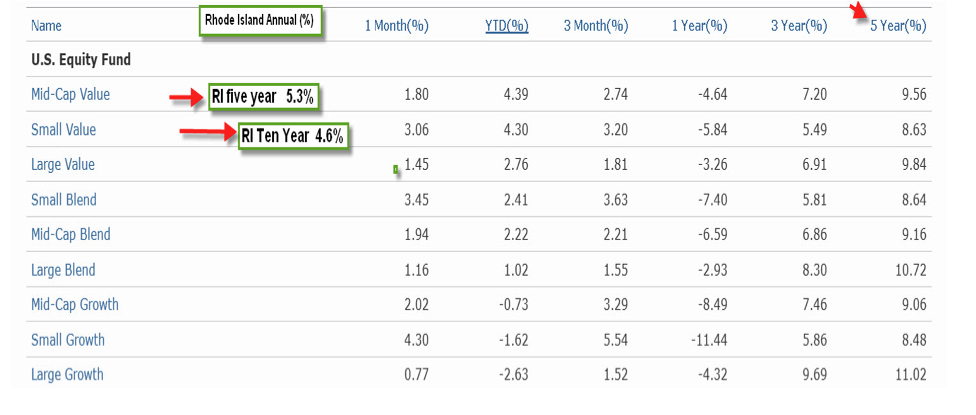
The Maryland team has produced a loss for fiscal 2016 as of March 31 this year and their performance for the 5-year period is also dismal at shy of 5.5%.The trend of ridding State pension plans of hedge funds and high fee alternatives has been accelerating as of late. So what will Seth do? I suggest he get rid of CliffWater consultants, who who has picked a bunch of losers, and the hedge funds altogether. He should make a clear departure from the Raimondo/Fink allocation model and reduce the number of managers and increase the transparency at the same time. It can be done.
GET THE LATEST BREAKING NEWS HERE -- SIGN UP FOR GOLOCAL FREE DAILY EBLASTWith interest rates at record lows in the US and negative around the world, every pension fund will have a terrible time trying to achieve their discount rate assumptions. But not every pension plan is critical. Rhode Island still is and they can't have another 2008. This is exactly why Raimondo adopted her reform and separately her investment philosophy. Well, the strategy didn’t work. It's time to abandon high fee hedge funds and private equity investments. The 5 year experiment was a failure and we should end it tomorrow. Can Rhode Island manage a portfolio with similar risk and more upside? The answer is yes - I know I could.

Timeline - Rhode Island Pension Reform

2005-2010

January 2009
Governor Don Carcieri makes pension reform a top priority in his emergency budget plan. His three-point plan included:
1. An established minimum retirment age of 59 for all state and municipal employees.
2. Elimination of cost-of-living increases.
3. Conversion of new hires into a 401(k) style plan.
See WPRI's coverage of Carcieri's proposal here.

2009
Rhode Island increased mandatory employee contributions for new and current employees. New Mexico was the only other state to mandate current employees to increase their contributions.
Read the NCSL report here
(Photo: FutUndBeidl, Flickr)

2010
Rhode Island's state administered public employee pension system only held 48% of the assets to cover future payments to its emplyees.
"This system as designed today is fundamentally unsustainable, and it is in your best interest to fix it" - Gina Raimondo
Check out Wall Street Journal's coverage here.

November 2010
Gina Raimondo defeats opponent Kernan King in the election for General Treasurer of Rhode Island using her platform to reform the structure of Rhode Island's public employee pension system. She received 201,625 votes, more than any other politician on the 2010 Rhode Island ballot.

April 2011
Raimondo leads effort to reduce the state’s assumed rate of return on pension investments from 8.25 to 7.5%.
Her proposal includes plans to suspend the Cost of Living Adjustment (which allows for raises corresponding with rates of inflation for retirees), changing the retirement age to match Social Security ages, and adding a defined contribution plan.

May 2011
Raimondo releases “Truth in Numbers”, a report detailing the pension crisis and offering possible solutions. She continues to work to raise public support for her proposal.
"Decades of ignoring actuarial assumptions led to lower taxpayer & employee contributions being made into the system." - Gina Raimondo (Truth in Numbers)
Read GoLocalProv's analysis of the report here.
Read the Truth in Numbers report here.

October 2011
Governor Lincoln Chafee and General Treasurer Gina Raimondo present their pension reform legislation proposal before a joint session of the General Assembly.
“Our fundamental goal throughout this process has been to provide retirement security through reforms that are fair to the three main interested parties: retirees, current employees and the taxpayer…I join the General Treasurer in urging the General Assembly to take decisive action and adopt these reforms.”- Gov. Lincoln Chafee

October 2011
Head of Rhode Island firefighters’ union accuses Raimondo of “cooking the books” to create a pension problem where one did not exist. Paul Valletta Jr. states that Raimondo raised Rhode Islanders’ assumed mortality rate to increase liability to the state, using data from 1994 instead of updated information from 2008, and lowered the anticipated rate of return on state investments.
“You’re going after the retirees! In this economic time, how could you possibly take a pension away?” Paul Valletta Jr (Head of RI Firefighters' Union)
Read more from the firefighters' battle with Raimondo here.
Check out the New York Times' take on RI's pension crisis here.

November 17, 2011
The Rhode Island Retirement Security Act (RIRSA) is enacted by the General Assembly with bipartisan support in both chambers. RIRSA’s passing is slated to reduce the unfunded liability of RI’s pension system and increase its funding status by $3 billion and 60% respectively, level contributions to the pension system by taxpayers, save municipalities $100 million through lessened contributions to teacher and MERS pension systems, and lower the cost of borrowing.
Read more from GoLocalProv here.

November 18, 2011
Governor Lincoln Chafee signs RIRSA into law. According to a December 2011 Brown University poll, 60% of Rhode Island residents support the reform. Following its enactment, Raimondo holds regional sessions to educate public employees on the effects of the legislation on their retirement benefits.
Read about how Rhode Islanders react to RIRSA here.

January 2012
Raimondo hosts local workshops to explain the pension reforms across Rhode Island. She also receives national attention for her contributions to the state’s pension reforms. The reforms are given praise and many believe Rhode Island will serve as a template for other States’ future pension reforms.
Read about the pension workshop here.
Read Raimondo's feature in Institutional Investor here.

March - April 2012
Raimondo opposes Governor Chafee’s proposal to cut pension-funded deposits. She continued to provide workshops on the pension reforms.

December 5, 2012
Raimondo publicly opposes Governor Chafee’s meetings with union leaders in an effort to avoid judicial rulings on the pension reform package. In response, Chafee issues a statement supporting the negotiations.
Read more about Raimondo's opposition here.
Read about Chafee's statement here.

March 2013
Led by the Rhode Island State Association of Fire Fighters, unions protest the 2011 pension reform outside of the Omni Providence where Governor Lincoln Chafee and General Treasurer Gina Raimondo conduct a national conference of bond investors.
Read about Raimondo's discussion of distressed municipalities here.

April 2013
The pension plan comes under increased scrutiny as a result of the involvement of hedge funds and private equity firms. Reports show that $200 million of the state pension fund was lost in 2012.
"In short, impressive educational credentials and limited knowledge of investment industry realities made Raimondo ideally suited to champion private equity’s public pension money grab." - Ted Seidle (Forbes)
Read GoLocalProv's coverage of the State Pension Fund's losses here.
Read Ted Seidle's criticism of Raimondo in Forbes.

June 2013
Reports show that the State’s retirement system increased in 2013 by $20 million despite the reforms being put into effect the previous year.
Read GoLocalProv's investigation into the rising pension costs here.

September 2013
Matt Taibbi publishes an article in Rolling Stone detailing Raimondo’s use of hedge funds as a questionably ethical tool to aid with pension reform.
Read Taibbi's article in Rolling Stone.
Read GoLocalProv's response to Taibbi here.

October 2013
As Raimondo eyes the role of Governor of Rhode Island in 2014, more behind-the-curtain information about the 2011 pension reform comes to light.
Read more from GoLocalProv about the players in the pension battle here.


