


Russ Moore: Providence Should Enact Electoral College
Russell J. Moore, GoLocalProv MINDSETTER™
Russ Moore: Providence Should Enact Electoral College
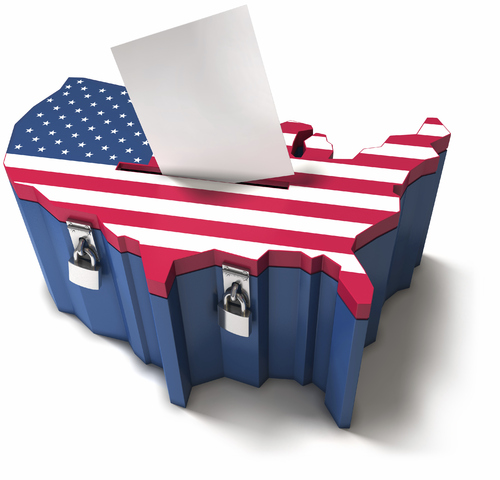
Each would be given equal weight in choosing the city’s chief executive officer, as opposed to the system we have now where one section of the city determines its fate.
Imagine, for a second, a situation in which a candidate cruises to victory in a mayoral election where the margins of victory were provided by massive turnout and victories in an area that comprises just 20-percent of the city. Then, on top of that, it just so happens that those portions of the city are also the most affluent parts of the city—where the people reside in brownstones, large townhouses, and in some cases, mansions.
GET THE LATEST BREAKING NEWS HERE -- SIGN UP FOR GOLOCAL FREE DAILY EBLASTOne doesn't need the imagination of J. R. R Tolkien to envision this scenario, because that’s precisely what happened in Providence last week. Not to take anything away from Mayor-elect Jorge Elorza, who ran a fantastic campaign comprised of expert staffers and driven volunteers. And yes, the Elorza campaign did an excellent job performing better than expected in other portions of the city. But the fact remains that he was thrust into office on the backing of primarily the city’s wealthiest residents.
The rich have spoken
Former Mayor Vincent “Buddy” Cianci won most of the wards comprised of lower income residents, whereas Elorza ran up daunting margins of victory in the wards where the city’s affluent residents live—the East Side. It’s hard to understate the drubbing Cianci took in the city’s wealthiest neighborhoods. The numbers are jaw-dropping.
In the Wards that comprise the East Side, Elorza garnered 7,818 votes. In those same three wards, 1, 2, and 3, Cianci received just 2,596 votes—giving Elorza an eye-popping victory of more than 5,222 votes.
For instance, in Wards 5,6,7, which comprised some of Cianci’s strongholds, he won by 1,175 with Elorza getting 3,127 votes and Cianci getting 4,302.
That means, in two areas, with identical population numbers, Cianci’s stronger area turned out just 7,429 votes whereas Elorza’s East Side stronghold turned out 10,414 votes. For every 10 people that voted on the East Side, just 7 people voted where Cianci was performing best, primarily in the North End of the City.
Number Crunching
Cianci won more Wards than Elorza. Cianci won 9 Wards, which included 4,5,6,7,8, 10, 11, 14, and 15. Elorza won 6 Wards, which included Wards 1, 2, 3, 9, 12, and 13.
Here’s the most important fact: take the East Side out of the equation, and Cianci wins by a comfortable margin of roughly 1,500 votes. Add the all-important wealthy East Side into the equation, and Cianci loses by an even more comfortable margin of roughly 2,700 votes.
There’s something inherently wrong and equitable about a system that allows a candidate to cater to and focus on just one portion of the city that comprises one-fifth of the population, and lose the majority of the Wards.
On the federal level, the USA uses the Electoral College to elect a President to prevent against allowing candidates to campaign solely in a few, well-populated areas. It’s a method of protecting certain sections of the country—Like New York City or Chicago—from having outsized power at the expense of the more rural portions of the country.
In the city of Providence, however, it would be even easier to setup an Electoral College system of electing a Mayor. That’s because each of the city’s Wards are broken up by population. The East Side Wards, despite having huge vote totals, have nearly identical populations to every other Ward in the city.
Under the scenario that occurred last week, Cianci would have been Providence's next mayor. That scenario, I might add, would have been more fair and equitable to all of the portions of the city.
Focus on Wards
In the election last week, had Providence used an Electoral College system of selecting a mayor, Cianci would have won a decisive victory of 9-6. (If, by chance, in an election, no candidate won a majority of the wards, the city could move to a runoff system.)
It’s no secret that wealthier people vote in much greater numbers than their poorer counterparts. Studies have shown that wealthy citizens are about 30 percent more likely to vote than their less affluent counterparts. That was exactly the case in Providence this year.
There’s a reason that the city has Wards. Were it not for the Ward system, the city council would be comprised of mostly of rich people from the East Side of the city. Instead, the Ward system gives the city a more diverse city council makeup, and we’re all better off for it.
Since that system works well for the city council, why doesn’t the city use the same type of system to elect a mayor? If Elorza is as concerned with good government as he claims to be, he should enact a charter commission to propose a change to the way the Mayor is selected.

10 Questions Elorza Has to Answer as Mayor

Department staffing?
Economic Development. Chief of Staff. Policy Director. Who will Elorza place in these key posts? Will former opponent Brett Smiley play a role? Will Elorza keep on any key Taveras staffers?
There are multiple questions in this category, and Elorza should be making moves shortly as to what his administration will look like. Will former opponent Michael Solomon be part of the team? Look to see.

Budget deficit?
Opponent Buddy Cianci famously said during the campaign that if there was a budget surplus in the City of Providence, he'd drop out of the race.
Councilman Terry Hassett told GoLocal that a close watch on the budget would be necessary in the coming year, as a "deficit exists." So how will Elorza tackle the fiscal challenge? He's talked about looking at city government department by department. Where will he make cuts if necessary? Or will Providence see taxes being raised?

Police force?
The Providence Police Department recently graduated a new class of officers from its academy -- but council members to community leaders are pointing out the numbers are still below even minimum staffing levels.
Will Elorza look to push through a new academy when he takes office?And how will he handle issues surrounding the department -- which following the most recent graduation, was at the center of intense public scrutiny?

Car Tax Changes?
Elorza said during the campaign that he wants to raise the car tax exemption from where it stands at $1,000 back to where it once was at $6,000.
So how's he going to make this happen? He teamed with Raimondo at the Olneyville press conference to pledge that if elected they would work in tandem make it possible. Will Providence see more aid from the state to fill the tax revenue hole?

Tax Breaks?
Tax stabilization agreements (TSAs) between developers and the City of Providence came under close scrutiny in 2014, as a report from City Auditor Matt Clarkin showed that the city wasn't collecting nearly what it was owed on the properties that cut special tax deals with the city in the name of development and job creation.
One council member -- Sabina Matos -- proposed putting a freeze on new TSAs until a full review was done, and a standardized process was put in place. Will Elorza continue to use TSAs as a tool in the economic toolbox?

195 development?
The 195 land, while in the hands of the State -- and 195 Commission, rests squarely in Providence, and as such, its redevelopment will have a profound impact on the economic future of the city.
How active will Elorza be in the process of courting businesses to put their stake in the ground and be part of the urban renewal process in Providence? Lots of work is already underway with the roads and infrastructure -- how soon will shovels be the ground for tenants?

Nonprofit relations?
As part of his administration, Mayor Angel Taveras ushered through historic PILOT (payment-lieu-of-taxes) agreements with the city's nonprofits, in order to obtain some fiscal relief from the tax-exempt institutions at t time when the city desperately needed it.
Will Mayor Elorza look to go back to the colleges, universities, and hospitals should the city find itself in difficult circumstances once again?

Jobs?
Elorza's jobs plan as proposed during the campaign included such components a supporting entrepreneurs, women, and minority-owned businesses, and promoting a mentoring program with the city's colleges and universities.
One of Elorza's proposals included the doubling of Providence's exports over the next five years. How is Elorza going to make this happen? He mentioned used cars and design exports during debates on the campaign trail. What policy moves will Elorza unveil to make this prophecy a reality? And where will Providence see the jobs?

School success?
Central to Elorza's education plan is the concept of community schools, so that the buildings are utilized long after the school day for increased learning and recreation opportunities for the surrounding neighborhoods.
Elorza has called for less emphasis on standardized learning, and has proposed an investment in technology in the classrooms. Where will Elorza find the money to achieve these goals -- and will they translate into academic success?

One Providence?
In the next two weeks, Elorza will be making staffing decisions that will set the tone for the new administration. Elorza won overwhelmingly on the East Side -- will he cull his talent from the 02906, or will he reach out to leaders across the city to comprise an administration reflective of the entire city's population? How will Elorza achieve the vision of "One Providence?"


