


Celtics Reset Is About “Aprons” and Money — Kevin Stacom
Kevin Stacom, Sports Analyst
Celtics Reset Is About “Aprons” and Money — Kevin Stacom

What they actually refer to are very pivotal financial benchmarks in the salary cap structures of teams that go into effect this year as part of the new NBA Collective Bargaining Agreement that goes into effect this year for the 2025-2026 season.
GoLocalProv reported on two big consequential trades that took place with Boston The first shoe to drop was 2 time All-Star and 2 time NBA Champ Jrue Holiday being traded for Anfernee Simons (Portland) and 2 second round picks Shortly after that Kristaps Porzingis was dealt in a 3-way trade with the Celtics basically receiving Massachusetts native Georges Niang from Atlanta.
GET THE LATEST BREAKING NEWS HERE -- SIGN UP FOR GOLOCAL FREE DAILY EBLASTThe reason for leading with the mention of the new “Aprons” in effect for luxury tax calculations is that they give context to these basketball decisions, mainly in explaining how they drastically affect the entire business model for teams.
This is an attempt to give a rough idea of the general amount of money involved and the scale of savings just these two transactions accomplished in the new realities of the severe punitive penalties incurred by piercing the proscribed Apron limits of the new CBA.
First of all, the NBA Salary Cap for the 2025-2026 season: $154,600,000
2025-2026 NBA Luxury Tax: $187,900,000
2025-2026 NBA First Apron: $195,900,000
2025-2026 NBA Second Apron: $207,000,000

So in the ballpark estimate of what these two trades saved the Celtics, the difference between Simons contract, 27.7million (final year of 4 year $100 million deal), and Holiday’s $32.4 million this year (not to mention getting off the hook for Holiday’s remaining 2026-27 and 2027-28, $72 million total), and combining that with the difference between Niang’s contract -$8.2 million( last year of $25 million 3 year deal) and Porzingis’ $30.7 million, a $22.5 million savings, the Celtics will save $27 million in salary and roughly $180 million in luxury taxes. More than $200 million total
It can get very cold reducing everything to numbers, so it should be noted that the Celtics would never have won that Championship two years ago without Holiday’s leadership on and off the court, his being part of the best defensive backcourt (with Derrick White) in the league and his calming affect from the point every time they tended to go off the rails were crucial to their success I’m sure in a perfect world Boston would prefer to keep him if all these monetary factors didn’t become so monumental.
And the monetary penalties are not the only downside to exceeding the new tax levels. For repeat offenders ( those teams exceeding cap levels 3 out of the last 4 years), penalties can include not being able to include draft picks in trades, having your 1st round picks demoted to the end of the 1st round, limiting signing new players to league minimum contracts only, and surrendering the ability to use what they call the mid-level exception signings to acquire new players, and a slew of other restrictions that take away any flexibility in running a franchise effectively.
Without naming it as such, it is fundamentally the implementation of a “hard” cap No sane ownership group or management team could operate for long past the dreaded new world of the 2nd Apron.
It would be surprising if Boston would seek to move off anymore of their core players — Tatum, Brown, or White, but it is reasonable to question if they would make any trades that could get them down past the 1st Apron- the 195, 900,000 mark A contract that could be a logical target is Sam Hauser’s $10 million a year ($45 million total) Baylor Scheierman (Creighton) on a rookie contract ($2.6 million) could potentially step in after the progress he showed toward the end of the season In both the G-league and the parent team.
Also, as talented a scorer and shot creator Simons is, and something they might desperately need in Tatum’s absence, his expiring contract is a valuable piece in any potential trade.
A lot has been posited lately about the incursion of private equity funds making inroads into college and professional sports As the numbers have gone from millions to billions in terms of valuations, that only seems logical There are only so many individual billionaires to go around that have an acute love of sports and the appetite to invest in them as a business.
The new owners, including the principal largest shareholder, Bill Chisholm, who currently purchased the Celtics for 6.1 Billion, arise from such a background He’s joined by Robert Hale ( current member of Celtics Board of Directors), Bruce A.Beal, Jr., President of Related Companies, and 6th Street Partners ( Private Equity firm)
Chisholm co-founded a California Bay Area-based Symphony Technology Group (Private Equity)
The point of bringing up the nature of this new high powered financial group is that it would be easy to assume all these cold hearted, bottom line business oriented decisions, impinging on the dissolution of a Championship caliber team, are the result of their acquiring the team, when the reality is, given the new firm dictates of the new CBA these moves would have been necessary even if the team wasn’t sold
Rhode Island native, successful real estate investor and developer, Stephon Lewinstein ( Newport resident), who is also a longtime Celtics minority owner, is very optimistic about the new principal owner, Bill Chisholm. Lewinstein is an avid and very knowledgeable basketball/Celtic fan from the days of his youth growing up on the East Side of Providence, where he remembers sneaking in to the old Providence Auditorium to watch some of the great old Bill Russell lead teams of the 1960’s He’s had the opportunity to meet Chisholm recently through a mutual friend from their Alma Mater Dartmouth College.
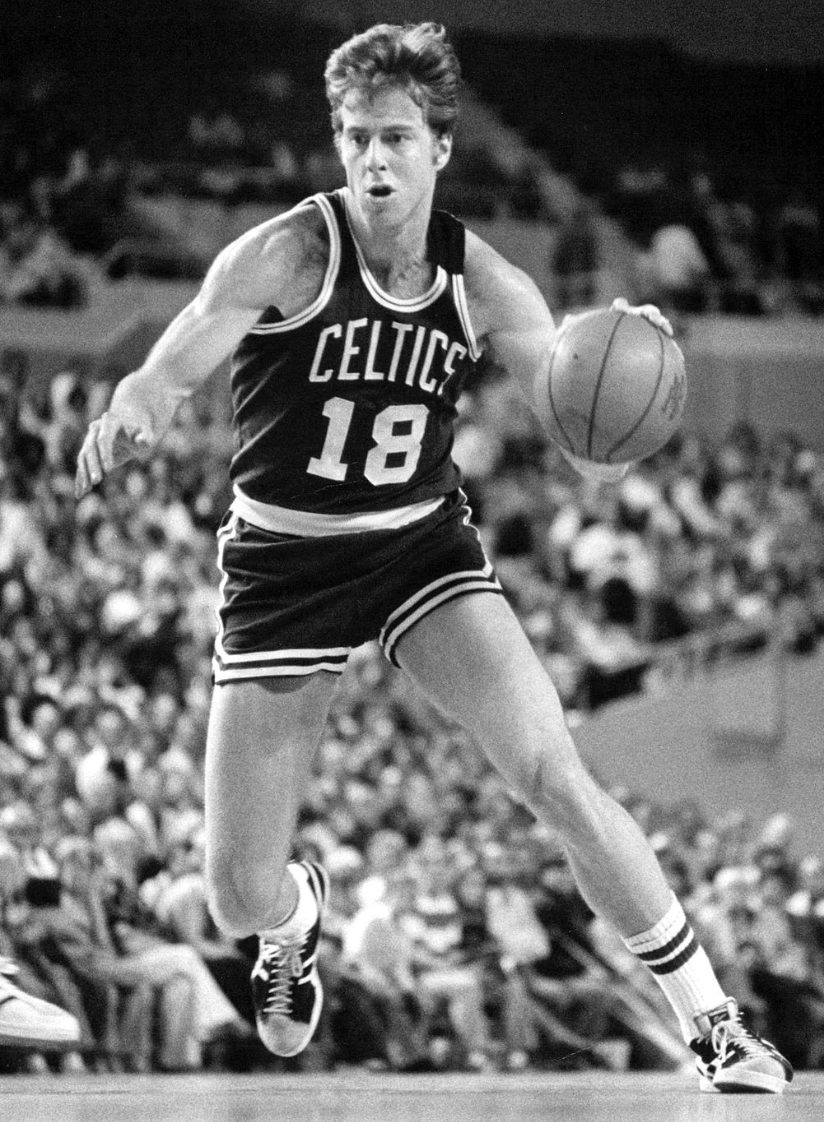
It’s funny how certain things stick in your mind as time rushes by. While pondering all these fantastic numbers, especially the newest salary cap of $154 million for 12-14 guys, I recalled a conversation with old friend and teammate, Dave Cowens who had just signed a new contract for I think, the 1975-76 season We were landing in New Orleans and Cowens was saying how grateful he was and how fortunate he was to be able to make this much money playing basketball Two years earlier, 1972-73 season, Cowens was the MVP of the All-Star game and MVP of the league He thought a contract for $250,000 was beyond his wildest dreams I remember saying “Well, you’re right, Dave, That’s an awful lot of money!”