


Lardaro Report: April Conditions Hit Lowest Value Since 2016
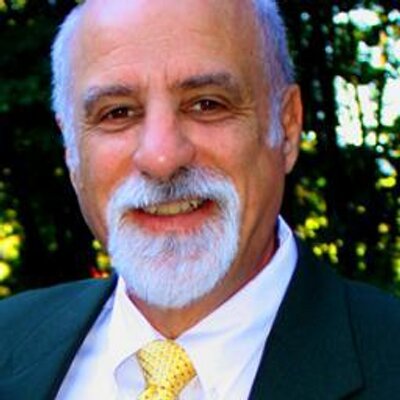
Len Lardaro, URI Professor of Economics
Lardaro Report: April Conditions Hit Lowest Value Since 2016
While all of this appears to be rather bleak and foreboding at first glance, raising the potential issue of whether Rhode Island might be in the early stages of realizing its FILO status, I believe such a rush to judgment is not necessarily appropriate at the present time. Is the CCI value disappointing? Yes, it is. But I view this as “guilty with an explanation.” Permit me to elaborate.
While the overall value of the CCI is disappointing, this month’s performance was fairly strong as disappointments go. Looking “below the hood,” several notable improvements this month accompanied the disappointments. First and foremost, both the labor force participation rate and the employment rate rose (relative to a year ago) in April. The labor force participation rate, the percentage of the population in the labor force, rose to its highest level since March of 2016. The employment rate, the percentage of the population that is employed, attained its highest value since late 2008. While both remain well below their prior cyclical highs, their April performance is, nonetheless, encouraging. Both have been trending higher in the most recent months. Furthermore, while the Manufacturing Wage fell in April, this was its first decline since February of 2016. The failure of Benefit Exhaustions to improve was its first such occurrence since July of 2017. Its downtrend remains intact.
GET THE LATEST BREAKING NEWS HERE -- SIGN UP FOR GOLOCAL FREE DAILY EBLAST
Overall, four of the five leading indicators contained in the CCI improved in April, although most had fairly easy comps. As stated earlier, New Claims rose, albeit barely in April. Sustaining our momentum moving forward will require that layoffs not begin trending higher. Rhode Island’s April goods-producing performance was much better than it was in March. Total Manufacturing Hours, a proxy for manufacturing output, an important element of Rhode Island’s strength over the past two years, rose strongly in April (+9.1%) based improvements in both employment and the length of the workweek. Single-Unit Permits, which reflect new home construction, increased at a double-digit rate (+22.3%), but this was only its second increase in the past six months. Permit me to state the obvious: Our ability to continue adding to our 2017 momentum this year will require continued strength from our goods-producing sector. Rising mortgage rates and a stronger US Dollar might create headwinds through the remainder of this year. Employment Service Jobs, a leading labor market indicator that was revised higher in 2017, rose again in April (+5.9%), moving to more rapid growth after slower growth during the first quarter of this year. US Consumer Sentiment improved in April (+2.2%), its third consecutive improvement after two consecutive declines.
Retail Sales grew again, although well below its prior double-digit rate (4.6%) and toward the lower growth range of late. Government Employment rose from its level a year ago (+0.2%), while Private Service-Producing Employment growth remained above the one percent level (+1.5%).
Moving forward, added emphasis should be paid to Total Manufacturing Hours, Single-Unit Permits, New Claims, Employment Service Jobs and Retail Sales.

Some of the Most Interesting GoLocal LIVE Interviews -- The First 1,000

Irish Prime Minister Enda Kenny
Enda Kenny, former Prime Minister - the Taoiseach - of Ireland, joined GoLocal LIVE to discuss the growing trade opportunities sparked by the new direct air travel between Rhode Island's T.F. Green via Norwegian Air.
Kenny has been instrumental with his support for the Ireland West International Trade Center in Rhode Island and the RI Trade Center in Mayo.
At the time of the interview, a Rhode Island trade mission was visiting Ireland led in part by Warwick Mayor Scott Avedisian, who also appeared on LIVE.
Kenny served as Prime Minister from 2011 until earlier 2017.

Amanda Clayton, Actress
Johnston native Amanda Clayton was almost ready to give up on her acting dreams when she got the call to travel to Atlanta to meet Tyler Perry and test-read with other actors for the then-new show “If Loving You Is Wrong," an opportunity that has been life and career changing for Clayton.
Having moved to New York at 19, five days before 9/11, she studied on-camera acting at New York Conservatory for Dramatic Arts and eventually moved to Los Angeles to pursue film and TV opportunities in Hollywood.
She appeared in Disney’s “John Carter," multiple TV appearances like NCIS: New Orleans, Major Crimes, and The Mentalist, and as Vinny Pazienza’s sister in “Bleed for This” filmed and based right here in Rhode Island.
Clayton just finished a Lifetime Movie “Mommy’s Little Angel”, coming out next year, and finished a role behind-the-scenes as a producer for “Dirty Dead Con Men.”
“If Loving You Is Wrong” airs Tuesday nights on OWN.

Billy Gilman, Grammy Nominee
When your career begins at age 11 as the youngest artist to reach #1 on the Billboard charts and continues on through adulthood, it’s almost difficult to believe one could still have professional firsts, but RI native and “The Voice” Alum, Billy Gilman, did just that with his first ever arena concert at the Dunkin Donuts Center.

Johanne Killeen, Al Forno
Johanne Killeen of Al Forno shared both the story on GoLocal LIVE's "The Taste," of how grilled pizza began -- as well as the announcement on her new cookbook highlighting pizza.
She told the story of how one of America's greatest restaurants was started and where it is going in the future.

South African Penguins
Mystic Aquarium’s Penguin Trainers Eric Fox and Josh Davis visited GoLocal LIVE with Blue-Purple and Blue-Red penguins, talking about how you can help the Endangered South African species.
They also discussed trips to South Africa, what it’s like working with penguins, and what’s on the penguin’s lunch menu.
Mystic Aquarium’s mission is to inspire people to care for and protect the ocean planet through education, conservation and research. To help accomplish that mission, Mystic Aquarium offers educational opportunities and fundraising events to continue their conservation work and teach the public about the ocean’s creatures.

Jai Rodriguez, Actor
“Queer Eye for the Straight Guy” alum, Jai Rodriguez, joined GoLocal LIVE to talk about his new show “Sex Tips for Straight Women from a Gay Man’’ currently running in Vegas until January of 2018.
Rodriguez co-stars in the audience-participation heavy live show with reality TV personality, Kendra Wilkinson, and says the subject matter of the show is perfect for the crowd in Vegas.
Rodriguez will also be appearing on the new CBS drama “Wisdom of the Crowd” and makes a cameo as Margaret Cho’s Husband in “Sharknato 5.”

Governor Lincoln Chafee
Lincoln Chafee, former Mayor, U.S. Senator and Governor, took Rhode Island Governor Gina Raimondo’s administration to task for promoting economic growth by funneling tax dollars to some of America’s richest corporations, in one of a number of appearances on GoLocal LIVE.
Appearing on GoLocal LIVE with GoLocal News Editor Kate Nagle, Chafee said the Raimondo’s transfer of taxpayers dollars to billion dollar companies such as General Electric and Johnson & Johnson was flawed.
“I have never liked corporate welfare. It's unfair to existing businesses…some out of state business comes in and you give them the candy store. I just don’t like it," said Chafee.

Archivist of the United States, David Ferriero
As only the 10th person to serve as the Archivist of the United States, David Ferriero said it’s been amazing to learn responsibilities of the position and get to know the staff at the National Archives. He appeared on GoLocal LIVE with Molly O'Brien at GoLocal's downtown Providence studio.
“The most exciting thing is getting to know the records and getting to know the richness of the documentation that tells our country’s history, starting with the oaths of allegiance signed at Valley Forge by George Washington and the troops, all the way up to the tweets that are being created as I am speaking, in the White House,” Ferriero said.

Governor Gina Raimondo
Governor Gina Raimondo joined GoLocal News Editor Kate Nagle on LIVE where she discussed the UHIP technology failure, economic development, the status of 38 Studios, and how she works to build a lasting legacy for Rhode Island.

Walt Mossberg, Top Tech Journalist
Who are five of the most influential people to change personal technology? The most important journalist gave his insight on personal tech to date and outlined where we are going.
Super tech journalist and Rhode Island native Walt Mossberg appeared on GoLocal LIVE with GoLocal's News Editor Kate Nagle.
"Well, it was a combination of really important people - and really important technology," said Mossberg. "It took too long for the computer industry to get the memo that these things had to be usable without reading manuals."
Mossberg, who served as the principal technology columnist for the Wall Street Journal from 1991 to 2013, founded AllThingsD, Recode, and the D and Code Conferences, and from 2015 to 2017, was Executive Editor of The Verge.

Gretchen Morgenson, Pulitzer Prize Winning Journalist
Gretchen Morgenson, a top financial writer for the New York Times [now the Wall Street Journal], joined GoLocal LIVE just hours after her newspaper published her investigative piece that unveiled that claims that financial giant TIAA was involved in improper financial practices took on new momentum.
Rhode Island’s Treasurer Seth Magaziner has nearly $700 million invested with TIAA.
Morgenson was first to report that, “New York’s attorney general has subpoenaed TIAA, the giant insurance company, and investment firm, seeking documents and information relating to its sales practices…”
In October, she wrote a sweeping investigative piece that raised questions about TIAA’s selling strategies. “The subpoena to TIAA, which handles retirement accounts for over four million workers at 15,000 nonprofit institutions across the country, followed an article last month in The New York Times that raised questions about the firm’s selling techniques,” wrote Morgenson.
On GoLocal LIVE, Morgenson told News Editor Kate Nagle in a Skype interview, “I think clients in all states should be worried -- Mr. [Seth] Magaziner should do a little more investigation into this to assure himself and the people in Rhode Island in these plans - that what TIAA is [telling them] is correct.”

Ron Powers, Pulitzer Prize-Winning Journalist
Pulitzer Prize-winning journalist, Ron Powers said his recent book, “No One Cares About Crazy People: The Chaos and Heartbreak of Mental Health in America” is one he promised himself he would never write.
The book is based on the true story of his two sons' struggles with mental illness. Both were diagnosed with Schizophrenia as young men.
While deeply personal, Powers gave insight on the battles his sons’ fought and details into their family life. He also looked at the history of mental illness, including incarceration, medication and more.
"I was determined to give the mentally ill, invisible to much of society and often denied the very basic acknowledgment of their own humanity, a voice,” Powers said.
Powers is the author or co-author of 14 previous books, including New York Times bestselling “Flags of our Fathers” and “True Compass."

Lidia Bastianich, Chef and Author
Lidia Bastianich, Emmy award-winning chef, restaurateur, and author joined GoLocal LIVE's The Taste with Rick Simone.
WATCH THE FULL INTERVIEW HERE
Bastianich explained how she was inspired by family traditions and how she first got into the culinary world. She has since carried on her passion and it now has involved to include her whole family in all her endeavors.
Big news -- Bastianich announced that Eataly could be opening in Toronto, Canada in 2018.

Piff the Magic Dragon
Magician and comedian Piff the Magic Dragon appeared on LIVE before he performed five shows at the Comedy Connection in East Providence over Labor Day Weekend.
“New show, all new jokes, all new tricks, same dog,” Piff said. “Mr. Piffles will be doing a lot of mind reading. He’s got his whole new act with The Dog Who Knows and he’ll be attempting to see all and know all. Ask him anything and he’ll tell you.”
Known for his dry sense of humor and rescue K-9 sidekick Mr. Piffles, Piff gained worldwide attention after his success on season 10 of America’s Got Talent.
Although Piff didn’t win that season, he’s made guest appearances on America’s Got Talent, racked up 50 million YouTube views, and recently extended his show at the Flamingo in Las Vegas until the end of 2018.

Jean Lesieur, French Journalist
Leading French journalist Jean Lesieur has appeared twice on GoLocal LIVE.
He is a novelist and a co-founder of France 24, the French version of CNN, warned of the rise of Trump and nationalism.
WATCH ONE OF HIS INTERVIEWS HERE
“He is the symptom and agent of the emerging nationalism. And, nationalism should not be considered patriotism. Patriotism is the love of your own. Nationalism is the hatred of others,” said Lesieur at the Hope Club.
In a sweeping discussion with GoLocal, he spoke about Europe in the Brexit, the Trump relationship with Russian leader Vladimir Putin and the wild French election campaign.

Patrick Kennedy, Former Congressman
Former Rhode Island Congressman Patrick Kennedy spoke with GoLocal LIVE about efforts in Rhode Island in 2017 to legalize marijuana - and what he said is the country’s crisis of addiction, and why he is opposed to marijuana legalization.
“We’re going through an epidemic of addiction and depression…and we’re in the midst of the rollback the biggest expansion of healthcare coverage that benefits people with mental illness [and] addiction, and this was the first time the ever got coverage,” Kennedy told GoLocal’s Kate Nagle on Wednesday.
“We ought to think do we want to throw gasoline on the fire,” said Kennedy, of legalizing marijuana in Rhode Island. “We know what’s happened with other addictive substances where’s basically there’s no perception of ‘risk’ — alcohol is ubiquitous; tobacco, until the settlements, there was no appetite for addressing [the impact of that].”
“Going down this road of adding a new intoxicant is not a good thing,” said Kennedy.

Beverly Daniel Tatum, Former Spelman College President
Former president of Spelman College, Beverly Daniel Tatum, Ph.D., is one of the nation’s leading experts on race, and the psychology of race.
Tatum recently released a fully revised and updated edition of her bestselling book “Why Are the Black Kids Sitting Together in the Cafeteria: And Other Conversations About Race.”
In an interview with LIVE, Tatum said it’s important to have conversations about race and listen for opportunities to have natural discussions.
“We can’t solve a problem if we can’t talk about it,” the Brock International Prize in Education winner said.
To make a change, she said, we all have a role to play and each of us has an opportunity.
“We all have a sphere of influence. Everybody influences someone, and we should not be afraid to use that influence to bring about the changes we hope to see,” she said.

Mark Baillie, Top British Security Expert
Terrorism and international relations expert Mark Baillie of King's College in London's War Studies Department spoke with GoLocal's Kate Nagle regarding the post-Manchester landscape in England - and the world.
"The young guy...did it in his mother's basement. Any lone actor can make a powerful bomb," said Baillie following the terrorism incident. "We're in the midst of a general election where politicians talk about there being no political or cultural backlash."
"And estimated 300 people are 'ready to go' - 400 who have been fighting with Isis in Syria -- and in a group of about 20,000 supporters," noted Baillie of the UK landscape, calling Manchester and acts like it the "terrorism of the mundane" -- and much more frightening than "spectacular" acts of terrorism.
Baillie, who runs seminars on a wide range of security matters at King's and at the UK Joint Staff College, has lived or worked in more than 14 countries in the fields of news, security, finance, economics, business and politics and appears widely in international news media on terrorism and international security.

Mark Geragos, Celebrity Attorney
Geragos is one of Hollywood's biggest celebrity lawyers having represented rapper Chris Brown and Michael Jackson over the years. When asked about his relationship with the often legal troubled Brown, Geragos said that the rapper is "like a son and an annuity" to him.
In reference to a lawsuit that he is representing Alex and Ani over, Geragos said, "For lack of a better word, we've got a couple of knuckleheads, [and] it's not at the forefront of anything we're worried about."
"Unfortunately when you become successful people want to take an elevator to the penthouse and that won't happen here, trust me," said Geragos.
Geragos explained how he met Alex and Ani CEO Carolyn Rafaelian - and spoke to how the "company culture" brought him in.
"I was at a charity event at Carolyn's Sakonnet Vineyard -- she was doing a fundraiser for an Armenian orphanage," said Geragos. "They have a unique blend of doing humanitarian work...Carolyn was the hit in New York this week."
Model, entrepreneur and activist Gisele Bündchen, co-anchor of Good Morning America Robin Roberts; and Rafaelian were among the women recognized Tuesday in New York City by the David Lynch Foundation (DLF), a global charitable organization that addresses the epidemic of trauma and toxic stress amongst at-risk populations.

Amazing Regulars
Each week, GoLocal LIVE features an amazing group of experts in Rhode Island and Washington, D.C.
Robert Whitcomb, former Editorial Page Editor of the Providence Journal, now GoLocalProv columnist
Gary Sasse, "The Money Man," an expert on state and federal fiscal policy
Jennifer Lawless, Director of the Women & Politics Institute and Professor of Political Science at American University
Ray Rickman, Former State Representative, Deputy Secretary of State, and Civil Rights Leader
Kristin MacRae, Organizing Expert
Saul Kaplan, Business Innovation Expert
Robin Garceau, Interior Design Expert


