


Brown Faces Pushback for Failing to Fund Scholarships for Providence Children
GoLocalProv News Team
Brown Faces Pushback for Failing to Fund Scholarships for Providence Children
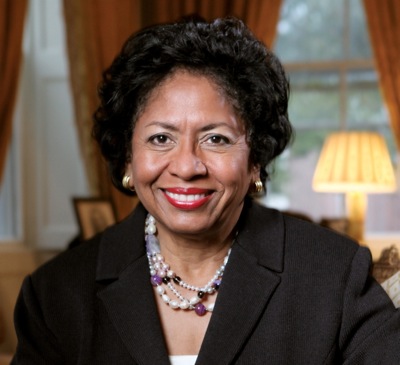
Now, a group of students, faculty, graduates, and educators are calling on the Ivy League school to address what they say is its “debt” to Rhode Island youth, calling on Brown to make a greater investment in the education of Providence children.
Specifically, the group points to Brown not fully funding The Fund for the Education of the Children of Providence to provide more local youth with college scholarships — which the university now says it is “now committed” to doing.
GET THE LATEST BREAKING NEWS HERE -- SIGN UP FOR GOLOCAL FREE DAILY EBLASTThe petition, however, calls for more investments in teacher training — and the community.
Javier Juarez, the Executive Director of the Providence Student Union and 2018 graduate of Brown, launched the petition the week garnering over 800 signatures so far.
The Petition
The petition, called "Accountability Now: Brown University’s Debt to Rhode Island Youth" is calling for the following investments.
"In 2003, Brown University President Ruth J. Simmons appointed a Steering Committee on Slavery and Justice to study the University’s historical relationship to slavery and the transatlantic slave trade. Following the presentation of the final report to President Simmons in October of 2006, the Slavery and Justice Report garnered national attention as a model for how institutions of higher education that benefited from the slave trade can begin the difficult and necessary work toward reparations. The majority of the Report’s recommendations called for powerful initiatives internal to Brown University’s campus—some of which were realized, such as the creation of the Center for the Study of Slavery and Justice. The report also outlined broader, community-oriented recommendations to support local youth.
At the time of the Report’s publication, forty-eight of Providence, Rhode Island’s forty-nine public schools failed to meet federally-prescribed minimum standards for academic achievement. In the concluding pages of the Report, the Committee responded to this statistic explicitly, stating: “This situation represents a direct challenge to Brown University. One of the most obvious and meaningful ways for Brown to take responsibility for its past [as a beneficiary of the slave trade] is by dedicating its resources to improving the quality of education available to the children of our city and state.”
Nearly a decade and a half later, in the midst of a global health crisis and a national movement to address entrenched histories of anti-Blackness and state violence sparked by the recent murders of Ahmaud Arbery, George Floyd, David McAtee, Nina Pop, Tony McDade, and Breonna Taylor, Brown University must act on its commitment to invest in Providence youth. Today, Black youth in Providence are leading and organizing marches and rallies in the streets for racial equality. They are fighting for their futures.
For Brown, an institution built on slavery and genocide, to 'hold itself accountable for the past, accepting its burdens and responsibilities along with its benefits and privileges,' requires an ongoing commitment to antiracist, reparative work. Brown must do better.
We, the undersigned, argue that Brown University has a responsibility—indeed, a debt—to the students of Rhode Island. We demand the University acknowledge that the following recommended initiatives in the Report were either unmet or not fully sustained and that the University must recommit, financially and publicly, to the spirit of the Report's recommendations, adapted to the present moment and in collaboration with the Providence community:
• to reinvest in The Fund for the Education of the Children of Providence to provide more local youth with college scholarships
• to expand the number of course offerings and available scholarships in Brown Summer High School
• to increase funding and institutional support to Brown’s Master of Arts in Teaching Program, including full tuition waivers for students who commit themselves to working for at least three years in Rhode Island public schools
• to create professional development opportunities for Rhode Island public school teachers, including the opportunity to enroll in one Brown class per semester, without charge
These initiatives comprise only a partial list of the community engagement recommendations within the Report that Brown has not yet fulfilled, many of which were restated in 2015 within the comment period for Pathways to Diversity and Inclusion: An Action Plan for Brown University. The call to invest in Rhode Island youth, teachers, and public schools must not be a unidirectional conversation—but, instead, one that centers collaboration with, and material support of, grassroots youth-led organizations within the state, such as the Providence Student Union (PSU).
As a community that 'does not condone acts of racism, discrimination or violence,' Brown University must acknowledge that anti-Blackness is not limited to overt acts, but is structural and systemic. The Report itself states that Brown University must maintain “a sustained, substantial commitment of energy and resources over many years” in order to make a meaningful impact to support youth—in particular, Black youth— in collaboration with the larger community.
In the years since the Report was published, Brown University has rescinded much of its energy and resources in support of Providence youth. We demand accountability, now.
For the full list of signatures, go here."

"We are often asked to comment on petitions or demands that circulate online. We value direct dialogue and engagement with students, faculty, staff and community members — especially on topics as consequential as racial injustice," said Brown spokesperson Brian Clark, who noted the school "does not have a practice of responding through news media" to matters expressed in online petitions.
"Independent of any petition, we have committed to fully fund, no later than the end of this calendar year, the Fund for the Education of the Children of Providence, which was established in response to the report of the Steering Committee on Slavery and Justice at Brown," said Clark." As we noted in sharing that news with the campus community, Brown has also been deeply engaged in discussions with city and state educational leaders to identify specific ways for the University to support efforts to strengthen teaching and learning in the Providence Public Schools. Drawing on expertise and scholarship from across the University, we are developing a set of initiatives that align with the school district’s plan."
Juarez commented online to the response he received from the university.
"No mention of pvd community voices in their decision making," he wrote. "The work must continue."