


Guest MINDSETTER™ Stewart: Patrick Kennedy Should Learn from Family History
Guest MINDSETTER™ Andrew Stewart
Guest MINDSETTER™ Stewart: Patrick Kennedy Should Learn from Family History
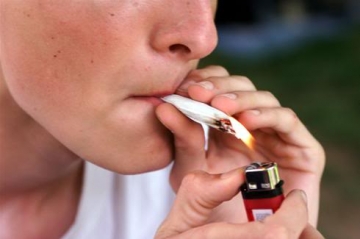
As someone who is intimately familiar with the pain of addiction as a mental illness, including having buried several friends in the past few years owing to the opiates crisis in New England, I think Kennedy is totally out of line. He exploits the suffering and pain of people who have to confront addiction not to make a moral point but to preserve his family wealth. Yet his family history should rather be promoting the opposite orientation of thought and action in policy.
For those of you who are unclear, let's be frank, the historic Kennedy and Fitzgerald fortunes that eventually financed the political careers of Joseph, John, Robert, Teddy, and the rest were made by the seal of a liquor bottle. For several generations, the family has been involved in the import of several premium spirits from Canada and Scotland as well as liquor store proprietorship. During Prohibition, Joseph Kennedy made a mint on a substantial bootlegging operation nationwide that brought Canadian whiskey across the border and put money in the pockets of hoodlums like Al Capone. Kennedy's moralizing is so banal and inept because the last time the government banned recreational substances the American mafia was given what amounted to state-financed finishing school training in the illegal rackets. Prohibition not only was a booming time for la cosa nostra, it was also quite dangerous for anyone who dared consume contraband alcoholic beverages. Purchasing batches of alcohol that were laced with turpentine, arsenic, ammonia, or other substances was a fundamental risk of doing business with your local bootlegger. The criminalization of consumption hindered detection of not just public drunkenness but also child abuse, domestic violence, rape, and many more crimes that actually had victims. The fundamental truth now and then is that prohibition of a vice does not stop its practice, it only hinders its safe practice while supporting organized criminal behavior, a sort of bail-out for the mob. By contrast, decriminalization combined with sensible regulation and oversight promotes small business ownership, job growth, and healthier practices by both those struggling with addiction and those who have the ability to merely casually consume these substances. Yet nary a peep is heard from Kennedy in seeking reparation for that part of his family’s legacy, instead his moral platitudes are intended to drown out such concerns.
GET THE LATEST BREAKING NEWS HERE -- SIGN UP FOR GOLOCAL FREE DAILY EBLASTThe ultimate irony is that the end of Prohibition also was the moment when Joseph Kennedy, who literally was the best thing that ever happened to Adolf Hitler’s aspirations for Czechoslovakia, ascended to high office as the American ambassador to England. Franklin Roosevelt brought Kennedy into his government while repealing Prohibition to create economic stimulation and jobs as part of the first New Deal. The President’s Progressive legislative initiatives were revolutionary for the time because they ended up embracing both the concerns of the temperance movement from a generation before while also giving substantial growth to the economy and pulling the country out of fiscal doldrums with reopened breweries, liquor stores, and bars. The commonsense regulations that were created in tandem with the repeal, such as those preventing sale of poison-tainted substances and the return of the reviled saloon along with standards allowing for both home brewing and big business beer companies, serve as guidance for legislation on the state and national level that can and should dictate policy regarding marijuana, a substance that has less fatalities registered to its after-effects than Kennedy-imported liquors.
And just to drive the point home, this is not an isolated instance with Kennedy. Congresswoman Debbie “Super-Delegates” Wasserman Schultz has also of late taken to this tone in her moralizing about marijuana prohibition, owing in no small part to the substantial percentage of her campaign war chest that is funded by Florida brewery and distillery interests. Attorney General Kilmartin, a former member of the General Assembly, was almost certainly aware of what Rep. Moira Walsh has recently given light to, that the boys of Smith Hill are apparently plastered all day every day, owing in no small part to the substantial sway that lobbyists for the tourism and alcoholic beverage vending industries have in the halls of power (just ask Gordon Fox about that sway). This recent spat of public figures behaving as school yard narcs is an economically motivated one. Their behavior only promotes addiction and criminality. If marijuana were regulated in the same way tobacco and alcohol are already, juvenile consumption and adult addiction would finally have a check-and-balance from public safety, funding for treatment programs as opposed to the police-prison-industrial complex would materialize, and economic growth in a state that direly needs it would develop. I personally do not consume marijuana or alcohol. But I also know that the legal system provides a better control of alcohol sales then marijuana sales in this state and the proof of this ineffective policy is born out in the problems that Kennedy, Kilmartin, and the rest point to as a reason for more of the same policies. Addiction treatment is defined by harm reduction as a basic principle and promoting further growth of a black market is absolutely not reducing anything but financing for addiction healthcare in the name of police budgets. To mangle a colloquialism, I guess rum’s the word.
With the recent pronouncements by Attorney General Sessions regarding marijuana prosecution, it is absolutely necessary and morally exemplary to hinder in any way possible a further growth of the New Jim Crow in the carceral state. Kennedy’s appeasement of Sessions is simply a family tradition that we should not be surprised by.

Who Supports, Opposes Marijuana Legalization in RI in 2016

Supports
Jared Moffat with RegulateRI pointed to Colorado’s regulated marijuana system generating more than $135 million in revenue in 2015 -- as well as potential competition from Massachusetts if they legalize marijuana first -- as reasons for Rhode Island lawmakers to act on the legislation this year.
“Vermont and Massachusetts, we should be well aware of the fact that they're moving seriously towards legalization,” said Moffat. “We've had the debate for five years now -- and it's coming. The question is now do we want to get ahead of the curve. Our hope is that now that tolls vote happened, that this will be the next thing that fills the void."

Opposed
"Legislatively, we have nine point policy on drugs, and the last one is we don't support legalization. It's not specific to marijuana, but it's the closest the [American Medical Association] comes to policy," said Steve DeToy, RIMS Director of Public Affairs.
"We support medical marijuana. Taxing the patient isn't something we'd support, but if it's for regulating an unregulated supply system, we support that," said DeToy. "Rhode Island has two types of suppliers, one is the compassion centers that have had strict oversight, and the other is the caregivers' side which hasn't had the same level of protections and oversight at this time."

Supports
NAACP Providence Branch President Jim Vincent serves on the RegulateRI coalition -- and offered the following:
"The New England Area Conference [of the NAACP] voted in favor of the legislation. It continues to be an issue that tears apart our community, this war on drugs. It's a key factor why our community is suffering, when we can be keeping people out of jail for something that can be regulated," said Vincent.
"Legalization is many issues -- it's social justice. for others its medicinal, they for others its a tax raising issue," said Vincent. "I'm staying on the social justice."

Opposed
"Marijuana will be the next great debate. With leadership unwilling to address their broken culture of inefficiency and questionable ethics, they will look to any source for future funds that will not impact the current culture," said RI Taxpayers' Larry Girouard. "Tolls, pot, gambling and other initiatives do not require leadership to change anything. They just tap new funding sources."
"When you have the most hostile business climate in the continental US, one would think there would be ample examples of things leadership might initiate to improve our business climate. Of course this would mean that leadership would need to make a few unpopular decisions, something that they seem unwilling to do. Name one thing that leadership has done over the last 5 years that demonstrates that they are really serious about changing Rhode Island’s abysmal anti-business brand. It is easier to create new sources of income, like tolls," said Larry Girouard.

Neutral
Rhode Island Center for Freedom and Prosperity
"Our statement is we're not 'pro' or con until we do more research," said Rhode Island Center for Freedom and Prosperity CEO Mike Stenhouse. "Our question is, if it's a lot like alcohol, and supporters say why don't we just tax it like that, then do we think more 'alcohol' for young Rhode Islanders is a good or bad thing?"
"When government in its voracious appetite for new revenue considers legislation that could arguably provide great societal or individual harm, you have to consider the pros and cons," said Stenhouse. "We'd have to look at Colorado and other states for the impact there."
"As for [taxing] medical marijuana, if we're taxing it simply as a revenue source, it's government out of control," said Stenhouse. "And if we try and overregulate, we know there's a huge black market for cigarettes already in Rhode Island."

Supports
"We support a legalize, tax, and regulate approach," said Sam Bell with the RI Progressive Democrats."
As for the Governor's proposal to tax medical marijuana caregivers and patients?
"We have not taken a formal position, but I would imaging the majority of our group would be opposed," said Bell.

Supports
"Continuing to waste resources on enforcing the prohibition on the consumption of marijuana, the moral equivalent of a good bourbon, is like flushing taxpayer dollars down the drain," said Pat Ford, Chairman of the RI Libertarian Party. "If adults want to use marijuana in the privacy of their home, why shouldn't they be allowed to do so without fear of prosecution?"
"The War on Drugs is a consummate failure that has crossed our nation billions of dollars through the combined cost of interdiction and incarceration, exacerbated racial tensions, inspired a narco terrorist fueled refugee crisis and been the root cause underlying several public health crises," said Ford. "Waisted lives and wasted resources will be its sole legacy. The legalization of cannabis can begin to bring this madness to an end."


