Our Environment: “Fuzzy Orange-and-Black Woolly Bear Caterpillar” By Scott Turner
Scott Turner, Environmental Columnist
Our Environment: “Fuzzy Orange-and-Black Woolly Bear Caterpillar” By Scott Turner
.jpg)
We picked up the insect and moved it to the trailside to keep it from getting flattened by bikers, skaters and others on the William C. O'Neill Bike Path a half-mile south of the West Kingston Train Station in a section that passes beside and through the Great Swamp Management Area.
To the best of our memories, this was the first February woolly bear we’d found. Scientists know that these little creatures—icons of both fall and false weather predictions—can endure subfreezing conditions beneath leaf litter.
GET THE LATEST BREAKING NEWS HERE -- SIGN UP FOR GOLOCAL FREE DAILY EBLASTIn response to cold conditions, a woolly bear goes into an insect-specific inactivity, called quiescence. As part of this survival trait, the caterpillar produces large quantities of glycerol, which keeps its cells from rupturing when they freeze. Quiescence is reversible when the weather warms up. So if winter temperatures rise and fall regularly, the woolly bear will go into and out of inactivity. In spring a surviving woolly bear forms a cocoon and transforms into an Isabella tiger moth.
Our walk took place on a sunny, 35-degree afternoon in mid-February, during which a steady stream of bikers, skaters, strollers, dog walkers and others passed by.
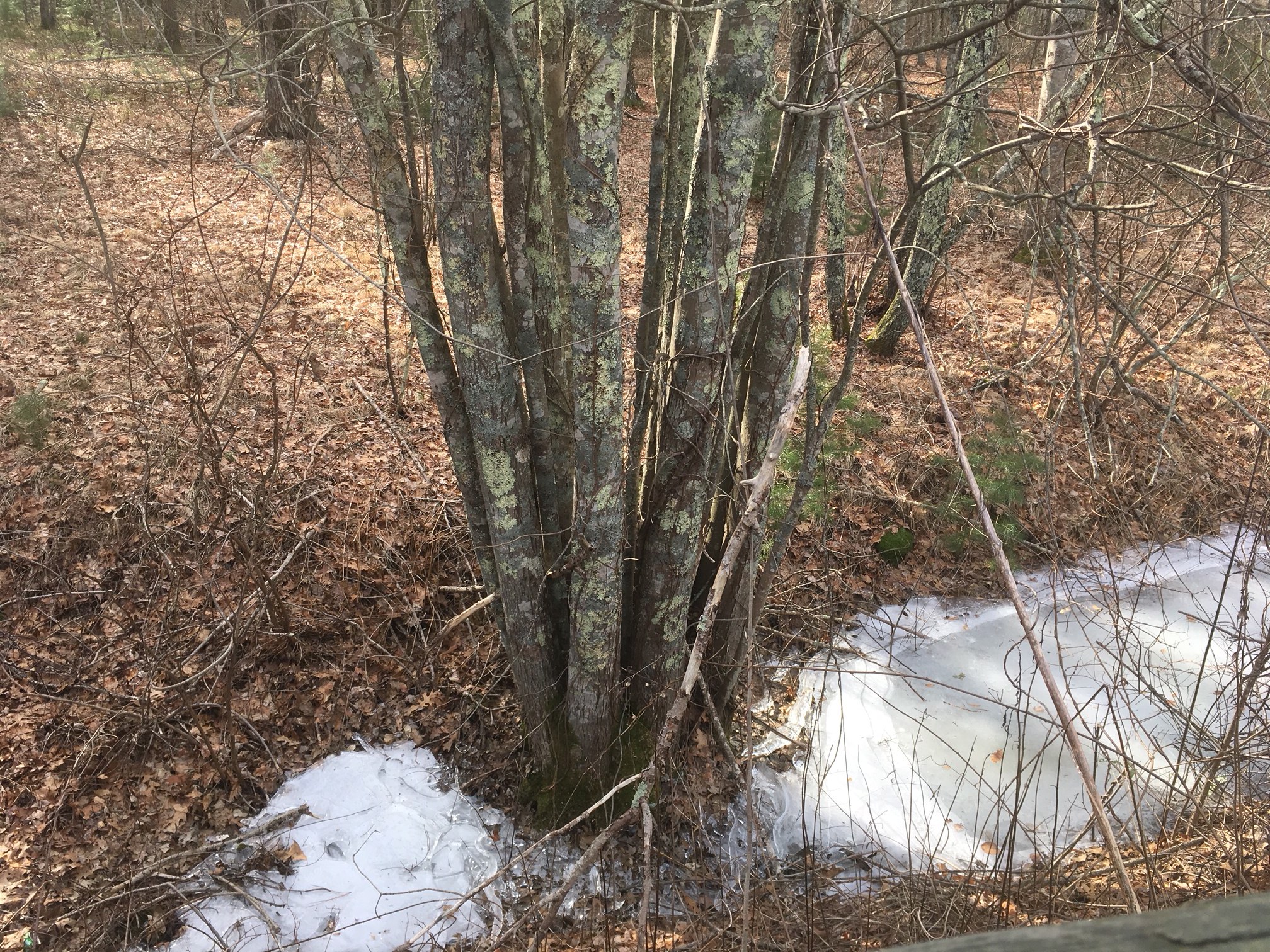
At present, the Great Swamp is a Great Swamp—full of water. Where the sun shone, open water surrounded the red maples, which are ubiquitous in the giant wetland. In shadier spots, ice encased the base of the trees. Where there was a rise in elevation—even a few inches—oaks and white pines took hold, and ground pine carpeted the forest floor.
At a small waterfall, the water churned under the path in a chorus of burbles, babbles and trickles.
The battle is also called the Great Swamp Massacre, notes EB, because “Despite fierce resistance, the (Native American) fort was finally taken and burned; many elder Indians and women and children were burned alive.” This was a deep, dark moment in Colonial history.
Our walk coincided with the publication of a global review that found the world’s insects are on the pathway to extinction, and could vanish within 100 years. Given that insects govern our food production, pollinating plants and getting rid of bad bugs, and purify soil and water and recycle waste through their above- and below-ground activities, the report suggests that the insect extinction will lead to the sooner-than-later disappearance of our own species. Simply put, we cannot live without bugs.
The study authors cited intensive agriculture, especially the heavy use of pesticides, as the main driver of the insect nose-dive. Other major factors included urbanization and climate change.
At a fenced-off cut in the swamp vegetation, where some sort of high-voltage electrical work was taking place, the forest edge hosted seven Eastern Bluebirds. In the sunshine, their backs, heads and wings were the color blue sky, while their soft brown breasts and sides suggested the color of earth. Such shades in winter were astounding to witness, but I wondered how soon this and other bug-eating bird species would vanish along with the insects?
To the freshwater of the Great Swamp, we added some of our salty tears.
Then I remembered the woolly bear; a tiny creature that can freeze and thaw repeatedly under the disarray of leaf litter on the forest floor before emerging into the open. That is quite a survival mechanism in our ever-harsh world. I wondered what tricks we humans had or needed to evolve, and quick, to survive and crawl out from under the mess that we’ve made for our world.