Our Environment: “Gnatcatchers” by Scott Turner
Scott Turner, Environmental Columnist
Our Environment: “Gnatcatchers” by Scott Turner
Tip-toeing atop rocks beside a muddy path, we plunged through clouds of gnats, which, like many insects, have begun to show up this spring. How appropriate then, that the tender and persistent mewing calls of Blue-Gray Gnatcatchers interrupted our creep along the trail.
Late April is when Blue-Gray Gnatcatchers reappear in Rhode Island, Thinner and smaller than a Black-capped Chickadee, a singing male Blue-Gray Gnatcatcher is blue-gray above and white below. Its tail and bill are relatively long. That tail is black and trimmed in white. The bird also features a subtle white ring around each eye. Overall, the females are grayer.
GET THE LATEST BREAKING NEWS HERE -- SIGN UP FOR GOLOCAL FREE DAILY EBLASTResidents of forest edges and scrubbier foliage, Blue-Gray Gnatcatchers are hard to see, even when the leaves have yet to unfurl. I identified the birds by their calls. My favorite fact about this little bug eater is that breeding pairs of gnatcatchers “use spiderweb and lichens to build small, neat nests, which sit on top of branches and look like tree knots,” according to the Cornell Lab of Ornithology.
We’d chosen the yellow, meadow, red and orange trails of Weetamoo Woods & Pardon Gray Preserve in Tiverton for our early morning nature escape. The route presented an excellent selection of habitats to traverse within an hour, which was our goal in these COVID-19 times. Get out early, move steadily, and return home.
The meadow, for example was pastoral, with views of rock outcrops and stonewalls. There, we encountered another singing first-of-the-year species: an Eastern Towhee. This male was a vivid combination of black, white and reddish-brown.
Towhees, which are big sparrows, usually reside in woods and thickets and like gnatcatchers are generally hard to see. This fellow was singing the species’ diagnostic, “Sip-your-tea” song. Just as Karen spotted the bird, it dashed into the undergrowth.

Also present were scattered clumps of sessile-leaf bellwort. These yellow flowers looked like little stretched-out bells. We watched a bumblebee turn upside down to reach inside the tubular blossoms.
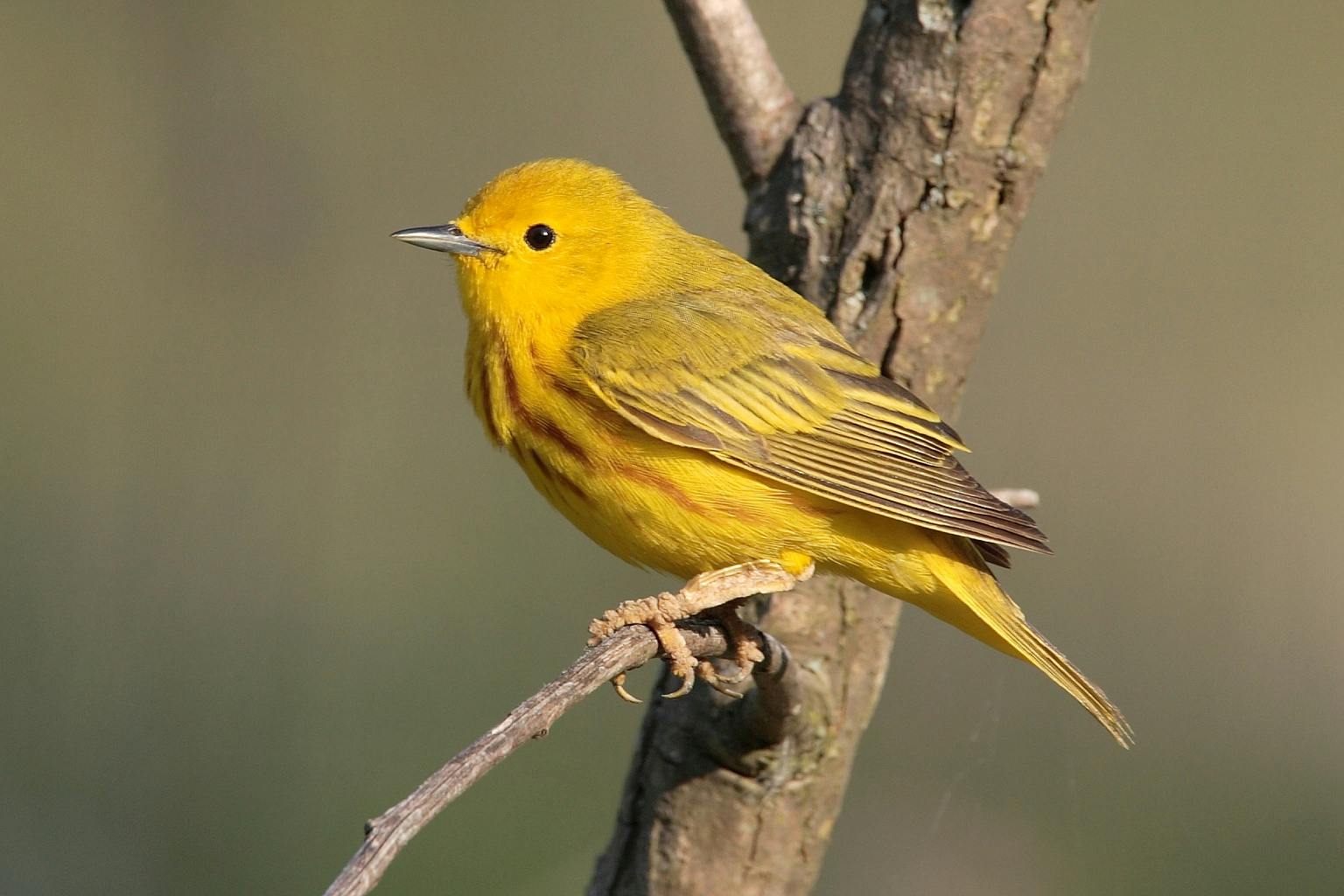
From thickets near the parking lot came the call of a male Yellow Warbler, which is another devourer of insects that arrives as April departs. The Yellow Warbler is a stout-billed, round-headed little songbird, with a bright yellow body and a red-streaked breast. The bird brings rich color to the early spring landscape, looking like a pat of butter on a tree branch. The warbler repeatedly whistled its signature refrain, which to me sounds like “sweet, sweet, swisher sweet.”
This continual song reminded us that spring was fluttering in and that on the delicate wings of a gnat we’d found treasures in blue, gray, white, black, yellow, and red-brick at Weetamoo.