


Robert Whitcomb's Digital Diary: Crazy Consultants and Immigrants Pull Down Wages
GoLocalProv
Robert Whitcomb's Digital Diary: Crazy Consultants and Immigrants Pull Down Wages
“I dont hate it he thought, panting in the cold air, the iron New England dark; I dont. I dont! I dont hate it! I dont hate it!”
GET THE LATEST BREAKING NEWS HERE -- SIGN UP FOR GOLOCAL FREE DAILY EBLAST
-- William Faulkner, from Absalom, Absalom!
Sometimes it may make much more functional and financial sense to have government employees do the jobs now being done by consultants, assuming that the political leadership obtains adequate resources for training them and indeed hires more state employees to ensure that a new system is properly managed over coming years. Many in the public complain that Rhode Island government is overstaffed. It is not.
What can go wrong in hiring outside consultants to do jobs that are more properly those of government employees was vivid in Iraq, where after the U.S. invasion in 2003, the Bush administration sent in thousands of very highly paid consultants (some being employees of consultancies with political connections) to do what military and other federal employees should have been doing. As a result, there were scandals involving inappropriate physical force as well as vast cost overruns and administrative snafus.
Sometimes hiring outside consultants to do government work can be a great big fat false economy.
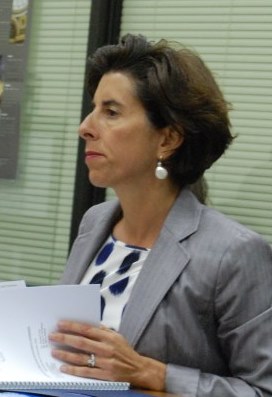
It was good to hear Gov. Gina Raimondo this past week again take ultimate responsibility for the mess; she has removed some of the state executives who had been involved in the launch. But she did mystify many people (including me) when she cited, with no evidence (as of this writing), alleged pressure from legislative leaders to fast-track the launch of the now infamous Unified Healthcare Infrastructure Project – a rush job that of course made everything worse. Really? Name, names, governor? And did you fire some people who maybe you should have retained?
xxx
Also too often ignored amidst the sad tales is that if a country doesn’t have firmly monitored borders, it will eventually cease to be a country. Something indeed must be done to bring order to our chaotic immigration arrangements.
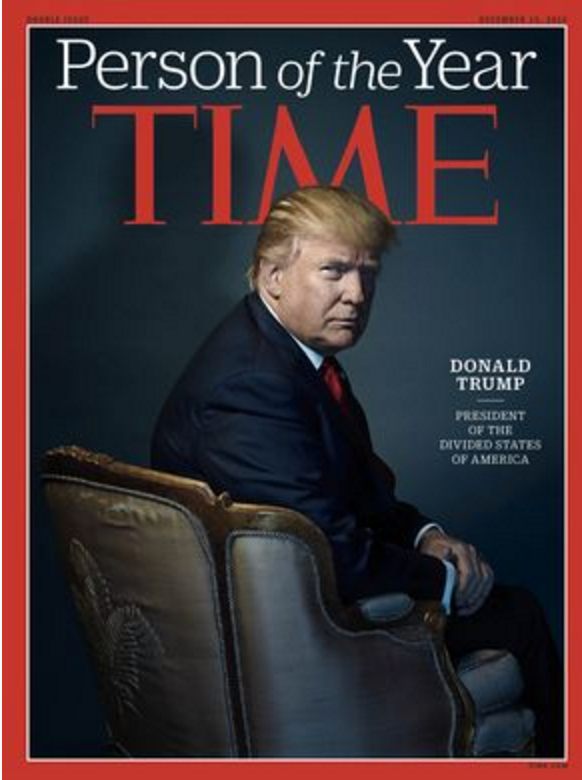
The administration has been clumsy and in some ways ignorant in its campaign to appear (especially to its Tea Party base) to be acting against potential foreign terrorists trying to get into the United States. And Americans may have much more to fear from their crazy, heavily armed compatriots than from foreign mad bombers. Still, that Donald Trump is a corrupt and unstable demagogue doesn’t mean that he isn’t more right than wrong on some issues, including some involving immigration.
xxx
The president recently promised to try to delete many government regulations, with the professed mission of liberating the animal spirits of capitalism to grow the economy. Well, there are plenty of regs that are outdated and/or duplicative. But in the cyclical fury to “eliminate ‘red tape,’’’ it’s often forgotten that just about all regulations were created to address a serious problem -- and in health-and-safety matters often a lethal one.
Many laws and regulations were enacted because people were killed or injured, were defrauded or otherwise were harmed by the lack of regulations.
Now the President, supported by his Treasury secretary, the very smart Steven Mnuchin, a former executive of Goldman Sachs, an enterprise that helped fuel the 2008 crash and has been a poster boy for much that has gone wrong with American capitalism in the past 40 years, wants to defang much of the Dodd-Frank law, created to reduce the chances of runaway speculation and fraud in the financial-services industry.
I wouldn’t be surprised if castrating Dodd-Frank will act for a while as crack cocaine for increased lending and maybe economic growth. But it will lead to speculative excesses and, probably, another crash.
As for the complaint that Dodd-Frank has held back growth, the United States has done better economically than almost any other developed nation in recent years as measured by its unemployment numbers and generally modest economic growth. There are many reasons for the generally slow growth in the U.S. and Europe in recent years as compared with some previous decades. An aging population, the failure of companies and governments to come up with truly revolutionary technological innovations to boost productivity, as compared to the advances in, say, the ’90s, and income inequality, which constrains consumer spending and confidence, are among them.
Making it easier for financial institutions to commit fraud and engage in rapacious speculation (with the taxpayers cleaning up the mess) will not help the U.S. in the long run. Attention citizens: Prepare to be cheated big time. Again.
xxx

That will not change, whatever the president’s protectionist promises. Companies will continue to seek to maximize profits for shareholders, which of course generally include senior corporate managements. Mr. Trump, who has shown himself fabulously greedy, must understand, whatever his rhetoric. The fewer people you have to pay to make the same products, the more money for shareholders. With artificial intelligence now coming on strong, the evisceration of the traditional workforce can only intensify.
In any event, governments that invest in good K-12 and college education and have other good public services will grab most of the new manufacturing jobs because those positions will require far more knowledge of science and technology than did working in, say, old-fashioned steel, auto and glass plants. There won’t be all that many of these new jobs, but those who have them will be very well paid.
Thus New England, where much of American manufacturing began, may become in the next few decades a manufacturing center that eclipses the 20th Century industrial powerhouses in the Upper Midwest. (I have followed this for many years, as a business editor and as someone part of whose family was in such Midwestern industries as steel.)
xxx

One of the ironies of the impasse is that the Palestinian Arabs have more human rights and a more humane government under Israeli rule than they’d get under a full Palestinian state, which, like just about all the Arab world, will almost certainly turn out to be corrupt, tyrannical and brutal. Whether it’s due to elements of Islam, tribal traditions or other things of ancient origin, the Arab world (excepting, at least for the moment, Tunisia) just can’t seem to do democracy and rule of law. If the Palestinians ever get their own “real country’’ I wouldn’t be surprised if some, quietly, fearfully soon tell family members and close friends that they had it better under the Israelis.
xxx
There’s been quite a revival of small-scale agriculture in New England in recent years, with the products grown alluring to the swelling numbers of “locavore’’ customers, many of whom buy the stuff at those proliferating outdoor markets open from spring to late fall or at the increasing number of stores, including supermarkets, that tout the local origin and “organic’’ nature of their food. Proving that something is “organic’’ can be daunting….
Cuba, of all places, may have some lessons for successful small-scale organic agriculture here. Since the collapse of the Soviet Union, in 1991, deprived the Cubans of cheap petroleum-based fertilizers and pesticides, the Cubans have moved to become very successful growers of food without these manmade chemicals. This movement has been further encouraged by some reforms that have replaced huge state-run farms with many small farms -- some in urban areas -- run by individuals.
The lack of chemical fertilizers and pesticides has led over the years to more sustainable and healthier agriculture on the island.
I was reminded of this the other day after reading a Boston Globe column headlined “Is Cuba the future of farming?’’ by Greg Watson, who’s a former Massachusetts Department of Agriculture commissioner. Mr. Watson, whom I know slightly, is no apologist for the Communist dictatorship led by the late Fidel Castro and now his brother Raul. But Mr. Watson has zeroed in on what the Cubans have been doing well.
Cuba is not the “future of farming’’ for the United States in general: The economics of the food industry means that huge agribusiness farms in the Midwest, the Plains States, California, Florida and some other places will continue for decades. But in New England, where topography and population density encourage much smaller farms, Cuba offers some lessons, even when considering that the Cubans, unlike New Englanders, can grow things outdoors year round.
Providence-based United Natural Foods Inc., an “organic’’ foods distributor, is a natural partner for such small-scale farms and the markets and restaurants they help supply. The company has just announced that it’s adding 150 new jobs in Rhode Island, where it already employs about 450 people.
xxx
Vermont Public Radio (vpr.org) ran a charming story. ‘’Despite Ringling Bros. Shutdown, The Circus Arts Remain Alive And Well In Vermont “ the other day about the New England Center for Circus Arts, in Brattleboro, Vt. The folks there see circuses as still having a bright future, even with the imminent demise of the most famous one, Ringling Bros and Barnum & Bailey Circus.
The Brattleboro school concentrates on trapeze and other gymnastics. They don’t do stuff with animals. Growing opposition from animal-rights people helped force Ringling out of business; much of the attraction had been animal acts with such “charismatic’’ animals as elephants.

Let’s hope that this ancient art (and athletic) craft survives in some way to bring joy to people in communities large and, especially, very small.
That reminded me of another small organization training people to succeed in a niche art: The Center for Cartoon Studies, in White River Junction, Vt. It trains people to do “sequential art’’ – mostly cartoons, comics and graphic novels. (As you see when visiting most bookstores, graphic novels have been booming.)
This quirky institution offers a master of fine arts degree, one and two-year certificate programs, as well as summer programs. It’s the only such college-level training program of its kind in the United States." Given the probable craziness of social and political events and celebrities now and for at least the next few years, the students and graduates of this school will have more material than ever. It’s a new golden age.
xxx
For lessons in how brilliant (almost genius), honest and patient but authoritarian leadership and public policy can turn a very poor place into one of the world’s richest, read the elegantly written Singapore: Unlikely Power, by John Curtis Perry (Oxford University Press).