


Secrets and Scandals - Reforming Rhode Island 1986-2006, Chapter Thirteen
H. Philip West Jr.
Secrets and Scandals - Reforming Rhode Island 1986-2006, Chapter Thirteen

Since colonial times, the legislature had controlled state government. Governors were barred from making many executive appointments, and judges could never forget that on a single day in 1935 the General Assembly sacked the entire Supreme Court.
Without constitutional checks and balances, citizens suffered under single party control. Republicans ruled during the nineteenth and early twentieth centuries; Democrats held sway from the 1930s into the twenty-first century. In their eras of unchecked control, both parties became corrupt.
GET THE LATEST BREAKING NEWS HERE -- SIGN UP FOR GOLOCAL FREE DAILY EBLASTH Philip West's SECRETS & SCANDALS tells the inside story of events that shook Rhode Island’s culture of corruption, gave birth to the nation’s strongest ethics commission, and finally brought separation of powers in 2004. No single leader, no political party, no organization could have converted betrayals of public trust into historic reforms. But when citizen coalitions worked with dedicated public officials to address systemic failures, government changed.
Three times—in 2002, 2008, and 2013—Chicago’s Better Government Association has scored state laws that promote integrity, accountability, and government transparency. In 50-state rankings, Rhode Island ranked second twice and first in 2013—largely because of reforms reported in SECRETS & SCANDALS.
Each week, GoLocalProv will be running a chapter from SECRETS & SCANDALS: Reforming Rhode Island, 1986-2006, which chronicles major government reforms that took place during H. Philip West's years as executive director of Common Cause of Rhode Island. The book is available from the local bookstores found HERE.
Chapter 13
RISDIC TV
1992
The RISDIC Investigating Commission launched its final hearings in May 1992, just as the General Assembly lurched toward adjournment. Commission Chairman Jeffrey Teitz told reporters that investigators would now ask why government had failed to detect RISDIC’s flaws in time to address them “without such catastrophic consequences.” As I struggled to balance lobbying against watching the proceedings unfold, I could barely imagine how Teitz managed his time.
Former Atty. Gen. Arlene Violet took her turn in June. RISDIC, she testified, had crushed legislation to mandate federal credit union insurance. With owlish glasses and close-cropped hair, the woman often called “Attila the Nun” radiated moral authority. A resonant voice and gift of gab had made her a talk-radio celebrity, and Violet reveled in her vindication. On June 3, 1992, in a dramatic opening statement, she blamed political insiders she derisively called “The Network,” comparing their power to the Mafia’s. “Except for one thing,” she said. “They make what they do legal. They’ve raped and plundered the people of this state.”
She reminded Teitz’s panel that she had testified six years earlier in this very room before the House Finance Committee and its vice chair, Rep. Bob Bianchini. Violet had feared then that rumors of RISDIC’s peril would start a calamitous run on the credit unions. She said that exercise had been futile, because House Speaker “Matty Smith had already given the word that the bill was six feet under.” She had also urged then-Gov. DiPrete to enter the fray, but even after DiPrete’s trusted attorney, Normand Benoit, confirmed the dire warnings in Robert Stitt’s report, DiPrete never made RISDIC a priority. Violet also charged that former state treasurer Roger Begin had pumped $30 million of taxpayer funds into the Rhode Island Credit Union League to prop up the insurance system.
Next she went after Teitz himself. “Do you ever intend to come to this side of the microphone?” she demanded.
“This is not a radio talk show,” he shot back. “This is a legal proceeding, and we expect you — as all witnesses — to conform with the rules of the proceeding.”
“Are you refusing to answer the question, sir?” Violet demanded.
Teitz rebuffed her with silence. During a break, he expressed his exasperation to reporter Mike Stanton: “What you’re seeing is classic Arlene Violet: rhetoric without regard for facts.”
Alan Baron quizzed Violet on why she had not gone privately to House Speaker Matthew Smith. “Why did you not say to him, ‘You may not like me, and I don’t like you, but there is something here that’s bigger than both of us’? You’ve got to read this report. You’ve got to pay attention to it. You’ve got to help us get this legislation through.’ Why did you not do that?”
“For heaven’s sake!” Violet shot back. “In 1985 the leadership in the General Assembly had supported RISDIC through thick and thin. They had malnourished the Department of Business Regulation. They knew how to read. They heard what I was saying. They saw what was happening in banking. How naive to think Mr. Smith had any intention of doing anything. He’s one of the boys.”
“Miss Violet,” Baron persisted, “what did you have to lose by giving it a shot? He was the one guy who could have pushed this legislation through if you won him over.”
“You need to stay here longer, Mr. Baron,” she scolded. She told how Auditor General Anthony Piccirilli had raised concerns over RISDIC in 1979 but had been “chastised in the press” by Thomas J. Calderone, Gov. J. Joseph Garrahy’s director of business regulation, who later became a judge. She reminded Baron that DiPrete’s top regulator had followed the same career path. “Mark Pfeiffer was head of business regulation. He does nothing. He becomes a judge. Mr. Teitz might become a judge. I don’t know. But nobody does anything. Legislators told me: ‘Read my lips. No.’ ”
John Nields, Baron’s co-counsel, took a turn. “Why didn’t you leap at the chance of going behind closed doors at an executive session or at a private meeting and sticking those facts right in their face: ‘You have three big RISDIC-insured institutions that are insolvent. You have got a real problem right now.’ ”
Violet reminded Nields that members of the House Finance Committee had met privately twice with RISDIC leaders over dinner at the Aurora Club. She insisted that they knew RISDIC’s problems and that they had the Stitt Report. “You’re missing the whole point here,” she remonstrated. “What went wrong with government? The network I’ve been talking about. This was their power base. They wanted these institutions. There’s no way they wanted the federal government poking its nose into their loaning practices, the passage of information around to developers, the types of campaign contributions they were making to members of the General Assembly, the kinds of jobs that people in that General Assembly got promoted to. That’s what RISDIC is about. The rest of it is show. It is a play, sir.
On June 8, 1992, Rep. Robert Bianchini took his turn under the hot lights as the panel took aim at his conflicts of interest. While director of the Rhode Island Credit Union League (RICUL), he had hosted two dinners at the Aurora Club for his colleagues on the House Finance Committee. RISDIC President Peter Nevola had used the gatherings to argue against legislation that would require federal insurance of credit unions. Bianchini later sent his tab to Nevola.
Bianchini even chaired part of the Finance Committee’s crucial meeting on May 12, 1986. Now, six years later, the RISDIC panel, spectators, and television audience watched a videotape of Bianchini grilling Rep. Frank Gaschen for having sponsored the bill to require federal insurance. Now their roles were reversed: Gaschen sat on the investigating commission and Bianchini came under attack in the witness chair.
The blotchy video showed Bianchini badgering Robert Stitt—now revered for his 1985 warning of RISDIC’s collapse, his nobility burnished by his sudden death on live radio with Arlene Violet. Monitors mounted around the room showed Bianchini bullying Stitt as if in a TV courtroom drama.
“I’ll tell you why,” Bianchini acknowledged, “I was angry.” He said he had believed Gaschen’s legislation impugned the credit union system. He accused special counsel Alan Baron of taking the video clips out of context.
Baron asked why he treated Stitt as if he knew nothing about banking practices.
“I was overly aggressive and I should not have been,” Bianchini said. “Just similar to what you are doing to me, by the way.”
John Nields took over. He asked Bianchini about the conflict between his separate roles as RICUL executive and state representative. “How do you ignore that industry position when you turn to do your job as a legislator?”
With a straight face, Bianchini answered: “I had very little occasion to ever have a conflict in that regard.” He said his constituents were members of credit unions, and he was protecting them when he shielded credit unions from attack. He explained that he often left the House floor when bills favored by RISDIC came up for a vote. “No matter what the industry position was, I would not participate in the vote.”
“Now wait,” Nields interrupted. “You’re saying that on those bills where the government affairs committee had developed a position, you would generally not participate in the legislative process?”
“That’s right,” Bianchini said. “I would leave the floor of the House if those bills came up on the calendar.”
“Then why did you participate so actively on the federal deposit insurance law?”
Bianchini said again that he had been angry. “I was absolutely convinced that the reason that Rep. Gaschen introduced the legislation had nothing to do with the real issue at hand. It had more to do with the people he was close to.” He named several, including Robert Bergeron, the head of a credit union that had already switched to federal insurance. “I was angry and aggressive,” Bianchini repeated, “and I shouldn’t have been.”
Commission member Mary Lisi asked Bianchini if he felt compromised when he called committee members together on legislation they would be hearing.
“No. I did not.”
Lisi asked if he had thought about seeking an advisory opinion under the state’s conflict of interest rules.
He answered calmly that he had always understood the law to mean that unless monetary gain was involved, there was no conflict.
Her eyebrows rose. “So unless you’re going to make some money on something, it’s not a conflict?”
Bianchini garbled his answer: “Unless you were going to, you personally, were going to benefit. . . .” His sentence fell away.
A former RISDIC board member who once charged Bianchini with a conflict of interest now sat in the audience. Unheralded and unrecognized by most, Robert G. Bergeron was president of the Woodlawn Credit Union, and he knew RISDIC from the inside. He had watched RISDIC officers abuse their power, take excessive risks, and mislead their depositors. Concerned that any large claim on RISDIC might topple the entire system, Bergeron had led Woodlawn to obtain federal insurance and quit RISDIC. He knew vast numbers of depositors remained at risk in RISDIC-insured credit unions. Bergeron and Gaschen had drafted the 1986 legislation requiring federal insurance, but neither knew that Arlene Violet’s investigators shared their concerns.
Gaschen’s bill had provoked the ire of many RISDIC players. Former colleagues cursed Bergeron and mobilized against the legislation, treating Bergeron and Gaschen as enemies. When Gaschen’s bill was defeated, Bergeron fumed over what Bianchini had done and filed a complaint against him — the last complaint adjudicated by the old Conflict of Interest Commission before it went out of business.
Back in the same hearing room six years later, the two protagonists never acknowledged each other. Bergeron later told a reporter that he had come because Bianchini was lying.
Several nights after Bianchini’s testimony, Rep. Francis A. Gaschen strode from his seat on the RISDIC Investigating Commission to the center table and became a witness. I had gotten to know him as a young lawyer who served on the House Judiciary Committee and eagerly sponsored ethics bills for Common Cause. Gaschen was thin and soft-spoken, but fearless. In dozens of conversations since RISDIC’s collapse, he had only hinted about what happened when he filed his now famous 1986 bill to require federal credit union insurance for RISDIC-insured institutions.
Gaschen testified that constituents from his Cumberland district had asked him if their credit unions were safe. He explained to his fellow commissioners that the hostility against him had built steadily from the moment he first filed the federal credit union insurance bill. Colleagues had warned him that he faced an uphill battle, while Bianchini and the RISDIC lobby treated him as an enemy. Gaschen testified that he had asked House Speaker Matthew Smith to mediate between him and Bianchini, but Smith refused. Then the House Finance Committee pounced.
Six years after the event, Gaschen’s emotions remained raw. “In thirteen years’ experience in the House,” he testified, “I’ve never seen anyone grilled as toughly as I was.”
Nor had Gaschen’s punishment ended when they buried his bill. Retribution followed. He testified that law clients were pressured to dump him. Two homebuyers had told him that officers at the East Providence Credit Union warned against using him as their attorney. “One was told he could use any attorney in the state but me,” Gaschen said. When the buyer asked why, he was told: “that RISDIC thing.”
In mid-June, former House Speaker Matthew J. Smith finally testified before the RISDIC panel. Smith had spun through the revolving door from speaker to administrator of the state court system. I had seen him return triumphantly to the State House, always surrounded in the hallway by a retinue of lobbyists and legislators. I recognized his charisma and heard legends of his power. Now, though called as a witness, he cheerfully greeted members of the RISDIC panel by their first names.
Two former House Finance Committee members had testified that Smith spurned Arlene Violet’s offer to share the Stitt Report in a confidential session. Both quoted the speaker as refusing her offer and protecting Bianchini with the unforgettable phrase: “We don’t want to embarrass Bobby.”
Smith flatly denied that he had said any such thing. He also rebuffed prior testimony that he had the power to “give the nod” on any particular bill, and he bristled at charges that he had done anything to kill Gaschen’s bill.
Alan Baron asked if he could have saved the legislation. More tentatively, the former speaker answered, “I think that if information was supplied to us, we would have acted decisively.”
Whatever happened in a closed-door meeting six years earlier, it all came down to vague memories of private conversations and highly public spin. This was not a court of law, and the RISDIC commissioners were not jurors. Whatever the viewers’ verdict, Matty Smith would not pay a fine or go to jail.
In his turn as a witness Senate Majority Leader John J. Bevilacqua radiated resentment, but his testimony pulled several facts into sharp focus. Records from the now-defunct Greater Providence Deposit Corporation showed that his mother, widow of the disgraced late chief justice, had cashed out certificates of deposit worth $176,088 on December 21, 1990, only hours after her powerful son learned of RISDIC’s looming collapse. Like others who rushed their funds to federally-insured banks, Josephine Bevilacqua paid a hefty penalty for her early withdrawal. On that same day Bevilacqua’s top aide, former Cranston Rep. Anthony DeLuca, cashed out a passbook account worth $115,000 from the Rhode Island Central Credit Union.
In answer to questions from Alan Baron, the Senate’s powerful leader testified that he had attended a meeting with House Speaker Joseph DeAngelis and Gov.-elect Bruce Sundlun at Sundlun’s transition office. Bevilacqua said he was unsure of the date. He insisted that he had received only vague information about the crisis. “I was never informed of any RISDIC-insured institution being in jeopardy,” Bevilacqua told the panel. “I was never privy to this information.”
Baron tried to refresh his memory, noting that other witnesses put the meeting on December 20 and described “a much more dire situation,” including the likelihood that several institutions would have to close and have their assets sold off. “Do you recall being present at a meeting on or about that date in which the issue was discussed concerning the status of the RISDIC-insured institutions?”
“That’s the first I’ve heard of that meeting,” Bevilacqua insisted.
Bevilacqua might have forgotten exactly when and how he learned about RISDIC’s impending crash, but several witnesses put him at the crisis meeting with Sundlun and DeAngelis on December 20, and records from two RISDIC institutions showed the massive withdrawals by his mother and chief of staff on December 21. Was it possible that Bevilacqua learned on the 20th and confided separately in two people he trusted?
Bevilacqua finished testifying and stalked out without waiting to see what his counterpart, House Speaker Joseph DeAngelis, would say. DeAngelis had not been present for Bevilacqua’s testimony. He claimed that he and Bevilacqua had learned together at the December 20 meeting with Sundlun and his staff that several RISDIC institutions would fail. Baron asked DeAngelis if that news came as a shock to him and Bevilacqua. “To me,” the speaker answered, “no. The rumors of that issue were around the State House and on the street for days before that. We had Heritage, which had gone down. Jefferson had gone down.”
Baron asked whether they had suggested shutting down the thrifts. “Did you and Sen. Bevilacqua discuss that issue with the governor at this meeting?”
“I’m not sure if we did at that meeting,” DeAngelis answered. He said he and Bevilacqua had told Sundlun that closing the credit unions would harm the economy and many depositors.
Baron seemed to relish finally getting a straight story. “Subsequent to this meeting of the 20th, did you and Sen. Bevilacqua take any steps to solve or ameliorate the situation?”
“We met a lot,” DeAngelis said, “and we did a lot of hand-wringing, I guess. Candidly speaking, the General Assembly was not equipped to deal with that kind of issue. I know that Sen. Bevilacqua and I visited with the presidents of two of the major banks in Rhode Island to find out what help they could be.”
Though resentful depositors had branded DeAngelis “the Prince of Darkness,” I sensed that he believed in government and tried to make it work. He was arguably the most powerful politician in Rhode Island, but nothing he could do would repair the damage of RISDIC’s collapse.
Only days before former Gov. Edward DiPrete would take his turn as a witness before the RISDIC panel, three Providence Journal reporters produced a stunning story: in 1985 and 1986 DiPrete had received no fewer than five explicit warnings that RISDIC was overextended and at risk of collapse. In their coverage, reporters Mike Stanton, Ira Chinoy, and Christopher Rowland cited the Stitt Report, Norman Benoit’s confirming memo, and three additional red flags that DiPrete ignored.
In April 1985 DiPrete’s friend and confidant, lawyer John J. Partridge, delivered a twenty-three page confidential report about how private deposit insurance had failed in Ohio and Maryland, plunging those states into crisis. Later, DiPrete’s director of business regulation, Clifton Moore, sent the governor a private summary of concerns the Federal Reserve Bank had raised with him: federal officials concluded that RISDIC-insured institutions were at risk and should apply for federal insurance. Moore begged DiPrete for additional bank examiners to ride herd on RISDIC. He told the reporters that he had been kept out of the loop on RISDIC and that Stitt’s report had remained “a deep, dark secret.” DiPrete did nothing, and Moore quit.
On March 21, 1986, Frank E. Morris, the president of the Federal Reserve Bank of Boston, drove to the State House with two of his top staff to warn the governor. “We had been following the situation in Rhode Island for some time,” said Thomas E. Cimeno, the Fed’s senior vice president of bank supervision. “We were concerned about the financial stability of RISDIC, and that it threatened the financial stability of the state.” The federal officials urged DiPrete to back legislation requiring federal credit union insurance.
Instead of action from the governor’s office, they got an angry phone call from RISDIC President Peter A. Nevola. Nevola complained they were interfering. Now, six years later, Cimeno testified that, after Nevola’s call, “we went from having marginal cooperation to zero cooperation” from RISDIC.
News that DiPrete had shrugged off five explicit warnings from credible sources became a hot topic among lobbyists and lawmakers in the marble corridors. Callers to talk radio programs railed against the former governor, but few made the connection to large amounts of campaign cash DiPrete had taken from RISDIC-insured credit unions and their officers. In his desperate dash toward the 1988 election, DiPrete extracted $2.6 million from architects, engineers, developers, and RISDIC operators. Corporate donors easily skirted the weak Campaign Finance Law then on the books. The Olney Pond contract that DiPrete had steered to Domenic Tutela was only one tip of an iceberg. Unseen below the surface and far more dangerous were his financial obligation to RISDIC and his failure to address the looming catastrophe.
On June 18, in a red paisley tie and gray suit, DiPrete raised his hand and swore to tell the truth. In a ferocious opening statement, he lashed out at the Providence Journal, the General Assembly, and his successor, Bruce Sundlun, whom he blamed for wrongly closing down all forty-five credit unions. DiPrete insisted that he had done all he could to avert the RISDIC disaster.
Special Counsel John W. Nields picked at that claim. “Did there come a time during the budget negotiations when you sat down with anybody from the leadership, and said ‘This has got to happen and you’re going to avoid it over my dead body’ or words to that effect?”
DiPrete hedged. “If I say, look, this is something that is a priority for the administration, we have people write them letters, go see them, testify at a hearing. The attorney general is there, special counsel. If they don’t get the message on that, I think they either don’t want to hear the message or they had made up their minds. And come hell or high water, they were not going to pass federal mandatory insurance, as Rep. Gaschen knows.”
At his seat on the dais, Gaschen nodded.
Nields asked DiPrete, “How important was this issue to you?”
“Very important,” the former governor replied.
Nields then asked if moving RISDIC-insured institutions into federal credit union insurance was the governor’s most important issue that year. Did it rank among the top three or top ten?
“Top three,” DiPrete supposed. “It was in the top handful. Yes, out of hundreds of bills in the session.”
“Why do you think you lost?”
“Because the key leadership in the General Assembly was tightly aligned with credit union and RISDIC interests.” DiPrete added that he thought the legislation never had a chance.
Nields asked about RISDIC’s backers.
“I know they relied on Bob Bianchini very heavily for advice on financial matters, specifically credit unions.”
“And do you know what Mr. Bianchini’s position was outside of the legislature? Was he head of the Rhode Island Credit Union League?”
“Yes,” DiPrete agreed emphatically, “Yes.”
“And are you saying, in effect, that if Bob Bianchini was against this bill, that there was no way that the governor’s office could get it passed?”
“You got it.”
Nields continued to press DiPrete: “Did you or anybody acting for you ever show the Stitt Report to members of the legislature?”
DiPrete equivocated. “If they didn’t see the actual report, I’m sure the key information was discussed. They knew it existed.” DiPrete said he thought that the Stitt Report had been reported in the press. “It was no secret that there was a report by Stitt given to the governor by Violet. We identified that as a priority. We spoke about, wrote about, sent letters to people. Sent Norm Benoit. . . .”
Nields interrupted: “What’s the answer to the question of whether you ever showed the Stitt Report to members of the General Assembly?”
“Did we show it to all of them? No.”
“Did you show the report to anybody?”
“To my knowledge people in the Assembly have seen the Stitt Report.”
Nields honed in. “My question was, did you or anybody from your administration ever show it to anybody from the General Assembly? It’s a very simple question.”
“Excuse me, please,” DiPrete countered. “I can’t tell you if I showed them the verbatim report word for word, cover to cover. There is no question in my mind key people in the Assembly knew the context of that report.”
Nields asked if he had told them that Federal Reserve officials had come to his office and raised concerns.
“Probably not,” DiPrete said.
“Why did you not call up the leaders and ask for a meeting specifically on this subject? Why didn’t you sit down with them and say, ‘Look, guys, we have got a serious problem that has just got to be addressed. Let me show you the information in the report about the specific institutions that are either insolvent or close to being insolvent. We’ve got to put party differences and biases aside and get this done.’ Why didn’t that happen?”
DiPrete replied with an evasive double negative: he was “not sure such a meeting didn’t happen.” He added that it would not have mattered. “If they didn’t know where I stood, I wouldn’t have known how else to communicate an idea. There is no question they knew where we positioned that bill. There is no question in my mind.”
The former governor’s time as a witness stretched to more than five hours. He continued to insist that even as he prepared to leave office at the end of 1990, there was no need to close the RISDIC-insured credit unions.
Next Alan Baron took over the questioning. He asked about land deals that brought windfall gains to DiPrete family businesses. “Who’s supplying the money?” he asked rhetorically and then answered: “Another RISDIC institution.”
Baron tied lucrative DiPrete family land deals to Nicholas E. Cambio, a developer who borrowed vast sums from RISDIC institutions and bought land from Dennis DiPrete at inflated prices. Cambio funneled money through nine corporate shells into DiPrete’s campaigns. Financial shell games that enriched both the Cambios and the DiPretes had begun in the mid-1980s, swindles that sapped the assets of the Rhode Island Central and Marquette credit unions. Nicholas Cambio would later be charged with fraud, but Dennis DiPrete cleared profits above $700,000 on deals related to Briar Hill Estates. Some key transactions had occurred in the spring of 1986 while Gaschen’s bill was under attack. If the lending institutions had been forced to apply for federal credit union insurance, these deals would have stopped.
Seeing Briar Hill on the lists of flipped properties gave me grim satisfaction. I had written it up in the Common Cause complaint against DiPrete, but those charges had been dismissed because the events occurred before DiPrete signed the ethics law on July 25, 1987. Now RISDIC investigators had followed money from looted credit unions through Mob-connected developers to DiPrete’s campaign and family. As intricate and mind numbing as the financial patterns were, I was glad to have these witnesses appear on television.
But questions remained. Would viewers recognize this as an organized criminal enterprise? Would they pressure their senators and reps to enact the RIght Now! package of campaign finance and ethics reforms? I could only hope.
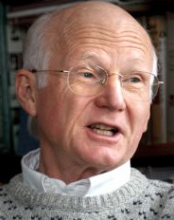
He helped organize coalitions that led in passage of dozens of ethics and open government laws and five major amendments to the Rhode Island Constitution, including the 2004 Separation of Powers Amendment.
West hosted many delegations from the U.S. State Department’s International Visitor Leadership Program that came to learn about ethics and separation of powers. In 2000, he addressed a conference on government ethics laws in Tver, Russia. After retiring from Common Cause, he taught Ethics in Public Administration to graduate students at the University of Rhode Island.
Previously, West served as pastor of United Methodist churches and ran a settlement house on the Bowery in New York City. He helped with the delivery of medicines to victims of the South African-sponsored civil war in Mozambique and later assisted people displaced by Liberia’s civil war. He has been involved in developing affordable housing, day care centers, and other community services in New York, Connecticut, and Rhode Island.
West graduated, Phi Beta Kappa, from Hamilton College in Clinton, N.Y., received his masters degree from Union Theological Seminary in New York City, and published biblical research he completed at Cambridge University in England. In 2007, he received an honorary Doctor of Laws degree from Rhode Island College.
Since 1965 he has been married to Anne Grant, an Emmy Award-winning writer, a nonprofit executive, and retired United Methodist pastor. They live in Providence and have two grown sons, including cover illustrator Lars Grant-West.
This electronic version of SECRETS & SCANDALS: Reforming Rhode Island, 1986-2006 omits notes, which fill 92 pages in the printed text.
Rhode Island's History of Political Corruption

Buddy Cianci
Vincent A. "Buddy" Cianci resigned as Providence Mayor in 1984 after pleading nolo contendere to charges of assaulting a Bristol man with a lit cigarette, ashtray, and fireplace log. Cianci believed the man to be involved in an affair with his wife.
Cianci did not serve time in prison, but received a 5-year suspended sentence. He was replaced by Joseph R. Paolino, Jr. in a special election.

Joseph Bevilacqua
Joseph Bevilacqua was RI Speaker of the House from 1969 to 1975, and was appointed as Chief Justice of the State Supreme Court in 1976. It was alleged that Bevilacqua had connections to organized crime throughout his political career.
According to a 1989 article that appeared in The New York Times at the time of his death:
The series of events that finally brought Mr. Bevilacqua down began at the end of 1984... stating that reporters and state police officers had observed Mr. Bevilacqua repeatedly visiting the homes of underworld figures.
The state police alleged that Mr. Bevilacqua had also visited a Smithfield motel, owned by men linked to gambling and drugs...

Thomas Fay
Thomas Fay, the successor to Bevilacqua as Chief Justice of the Supreme Court, resigned in 1993, and was later found guilty on three misdemeanor counts of directing arbitration work to a partner in his real estate firm, Lincoln Center Properties.
Fay was also alleged to use court employees, offices, and other resources for the purposes of the real estate firm. Fay, along with court administrator and former Speaker of the House, Matthew "Mattie" Smith were alleged to have used court secretaries to conduct business for Lincoln, for which Fay and Smith were business partners.
Fay was fined $3,000 and placed on one year probation. He could have been sentenced for up to three years in prison.

Brian J. Sarault
Former Pawtucket Mayor Brian J. Sarault was sentenced in 1992 to more than 5 years in prison, after pleading guilty to a charge of racketeering.
Sarault was arrested by state police and FBI agents at Pawtucket City Hall in 1991, who alleged that the mayor had attempted to extort $3,000 from former RI State Rep. Robert Weygand as a kickback from awarding city contracts.
Weygand, after alerting federal authorities to the extortion attempt, wore a concealed recording device to a meeting where he delivered $1,750 to Sarault.

Edward DiPrete
Edward DiPrete became the first Rhode Island Governor to be serve time in prison after pleading guilty in 1998 to multiple charges of corruption.
He admitted to accepting bribes and extorting money from contractors, and accepted a plea bargain which included a one-year prison sentence.
DiPrete served as Governor from 1985-1991, losing his 1990 re-election campaign to Bruce Sundlun.

Plunder Dome
Cianci was forced to resign from the Mayor’s office a second time in 2002 after being convicted on one several charges levied against him in the scandal popularly known as “Operation Plunder Dome.”
The one guilty charge—racketeering conspiracy--led to a five-year sentence in federal prison. Cianci was acquitted on all other charges, which included bribery, extortion, and mail fraud.
While it was alleged that City Hall had been soliciting bribes since Cianci’s 1991 return to office, much of the case revolved around a video showing a Cianci aide, Frank Corrente, accepting a $1,000 bribe from businessman Antonio Freitas. Freitas had also recorded more than 100 conversations with city officials.
Operation Plunder Dome began in 1998, and became public when the FBI executed a search warrant of City Hall in April 1999.
Cianci Aide Frank Corrente, Tax Board Chairman Joseph Pannone, Tax Board Vice Chairman David C. Ead, Deputy tax assessor Rosemary Glancy were among the nine individuals convicted in the scandal.

N. Providence Councilmen
Three North Providence City Councilmen were convicted in 2011 on charges relating to a scheme to extort bribes in exchange for favorable council votes. In all, the councilmen sought more than $100,000 in bribes.
Councilmen Raimond A. Zambarano, Joseph Burchfield, and Raymond L. Douglas III were sentenced to prison terms of 71 months, 64 months, and 78 months, respectively.

Charles Moreau
Central Falls Mayor Charles Moreau resigned in 2012 before pleading guilty to federal corruption charges.
Moreau admitted that he had give contractor Michael Bouthillette a no-bid contract to board up vacant homes in exchange for having a boiler installed in his home.
He was freed from prison in February 2014, less than one year into a 24 month prison term, after his original sentence was vacated in exchange for a guilty plea on a bribery charge. He was credited with tim served, placed on three years probation, and given 300 hours of community service.

Joe Almeida
State Representative Joseph S. Almeida was arrested and charged on February 10, 2015 for allegedly misappropriating $6,122.03 in campaign contributions for his personal use. Following his arrest, he resigned his position as House Democratic Whip, but remains a member of the Rhode Island General Assembly.

Gordon Fox
The Rhode Island State Police and FBI raided and sealed off the State House office of Speaker of the House Gordon Fox on March 21--marking the first time an office in the building has ever been raided.
Fox pled guilty to 3 criminal counts on March 3, 2015 - accepting a bribe, wire fraud, and filing a false tax return. The plea deal reached with the US Attorney's office calls for 3 years in federal prison, but Fox will be officially sentenced on June 11.


