


Speaker Mattiello Has Sights on Ending HealthSource RI
Kate Nagle, GoLocal Contributor
Speaker Mattiello Has Sights on Ending HealthSource RI

"I know that they're working on trimming that number down significantly," said Mattiello, as the state awaits Governor Gina Raimondo's budget proposal on March 12 for Fiscal Year 2016. "In my mind, the question is can they trim it down enough that it is efficient for our citizens."
"The General Assembly will ultimately have to make the decision as to if and how we fund it, through budget appropriations or through some type of fee," continued Mattiello of the projected $14.4 million cost to the state in the coming year to run the exchange. "That's our jurisdiction. If it's not efficient, we'll certainly look to turn it over to the Feds."
GET THE LATEST BREAKING NEWS HERE -- SIGN UP FOR GOLOCAL FREE DAILY EBLASTBoth Mattiello and Senate President Teresa Paiva Weed spoke to the state's healthcare exchange at the Greater Providence Chamber of Commerce legislative luncheon this week, with Paiva Weed saying she supported keeping HealthSource RI -- but not without addressing the costs.
"It's not the model car we're diving, it's a weight problem," said Paiva Weed. "There's been a tremendous amount of money spent on marketing, and [spent] investing in the call centers. Those are just two areas where the exchange [costs] can be trimmed down. I believe it can be trimmed down without abandoning its core mission."
Looking at Costs

Currently, Rhode Island is one of thirteen states (plus Washington, DC) to operate its own exchange; the rest comply with the Affordable Care Act through the federally-operated exchange.
"We need $14.4 million that has to go into the budget for next year from what we hear," said Mattiello. "If we're not willing to appropriate that, and say [HealthSource] is able to get federal grants to cover that, we can still within the parameter of the budget process opt to have it turned over to the feds, due to its fiscal implications."
Mattiello noted he has been talking with Governor Raimondo and his colleagues in the General Assembly as to what a feasible cost structure might be.
"I've been collaborating with the Governor, and the Senate President and my members and we will come up with a consensus," said Mattiello. "The argument that I hear the most for keeping HealthSource RI that it's something that Rhode Island has done well and we should have pride in that-- but I've also learned of significant problems within the exchange. There's a certain pride operating it at the state level, but it can't come at the expense of inefficiencies. "
HealthSource RI's new Executive Director Anya Rader Wallack said that she was working with Raimondo to reduce operating costs -- and budget estimates.
“I’m working closely with the Governor to significantly reduce the previous budget estimate for operating HealthSource RI and to make the case for keeping a state-based exchange," said Wallack. "Handing it over to the Feds means ceding local authority and control, as well as potential benefits to the state-- including jobs and ways in which we can serve small businesses. There is also uncertainty about whether Rhode Islanders would continue to receive tax credits they currently receive through HealthSource RI (estimated at $67M in calendar year 2014).”
As of January 31, 2015, HealthSource RI reported that 78% of its first year customers had renewed for 2015, totaling 19,887 -- and that over 7,500 new customers signed up for 2015.
Supreme Court Ramifications?
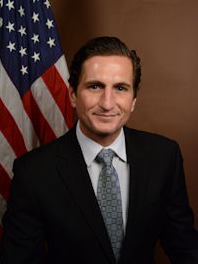
Freshman State Representative and attorney Blake Filippi provided his vantage point.
"If the Supreme Court says subsidies are available anywhere -- to states with their own exchange, or not -- if we get rid of HealthSource RI, there's not much downside," said Filippi. "However, if the Supreme Court says those subsidies are only available where a state run exchange has been established, it becomes an interesting political issue."
Filippi continued, "If we keep HealthSource RI, the continued federal subsidies will help many economically disadvantaged people purchase health insurance. However, it comes at a cost. The subsidies will impose the individual mandate on many poor persons that would not be able to afford health insurance without these subsidies, and critically, the continued subsidies will impose the large employer mandate on many of our businesses."
"The law currently says that the large employer mandate is applicable where subsidies are available," said Filippi. "So, if we keep HealthSource RI and the federal subsidies that come along with it, our large employers are subject to this mandate. If we get get rid of HSRI, we don't have federal subsidies -- or the large employer mandate tax."
Filippi summed up the implications, as they pertained to the current debate.
"This is a critical issue," said Filippi. "We have to decide whether the continued subsidies are worth having the large employer mandate tax imposed on our businesses. As we try to attract new businesses to come here, if we're one of a minority of states with its own exchange that imposes the large employer mandate, we have to consider the impact on the cost of doing business here versus the 34 states without this significant expense."
Mattiello acknowledged the potential impact on states depending on the Supreme Court outcome -- but asserted that the state would move forward as the law currently stands.
"There would be one argument for keeping [in the state] to keep the subsidies for our citizens, but the other argument is then you don't have the mandate. You can make the argument from either side, depending," said Mattiello.
"Right now the law is constitutional, and the law is you get the subsidies in either system," continued Mattiello. "That being the case, we've made the decision that our collective belief is that the most appropriate way to move forward is under the assumption that the subsidies will be provided in either system, and act accordingly on that belief."
Across the State

“It’s hard to see the enrollment numbers as anything other than disappointing,” said Mike Stenhouse, president and CEO of the Rhode Island Center for Freedom and Prosperity. “The fact they are so far behind their original enrollment estimates of 100,000 suggests most Rhode Islanders don’t want what they’re selling, and therefore local funding of HealthSource RI does not present an acceptable cost-benefit return.”
"Our Center recently published a report that recommended patient-centric, free-market reforms as the best means to lower costs and increase access to healthcare services," continued Stenhouse. "We think it would be precisely the wrong approach if the new administration were to move towards a government-centric, centrally-planned one-size-fits-all approach. We'll find out soon enough."
Advocacy group RI Taxpayers' Monique Chartier provided the following statement on behalf of the organization.
"It's important to note, first of all, the failure of ObamaCare and HealthSource RI to fulfill one of their most important goals: to offer a broader range of reasonably prices policies and to lower the cost of health insurance coverage," said Chartier. "This has not happened. In fact, many customers have found that they must accept policies that are actually more expensive, either premium-wise or in terms of higher deductibles. So HealthSource RI offers little to no value in terms of saving on health insurance coverage."
Supporters of keeping the exchange in the state are making their case to make sure that it stays run by Rhode Island.
"Rhode Island should keep HealthSource RI which is putting the state on a path to a future that is both healthier and more economically secure. HealthSource provides one-stop shopping for quality, affordable health insurance for Rhode Islanders. Individuals and families can compare a number of health insurance plans in one place and pick the plan that works best for their health care needs and budgets. Consumers have already seen an increase in the number of options and a decrease in the cost of some plans," said Linda Katz with the Economic Progress Institute. "They have easy access to the affordability options that help them pay for insurance. "
"HealthSource RI has worked to address the needs of small employers and employees through innovation in the SHOP – the marketplace for small businesses," continued Katz. "Dismantling HealthSource RI and participating in the federal marketplace means losing control over a key part of our health care system. Changing to the federal exchange is not without cost: Rhode islanders will still need to pay a fee to use the federal exchange; depending on the outcome of the Supreme Court case, Rhode Islanders could lost the federal tax credits that help them pay for insurance; insurers will need to revamp systems to interface with the federal exchange."
Ten Bills to Watch in 2015 General Assembly

Marijuana Legalization
Will marijuana legalization see daylight -- or even success -- in RI in 2015?
Advocates are buoyed by Governor Gina Raimondo's public openness to considering the possibility. As other New England states weigh the prospects of legalization, and Rhode Island faces a budget deficit, proponents are bullish on the potential.
"[Governor] Raimondo's recent comments — made very early in the legislative session — about marijuana policy reform being something we should "absolutely" look at sends a clear message to the General Assembly," said Jared Moffat, Director of Regulate RI. "She wants lawmakers to have an open, honest, and serious discussion about this issue."
"Our bill to regulate marijuana like alcohol hasn't been introduced yet, but will be soon," added Moffat. "Polls show a majority of Rhode Islanders are tired of costly and ineffective prohibitionist policies that punish adults for using a substance that is far less harmful than alcohol. With the huge loss in gambling revenue, lawmakers will be looking for a way to close the budget deficit, and marijuana consumers are one of the few groups that wouldn't mind paying more taxes."

Twin River Hotel
The slots-parlor-turned-casino-with-table games in Lincoln (through voter approval in 2012) wants to take another step towards full fledged destination status with a hotel, in order to compete with looming gambling on the horizon in Massachusetts.
"We expect there will be a bill, but we've always believed the conversation should start with the town first," said Twin River spokesperson Patti Doyle, about the prospects of a hotel being broached during the session.
"There's a meeting in Lincoln with residents on [February] 24th. After the public hearing, we will approach the Lincoln delegation about the possibility of bill introduction."
"We're looking for the repeal of the prohibition of a hotel, which exists in the current master contract between UTGR and the state," noted Doyle.

Social Security Exemption
The cornerstone of Speaker Mattiello's legislative agenda -- exempting social security from the state income tax -- has already drawn criticism from the state's former Director of Administration Gary Sasse, and a battle of words ensued over the merits (or drawbacks) of the proposal.
Mattiello pointed to RI being just one of 13 states that has an income tax on social security, while Sasse questioned its fiscal impact -- and its impact on job creation.
Representatives Patricia Serpa and Bob Craven have already introduced legislation push for Mattiello's proposal -- look to see how the rank and file follow suit and if opposition will arise at the Assembly to it.

Narcan in Schools
The bill recently introduced by State Representative David Bennett -- a psychiatric nurse -- to equip and train school nurses and officials in grades 6-12 to administer Narcan, the antidote for opioid overdoses, was proposed at the same time the RI Department of Health announced that Narcan was administered on youth under the age of 18 over 50 times in 2014.
"RI is on the cutting edge with this, before we congratulate ourselves too much, we're leading the nation in drug and alcohol use," said Dr. Jody Rich, at the Miriam Hospital. "I haven't checked the stats, but we're up there. We need to try everything we possibly we can. There were 1000 overdose deaths in MA in 2013, we had 200 in RI. In this day and age you don't want to see young people doing heroin, oxycontin, vicodin -- much of which is being cut with the fentanyl."
The proposal is slated for a hearing on Wednesday February 4 with the House Committee on Health, Education, and Welfare (HEW).

Ban on Beach Smoking
Will Rhode Island ban smoking at state beaches in 2015?
"Discarding cigarette butts, cigar butts and tobacco waste on beach sand is not only unsightly and unclean, it can be particularly hazardous to small children, who may handle or ingest this material,” said Sen. Erin P. Lynch (D-Dist. 31, Warwick, Cranston), who noted that cigarette butts contain 200 known poisons, many of which are known to cause cancer, in her legislative proposal.
The legislation would make smoking or disposing of smoking products illegal on or within 20 feet of all beaches under the control of the Department of Environmental Management. Violators would be guilty of a misdemeanor and subject to a mandatory fine of between $150 and $1,000 for a first offense, between $500 and $1,000 for a second conviction and between $750 and $1,000 for subsequent offenses. In addition to fines, the court may, as a condition of probation, order violators to spend eight hours collecting litter at state beaches.

School Construction Funds
The current moratorium on state aid to school construction in Rhode Island set to expire in May, and Senator Ryan Pearson introduced legislation to reform the process through which school construction projects are approved and provide a designated funding stream to meet the needs of modern public education facilities.
“This is a starting point for discussion on the critical issue of school construction aid,” said Sen. Pearson (D – Dist. 19, Cumberland, Lincoln). “This issue is a priority in the Senate for good reason. It is absolutely imperative that we get this right and meet the educational needs of students across the state while ensuring a sustainable funding strategy.”
The legislation, based on the work of a 2014 Senate task force, would enhance the funding, structure and functions of the Rhode Island Health and Educational Building Corporation (RIHEBC). The agency’s board would be reformed, and it would be designated as the financing and administering entity for school construction projects. RIHEBC would allocate funding of annual revenues for projects based on need, priority and cost effectiveness.

Rhode Map Opt-Out
The controversial state development plan approved by the State Planning Council in December could see legislation to allow cities and towns to decide to opt out.
Spearheaded by House Minority leaders, such a bill would most likely allow cities and towns to not adhere to the HUD standards set forth in RhodeMap.
“Many Rhode Islanders, all of the legislative members of the House Minority and many city and town councils have expressed concern with the impact that RhodeMap RI may have on local comprehensive plans and zoning ordinances. We decided to address those concerns.” said House Minority Leader Brian Newberry.

Ethics Legislation
After newly elected Governor Gina Raimondo issued an executive order calling for ethics and integrity in state government, members of the General Assembly began following suit -- to put a constitutional amendment question before voters establishing the makeup and powers of the Ethics Commission and specifically its authority over members of the General Assembly.
“The people’s trust in its government is the glue that binds a people to its government,” said Senator James Sheehan. “Restoring the Ethics Commission jurisdiction over legislators has become central to establishing that trust.”
Senator Edward O'Neill announced that he was looking to amend the Rhode Island Constitution to give the Ethics Commission greater jurisdiction over the General Assembly, including acts otherwise protected by the “speech in debate” provisions of Article VI, Section 5 of the Constitution.

Infrastructure Funding
During the campaign, now-Governor Gina Raimondo said she would create a Rhode Island Municipal Infrastructure Bank as a "one-stop shop" for cities and towns to improve Rhode Island's roads, bridges and other infrastructure.
It would expand a road and bridge revolving fund she created last year with the General Assembly to provide low-interest loans to municipalities for repairs; establish a road and bridge funding formula; launch a so-called green bank for retrofitting buildings and facilities; and create a school building authority to stimulate capital improvements.
In 2013, then-gubernatorial candidate Ken Block blasted then-General Treasurer Raimondo's infrastructure plan at the time. Look to see what, if any, discussion and debates arise if Raimondo tries to push the bolder proposal this year.

Budget
Facing a projected $30 million budget shortfall for the coming year, all eyes will be on Governor Gina Raimondo when she unveils her FY16 budget on March 12. Little is known at this time of the new Governor's agenda and budgetary priorities, but the first-time budget proposal, which is historically later the first year of an Administration, means for a shorter period of time for the General Assembly to digest -- and respond.


