


State Police Officer Who Unveiled Illegal Contamination Threatened With Discipline for Investigation
GoLocalProv News Team
State Police Officer Who Unveiled Illegal Contamination Threatened With Discipline for Investigation

A new GoLocal Access to Public Records Act (APRA) request unveils that the RISP officer who first uncovered the illegal dumping was not only ordered off the investigation, but threatened with discipline if he took further action.
On Saturday, September 5, 2020, Lt. Michael Casey wrote in a detailed memo to Captain Matthew C. Moynihan, then-a member of the State Police's command staff, unveiling contamination associated with one of the state's most expensive transportation projects.
GET THE LATEST BREAKING NEWS HERE -- SIGN UP FOR GOLOCAL FREE DAILY EBLASTThe memo stated that a retired state trooper had contacted Casey to alert him to the issue of illegal dumping. But nearly as soon as the investigation began, it was over.
On Tuesday, September 8, 2020, GoLocal broke the story of the contamination, in the article "EXCLUSIVE: Union Official Says RIDOT Allows Contractor to Illegally Dump Contaminates at 6/10 Site."
Later that Tuesday morning a meeting was held by Governor Gina Raimondo's office hosted by staffer Nicole Verdi -- that meeting included top staff RISP, RIDOT, and the Rhode Island Department of Environmental Management (RIDEM).
In a memo, written hours after GoLocal's story and the subsequent emergency meeting in Raimondo's office, Moynihan wrote at 9:13 PM to Casey ordering him to abandon the investigation and threatened him with disciplinary action.
The documents released to the GoLocal by the State Police in response to the APRA request were redacted, but GoLocal has learned what was printed under the blackened area in one of the key redactions.
Moynihan's memo stated:
“As I had instructed you on Saturday and again today, you are not to do anything further regarding this complaint. You should not be contacting anyone regarding the status of this investigation. It has been assigned to the Detective Bureau and they will be coordinating all further investigative activities. REDACTED
I have been very clear that this will not be investigated by you or members from the Uniform Bureau. The allegations are extremely serious and the Division must ensure our investigative efforts are thorough and performed with confidentiality in order to identify any potential wrongdoing.
We will ensure the case narrative report is accessible to you in the morning in order for you to .review and finalize your reports."
What Was Redacted by RI State Police
GoLocal has learned what Moynihan wrote in the email to Casey that was redacted by the State Police’s legal counsel Andrew Sholes before releasing the documents to GoLocal was a threat of disciplinary action, the redacted portion states:
“Any further action on your part will be considered insubordination as I feel I have been very clear that this will not be investigated by you or members from the Uniform Bureau,” wrote Moynihan.

Moynihan has left the State Police and now serves as the Police Chief of Block Island.
Reached on Sunday, Moynihan defended the directive to Casey, “Any matter like this must go through the chain-of-command.”
Moynihan said that it was not unusual for cases such as this to be reassigned to detectives and claimed that the language in the memo threatening insubordination was not unusual.
But, GoLocal reviewed thousands of pages of RISP emails and could not find a similar communication the threatened charges for any matter to a member of the agency, let alone to a senior member of the agency and especially to someone who just uncovered a potential significant criminal case.
Within days the investigation shifted from the state's primary law enforcement agency -- the RI State Police, which has a staff of more than 220 -- to the single investigator at the RI Department of Environmental Management. The environmental agency's investigative capabilities were slashed under Raimondo.
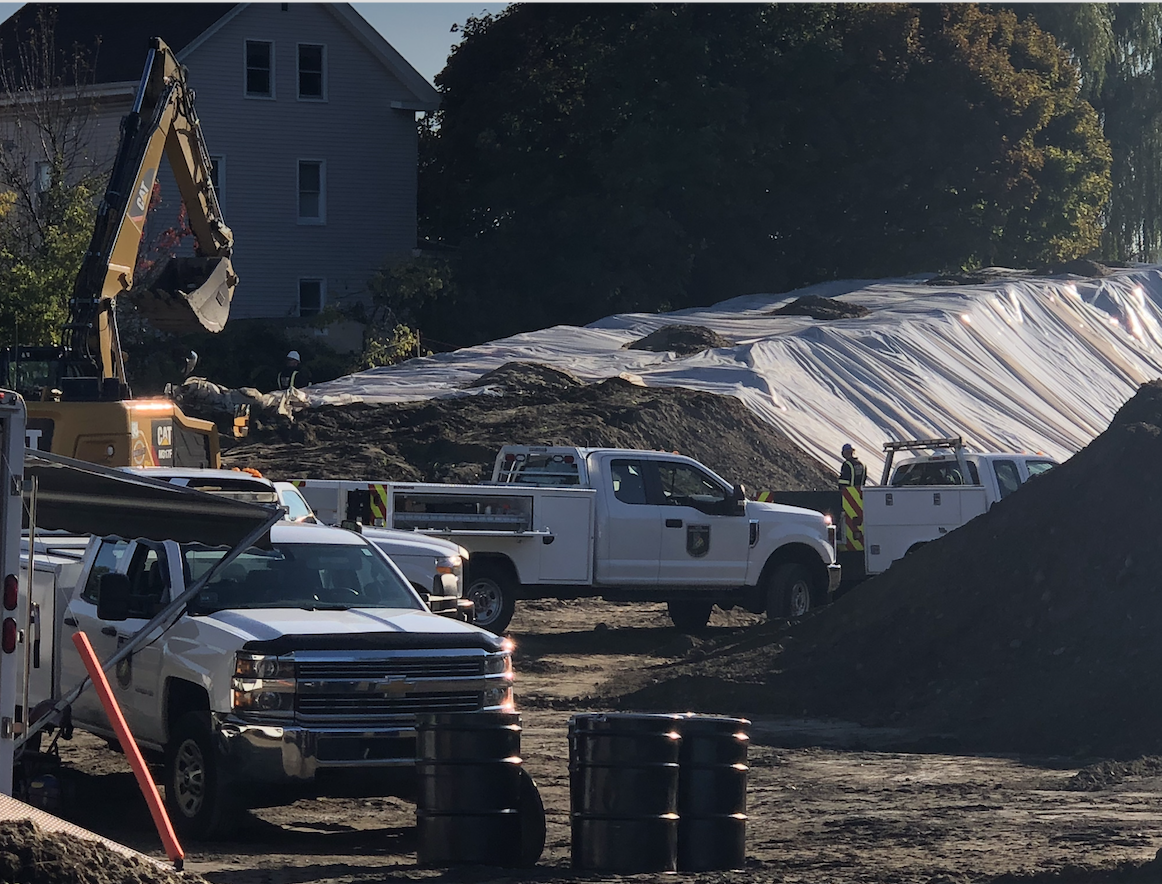
“On September 4, 2020, I spoke with retired Lt. Eric LaRiviere regarding information he learned from a friend of his, James White. Lt. LaRiviere stated that Mr. White had evidence that Barletta Corporation was illegally mixing and disposing toxic railroad dirt and rocks on the massive Route 10 @ Route 6 construction site. Lt. LaRiviere continued and stated that James White is the Business Manager and President of the Local 57 and is very concerned about his employees working and being in contact with these possibly contaminated mixtures,” wrote Casey in the memo.
“At this point in the conversation, I became concerned about our Troopers working details in this area, the particulates that were probably being dispersed into the air, breathed in, their uniforms contaminated and the troopers bringing these small particles to their home. Lt. LaRiviere asked if I would speak to Mr. White regarding the evidence he has to substantiate his beliefs. Lt. Lariviere stated that he would have Mr. White contact me right away,” wrote Casey.
“At 9:09 AM, I spoke with Mr. White who stated approximately two (2) months ago his Local 57 workers started noticing trucks from different companies transporting in a darker colored soil from sites in Massachusetts (MBTA Orient Heights Station located in Boston, MA) and Pawtucket. These trucks would drop off this darker soil at the corner of Pocasset Street and the overpass of Route 6 and leave this soil in very large piles (possibly 1,000s of yards),” stated the memo written by Casey.
In a Freedom of information Act request by GoLocal to Massachusetts, officials unveiled documents that showed that Commonwealth officials gave specific direction to the contractor for disposal options. White alleges the contamination was transported from Massachusetts to Rhode Island, but that was not an authorized disposal option. At the Massachusetts site, the Jamaica Plain MBTA construction project, Barletta was also the contractor.
According to Casey’s September memo, “The Local 57 workers immediately noticed that this darker soil smelt of oil and observed various items that would be associated with railroad fixtures such as, railroad spikes, wooden ties, springs and other heavy metal objects. It should be noted that each member of Local 57 [is] required to take a 40 hour class on hazardous materials so that they can learn certain indicators of soil and rocks that potentially contain contaminated and hazardous material. The workers were then instructed to mix this darker material with the native soil, but first they needed to send this darker material through a large dirt and soil screener to get these heavy metal objects out of the soil. Mr. White stated that his workers actually observed various railroad items stuck in the screeners almost clogging up that machine.”
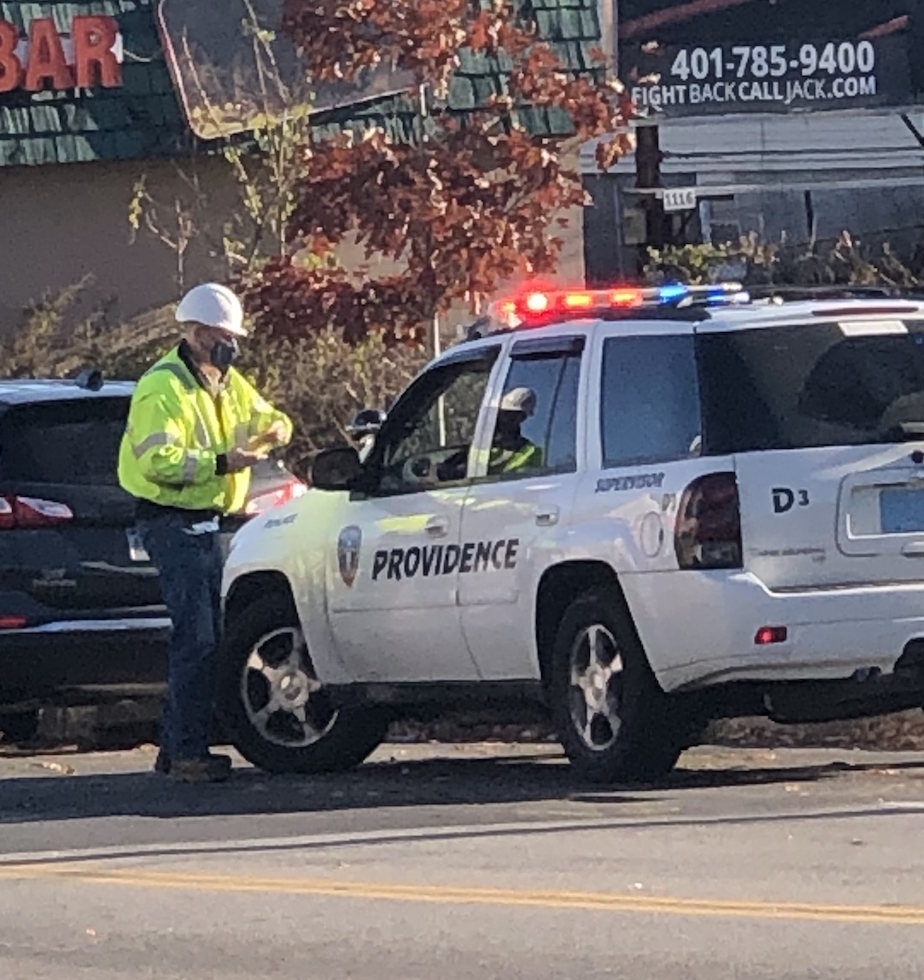
“Last week, I received photographs of alleged hazardous waste being dumped on the site to be used as fill for the project (6/10 reconstruction project). The truck drivers delivering this material said they were hauling it from an MBTA railroad station in Jamaica Plain, Massachusetts. My Members are being directed to immediately mix this fill into the native soils as soon as it is dumped out of the trucks,” wrote Casey.
"Mr. White then showed me a report from R.I Analytical (RIA) who are specialists in Environmental Services and located at 131 Coolidge Street, Hudson, MA 01749. This report reveals that R.I. Analytical conducted a Polycyclic Aromatic Hydrocarbons Test (PAH) instead of a Volatile Organic Compound Test (VOC) and showed that the soil contains 3.4 parts of Benzo(a)pyrene with the Rhode Island Industrial/Commercial standard limits being at 0.8. In addition, Dibenzo(a,h)anthracene was detected at 1.8 parts with industrial/commercial standards being set at 0.8," wrote Casey -- the report was later provided to GoLocal.
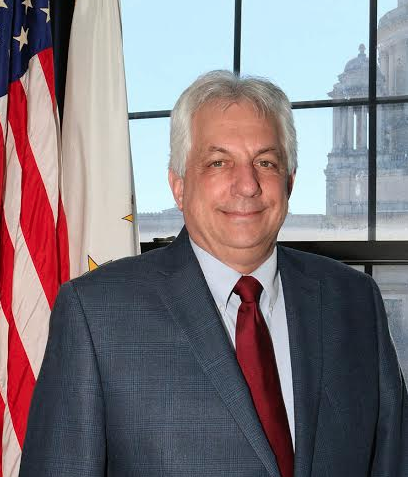
But Alviti's claims were false. Ultimately, the contamination was unveiled and RIDOT and the contractor were ordered to remove the massive pile of contaminated soil piled up in the Olneyville neighborhood next to homes -- homes with small children.
According to Casey's memo, "A quick search of Benzo(a)pyrene revealed that Short-term health effects can include a skin rash or eye irritation with redness and/or a burning sensation. Exposure to sunlight and the chemical together can increase these effects. Long-term health effects can be deadly. Benzo[a]pyrene is a probable cancer-causing agent in humans. In relation to cancer and the bodies function to this compound, by inducing G (guanine) to T (thymidine) transversions in transversion hotspots within p53, there is a probability that benzo[a]pyrene diol epoxide inactivates the tumor suppression ability in certain cells, leading to cancer. To save time, Dibenzo(a,h)anthracene is also listed as a Special Health Hazard chemical."
Samples Collected But Never Tested
"With the above information and to corroborate Mr. White’s assertions, at 1:00 PM I met Mr. White at the material mixing site located off Pocasset Street that abuts the Route 6 overpass, in the City of Providence. At this location, Mr. White showed me several piles of dirt and stones. I immediately observed an obvious discoloration in soils from the native soil pile and the larger-sized discolored rocks from the pile of smaller and cleaner rocks. I could also detect the smell of oil coming from the dirtier piles. Mr. White then brought me over to the large screener that was being used to sift the newly trucked-in material. Stuck within this screener were railroad spikes, wooden railroad ties and other heavy metal, coiled typed metal bars. A railroad spike and two (2) wooden ties were seized along with some soil and rocks. It should be noted, that Barletta allowed all construction employees to leave early for the Labor Day weekend, however, Mr. White had an “employee” who was told to mix the two (2) different materials stick around to explain the amount of material she has mixed over the last two (2) months. Mr. White, along with the site’s heavy machine operator showed me a huge pile of fill that was both tan and dark in color and was used to fill areas of the construction site. It was abundantly clear to me this was a mixture of the native soil," wrote Casey in the memo.
Casey took samples when he visited the RIDOT site with White. GoLocal has learned that those samples were never tested for contamination by the Rhode Island State Police.
The Casey memo states, "With this information, I instructed Corporal Doyle to try and contact the University of Rhode Island to see if they had a testing facility that could conduct a PAH screen test of their own. The reason for this is because Mr. White explained that Barletta conducted their own tests of the soil that conveyed negative results for any hazardous material, which Mr. White claims was taken from a non-contaminated area. It should also be noted that other dark soil/material was being transported directly in from the Rhode Island Department of Transportation Pawtucket site. Moreover, Mr. White advised that he had members of Local 57 watch a large dirt loader’s fill dump trucks at the Pawtucket DOT Facility and follow these trucks to the mixing site at Pocasset Avenue where this they watched, took pictures and videotaped this dirt being spread all along the construction site. Mr. White presented to the State Police several photographs obtained by his members corroborating the Local 57’s allegations."
The memo goes on to state, "With the above information, I called several retired sources who wanted to remain anonymous and asked about the possible dumping of old railroad fill. The sources stated that not only is Benzo(a)pyrene a hazardous and toxic material, but the railroad fill contains other containments such as: coal ash, lead, arsenic, oil, gasoline, herbicides, asbestos, other metals and anything else that could be transported. In addition, Cardi Corporation was investigated back in 1993 and 1994 for dumping railroad fill in their construction site but it is unclear of the outcome of that investigation."
In November -- two months after Casey's memo and GoLocal's first report -- GoLocal unveiled law enforcement activity expanded beyond the RIDOT site in Olneyville site to a second RIDOT site. The Pawtucket/Central Falls Train Station is also managed by Barletta. "While we cannot comment on the substance of the investigation, we can confirm that DEM is executing a state court-authorized search warrant at the site," said the Rhode Island Attorney General's office to GoLocal at the time.
Casey's memo outlined the scope of the amount of material that had been moved to the 6/10 project. "Mr. White has estimated that approximately 4,000 tons of this potentially contaminated material has been trucked from the MBTA and the RIDOT. Additionally, Mr. White has explained that since his complaints to the RIDOT, the delivery of this material has been halted, but Mr. White is now receiving legal correspondence from the RIDOT that to him feel like he is being subpoenaed. Mr. White is also concerned because Barletta has a contract to start a bridge renovation project in Rhode Island where some of the union members overheard that more of this product would be dumped at that site," wrote Casey.
Casey's memo referenced another Barletta project -- the Henderson Bridget project.
"Mr. White presented a letter from Mabbert & Associates located at 105 Central Street, Suite #4100, Stoneham, MA 02180 that conducted a 'Request for Approval for Soil Reuse at Aggregate Industries, Saugus, Massachusetts Orient Heights Station Material Stockpile, Boston, Mass.' This is the location where all the excavated railroad material is stored and supposed to be trucked to New Jersey to be decontaminated. In short, this report states: “On June 9, 2020, Jordan Herbert of Mabbett mobilized to the Orient Heights Station to characterize the southern portion of the stockpile (excavated railroad material). The northern portion of the stockpile had been characterized on May 29, 2020 and determined 'not to be suitable for reuse” at the aggregate industries Saugus facility,'" wrote Casey.
Casey's memo states, "Lastly and most concerning, according to the Mabbert Report 'The Site from which the material originated has been used for heavy-rail passenger service since the 1950s.' Which means seventy (70) years of constant railroad traffic and according to the report '90 percent of the material originated from the trackbed inside of the Blue Line Tunnel between Porter and Maverick Streets and an estimated 10 percent of the material originated from the trackbed outside of the tunnel adjacent to the East Boston Expressway'...that leads to the possibility that rainwater never had access to the tunneled portion of the railway and was unable to clean or filter out impurities."
The memo concludes, "Due to the above-mentioned information, I felt it imperative to come into work on Saturday to send you my findings. I realize that this is a lot of information, but my concern is the underprivileged area where these deposits are being made, the schools in the area, unsuspecting motorists, detail Troopers and Providence Officers and the eventual run-off from this material into our drinking water. We have all the documentation down here at the Barracks, along with computer checks conducted by Corporal Doyle.
Respectfully Submitted, Lieutenant Michael D. Casey #136 Rhode Island State Police, Hope Valley Barracks- Patrol Commander"
The State Police refused to comment on the memo.
TIMELINE: 6/10 Contamination GoLocal Investigation

EXCLUSIVE: Union Official Says RIDOT Allows Contractor to Illegally Dump Contaminates at 6/10 Site
Tuesday, September 8, 2020
One of Rhode Island’s top union officials is blowing the whistle -- and says he has proof that one of the construction firms working on two of Rhode Island’s largest infrastructure projects is improperly disposing of contaminated materials.
The construction firm at the center of the allegations is the Massachusetts-based Barletta Engineering/Heavy Division. which is one of the lead firms on the $410 million 6/10 Reconstruction project. The companies hired by RIDOT for the 6/10 project are called the "6/10 CONSTRUCTORS JOINT VENTURE." That joint venture has been paid in the past three-plus fiscal years $130,649,808, according to Rhode Island state records.
Of the total project cost, Barletta and its partners in the 6-10 Constructors Joint Venture's portion of the project is $247 million. The project was awarded to 6-10 Constructors Joint Venture after it was, the Barletta entities claim, the low bid by “more than 80 million dollars.”
Barletta is also the lead contractor on the Pawtucket/Central Falls Commuter Rail Station and Bus Hub -- a separate $47 million project.
James White, President of Local 57 of the International Union of Operating Engineers says, “I first brought concerns to Barletta in July and they did nothing. Our folks are trained in identifying hazardous materials and we had concerns about the soil materials they were bringing on to the site.”

RI State and Providence Police Pull Details Off 6/10 Connector Worksite Over Contamination Concerns
Tuesday, September 8, 2020
GoLocal has learned that on Monday, both the Rhode Island State Police Troopers Association and Providence Police FOP have canceled all details working the 6/10 Interchange construction site over concerns regarding contaminated soil.
Rhode Island State Police Troopers Association President J.R. Brown notified members of the decision on Monday not to work the site due to concerns raised by James White, President of Local 57 of the International Union of Operating Engineers and test results conducted by White’s union.

RI State Police Open Criminal Investigation Into Alleged Contamination at 6/10 Project
Wednesday, September 9, 2020
GoLocal has confirmed that the Rhode Island State Police have opened a criminal investigation into allegations that the contractor Massachusetts-based Barletta Engineering/Heavy Division transported allegedly contaminated soil onto the 6/10 project site.

Council President Matos Calls on DOT and DEM to Address “Preventable Danger” at 6/10 Project
Thursday, September 10, 2020
Providence City Council President Sabina Matos issued a statement on Wednesday after a GoLocal report unveiled allegations by a top union official of contaminated soil being dumped in Olneyville—part of the Rhode Island Department of Transportation's 6/10 construction project—which has a cost of $410 million.

RIDOT Refuses to Allow Access to 6/10 Site for Independent Soil Samples
Thursday, September 10, 2020
Rhode Island Department of Transportation (RIDOT) officials are refusing to allow access to an environmental testing firm engaged by GoLocalProv.com to take soil samples at the 6/10 Connector construction sites.

Questions Emerging About Investigation of Alleged Contamination at 6/10 Project
Monday, September 14, 2020
Delays in interviewing the whistleblower, refusal to allow independent testing, and moving and mixing the alleged contaminated material are raising concerns about the investigation into the alleged illegal dumping of contaminated material into one Providence neighborhood -- low income and predominately Latino.
PHOTO: Vincent Barletta, company

NEW: RIDOT Announces Removal of Contaminated Soil at 6/10 Project After GoLocal Investigation
Wednesday, September 16, 2020
After a GoLocal investigative series unveiled allegations of contaminated soil at a $410 million state construction project, the Rhode Island Department of Transportation (RIDOT) on Tuesday announced that the Rhode Island Department of Environmental Management (DEM) reviewed a second set of samples from a soil pile at RIDOT’s 6-10 Interchange construction project and ordered the contaminated material to be removed and the site to be remediated.
The samples, taken by RIDOT’s consultant with oversight by DEM site remediation program managers on Saturday, showed levels of some contaminants above regulatory thresholds. As a result, DEM and RIDOT agreed that the soil should be removed.
Of the total project cost, Barletta and its partners in the 6-10 Constructors Joint Venture's portion of the project is $247 million, which the company claims was the low bid by “more than 80 million dollars.”

Federal Investigators Now Probing Contamination at $410 Million 6/10 Project
Thursday, September 17, 2020
GoLocal has learned that agents from at least two federal agencies have been in Rhode Island investigating the now-confirmed contaminated soil at the 6/10 redevelopment project.
GoLocal first unveiled the dumping of contaminated soil 10 days ago.

6/10 Investigation: RIDOT Fails to Notify Neighbors of Contaminants - Children Live Just Feet Away
Saturday, September 19, 2020
Virginia Carmona, one of the homeowners directly abutting the pile of the contaminated materials, was made aware of the issue by GoLocal.
Carmona said no one from the state had told them about the contamination.
On Friday, GoLocal informed her of the contamination and the order to remove the contaminants — some which are just a few feet from her backyard stone fire pit and patio.
Her home on Pilsudski Street is just one of those directly adjacent. The pile of material stacks up to her home’s second-story window.
Carmona said that there are two children living in her home and two children living in the next-door home.
Providence City Council President Sabina Matos, who represents the area, tells GoLocal that state officials have yet to notify her.
How far the contaminated soil can be blown to other sections of the neighborhood is unknown — the concern must be growing because GoLocal, on one site visit to the contaminated area, saw a rusted Barletta Engineering water truck spraying water on some of the material on site.

Teamsters Quit RI Building Trades Council Over Dispute Regarding Barletta, Contractor on 6/10
Wednesday, September 23, 2020
The Teamsters Local 251 have quit the powerful RI Building Trades Council headed by Michael Sabitoni -- a close political ally of Governor Gina Raimondo.
Sabitoni, who also serves as the Business Manager RI Laborers’ Local 271, has been one of Raimondo's biggest fundraisers and political supporters.
According to a letter from the Teamsters Matt Taibi to Sabitoni and Greg Mancini, the dispute is tied to the Laborers' relationship with Barletta Engineering, the Canton-Massachusetts contractor that is one of the principal firms on the $410 million 6/10 construction project. Barletta was selected by Raimondo's RI Department of Transportation just months after Tim Barletta made thousands of dollars in donations to RI Democratic political funds.
Of the total project cost, Barletta and its partners in the 6-10 Constructors Joint Venture's portion of the project is $247 million. The project was awarded to 6-10 Constructors Joint Venture after it was, the Barletta entities claim, the low bid by “more than 80 million dollars.”

RIDOT Piled Contaminated Soil Next to Their Home, Tried to Get Family to Sign Release for $12,600
Saturday, September 26, 2020
The Carmona family has lived on a one-block street for 20 years in Providence. They immigrated from Venezuela, raised two children, and their oldest of the four grandchildren just graduated from the University of Rhode Island. Their daughter was pregnant. Life was good -- it was the American dream.
Then, the Rhode Island Department of Transportation and the contractor Barletta Engineering/Heavy Machine for the $410 million 6/10 project selected a piece of state land next to their home as a staging area for hundreds of tons of soil — soil that RIDOT admits now is contaminated.
Of the total project cost, Barletta and its partners in the 6-10 Constructors Joint Venture's portion of the project is $247 million, which the company claims was the low bid by “more than 80 million dollars.”
RIDOT presented the Carmonas with a legal document, a sweeping release from liability for the state and its consultants and agents -- forever. The Carmonas say a top RIDOT official repeatedly pressured them to sign it.
For more than a year, the family's backyard, car, and grill all have been blanketed with the soil. Soil from the contaminated pile is coming through the fence into their backyard. Everything is covered.

DEM Hazardous Investigation Team Deployed to 6/10 Project, Testing for More Contamination
Wednesday, October 7, 2020
On Tuesday morning, a swarm of Rhode Island Department of Environmental Management hazardous waste investigators and enforcement officers were deployed to the Rhode Island Department of Transportation’s site where hazardous waste has been discovered.
About a dozen investigators and Enforcement officers of DEM were onsite, with a backhoe and investigative trailer on location.

RI Once Had a Group of Elite Investigators to Combat Environmental Crimes - Now, Just One Detective
Saturday, October 10, 2020
As details of contaminated materials being dumped on the 6/10 construction project are emerging, it is clear that the State of Rhode Island's environmental investigative resources are just a fraction of what they used to be.
GoLocal reported this week that the Rhode Island Department of Environmental Management was onsite at a location on Plainfield Street taking more samples from the contaminated pile. State officials have already determined that tons of materials were brought to the location from sites in Massachusetts and a contaminated site in Pawtucket — the site being developed for the new train station.

EXCLUSIVE: U.S. Justice Dept. Issues Subpoenas Relating to Contamination at RIDOT’s 6/10 Project
Friday, October 16, 2020
GoLocal has learned that the U.S. Attorney’s office in Rhode Island has issued subpoenas relating to the contamination at the Rhode Island Department of Transportation’s 6/10 project.
The U.S. Attorney in Providence issued subpoenas in the past two weeks for materials and witnesses to present before a Federal grand jury.
In early September GoLocal unveiled that one of Rhode Island’s top union officials had repeatedly raised concerns with the lead contractor on the project and with both the Departments of Transportation and Environmental Management regarding contaminated soil being shipped into Providence and dumped.

Coalition of 15 Groups Call for “Immediate Halt” of 6/10 Construction Over Concerns of Contamination
Saturday, October 17, 2020
A new coalition of 15 groups in Providence called the “Fix the 6/10 Coalition” issued a statement Friday on the contamination at the Rhode Island Department of Transportation project site -- and are calling for the project to be closed until a full environmental assessment can be conducted.
“We the Fix the 6/10 Coalition call on the Governor and RIDOT to immediately halt construction to assess the public health impacts of this hazardous material on our communities. We ask that our leaders prioritize the health and safety of our residents, above all else, in this and future highway projects,” said the 6/10 Coalition.
Neither Governor Gina Raimondo nor RIDOT Director Peter Alviti responded to requests for comment.

Barletta Attended Raimondo & Mattiello Hosted Fundraiser - MA Company Has Won $349M in RIDOT Contracts
Tuesday, October 20, 2020
More questions are emerging about the timing of Vincent Barletta’s Massachusetts company winning three of Rhode Island’s biggest construction contracts from the Rhode Island Department of Transportation.
In December 2017, Vincent Barletta attended a Rhode Island Democratic party fundraiser co-hosted by Governor Gina Raimondo and Speaker of the House Nick Mattiello. The event was organized by political consultant Jeff Britt.
Britt was recently on trial on felony and misdemeanor charges relating to a 2016 Mattiello campaign mailer. The case is now before Judge Daniel Procaccini.
According to three people who attended the event, Barletta attended the fundraiser with his wife. Each said the couple was hard to miss. Vincent Barletta is somewhere around 6’6” and his wife was repeatedly described to GoLocal as “striking.”
Barletta's company - Barletta Engineering and Heavy Machine - is tied to contaminated soil according to the RIDOT. The contaminated soil has had an adverse impact on abutting neighbors including the Carmona family who lives adjacent to where the contaminated soil has been piled. Presently, there are ongoing state and federal investigations.

After 43 Days RIDOT Has Not Released 6/10 Contamination Docs, MA Released Over 1,100 in 14 Days
Friday, October 30, 2020
After 43 days, the Rhode Island Department of Transportation (RIDOT) is again delaying the release of public documents relating to the contamination at the 6/10 project — a project being managed in part by Massachusetts-based Barletta Engineering and Heavy Machine.
Barletta has in the past three years secured three major contracts from RIDOT totaling $349 million.

New Documents Show RIDOT Tried to Cover Up 6/10 Contamination, Delayed Cleanup for Months
Monday, November 2, 2020
Documents secured by GoLocalProv.com show that the Rhode Island Department of Transportation (RIDOT) knew that contractor Barletta Engineering and Heavy Material dumped soil in Providence improperly as part of the 6/10 construction project -- a month before GoLocal's first report about possible contamination on the site.
Furthermore, the documents undermine RIDOT and Director Peter Alviti's statements at the time, which served to mislead the public.
Even after GoLocal unveiled the allegations of contamination, Alviti took to talk radio and attested the material piled next to homes by the construction site was clean.
Communications show that RIDOT knew that material had been improperly moved to the Providence neighborhood, according to documents secured by GoLocal, and RIDOT had in fact instructed Barletta to remove the soil material more than five weeks earlier.
GoLocal has secured hundreds of pages of documents, reports and emails from the Rhode Island Department of Environmental Management (RIDEM) through an Access to Public Records Act (APRA) request.
RIDEM has refused to answer questions about the documents citing that there is an ongoing investigation.
The U.S. Attorney’s office in Rhode Island has issued subpoenas relating to the contamination at the 6/10 project.
READ THE REST OF THE STORY HERE

Investigation of 6/10 Contamination Linked to RIDOT Contractor Barletta Expands to Second Site
Thursday, November 5, 2020
Rhode Island Department of Environmental Management (RI DEM) investigators with a court-ordered search warrant were on site at the Pawtucket/Central Falls Train Station property — a Rhode Island Department of Transportation project site.
It is all part of answering the question of how contaminated material got dumped in a Providence neighborhood and spread throughout one of the state’s largest most expensive public works developments — the 6/10 project.
RI DEM told GoLocal in an email, "Further soil sampling at the Pawtucket train station project is being conducted today as part of an ongoing criminal investigation. For further information, please contact the Attorney General’s office."
"While we cannot comment on the substance of the investigation, we can confirm that DEM is executing a state court-authorized search warrant at the site," said the Rhode Island Attorney General's office.

Contaminated Material at RIDOT 6/10 Construction Site in Providence Moved — See Where
Tuesday, November 17, 2020
Contaminated material at the Rhode Island Department of Transportation (RIDOT) 6/10 construction site at Plainfield Street in Providence was transported out of state on Monday.
The transportation of the material marks the latest in the investigation into just how contaminated material was dumped in a Providence neighborhood and spread throughout one of the state’s largest and most expensive public works developments — the 6/10 project.
GoLocal followed trucks removing the soil from the Olneyville neighborhood to a landfill in Clinton, Massachusetts -- a landfill that is under a closure order.
Virginia Carmona and her family live adjacent to the contaminated material and she tells GoLocal that she hopes they remove the material quickly as the pile is now is emitting odors.
"The pile smells since they started to move it," said Carmona. The family and other neighbors have complained about the material for months. The soil has tested postive for contaminants above legal levels.
READ THE REST OF THE STORY HERE

State Blocks Release of Documents on Contaminated Soil at RIDOT’s 6/10 Project
Sunday, December 6, 2020
A GoLocal request for copies of the communications between the Rhode Island Department of Environmental Management (DEM) and the Rhode Island Department of Transportation (RIDOT) regarding the removal of contaminated soil a the 6/10 RI DOT project is being blocked by state attorneys.
GoLocal unveiled in September that contaminated material was dumped in an Olneyville neighborhood adjacent to homes and businesses and that material was spread throughout neighborhoods as part of the project -- a project that is costing taxpayers hundreds of millions of dollars.
For months RIDOT, Director Peter Alviti denied the material was contaminated and has refused to answer repeated questions.
GoLocal's investigation has now sparked both federal and state investigations. The Department of Justice has issued subpoenas and has empaneled a grand jury and Rhode Island Attorney General Peter Neronha has an ongoing investigation. And, State court has issued at least one search warrant tied to the investigation at another RIDOT project
Now, three weeks after GoLocal requested the public documents, RIDEM is claiming that among other things that, "Requested records are exempt from disclosure pursuant to R.I. Gen. Laws §38-2-2(4)(A)(I)(a) as privileged Attorney/Client communication.”
“The assertion of this exemption of attorney/client communication is absurd. We are asking for the communications between two state agencies about removing contaminated soil,” said Josh Fenton, CEO and co-founder of GoLocal. "One of the agencies is supposed to be regulating the other."
“We will ask the court to intervene,” said Fenton.
After months of the contaminated soil being dumped in the Olneyville neighborhood, it was removed and taken to a Massachusetts landfill that accepts contaminated material. Neither RIDOT nor RIDEM notified the neighbors, the public, nor the press of the removal. GoLocal tracked the trucks from Providence to the landfill in Clinton, MA.

EXCLUSIVE: Materials From RIDOT 6/10 Project Site Trucked to MA for Use at Contractor Family’s Home
Friday, December 11, 2020
GoLocal has tracked the transportation of concrete retaining wall blocks from the 6/10 construction site in Providence to the home of the daughter of Barletta Engineering’s supervisor in Weymouth, MA for the family's private use.
The contract to Barletta and its partners was awarded by the Rhode Island Department of Transportation -- and is worth hundreds of millions of dollars.
Twice this week, massive concrete retaining blocks were loaded onto a trailer in Providence and then trucked to the home of Barletta’s Dennis Ferreira’s daughter’s home in Weymouth. Identical types of blocks are being installed at the taxpayer supported 6/10 project.
Ferreira is the project supervisor who oversees the day-to-day operation of the construction project that each day is working on multiple sites across acres and acres in Providence neighborhoods and involves hundreds of workers.
According to Weymouth town records, the home at 485 East Street is co-owned by Ferreira's daughter Laken and her husband Brendan O’Brien and they purchased the property in 2019 for $488,000 — the home is now valued for as much as $540,000.
The concrete blocks are being used in a new retaining wall being installed on the privately owned Weymouth property.
Ferreira reached by phone told GoLocal, "I have no comment."
GoLocal tried to reach Ferreira's daughter -- the homeowner of the house in Weymouth -- and she did not respond to questions.
It is unclear why RIDOT inspectors did not detect the removal of the material.
READ THE REST OF THE STORY HERE

Two RI Landfills Refused to Accept Contaminated Soil from RIDOT 6/10 Site, Documents Show
Saturday, December 19, 2020
Documents released to GoLocal in response to an Access to Public Records request unveil that two landfills in Rhode Island refused to accept the contaminated soil improperly dumped in an Olneyville neighborhood.
GoLocal has been blocked by state attorneys from other requested public documents, claiming, in part, attorney-client privilege.
The emails and documents secured by GoLocal weeks after requesting them show that Rhode Island Resource Recovery, the agency overseeing the Central Landfill in Johnston, refused to accept the contaminated soil after initially agreeing to take the waste.
"Rhode Island Resource Recovery Corporation (RIRRC) must retract the approval dated September 23, 2020 for the material disposal request dated September 22, 2020, submitted by Mr. Patrick Haskell of AECOM. This request was for approximately 2,500 tons of currently stockpiled material at the US 6 / RI Route 10 Interchange site on the Plainfield Avenue in Providence, RI, which consists of a mixture of soils generated from various locations of the US 6 / RI Route 10 Interchange Project and stone material originated in Massachusetts," wrote Samantha Putlak of Resource Recovery on November 9 to RIDOT officials.
READ THE REST OF THE STORY HERE

RI State Police Shut Down Investigation Into 6/10 Contamination After Internal Memo Unveiled Issues
Wednesday, March 17, 2021
Prior to GoLocal unveiling contamination at the Rhode Island Department of Transportation 6/10 Construction site, a State Police officer had begun an investigation and taken samples but the investigation was shut down by Colonel James Manni.
GoLocal has now secured a copy of this internal State Police memo.
Initially, the State Police began the state’s investigation but it was almost immediately shifted to the Rhode Island Department of Environmental Management — that agency has only one investigator.
On Saturday, September 5, 2020, Lt. Michael Casey wrote in a detailed memo to Captain Matthew C. Moynihan, a member of the State Police's command staff, regarding contamination.
The memo stated that a retired state trooper had contacted Casey to alert him to the issue. But nearly as soon as the investigation began, it was over. On Tuesday, September 8, 2020, GoLocal broke the story of the contamination, EXCLUSIVE: Union Official Says RIDOT Allows Contractor to Illegally Dump Contaminates at 6/10 Site.

Feds Interview Barletta Supervisor on 6/10 Project, Tells GoLocal Decisions Made by Another Official
Wednesday, April 14, 2021
The ongoing federal investigation related to the dumping of contaminated material in Olneyville tied to the 6/10 construction project is advancing.
Federal agents visited the home of a supervisor of Barletta Engineering — the company is the lead contractor on both the 6/10 project — the state's largest construction project as well as the contractor on another RIDOT project Pawtucket/Central Falls Commuter Rail Station and Bus Hub.
Combined the two projects have received hundreds of millions in federal and state funding.
Truckloads and truckloads of contaminated material were transported to a Plainfield Street location adjacent to homes and small businesses in June of 2020 by Barletta and under the supervision of the RIDOT.
GoLocal has learned the federal investigation continues.
Latest Developments
On Sunday, March 7, 2021, federal agents interviewed Barletta supervisor Jeremy Oliveira about the Pawtucket/Central Falls Train Station project at his home in Dartmouth, Massachusetts about moving contaminated soil from the Pawtucket site to the 6/10 project site.
Oliveira in a phone interview with GoLocal on Monday confirmed that federal agents visited his home, but denied that he knew where the contaminated soil was being taken for disposal after it left the Pawtucket/Central Falls Train Station site.
“It was my job to load the trucks,” said Oliveira, referring to the dozens of trucks that moved material from the Pawtucket/Central Falls site to the 6/10 Olneyville site on Plainfield Street.
"Nothing goes without Dennis' approval," said Oliveira. "He instructed the trucks to take it to the 6/10 site."
Oliveira’s reference to "Dennis" is Dennis Ferreira. He is the project supervisor on the 6/10 Project who oversees the day-to-day operation of the massive construction project that each day is working on multiple sites across acres and acres in Providence neighborhoods and involves hundreds of workers.
READ THE REST OF THE STORY HERE

State Police Officer Who Unveiled Illegal Contamination Threatened With Discipline for Investigation
Thursday, October 7, 2021
More details are now emerging as to how the Rhode Island State Police (RISP) investigation into the illegal dumping of contaminated material at the Rhode Island Department of Transportation (RIDOT) 6/10 project was derailed.
A new GoLocal Access to Public Records Act (APRA) request unveils that the RISP officer who first uncovered the illegal dumping was not only ordered off the investigation, but threatened with discipline if he took further action.
On Saturday, September 5, 2020, Lt. Michael Casey wrote in a detailed memo to Captain Matthew C. Moynihan, then-a member of the State Police's command staff, unveiling contamination associated with one of the state's most expensive transportation projects.
The memo stated that a retired state trooper had contacted Casey to alert him to the issue of illegal dumping. But nearly as soon as the investigation began, it was over.
On Tuesday, September 8, 2020, GoLocal broke the story of the contamination, in the article "EXCLUSIVE: Union Official Says RIDOT Allows Contractor to Illegally Dump Contaminates at 6/10 Site."
Later that Tuesday morning a meeting was held by Governor Gina Raimondo's office hosted by staffer Nicole Verdi -- that meeting included top staff RISP, RIDOT, and the Rhode Island Department of Environmental Management (RIDEM).
In a memo, written hours after GoLocal's story and the subsequent emergency meeting in Raimondo's office, Moynihan wrote at 9:13 PM to Casey ordering him to abandon the investigation and threatened him with disciplinary action.
The documents released to the GoLocal by the State Police in response to the APRA request were redacted, but GoLocal has learned what was printed under the blackened area in one of the key redactions.

RIDOT and 6/10 Contractor Leave Once Contaminated Site “a Disaster”
Tuesday, December 14, 2021
One year after the lead contractor on the 6/10 construction site — Barletta Engineering/Heavy Machine — was ordered to remove the contaminated soil from the Olneyville neighborhood in Providence, the site today is littered with debris, broken fencing, and what one of the abutting homeowners calls “a disaster.”
Virginia Carmona and her husband Teofilo (or “Ramon” to his friends) own one of the adjacent homes to the site and have suffered from two years of contamination and the trashing of their neighborhood.
She and her family have endured pounding that they say damaged their foundation and cracked their steps, contaminated soil that covered their backyard making it unusable, and soil deemed contaminated by the Rhode Island Department of Environmental Management (RIDEM) that was stacked up to their second-floor window.
“They did not clean,” said Carmona in an interview on Monday. “They did nothing, nothing.”
For the better part of two years, the Carmona family and other neighbors have been unable to use their backyards, grill, or enjoy family get-togethers outside.
The Carmona family has lived on a one-block street for more than 20 years in Providence. They immigrated from Venezuela, raised two children, and their oldest of the four grandchildren just graduated from the University of Rhode Island. Their daughter became pregnant before the RIDOT project. Life was good before the 6/10 project began -- it was the American dream.
Now, the RIDOT site is spewed with garbage and a single trash can is overflowing. Trash and debris can be seen across the site.
“They did not finish the job,” said Carmona.
“It is terrible — we can’t sell our house,” she adds.

Families Who Live Next to 6/10 Contamination Site Sue RIDOT - State Continues to Test for Pollutants
Sunday, February 6, 2022
Families who live adjacent to the site controlled by the Rhode Island Department of Transportation (RIDOT) where massive piles of contaminated soil were dumped have filed a lawsuit against RIDOT.
This is just the latest development in the contamination case in the Olneyville neighborhood of Providence tied to the 6/10 connector project -- a construction project that costs hundreds of millions of dollars.
The suits were filed in Providence Superior court on behalf of the homeowners of two adjacent houses — Teofilo and Virginia Carmona and their adjacent neighbor Miriam Bonilla.
The families have filed suit alleging in part that “…the actions of the State on the Adjacent Parcel have resulted in the distribution of soils containing toxins and pollutants onto the Property and into the Building as a result of the storage soil and operations conducted by the State on the Adjacent Parcel."
The lawsuit asserts that “the Property and Building has been contaminated by such toxins and pollutants as a result of the operations conducted by the State on the Adjacent Parcel. And damage was done by the construction on the site loading and unloading the contaminated materials."
The lawsuit states, “The operation of the heavy machinery or equipment on the Adjacent Parcel has caused significant vibrating, shaking, shuddering and quaking of the Building and the Property. The significant vibrating, shaking, shuddering and quaking of the Building and the Property has caused damage to the structure of the Building and surrounding infrastructure and improvements."
The site was managed by Barletta Engineering/Heavy Machine -- the lead contractor on the multi-hundred million 6/10 connector project -- who was ordered to remove the contaminated piles in the fall of 2020. The company and other private firms involved were not named in the initial lawsuits.
The families also assert that “damage to the Property and the Building was foreseeable and the State failed to take any remedial action in response to complaints regarding the activities occurring on the Adjacent Parcel. The State is liable for the actions of its agents and the State’s failure to prevent the damage to the Property and the Building.”

Multiple 6/10 Lawsuits and Investigations Creating Pile of Legal Issues for Attorney General
Sunday, February 6, 2022
In September of 2020, GoLocal first unveiled that the Rhode Island Department of Transportation's (RIDOT) lead contractor on the 6/10 connector project had brought hundreds of tons of contaminated material and dumped it in the Olneyville neighborhood of Providence. Since then, federal and state investigations have been ongoing for upwards of 14 months and, now, civil cases are beginning to be filed.
When the neighbors who live adjacent to the site where the contaminated material was dumped filed a lawsuit against the RIDOT, it would be standard for the Rhode Island Attorney General's office to defend RIDOT.
But, not in this case. Rhode Island Attorney General Peter Neronha is investigating RIDOT and the state's contractor for the 6/10 project Barletta Engineering/Heavy Machine, the Massachusetts-based firm for their roles in the dumping of contaminated soil and other issues.
Neronha's spokesperson Kristy dosReis said in a statement to GoLocal, "The Office has an ongoing criminal investigation involving the Route 6/10 connector project."
"Like any state agency, DOT, once sued, may by state law request that this Office represents them in a civil action. State law requires that this Office represent the agency. However, a potential, actual or apparent conflict may arise under a variety of scenarios, including those where the Office has an ongoing criminal investigation involving the same general subject matter as the civil suit against the state agency," added dosReis.
"As only this Office can conduct a criminal investigation in the State of Rhode Island, such criminal investigations take priority over defending a state agency in a related civil action. The practice in such instances is for outside, private 'conflict counsel' to be immediately appointed to represent the state agency in the civil action. From that point forward, this Office is not involved in the civil case involving the state agency. This scenario arises fairly often, and there are any number of examples where this approach has been utilized," said dosReis.
"Consistent with this practice, this Office will not represent DOT in connection with the Route 6/10 connector project. The agency will be represented by outside, private conflict counsel. This Office will have no involvement in that lawsuit," said dosReis.
Counsel for the neighbors suing RIDOT -- the Providence law firm DarrowEverett -- was unaware that Neronha's office had decided to shift the defense of the lawsuit to an outside counsel.
Since then, the state has engaged Raymond A. Marcaccio, the co-founder of Oliverio & Marcaccio LLP.

6/10 Contractor Piling Up Tens of Millions of Dollars in Change Orders - Despite Alviti’s Promises
Monday, May 23, 2022
In the past few years, Rhode Island Department of Transportation Director Peter Alviti has repeatedly defended the agency’s shift from awarding contracts to the lowest qualified bidder to the bidders who provided both design-build competency.
Alviti has stated that the “design-build” process ensures that by selecting one company that is responsible for both the design of the project and the construction, that it will eliminate rising project costs and change orders.
Too often, Alviti’s claims about the controversial 6/10 project have proven to be false.
He repeatedly claimed that the Olneyville neighborhood was not contaminated by the dumping of soil by the lead contractor under RIDOT's oversight -- that claim by Alviti has proven to be false.
RIDOT’s lead contractor Barletta Engineering/Heavy Division dumped tons of contaminated material next to homes in the Olneyville section of Providence.
Presently, the project is being investigated by both the United States Attorney and the Rhode Island Attorney General. Two of the families impacted by the contamination have filed lawsuits against RIDOT.
More Than $21 Million in Change Orders
GoLocal has secured nearly 80-pages of documents that show that in the 6/10 construction project, the contractor submitted and received approval for more than $21 million in change orders from the beginning of the project thru August of 2021.
The 6/10 project was formally announced by state officials in January of 2018. Then-Governor Gina Raimondo, members of the Rhode Island Congressional delegation, Providence Mayor Jorge Elorza and Alviti praised the project at a press conference on January 8, 2018.
Barletta and its partners in the 6/10 Constructors Joint Venture's portion of the project won the bid at a price of $247 million. The project was awarded to 6/10 Constructors Joint Venture after it was, the Barletta claims, the low bid by “more than 80 million dollars.”
But, documents show the project was racking up tens of millions in change orders. The $21 million in cost overruns were submitted by the Barletta-led 6/10 Constructors Joint Venture.
That represents an 8.5% cost overrun through August of 2021.

VIDEO: GoLocal’s Nagle Confronts Federal Highway Official on Investigation Into 6/10 Contamination
Saturday, July 16, 2022
Federal Highway Administration (FHWA) Deputy Administrator Stephanie Pollack came to Rhode Island for a site visit on the controversial 6/10 project on Thursday.
The visit by Pollack — the Biden appointee and former Massachusetts Department of Transportation Director — comes two years after dozens of truckloads of contaminated soil were transported into the Olneyville neighborhood and dumped next to homeowners — homes with small children and a pregnant woman.
For months after the Rhode Island Department of Transportation (RIDOT) was warned about the contamination, RIDOT Director Peter Alviti denied the claims; made false charges against the whistleblower union official James While; and minimized the impact on abutting homeowners.
White is the President of Local 57 of the International Union of Operating Engineers and sparked the ongoing investigation by GoLocalProv.
GoLocal Asks About Status Off Investigation
Pollack, when confronted by GoLocalProv news editor Kate Nagle, said the investigation is ongoing.
“You know, the Department of Transportation's independent inspector general is taking a look at the claim so [I am] not going to talk about those today but we have a process when there is a complaint made,” said Pollack.
“We take those very seriously,” said Pollack.
But, Pollack would not answer questions about the ongoing federal investigation far broader and deeper than the investigation now with the U.S Attorney's' office in Providence and RI Attorney General's office.
That investigation has been led by Susan Murphy of the U.S. Department of Labor’s Office of Inspector General, Office of Labor Racketeering & Fraud Investigation.
Alviti interrupted the questions by Nagle, claiming his agency has been proactive.
Alviti claimed the contaminated material was cleaned from the site.
But, the site is fenced off, and as GoLocal reported an environmental testing firm and RI Department officials were onsite taking samples and testing soil as recently as February of 2022.
When asked by Nagle if any RIDOT staffing changes have been made as a result of the illegal dumping by the contractor under RIDOT's supervision, Alviti said no.
The Olneyville neighborhood is one of the poorest in the state and overwhelmingly minority.
The contractor — Barletta Heavy Division — is still on the project and has been awarded hundreds of millions in additional work by the RIDOT.
Some of the neighbors who were hit hardest by the dumping have filed suits. The civil cases could take years to resolve.
The suits were filed in Providence Superior court on behalf of the homeowners of two adjacent houses — Teofilo and Virginia Carmona and their adjacent neighbor Miriam Bonilla.
The families have filed suit alleging in part that “…the actions of the State on the Adjacent Parcel have resulted in the distribution of soils containing toxins and pollutants onto the Property and into the Building as a result of the storage soil and operations conducted by the State on the Adjacent Parcel."
The lawsuit asserts that “the Property and Building has been contaminated by such toxins and pollutants as a result of the operations conducted by the State on the Adjacent Parcel. And damage was done by the construction on the site loading and unloading the contaminated materials."
It is now two years since the dumping and the contamination were flagged by White to Alviti and then-Rhode Island Department of Environmental Management Director Janet Coit.
Alviti and Coit both refused to take action until the first GoLocal report in September of 2020.

RIDOT Refuses to Turn Over 59 Emails Tied to 6/10 Contamination Investigation
Wednesday, August 17, 2022
The Rhode Island Department of Transportation is refusing to release documents from federal agencies relating to the contaminated soil dumped in the Olneyville section of Providence — one of the city’s poorest neighborhoods.
On June 2, GoLocal filed an Access to Public Records Act (APRA) request seeking “any communications from the U.S. Department of Labor, Federal Highway Administration or US Department of Justice to the RI Department of Transportation to any employee including but not limited to Peter Alviti between Jan 1, 2022 and today. “
The agency, and, specifically its director, Peter Alviti, repeatedly denied there was contamination and now is refusing to turn over 59 emails.
RIDOT and Alviti had repeatedly ignored complaints about the contaminated soil and has repeatedly tried to block and delay the release of public information.
In July, RIDOT charged GoLocal nearly $900 for the records request and is withholding 59 emails citing exemptions in the APRA statute that allows the agency to withhold the documents -- but do not require the agency to withhold them.
"RIDOT ignored complaints about the dumping in 2020, then Director Alviti took to the radio to deny that the material was contaminated, and when that was proven false, then he claimed that the material was not a serious health threat and now he is refusing to release important public documents that will help to resolve this public health and environmental issue," said Josh Fenton, CEO and co-founder of GoLocalProv.
The RIDOT wrote in the letter to GoLocal denying key emails:
"RIDOT is producing 4254 emails responsive to your request. However, RIDOT is withholding 59 emails which are between the US Department of Labor, the Federal Highway Administration, and/or US Department of Justice and RIDOT’s Office of Legal Counsel and are exempt pursuant to:
• RIGL § 38-2-2(4)(E) Any records that would not be available by law or rule of court to an opposing party in litigation.
• RIGL § 38-2-2(4) (K) Preliminary drafts, notes, impressions, memoranda, working papers, and work products, including those involving research at state institutions of higher education on commercial, scientific, artistic, technical, or scholarly issues, whether in electronic or other format; provided, however, any documents submitted at a public meeting of a public body shall be deemed public.
• RIGL § 38-2-2(4) (P) All investigatory records of public bodies, with the exception of law enforcement agencies, pertaining to possible violations of statute, rule, or regulation other than records of final actions taken, provided that all records prior to formal notification of violations or noncompliance shall not be deemed to be public.
• RIGL § 38-2-2(4) (S) Records, reports, opinions, information, and statements required to be kept confidential by federal law or regulation or state law or rule of court.
Dumping, Denials, Delays
The dumping of contaminated started in July of 2020 and continued for weeks. The material was piled up to nearly the third-floor windows of the homes in the neighborhood.
For months Alviti and RIDOT denied that the soil trucked to the Plainville Avenue site by the lead contractor on the 6/10 project, Barletta Heavy Machine, was contaminated, but a union top official James White repeatedly complained about the contamination.
Alviti denied the claims, made false charges against the whistleblower While, and tried to minimize the impact on abutting homeowners. White is the President of Local 57 of the International Union of Operating Engineers and sparked the ongoing investigation by GoLocalProv. The first report on the contamination was published on September 8, 2020.
There have been ongoing federal and state investigations. But neither the U.S. Attorney's office nor Attorney General Peter Neronha has yet to take enforcement action during the past two years.
In July, GoLocal News Editor Kate Nagle confronted Federal Highway Administration (FHWA) Deputy Administrator Stephanie Pollack, who came to Rhode Island for a press site visit at the controversial 6/10 project.
“You know, the Department of Transportation's independent inspector general is taking a look at the claim so [I am] not going to talk about those today but we have a process when there is a complaint made,” said Pollack.
“We take those very seriously,” said Pollack.
But, Pollack would not answer questions about the ongoing federal investigation far broader and deeper than the investigation now with the U.S Attorney's office in Providence and Rhode Island Attorney General's office.
That federal investigation has been led by Susan Murphy of the U.S. Department of Labor’s Office of Inspector General, Office of Labor Racketeering & Fraud Investigation.
Alviti interrupted the questions by Nagle, claiming his agency has been proactive.

6/10 Contamination: Barletta to Pay $1.5M in Federal Penalty, Top Supervisor to Plea to 3 Counts
Twenty-six months after GoLocalProv exclusively uncovered the dumping of contaminated soil in the Olneyville section of Providence, U.S. Attorney Zachary Cunha announced the resolution of federal criminal and civil investigations on Wednesday.
According to the non-prosecution agreement, Barletta Heavy Division will pay total penalties of $1,500,000.
PHOTOS: U.S. Attorney Cunha and Vincent Barletta - DOJ and GoLocal
And one of Barletta’s top men — Dennis Ferreira — has agreed to plea to three counts. Count I is that Ferreira made false statements to the government on the quality of work done; Count II is that Ferreira made false statements that work was completed and Count III is about the character and quality of the work performed.
$500,000 of the penalty is part of a non-prosecution agreement.
And the company will pay $1,000,000 as part of a civil penalty. All of the provisions of that aspect of the civil agreement will be made public in the near future, the U.S. Attorney's office said.
No officers of the corporation were charged.
When asked about the impact on the abutting neighbors, Cunha told GoLocal, "I feel for any member of the public that suffers regardless of the cause — what I say to them is, we looked at this thoroughly over a two-year period, we looked at it from every angle of available enforcement under federal, civil, and criminal law."
He added, "And what we ultimately concluded is that the facts supported the resolution that we’ve reached with respect to the construction and procurement investigation, and with respect to that investigation, we did the best that the facts would allow us to hold the company accountable and make sure that the taxpayers were made more than whole."
The Details:
Barletta agrees to pay a Criminal Monetary Penalty in the total amount of $500,000 to the United States Treasury no later than ten business days after the Agreement is fully executed. Barletta acknowledges that no tax deduction may be sought in connection with the payment of any part of this amount. The Government is not requiring Barletta to pay a Victim Compensation Payment as Barletta has agreed to a global resolution of its criminal and civil liability, entering into a separate civil settlement with the U.S. Attorney's Office for the District of Rhode Island which will make FHWA and RIDOT whole.
Ferreira, the former project superintendent, will plead guilty in federal court to charges of making false statements; under a separate agreement, Barletta will pay a criminal fine of $500,000, return $1,000,000 to the government, make factual admissions, and undertake a series of monitoring, reporting, and compliance measures.
“When federal tax dollars fund work in our communities, we expect that the government will get what it bargains for,” said Cunha. “In this case, that didn’t happen. Today’s resolution should serve as a reminder to any company or corporate official that, when the government is footing the bill, false statements have consequences.”
He will face sentencing by a federal court judge and could face jail time.
As part of the resolution, as detailed in documents filed in federal court, Ferreira will plead guilty to an Information that charges him with three counts of making a false statement in connection with a federally funded highway project.
These charges stem from Ferreira’s decision to import railroad ballast (loose stone) from a Barletta project site in Massachusetts, and soil from the Pawtucket/Central Falls Rail Station and Bus Hub Project, a separate Barletta job site in Rhode Island, to the 6/10 Project to be used as fill.
The Agreement
According to the non-prosecution agreement, Barletta as a corporation has agreed to a far-reaching provision.
One key element of the agreement for the government is a provision that states:
Upon request of the Government, Barletta shall truthfully and in a timely manner disclose all factual information not protected by a valid claim of attorney-client privilege or work product doctrine with respect to its activities, those of its subsidiaries and affiliates, and those of its present and former directors, officers, employees, agents, and consultants, including any evidence or allegations and internal or external investigations, about which Barletta has any knowledge or about which the Government may inquire. This obligation of truthful disclosure includes, but is not limited to, the obligation of Barletta to promptly provide to the Government, upon request, any document, record or other tangible evidence about which the Government may inquire of Barletta.
The crime was perpetrated in one of the poorest sections of Rhode Island -- and the response to the criminal allegations was manipulated and covered up by top officials in the administration of Gina Raimondo. She now serves as the United States Secretary of Commerce in the Biden Administration.
Repeatedly, Rhode Island Department of Transportation Director Peter Alviti denied any contamination on the site -- but the contamination took place under his agency's direct supervision.
State Charges Are Pending
Just two days after the first GoLocal report, Rhode Island Department of Transportation Director Peter Alviti took to the radio to deny that the site was contaminated.
The federal announcement is just a portion of the charges potentially pending against the 6/10 contractor, Massachusetts-based Barletta Heavy Engineering.
Rhode Island Attorney General Peter Neronha is also poised to level significant and numerous state charges against Barletta for an array of environmental crimes.
Neronha's office offered the following statement on Wednesday, "Our investigation of potential violations of state environmental laws involving the Route 6/10 construction site continues. That investigation is separate and independent of the federal matter disclosed today. We anticipate providing an update regarding this Office’s investigation in the very near future."
The announcement was spurred by a near non-stop investigation by GoLocal that exposed the contamination and unveiled cover-ups by state officials.
GoLocal has published more than 40 stories on the dumping and attempted whitewashing by state officials.
This story is developing.
10/19/22 11:31 AM

What Happens Next in 6/10 Contamination Investigation? Now, It Is Neronha’s Move
Thursday, October 20, 2022
On Wednesday, GoLocal first reported the enforcement actions by U.S. Zachary Cunha against the lead contractor on the 6/10 project.
The U.S. Attorney’s actions were sparked by an ongoing GoLocal investigation of the dumping of contaminated materials that began in September of 2020.
And, the GoLocal investigation has repeatedly unveiled key elements of the cover-up led by Rhode Island Department of Transportation Director Peter Alviti.
For months, contaminated soil was piled two stories high next to the homes of families that included small children and pregnant women.
In a series of actions agreements between the U.S. Attorney and Barletta Heavy Division, the company that is the lead contractor on RI’s largest road project — a project that was budgeted for $410 million — has agreed to pay a total of $1.5 in penalties and the supervisor on the project, Dennis Ferreira, plead to three counts.
Barletta’s President is Vincent Barletta, and neither he nor any officers of the company were charged by the U.S. Attorney.
Contaminated material piled next to homes in Olneyville being removed 5 months are being dumped. PHOTO: GoLocal
Neronha's Turn
Now, all eyes shift to Rhode Island Attorney General Peter Neronha.
While the federal action was focused on false claims by Barletta, Neronha’s investigation has been on the environmental crimes, specifically, bringing contaminated and solid waste into Rhode Island and dumping it in the Olneyville neighborhood. The area is among the poorest neighborhoods in Rhode Island.
Neronha is poised to level significant and numerous state charges against Barletta for an array of environmental crimes.
Neronha's office offered the following statement on Wednesday, "Our investigation of potential violations of state environmental laws involving the Route 6/10 construction site continues. That investigation is separate and independent of the federal matter disclosed today [Wednesday]. We anticipate providing an update regarding this Office’s investigation in the very near future."

How RIDOT Director Bullied, Covered for Crimes and Repeatedly Lied on the 6/10 Project
Saturday, October 29, 2022
At a public hearing on April 11, 2016, at the beginning of the planning of the 6/10 Connector project, Rhode Island Department of Transportation (RIDOT) Director Peter Alviti screamed at an elderly man.
The elderly man said to Alviti, “You hardly listen to anyone."
Alviti berated that man, saying, "Let me tell you something, pal.”
For Alviti, that was just the beginning. During the course of the project, Alviti has repeatedly made statements about the 6/10 project that are simply not true.
The project is budgeted at $410 million — the most expensive road project in Rhode Island history.
And, under Alviti's leadership, one family impacted by the contamination was pressured by one of Alviti's top lieutenants and the top supervisor for the lead contractor on the 6/10 project — supervisor Dennis Ferreira of Barletta Heavy Division.
Last week, Ferreira agreed to plead guilty to three counts in an agreement with the U.S. Attorney's office relating to false statements. Ferriera will be arraigned on Monday in federal court in Providence.
And, it is expected that Rhode Island Attorney General Peter Neronha will be announcing enforcement actions in the near future.

Sealed Federal Whistleblower Lawsuit Against Barletta for 6/10 Contamination Unveiled
Wednesday, November 30, 2022
The key document of the federal whistleblower complaint filed by James White, President of Local 57 of the International Union of Operating Engineers against Barletta Heavy Division, has now been secured by GoLocalProv.
The claim was under court-ordered seal for approximately two years.
White’s lawsuit constitutes a federal civil action. GoLocal was first to unveil the 6/10 contamination in the Olneyville neighborhood in September 2020.
The contamination took place under the oversight of the Rhode Island Department of Transportation, and its Director, Peter Alviti, repeatedly lied in statements to the media that there was no contamination.
The federal settlement with Barletta was then first reported by GoLocal in October. The documents unveiled today outline the $1 million civil action of a total $1.5 million in penalties.
In addition, Barletta supervisor Dennis Ferreira has agreed to plea to three counts. Count I is that Ferreira made false statements to the government on the quality of work done; Count II is that Ferreira made false statements that work was completed and Count III is about the character and quality of the work performed. He was in federal court for an arraignment on October 31.
In addition, Rhode Island Attorney General is poised to take action with state charges against Barletta. The investigation has been going on for more than two years.

CEO of 6/10 Contractor Says RI AG Neronha Is Demanding $17M and Criminal Charges for Contamination
Tuesday, January 10, 2023
In an interview with GoLocal, Vincent Barletta, the CEO and President of Barletta Heavy Division, the lead contractor of the 6/10 construction project, said that Rhode Island Attorney General Peter Neronha is “blackmailing” him and demanding $17 million to settle the environmental contamination case.
Barletta’s firm dumped tons of contaminated material in the Olneyville neighborhood in Providence in the summer of 2020. GoLocal unveiled the dumping in September 2020.
Barletta now says Neronha is demanding a payment of $17 million and threatening criminal arrest.
“We kind of got through a lot of the [BS] and a lot of the blackmailing and kind of got to a little bit more straightforward discussions,” said Barletta said of the discussions with the Attorney General’s office.
Barletta and his firm had been facing both federal and state prosecution.
In October, Barletta settled with the U.S. Attorney’s office in a non-prosecution agreement.
Barletta told GoLocal on Monday that Neronha has threatened to arrest him for weeks.
“We’ve had, you know, out of 12 months, I mean not every week, you know, we were completely convinced but you know from the time from August when the feds had agreed to everything [non-prosecution agreement] to pretty much election week, I was told we were going to get, I had to report for an indictment -- and nothing,” said Barletta.
When asked if the negotiations with the state were fruitful, Barletta said, "Oh no, they're at -- they want -- $17 million dollars and we are at a ham sandwich. So nowhere. We are nowhere close."


