


The Deadliest Jobs in New England
Stephen Beale, GoLocalProv News Contributor
The Deadliest Jobs in New England

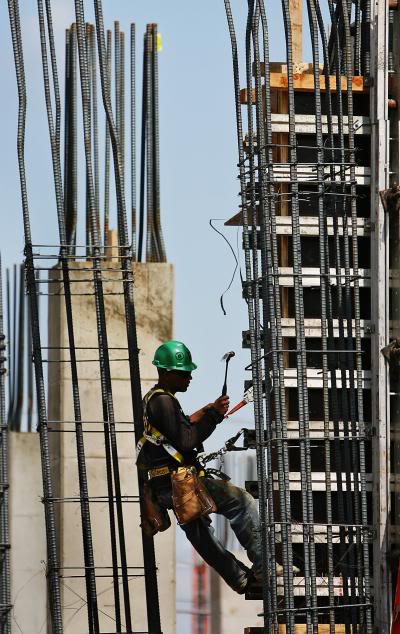
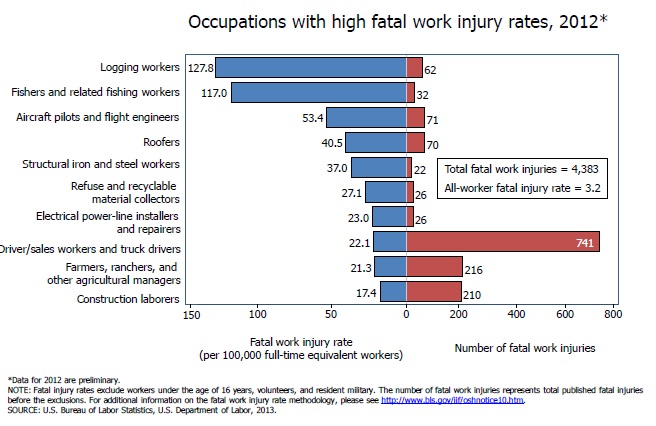
The deadliest jobs included heavy and tractor-trailer driving, commercial fishing, construction labor, law enforcement, firefighting, and logging, the data shows. While circumstances vary widely across those occupations, all tend to be high-risk jobs, according to Tim Consedine, a regional economist at the New England office for the Bureau of Labor Statistics. (See below slides for the top 25.)
The most common injuries leading to workplace fatalities are falls and strikes by vehicles or equipment, according to James Celenza, the executive director of the Rhode Island Committee on Occupational Safety and Health, which provides workplace training throughout New England. Nationally, transportation-related accidents accounted for 40 percent of all workplace fatalities, Consedine said.
GET THE LATEST BREAKING NEWS HERE -- SIGN UP FOR GOLOCAL FREE DAILY EBLASTHidden risks to some jobs
Some jobs have risks largely hidden from the public eye. While fishing, fighting fires or fighting crime might have obvious risks, being a social worker does not. Yet social work is among one of the deadliest occupations in the New England, ranking 25th when fatalities for social work with families, health care, mental health and substance abuse are combined. Between 2008 and 2012, half a dozen social workers died on the job.
“Our folks are really dealing with the most at-risk families and individuals throughout Massachusetts,” Stephany said. That work could place his members in a wide range of situations that are potentially unsafe—from dealing with those who have developmental disabilities to entering a home where there have been allegations of abuse or neglect.
“And so workplace safety is a very important part of this,” Stephany said.
Last summer, an employee at Community Healthlink, a Worcester-based organization that provides mental health and substance abuse services, was attacked by a patient with a utility knife while driving him to his home. The worker survived.
Social workers also face health-related risks, especially for those who handle bodily fluids that could be carrying pathogens, Stephany said.
Economic factors in workplace fatalities
While risk is a factor in what jobs rank as the deadliest, so is the economic and demographic makeup of a region, according to Consedine.
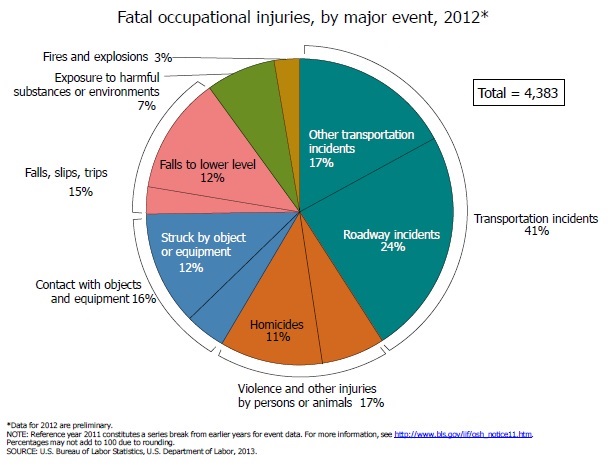
Overall, on-the-job deaths are on the decline. In 2012, there were 4,383 deaths at the workplace, down from 4,693, according to the Bureau of Labor Statistics. Just one sector saw an increase after five consecutive years of declining fatalities: the construction industry. In 2012, construction accidents claimed the lives of 775 workers, up from 738 in 2011, an increase of 5 percent, according to the Bureau of Labor Statistics.
While workers in different industries may share in the same high risk, they are not equally compensated for it. Farmers and roofers had the same number of fatalities—nine—but the typical farmer earned $69,300, nearly double what a roofer did. There was one more fatality among electricians, whose salary of $49,840 put them roughly in between the incomes for farmers and roofers.
The difference unions make
Beyond the high risk, several other factors affect the safety of a workplace, experts say.
Michael Sabitoni, the president of the Rhode Island Building and Construction Trades Council, says the training unions provide to their members results in a safer workplace. He points to older worker fatality data from the Occupational Health and Safety Administration, showing that there were 354 on-the-job deaths in non-union workplaces with just 77 deaths at unionized workplaces in New England between 1998 and 2005.
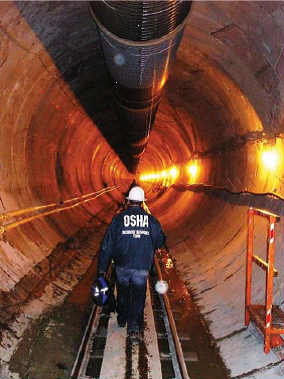
Beyond training, unions also provide protection for workers who speak out against workplace issues, Celenza said. Although there already is a federal law against firing employees for raising questions about safety, it is easier for businesses that aren’t unionized to skirt the law than for those that are, according to Celenza. Ultimately, a well-training worker who does not have union protection may still face unsafe working conditions, Celenza said.
“There is no doubt that being in an environment where a union is present gives workers a greater ability to both speak out on and address workplace safety concerns,” added Stephany.
But training will only get you so far, Celenza added. Sometimes, when catastrophe strikes—such as a major storm that breaks out before a commercial fishing boat loaded with fish can reach shore—all the training in the world can’t avoid a tragedy, Celenza said.
Other factors: language barriers, budget cuts
One trend in fatality rates points to a cultural factor. While the overall rate is declining, it is on the rise in one population, according to Celenza: Hispanic workers. “There’s a nexus of conditions that just kind of play into that,” Celenza said.
He said Hispanic workers tend to have less training and are more willing to take risks. For Hispanic workers, particularly those who are undocumented residents, Celenza said the fears they could lose a job drives them on to greater risks.
Sometimes unsafe conditions are intentional: “There’s always going to be a subset of subcontractors that are going to cut corners,” Celenza said. Bypassing normal safety procedures saves money and gives those subcontractors an unfair edge in bidding for projects, according to Celenza.
For human service workers, a critically important factor in workplace safety is staffing, according to Stephany, who cited low staffing as a factor in the 2011 slaying of Moulton and the knife attack last summer.
In most cases, the lack of adequate staffing is due to budget constraints or funding cuts, according to Stephany. “To be quite frank, sometimes it is poor management,” he added.
Since the Moulton case, there have been signs of improvement. Last August, the U.S. Department of Labor reached a settlement with the North Suffolk Mental Health Association, the agency that employed Moulton. As part of the settlement, the agency agreed to implement “comprehensive procedures and policies,” including new violence prevent program, a “buddy system” for the second and third shifts, and a more proactive approach to identifying clients who exhibit threatening behavior, according to a news release announcing the settlement.

SEIU Local 509 has been leading the effort to boost staffing levels at North Suffolk as well as other agencies. Additional staffing can prevent a tense situation from escalating into violence and ensures there are enough hands-on workers available to protect both a social worker and their client, according to Stephany.
In the human services sector, making workplace safety for human service workers translates into safety for their clients at well, according to Stephany. “The number one priority of human service workers in Massachusetts is keeping the clients they serve safe,” he said.
In New England, as with the rest of the nation, it appears the number of workplace fatalities is on the decline. The latest fatality census for the Boston metropolitan area revealed that were under 20 deaths in 2012, the lowest level seen since 2000, according to Consedine. Still, the 706 people who have died at their jobs over the last five years is a troubling statistic for many workplace safety advocates. “Fatalities in the workplace should be zero,” Sabitoni said.
Stephen Beale can be reached at [email protected]. Follow him on Twitter @bealenews
New England Worker Fatalities

#25
Social Workers
Number of Fatalities: 6
Median Salary: $39,980 to $54,560
Occupation Group: Community and social service occupations
Total Occupation Fatalities: 12
Note: Category encompasses several specific occupations, including social workers in the child, family and school, health care, mental health and substance abuse fields. Because of insufficent data a breakdown by specific occupation was not available.

#24
First-Line Supervisors of Retail Sales Workers
Number of Fatalities: 8
Median Salary: $36,820
Occupation Group: Sales and related occupations
Total Occupation Fatalities: 26
Note: First-line supervisors directly oversee and coordinate activities of retail sales workers in an establishment or department. Duties may include management functions, such as purchasing, budgeting, accounting, and personnel work, in addition to supervisory duties.

#23
Driver/Sales Workers
Number of Fatalities:8
Median Salary: $22,670
Occupation Group: Transportation and material moving occupations
Total Occupation Fatalities: 167
Note: Includes those who drive trucks or other vehicles over established routes or within an established territory and sell or deliver goods, such as food products, including restaurant take-out items, or pick up or deliver items such as commercial laundry. May also take orders, collect payment, or stock merchandise at point of delivery. Includes newspaper delivery drivers. Excludes Coin, Vending, and Amusement Machine Servicers and Repairers and Light Truck or Delivery Services Drivers.

#22
Farmers and Ranchers
Number of Fatalities:9
Median Salary: $69,300
Occupation Group: Management Occupations
Total Occupation Fatalities: 37

#21
Roofers
Number of Fatalities: 9
Median Salary: $35,290
Occupation Group: Construction and extraction occupations
Total Occupation Fatalities: 129

#20
General Maintenance and Repair Workers
Number of Fatalities: 9
Median Salary: $35,210
Occupation Group: Installation, maintenance, and repair occupations
Total Occupation Fatalities: 53

#19
Commercial Pilots
Number of Fatalities: 9
Median Salary: $73,280
Occupation Group: Transportation and material moving occupations
Total Occupation Fatalities: 167
Note: Category includes those who pilot and navigate the flight of fixed-wing aircraft on nonscheduled air carrier routes, or helicopters. Requires Commercial Pilot certificate. Includes charter pilots with similar certification, and air ambulance and air tour pilots. Excludes regional, National, and international airline pilots.

#18
Industrial Truck and Tractor Operators
Number of Fatalities: 9
Median Salary: $30,220
Occupation Group: Transportation and material moving occupations
Total Occupation Fatalities: 167

#17
Janitors and Cleaners (Excluding Maids and Housekeepers)
Number of Fatalities: 10
Median Salary: $22,320
Occupation Group: Building and grounds cleaning and maintenance occupations
Total Occupation Fatalities: 52

#16
Electricians
Number of Fatalities: 10
Median Salary: $49,840
Occupation Group: Construction and extraction occupations
Total Occupation Fatalities: 129

#15
Firefighters
Number of Fatalities: 12
Median Salary: $45,250
Occupation Group: Protective service occupations
Total Occupation Fatalities: 48

#14
Fallers
Number of Fatalities: 12
Median Salary: $35,250
Occupation Group: Farming, fishing, and forestry occupations
Total Occupation Fatalities: 64
Note: Fallers use axes or chainsaws to fell trees using knowledge of tree characteristics and cutting techniques to control direction of fall and minimize tree damage.

#13
Automotive Service Technicians and Mechanics
Number of Fatalities: 12
Median Salary: $36,610
Occupation Group: Installation, maintenance, and repair occupations
Total Occupation Fatalities: 53

#12
Taxi Drivers and Chauffeurs
Number of Fatalities: 12
Median Salary: $22,820
Occupation Group: Transportation and material moving occupations
Total Occupation Fatalities: 167

#11
Painters, Construction and Maintenance
Number of Fatalities: 13
Median Salary: $35,190
Occupation Group: Construction and extraction occupations
Total Occupation Fatalities: 129

#10
Laborers and Freight, Stock, and Material Movers (By Hand)
Number of Fatalities:15
Median Salary: $23,890
Occupation Group: Transportation and material moving occupations
Total Occupation Fatalities: 167

#9
Police and Sheriff's Patrol Officers
Number of Fatalities: 16
Median Salary: $55,270
Occupation Group: Protective service occupations
Total Occupation Fatalities: 48

#8
Tree Trimmers and Pruners
Number of Fatalities: 16
Median Salary: $32,310
Occupation Group: Building and grounds cleaning and maintenance occupations
Total Occupation Fatalities: 52

#7
Landscaping and Groundskeeping Workers
Number of Fatalities: 18
Median Salary: $23,570
Occupation Group: Building and grounds cleaning and maintenance occupations
Total Occupation Fatalities: 52

#6
Light Truck or Delivery Services Drivers
Number of Fatalities: 18
Median Salary: $29,390
Occupation Group: Transportation and material moving occupations
Total Occupation Fatalities: 167

#5
First-Line Supervisors of Construction and Extraction Workers
Number of Fatalities: 22
Median Salary: $59,700
Occupation Group: Construction and extraction occupations
Total Occupation Fatalities: 129

#4
Carpenters
Number of Fatalities: 24
Median Salary: $39,940
Occupation Group: Construction and extraction occupations
Total Occupation Fatalities: 129

#3
Construction Laborers
Number of Fatalities: 26
Median Salary: $29,990
Occupation Group: Construction and extraction occupations
Total Occupation Fatalities: 129

#2
Fishers and Related Fishing Workers
Number of Fatalities: 34
Median Salary: $33,430
Occupation Group: Farming, fishing, and forestry occupations
Total Occupation Fatalities: 64

#1
Heavy and Tractor-Trailer Truck Drivers
Number of Fatalities: 59
Median Salary: $38,200
Occupation Group: Transportation and material moving occupations
Total Occupation Fatalities: 167


