


Bishop: Post-Toll Impasse Between Public and Political Will
Brian Bishop, GoLocalProv Guest MINDSETTER™
Bishop: Post-Toll Impasse Between Public and Political Will
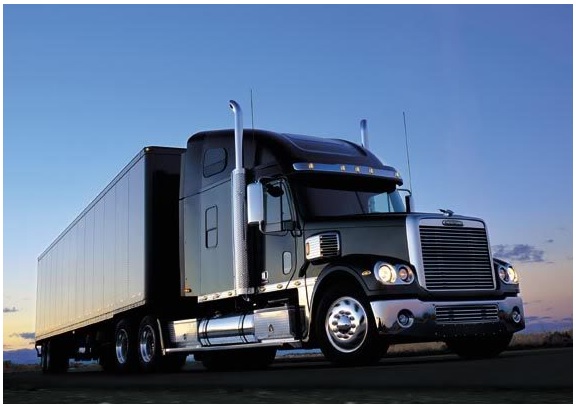
There has been a fairly strong public pushback against the concept. Apparently this civic engagement had politicians supporting the program worried enough that they found it necessary to go abroad with a particularly aggressive program of carrots and sticks to herd their colleagues into compliance. And this environment of reward and retribution did not stop at the caucus door, but has spilled over into the world of lobbyists and factions circling the legislature.
Robert Lafleur, the recently resigned Executive Director of the Rhode Island Independent Contractors and Associates (RIICA) said in a statement Monday: “Never in my many years of involvement at the State House have I ever seen a more toxic culture of intimidation and fear-mongering by the leadership.”
GET THE LATEST BREAKING NEWS HERE -- SIGN UP FOR GOLOCAL FREE DAILY EBLASTI agree with Lafleur’s statement on several points. It was an embarrassment for the so-called Chamber of Commerce to support this tolling program in a kind of stage managed appearance notable for its lack of actual business people. The Greater Providence Chamber of Commerce hacks are just part of the political class appointed not to represent businesses but to make sure they don’t get out of hand. But this should not obscure that Bob Lafleur, himself, is part of the political class too.
Misunderstanding what is political
Some critics have miscast Lafleur’s resignation as showing that political horse trading is spilling its banks into “private industry." As if to say that bumping legislators off committees is one thing; threatening towns with loss of funding, par for the course; but effectively getting someone fired from a trade association is really off the reservation.
Radio host Tara Granahan, confronted by the point that lobbyists for private industry are essentially political actors subject to the same rough and tumble as elected officials tried to parse contract lobbyists, hired guns whose sole function is to represent an interest before a political body, from someone like Lafleur who was employed by a trade association. Lafleur surely had duties to expand membership and administer the organization in addition to furthering its legislative agenda. The problem with that distinction is that factional associations like RIICA exist principally to accomplish political goals.
Granahan doubled down suggesting that no one had heard of Bob Lafleur or the Rhode Island Independent Contractors Association before the toll issue. The implication is that they, like the rest of civic society, were minding their own private business when they were shocked to find the legislature was targeting them with tolls and then became politically active.
The truth is otherwise, and the proof is in the pudding of Lafleur’s own statement in which he details “years at the legislature” and specifies the RIICA association president Olsen’s concern that: “any future legislation that may be submitted may be jeopardized due to the relationship." Why would this be a concern if the association is not principally concerned with political outcomes? What this really means is that Lafleur and the RIICA have been quietly active in politics for years. We just noticed.
Who is Wesley Mouch
It is a crying shame that so much of what private industry does has been politicized, which is to say brought more and more within the ambit of government. Ayn Rand personified this by naming the lobbyist in Atlas Shrugged: Mouch. And as she predicted in the 1940s, having a lobbyist is a virtual necessity for many businesses these days. Ideally, we would walk back this public choice nightmare that often leads industries to conspire with government to regulate themselves in ways to limit competition.
But we can’t even shed licensing of cosmetology instructors without recrimination. And please don’t start in about lab technicians who work with blood. If PBS’s Doc Martin can have his hapless secretary certified a phlebotomist with a two day course and a certificate of completion on the wall, there is no reason to assume that the nonfictional practice can’t be well regulated by private associations of labs and/or lab workers voluntarily setting industry best practices and insurance companies that would stand to pay liability judgments for mishandling such procedures serving as a further realm of oversight.
But the use of public roads, and paying for them, is always going to be a political question. Political questions get answered by logrolling. And the corollary obverse of “you vote for me, I’ll vote for you” is “you don’t vote for me, I won’t vote for you."
High Stakes distinguish this fight

Whether one could call it “toxic” probably depends on whether they supported the tolls or not. Those who wish to believe, contrary to the evidence, that wasting hundreds of millions of dollars on the 6/10 connector is a necessary investment in infrastructure, no doubt think nothing short of the full court press put on by the Speaker was appropriate.
Indeed, some might suggest it was necessary simply from a leadership perspective. The speaker effectively lost the battle over state subsidies for a new Red Sox Stadium and is embittered towards the opponents who pinned the 38 Stadium label on that boondoogle. Had he lost another high profile battle so soon afterwards, his ability to lead and muster majorities for the budget or more run of the mill legislation might have been undercut. This wouldn’t have bothered any of us trying to shrink government – indeed one can only hope that the leaf tax (S-2103) just passed in the Senate isn’t to be rubber stamped in the house as part of any grand bargain.
Impasse on Overpasses
But one understands what has brought us to this impasse between political and public will. Effective activism galvanized large parts of the citizenry in opposition to the political class. One battle was won, and one battle was lost (for the time being). And those paying the most immediate price, from Bob Lafleur to Representative Ray Hull are part of the political class – they just went with the good guys this time so they get their head handed to them on a platter by the status quo politicians. Even Job Lot, we can see, is just as busy negotiating favorable political treatment in some areas as they are opposing the tolls. So whatever should befall even individual businesses that were outspoken is largely related to what they were hoping to get from government.
I believe Karen Macbeth correctly sees the Oversight Committee as an arena where the legislature can vet its own behavior, inquiring into whether the logrolling activities to pass this legislation were seemly and appropriate because that is a political question, not a legal one – assuming the only thing traded was votes. There has yet to arise the hint of allegation that envelopes were trading hands (except maybe those with lists of projects that stood to be approved for legislators who went along with the Rhodeworks vote).
But if the decision was wrong and inefficient then we are all paying the price. But the most major mistake we could make at this juncture is to think that our distaste for how this was accomplished could be solved anywhere but the ballot box. Karen Macbeth can hold hearings if she is not demoted to dogcatcher. That can help the public to understand the ‘bargains’ inherent in the adoption of Rhodeworks legislation. But the committee has no power of correction, nor could it have. There is only one person who can fix this and to see the identity of that individual you must look in the mirror. And while you are at, write on the mirror in lipstick – preferably bright red – Remember in November.
RI Truck Tolls Controversy -- 2016

January 22
Truckers at Odds
On Thursday January 21, a number of truckers circled the Rhode Island State House in opposition to truck tolls -- but the members of the Rhode Island Independent Contractors and Associates were also countering what the Rhode Island Trucking Association (RITA) put forth to increase fees -- and the diesel tax -- in order to provide some revenue to the state in lieu of taxes.
"Let's get people back to work, take a look at pay-go, and with respect to those opposed to the diesel tax -- RI truckers are ranked 29th in fees that they pay," said Bill Fischer with RITA. "We're saying we're middle of the pack. It's not as though we're third in the country in fees. There's room for legislative increase on the diesel tax and registration fees. We didn't go [Thursday] because we don't believe the solution lies in not bringing anything to the table."

January 22
Call to Contact Legislators
Groups including the RI Center for Freedom and Prosperity continue to push for Rhode Islanders to contact legislators on the toll issue. The group shared the following on the StopTollsRI.com
SPEAK OUT: CONTACT YOUR LEGISLATORS IMMEDIATELY TO STOP TOLLS
You have the power to stop tolls in Rhode Island. Below you will find a letter that will automatically be sent to your state senator and representative.
Fill out the form and click the send button, time is running out to stop tolls. Speak out to immediately send a powerful message to our elected officials. Don't delay, act now. Your representatives will listen to you!

January 22
Raptakis Calls for More Time, Consideration
Concerned about the number of proposals to pay for the repair and replacement of the state’s infrastructure, Sen. Leonidas P. Raptakis (D-Dist. 33, Coventry, West Greenwich, East Greenwich) said "it’s time for the state to take a timeout to sift through all the information it has been inundated with."
The release for the General Assembly said the following:
He has submitted a resolution that would create a special legislative commission to study and review all aspects of future tolling of motor vehicles in the state.
The commission would be tasked with making a comprehensive study and analysis of all aspects of future motor vehicle tolling including, but not limited to, automobiles, tractor trailers and other commercial vehicles.

January 22
Hassenfeld Poll Released; GOP Jumps on Results
The Hassenfeld Institute for Public Leadership released its quarterly survey on key issues facing the State. The poll first asked respondents if they favored or opposed several proposals for bridge and road repair. On proposals to put tolls in place to help fund repairs:
• 43.9% favor Governor Raimondo’s proposal to assess a toll on large trucks to pay for the $1 Billion in revenue bonds to fix the roads and bridges; while 49.4% said they oppose the plan.
• 37.7% favor an alternative “pay as you go” plan, that could still include tolls but avoid interest payments, while 51.9% said they oppose the plan.
The RI GOP weighed in on the poll.
In September 2015, Bryant University's Hassenfeld Institute conducted a poll which showed that the voters supported new tolls by a margin of 53 to 44. But, today as voters have learned more about the plan, the numbers have flipped and now voters are against new tolls by a margin of 49 to 44, a swing of 14 percent.
At the same time, the Hassenfeld Institute poll showed 58 percent of the voters support reallocating money from the state's budget to fix the roads and bridges. Reallocating existing revenues within the budget instead of creating new revenue sources to fix our bridges has been the position championed by Republicans since the beginning of this debate in June 2015.

January 20
StopTollsRI.Com Says 75% of RI’s Legislators Refuse To Go On Record About Highly Controversial Toll Proposal
Toll opponents StopTollsRI.com distributed a survey to all Rhode Island legislators. It consisted of one question: "Do you unequivocally oppose new tolls of any kind?"
"That simple question was left unanswered by 75% of all legislators," said StopTollsRI.
“Voters and taxpayers have the right to know where their legislators stand on any issue, but particularly on a highly controversial issue like tolls”, says StopTollsRI.com’s spokesperson Monique Chartier. “The silence is deafening on this critical question."

January 20
RI Trucking Association Releases Letter Sent to Raimondo by the American Trucking Associations (ATA) in Virginia
RITA President Chris Maxwell had asked the ATA to review correspondence and media statements related to toll enforcement by both Governor Raimondo and Colonel O’Donnell of the Rhode Island State Police.
“I can assure every member of the General Assembly that the opinions and statements issued by the governor related to toll enforcement have raised major concerns in both the trucking industry and the business community,” said Maxwell. “There are federal laws in place that provide truckers the right to access local roadways. The governor has raised an issue and not provided any details of how this enforcement plan would work. At this juncture, we are very concerned about any plan that may interrupt the flow of commerce or add greater burdens and cost to the trucking industry.”
“It is fair to ask how a Rhode Island trooper is expected to know when a truck is purposely diverting a toll and when they are getting off the highway to make a delivery – or quite frankly just going home. We intend to fight any legislative initiative that will create a police state for the trucking industry,” added Maxwell.

January 20
Filippi, GOP Members Call for Voter Approval
Independent House District 36 Representative Blake Filippi (Block Island, Charlestown, South Kingstown and Westerly) joined with the Republican Policy Group to introduce legislation calling on voters to amend the R.I. Constitution to require statewide and local voter approval for any new passenger vehicle tolls. Representatives Morgan, Price, Chippendale, Roberts and Reilly are cosponsors of H-7191.
“The Governor’s proposed Rhode Works toll gantries will stand as monuments to inefficiency and a failure to do right by the People – and we are adamantly opposed to this plan. However, if the State is going to establish a statewide network of toll gantries, R.I. families deserve protection from a future government in a cash crunch. Although our leaders have assured us that the proposed network of gantries will never be used to toll passenger vehicles, these gantries will remain standing long after they leave office, and future leaders are not bound by these promises,” said Filippi.
January 14
GOP Introduces No Toll Legislation
“The Governor has asked for a viable and sustainable alternative to her Toll proposal. We [are] introducing the Republican No Tolls Bridgeworks plan in both the House of Representatives and the Senate,” stated Representative Patricia Morgan. “At the same time, we will hand deliver a copy of the legislation to her office. Hopefully, now that it is in official form, she will review its merits and work to help Rhode Island, not hurt the state with tolls.”
The GOP issued the following release:
"When the Governor abruptly introduced her massive borrowing and tolling scheme at the end of last year’s legislative session, the Republican Policy Group knew tolls would have detrimental consequences for Rhode Islanders. Our hard working families are fighting a stagnant economy and increase expenses. They simply should not be asked to bear the burden of higher consumer goods, because our State’s political leaders are unwilling to prioritize bridge repair over corporate welfare and waste,” she continued.
The Republican Policy Group searched the budget for spending that could be used for bridge repair that, at the same time, did not touch social programs or vital services. “Our budget is $8.7 million. Reallocating less than 1% of existing revenue for the next 10 years to bridge repair will raise $255 million more than the Governor’s plan,” explained Morgan. “That means in the same time frame, we will have more bridges repaired and more jobs created. The Republican plan surpasses the beneficial parts of the Governor’s plan, while, at the same time, avoiding the damage of tolls."

January 13
StopTollsRI.com Condemns "Deceptive Push Poll about Tolls Conducted by AAA"
Stop Tolls said that, "AAA Northeast released the results of a poll that appeared to show that a simple majority of their Rhode Island members supports Governor Gina Raimondo's truck toll proposal. However, the poll questions were not released with the results."
A release from NoTolls said the following:
AAA members themselves circulated the questions to the press, at which point, their bias was evident. It appears that this is a push poll designed simply to carry the Governor's side of the debate. As the R.I. Trucking Association has correctly pointed out, unfortunately, the state's largest business association, the Providence Chamber of Commerce, is an agent of the Governor and not necessarily working on behalf of the business community. The Providence Chamber appears to be orchestrating this via AAA (which is otherwise a very good and reliable business.)
"The results of the survey are misleading because it was crafted in a way to just get drivers to respond to the need to fix the roads, which is not in dispute. That's very different from asking respondents to weigh in on the financial and long term implications of tolls, not to mention important alternatives like pay-as-you-go", says StopTollsRI.com spokesperson Monique Chartier. "They are portraying these poll results as "Drivers approve of the RhodeWorks Truck Tolls Plan" - this is deceptive and misleading spin."

January 13
Could Toll Technology Be Used for Monitoring Drivers’ Data?
Opponents to truck tolls in Rhode Island are questioning the tracking capacities of the gantries, in light of other states using E-ZPass to issue speeding tickets and engage in data monitoring activities as discovered by the ACLU.
Read the GoLocal article here.
“While our primary concern is to stop the government from creating a new revenue stream from the taxpayer, of course we are concerned as average citizens that more of our basic rights might be stripped from us,” said Pam Gencarella with OSTPA.

January 12
RI Trucking Assoc: "Independent Analysis Points to Flaws in Economic Impact Study on RhodeWorks"
The Rhode Island Trucking Association (RITA) released an analysis of an economic impact study of RhodeWorks and concluded the study is flawed. The governor previously released the economic impact study (REMI Report) last October and used it as a foundation to build support for her toll plan.
The release was as follows:
The analysis of the REMI report was conducted by IHS, a leading analytics and information company, which operates in 32 countries around the world. The IHS team reviewed “The Economic Impact of RhodeWorks: An Accelerated Transportation Restoration Plan”, prepared by REMI. Their review identified several key issues in the report where assumptions and approaches to the study may lead to erroneous or suspect conclusions. Additionally, they found that the REMI study is sorely lacking in transparency. Key issues identified by IHS include:
*The IHS study projects revenue from tolls will only generate $24 million to $37.5 million per year, substantially below RhodeWorks’ $60 million per year projection.
* Highway truck volumes used in the REMI report appear questionable.
*The REMI report did not adequately account for truck routing diversion potential around the state.
* Not enough consideration was given to financing alternatives, which did not include bridge tolling.

January 10
StopTollsRI.com Calls Upon Governor to "Stop Stonewalling on APRA Request and Release Administration’s Own Truck Diversion Study"
StopTollsRI.com called upon Governor Raimondo to release a key study associated with her truck tolls plan concerning projections of truck diversion of highway toll gantries.
"The Governor has thus far stonewalled on releasing her own authorized truck diversion study, but in the wake of a survey recently released by the RI Trucking Association (conducted by the Owner-Operator Independent Drivers Association), StopTollsRI.com believes the release of the state sponsored survey is urgent.
Representative Patricia Morgan, a staunch critic of the truck tolls plan, submitted an APRA request to see the diversion study and it was originally denied, along with her request for toll gantry locations. After significant public pressure, the Raimondo administration last week provided the toll gantry locations, but this important study, which covered likely diversion routes truckers could use to avoid the tolls, remains inaccessible to the public. StopTollsRI.com believes the Governor’s motivation in refusing to release all of the data is due to findings that would indicate there would be a significant amount of diversion around the toll gantries."

January 8
RI DOT Releases Proposed Gantry Locations -- Days After Letter Was Sent to Leadership
Wrote the RI DOT:
With the recent release of the preliminary tolling locations, we look forward to the final resolution of the RhodeWorks financing plan and passage by the Legislature. This will clear the way for us to begin rebuilding our roads and bridges, aiding in the economic revival of this state.

January 7
RI Trucking Association Releases Driver Survey Conducted by the Owner-Operator Independent Drivers Association (OOIDA)
OOIDA surveyed its membership in Rhode Island and surrounding states (Connecticut, Delaware, Maine, Maryland, Massachusetts, New Hampshire, New Jersey, New York, Ohio, Pennsylvania, and Vermont) using an on-line survey. 373 OOIDA members who regularly travel through and in Rhode Island responded to the survey.
"The purpose was to determine how truck drivers, in particular truck drivers that are likely to operate in Rhode Island, feel about Governor Raimondo’s proposal. The survey was available on the OOIDA website and was open to respondents for a period of roughly eleven days." The survey found:
76.7% of the respondents indicated they would alter their route to avoid paying tolls in Rhode Island.
60.6% of the respondents indicated they alter their route to avoid tolls in other states.

January 6
GOP Claims Victory Over Tolls with Special Election Win
The special election in Senate District 11 was "a special night for Rhode Island taxpayers," said the RI GOP:
John Pagliarini did not just defeat a well-known Democrat who has served for more than a decade on the town council of a community that constitutes about 66% of the district, he also defeated a candidate personally endorsed by Governor Gina Raimondo.
Chairman Brandon S. Bell declared: "By electing Pagliarini to the Senate, the voters sent a simple message by special delivery via a huge 18 wheeler truck to State House insiders: NO TOLLS!
The special election in Senate District 11 was a special night for Rhode Island taxpayers. John Pagliarini did not just defeat a well-known Democrat who has served for more than a decade on the town council of a community that constitutes about 66% of the district, he also defeated a candidate personally endorsed by Governor Gina Raimondo.
Chairman Brandon S. Bell declared: "By electing Pagliarini to the Senate, the voters sent a simple message by special delivery via a huge 18 wheeler truck to State House insiders: NO TOLLS

January 5
Toll Opponents Take to State House
Over one hundred opponents to truck tolls took to the State House on Tuesday for a press conference — and a rally — to express their concerns for Governor Raimondo’s funding mechanism to support a $500 million infrastructure bond.
Over a dozen groups including RI Taxpayers, Ocean State Taxpayers in Action (OSTPA), and the Rhode Island Center for Freedom and Prosperity turned out for a speaker series that included Republican Deputy Minority Leader Patricia Morgan, former Director of Administration Gary Sasse, RI Taxpayers' Larry Fitzmorris, and Sakonnet Toll Opposition Platform's (STOP) Tony Viveiros.
“In 2011, DOT said they couldn't fix our roads and bridges because interest payments on all the transportation bonds were consuming too much of their funding. The General Assembly attempted to fix that funding problem by creating a savings account dedicated for infrastructure spending,” said Morgan


